

Seeds of Change
On a warm October day in 1869, a special baby boy was born in Porbandar, India . His parents named him Mohandas Gandhi. His family and friends called him “Monu” – a sweet nickname that meant “precious one.”
Monu lived in a big house with his mom, dad, and three siblings. His father, Karamchand, worked as an important helper to the local king. His mother, Putlibai, was very kind and taught Monu to be gentle with everyone – even tiny insects!
Young Monu was a shy little boy. He didn’t like to talk much, but he loved to learn. Every morning, he would walk to school with his books held tight to his chest. His favorite subject was reading stories about brave heroes who helped others.
“Truth and love are the strongest powers in the world,” Monu’s mother would tell him before bed each night.
Learning Important Lessons
One day, when Monu was seven years old, something important happened. He took a small piece of gold from his brother’s bracelet without asking. The guilt made his tummy feel funny . That night, he wrote a note to his father saying:
Instead of getting angry, his father hugged him and cried happy tears. He was proud that Monu told the truth. This taught little Monu that being honest was very important.
Growing Up Different
Unlike other kids who played rough games, Monu liked quiet activities. He spent time helping his mother care for sick neighbors. He shared his lunch with children who had none. When others fought, he tried to help them become friends again.
Early Values That Shaped Gandhi:
• Being truthful always
• Helping others in need
• Solving problems without fighting
• Respecting all living things
• Being kind to everyone
Sometimes, other children made fun of Monu because he was different. But he remembered what his mother said: “A person who stands up for what is right is stronger than a hundred people who do wrong.”
First Steps to Greatness
As Monu grew older, he started thinking about big questions: Why were some people treated badly? How could he help make the world better? He wrote in his little diary:
Young Monu didn’t know it yet, but these childhood thoughts would one day help him become someone very special – Mahatma Gandhi, a person who would change the world with peace and love! ✨
His favorite teacher, Mr. Mehta, once told the class: “Small actions can create big changes, just like tiny seeds grow into mighty trees.” Little did anyone know that Monu was that special seed, ready to grow into someone who would make history.
Journey to South Africa
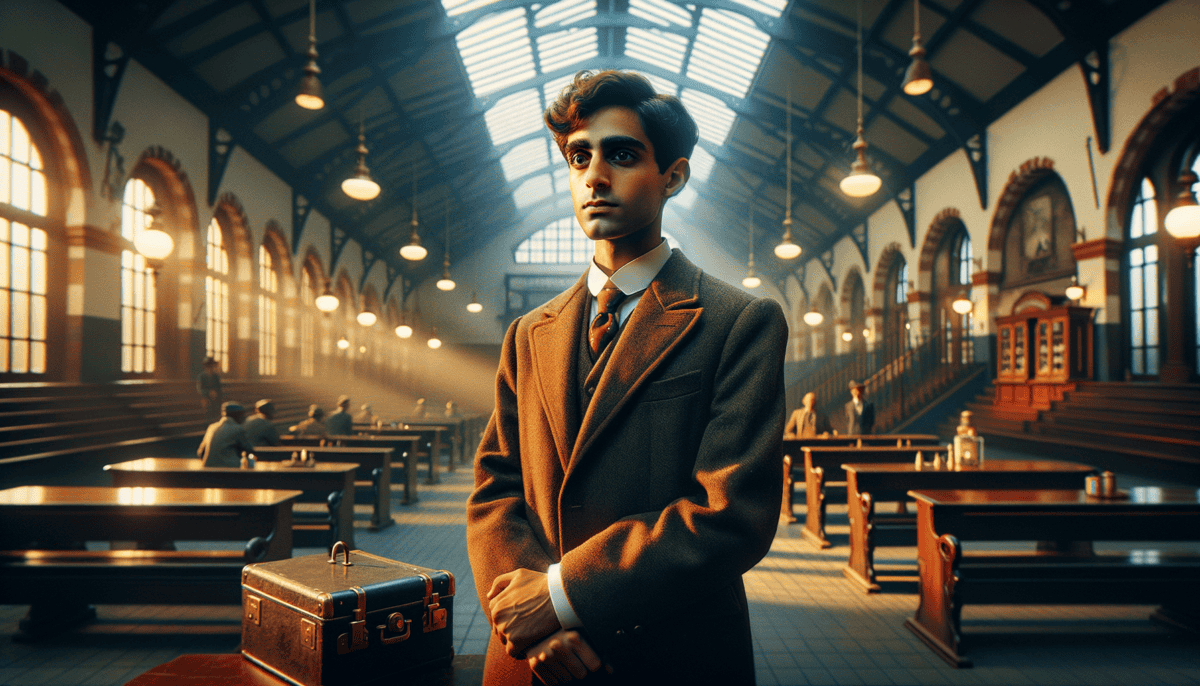
Young Gandhi stepped onto a big ship in 1893. He was 24 years old and heading to South Africa for his first job as a lawyer. His heart beat fast with excitement as he waved goodbye to India
A Painful Lesson
One day, Gandhi sat in a first-class train car in South Africa. He had bought a ticket, just like everyone else. But something unfair happened. A guard came and told him to move to the baggage car because his skin was brown.
“But I have a first-class ticket!” Gandhi said quietly.
The guard didn’t care. They threw Gandhi’s bags out and pushed him off the train at a station called Pietermaritzburg. It was cold and dark. Gandhi sat alone all night, shivering and thinking.
Fighting Back with Peace
Instead of getting angry or fighting, Gandhi had a special idea. He would stand up to unfair rules, but do it without hurting anyone! ️ He called this “Satyagraha” – which means holding onto the truth with love.
Gandhi’s Peaceful Ways to Fight:
• Speaking up bravely
• Writing letters to leaders
• Leading peaceful marches
• Refusing to follow unfair rules
• Helping others stand up too
Making Friends and Changes
Gandhi started helping other people who were treated unfairly. He opened an office where anyone could come for help. Soon, many people joined him. They called him “Mahatma” which means “Great Soul.”
One day, a scared little boy came to Gandhi’s office. “They won’t let me go to school,” he said. Gandhi held his hand and said:
Growing Stronger
Gandhi lived in South Africa for 21 years! During this time, he learned many important things:
He started a newspaper called “Indian Opinion” to tell people about unfair rules. He led big peaceful marches. When people went to jail for standing up to unfair laws, Gandhi went to jail too. But he never fought or got angry.
A New Way of Living
Gandhi changed how he lived too. He gave away his fancy lawyer clothes. He started wearing simple white clothes that he made himself. He ate simple food and lived in a small house.
People asked him why he lived so simply. Gandhi smiled and said:
“I want to live like the poorest person, so I can understand how to help them better.”
Every night, Gandhi wrote in his diary about his hopes for a better world. He drew pictures of people holding hands, no matter what color their skin was. His heart grew bigger with love for all people. ❤️
Coming Home to Change India
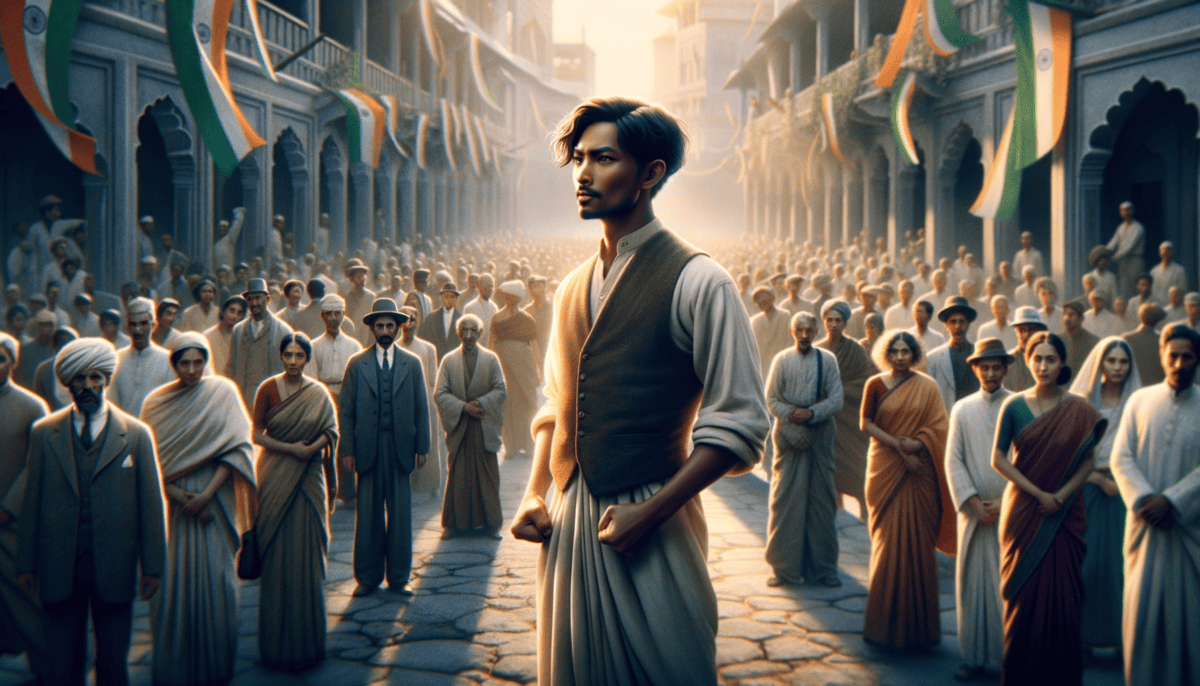
In 1915, Gandhi stepped off a ship in Mumbai. He was back in India after 21 years! His heart was full of big dreams to help his country.
Meeting the People
Gandhi didn’t go to fancy places. Instead, he traveled all over India in simple train cars. He wanted to meet regular people and learn about their problems.
“I must understand what makes my people sad before I can help them be happy,” Gandhi said.
He saw farmers who couldn’t grow food because of unfair rules. He met workers who didn’t get enough money for their hard work. He watched children who couldn’t go to school.
Teaching New Ways
Gandhi started teaching people about peaceful protest. He showed them how to stand up for what’s right without being mean or angry. ️
Gandhi’s Rules for Peaceful Change:
• Always tell the truth
• Never hurt anyone
• Be brave but kind
• Help others
• Don’t give up
Making Indian Things
Gandhi had a special idea. He asked everyone to make their own clothes using a spinning wheel. This was called “khadi.”
A little girl asked him, “Why should we make our own clothes?”
Big Peaceful Protests
Soon, thousands of people joined Gandhi. They would sit quietly on the streets to show they didn’t like unfair rules. Sometimes they wouldn’t buy things from British shops. Other times they would walk together in peaceful marches.
Leading with Love
Gandhi lived in a simple house called Sabarmati Ashram. Anyone could come visit him there. Rich or poor, everyone sat together on the floor and ate simple food.
People started calling him “Bapu” which means father. He would tell them:
“Love is the strongest power in the world. It can change anyone’s heart.”
Every morning, Gandhi would wake up early to pray and spin clothes. He wrote letters to British leaders asking them to let India be free. His peaceful movement was growing bigger and stronger every day! ✨
The Great Salt March
The year was 1930. Gandhi had a bold new plan to help India be free. He would lead a march to the sea to make salt!
Getting Ready for the Big Walk
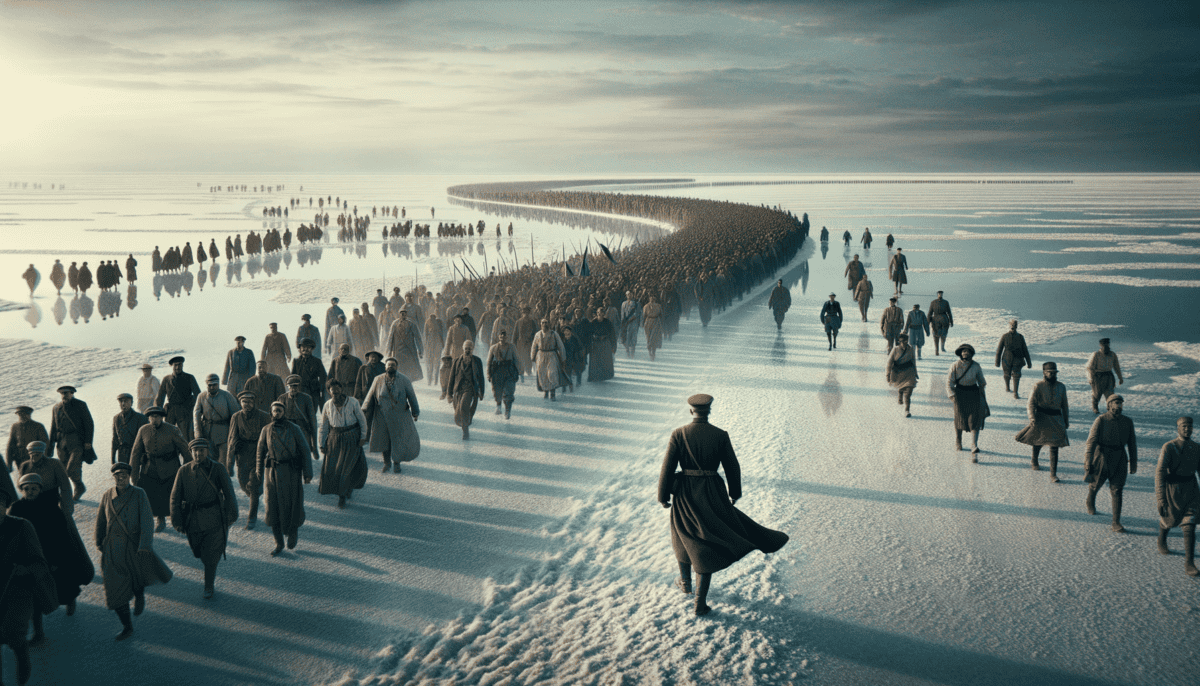
Gandhi picked 78 brave people to walk with him. They would walk 241 miles to the sea! That’s like walking around a big playground 2,000 times!
“Why salt?” asked a young follower.
The March Begins
On March 12, Gandhi started walking. He carried a long stick to help him walk. He wore simple white clothes and his round glasses.
“Each step we take is a step toward freedom,” Gandhi told his friends as they walked.
More and more people joined the march every day. Some walked a little while, some walked a long time. Soon, thousands of people were walking! ♂️ ♀️
News Spreads Far and Wide
People from all over the world heard about Gandhi’s salt walk. Newspaper writers came from many countries to take pictures and write stories.
• People walked 241 miles
• It took 24 days
• Thousands joined in
• Everyone stayed peaceful
• The whole world watched
Reaching the Sea
On April 5, Gandhi finally reached the sea! He picked up some salty mud from the beach. He boiled it in water to make salt.
Making History
After Gandhi made salt, millions of Indians started making their own salt too! They weren’t afraid anymore. The British police put many people in jail, but they couldn’t stop everyone.
Even when they were tired or their feet hurt, Gandhi and his friends kept walking. They showed that you don’t need to fight or be mean to make big changes. You just need to be brave and peaceful! ✨
The Salt March became one of the most famous peaceful protests ever. It helped India get closer to being free, and showed people everywhere that love is stronger than hate. ️
Working Together for Freedom
After the great Salt March, Gandhi had many important talks with British leaders. He wanted to help India become free in a peaceful way.
Making New Friends
“We must be friends with everyone,” Gandhi told his helpers. “Even people who don’t agree with us.”
He met with lots of different people:
• Poor farmers in small villages
• Religious leaders from temples and mosques
• Other freedom fighters who wanted to help India
Solving Big Problems
There were some hard times. Some Hindus and Muslims didn’t get along. Gandhi walked from village to village to help them become friends. ♂️
“My heart is big enough for everyone,” Gandhi would say with a smile.
Important Meetings
The British invited Gandhi to a special meeting in London. He went on a big ship across the ocean!
Teaching Peace
Gandhi kept teaching people about peaceful ways to solve problems. He wrote letters and spoke to big crowds.
Getting Closer to Freedom
More and more people started listening to Gandhi’s ideas. Even some British leaders thought he was right! They started thinking about letting India be free.
• Always tell the truth
• Be kind to everyone
• Help people who need help
• Solve problems without fighting
• Keep trying even when things are hard
Hope for Tomorrow
Gandhi worked very hard to help different groups of people understand each other. He knew that India needed everyone to work together to be free and happy.
Every day, more people joined Gandhi’s peaceful movement. They learned that love and kindness were stronger than anger and fighting. The dream of a free India was getting closer! ⭐
Gandhi’s peaceful ways were changing minds and hearts. The British were starting to see that India was ready to be free. Big changes were coming, and Gandhi was helping make sure they happened in a peaceful way. ️
A Dream of Peace Comes True
Finally, in 1947, India became free! Gandhi’s dream of peaceful change had worked. But there was still more work to do.
Freedom at Last
People all over India celebrated their freedom. They sang songs and waved flags. Gandhi smiled but reminded everyone, “With freedom comes big responsibility.”
Helping People Get Along
Even after India was free, Gandhi kept working to help people be kind to each other. He walked through places where people were fighting and asked them to be friends.
“My life is my message,” Gandhi would say. “We must be the peace we want to see.”
Gandhi’s Last Days
Gandhi was getting older, but he never stopped helping others. Every day, he would:
• Talk to people who needed help
• Write letters about being kind
• Walk in gardens and think about good ideas
• Share his wisdom with young people
A Sad Goodbye
On January 30, 1948, Gandhi went to pray as he did every day. But a angry man who didn’t like Gandhi’s ideas of peace did something very bad – he hurt Gandhi.
Gandhi’s Big Ideas Live On
Gandhi’s ideas didn’t go away. They grew bigger! Many other people used his peaceful ways to make good changes:
What We Learn from Gandhi
Gandhi taught us many important things that still help us today:
• Be kind even when others aren’t
• Stand up for what’s right without fighting
• Help make the world better
• Everyone can make a difference
• Love is the strongest power
Today, people still read about Gandhi and learn from his life. Students, teachers, and leaders use his ideas to solve problems without fighting. His peaceful way of changing things helps make our world better. ️
Gandhi showed us that one person who believes in peace can help change the whole world. His story teaches us that being kind and brave can make big changes happen. ⭐
Whenever we choose to solve problems peacefully, we’re following Gandhi’s path. His dream of a world filled with peace and love continues through all of us!