

A Young Mind Full of Wonder
On a sunny morning in 1817, little Charles Darwin woke up excited. He was just eight years old, but he already knew exactly what he wanted to do that day – explore!
Charles lived in a big house in Shrewsbury, England. His home had a wonderful garden full of colorful flowers and buzzing insects. Every morning, he would rush outside to see what new treasures he could find.
“Look what I found, Papa!” Charles called out, holding up a shiny beetle. “I’ve never seen one like this before!”
His father, Dr. Robert Darwin, smiled at his son’s enthusiasm. Charles was always collecting things – rocks, shells, insects, and anything else that caught his eye.
But Charles wasn’t just interested in collecting things. He wanted to know everything about them. Why did some beetles have bright colors while others didn’t? How did flowers grow from tiny seeds? These questions filled his curious mind.
School Days and Nature Ways
School wasn’t always easy for Charles. He found it boring to sit inside all day when there was so much to discover outdoors. His teachers thought he was a dreamy boy who spent too much time looking out the window.
“Charles,” his teacher would say, “please pay attention to your lessons!”
But what his teachers didn’t understand was that Charles was already learning – just in his own way. When other children were playing games, Charles was:
- Watching birds build their nests
- Finding interesting rocks in the garden
- Learning about different plants
- Collecting insects in jars
- Drawing pictures of his discoveries
A Special Helper
Charles had a special person who understood his love for nature – his older sister Caroline. She would often join him on his adventures, helping him identify plants and animals.
“Tell me more about this flower, Charles,” Caroline would say, encouraging his curiosity.
Together, they created a small museum in Charles’s bedroom. They carefully arranged his collections and made labels for each item, just like a real museum!
Dreams of Adventure
As Charles grew older, his love for nature only got stronger. He would read books about explorers and dream about visiting far-away places. Little did he know that his childhood curiosity would one day lead him to make one of the biggest discoveries in science!
Every evening, Charles would write in his notebook about what he had found that day. His father might have worried about his unusual son, but Charles’s love for nature was growing into something amazing.
“Someday,” young Charles would say, “I’m going to explore the whole world and learn all its secrets!”
In his bedroom at night, surrounded by his collections, Charles would dream about the adventures waiting for him. His curious mind and loving heart were preparing him for an incredible journey that would change how we understand our world.

The Journey Begins
It was a chilly morning in December 1831 when Charles Darwin stood at the dock, staring at the HMS Beagle. The ship wasn’t very big – about as long as two school buses. But it would become his home for the next five years!
“Are you sure about this, Charles?” his father asked, worried about his son’s big adventure.
“Yes, Father,” Charles replied, trying to sound braver than he felt. “This is my chance to see all the amazing things we’ve only read about in books!”
Getting Ready for Adventure
Before leaving, Charles had to pack everything he would need. He brought:
- Notebooks for writing down what he saw
- A magnifying glass to look at tiny things
- Boxes to collect specimens
- His favorite science books
- Drawing supplies to sketch his findings
The ship’s captain, Robert FitzRoy, welcomed Charles aboard. “Welcome to the Beagle, Mr. Darwin. I hope you’re ready for some seasickness!” he said with a friendly smile.
Life at Sea
The first few days were hard. The waves made the ship rock back and forth, and poor Charles felt very sick.
“I’ll never get used to this,” Charles moaned, holding his stomach.
But he did get used to it! Soon, Charles was running around the deck, watching seabirds and writing about everything he saw.
First Discoveries
Every time the ship stopped at land, Charles would jump off to explore. He found amazing things:
Colorful lizards running on hot rocks
Fish that could jump out of the water
Flowers no one had ever seen before
Charles wrote letters home about his adventures: “Dear Caroline, you won’t believe what I saw today!” He filled pages with drawings and descriptions of everything new.
Making Friends
At first, some sailors thought Charles was strange, always collecting rocks and bugs. But soon they started helping him!
“Mr. Darwin! Look at this strange shell I found!” a sailor would call out.
The ship’s crew became like a family. They would sit together in the evenings, sharing stories and looking at Charles’s collections.
As the Beagle sailed across the ocean, Charles thought about his garden back home. Now the whole world was his garden to explore! Every day brought new surprises and questions to answer.
The young collector who once studied worms in his backyard was becoming something more – a real scientist on the adventure of a lifetime. And the biggest discoveries were still ahead!
Wonders of the Galápagos
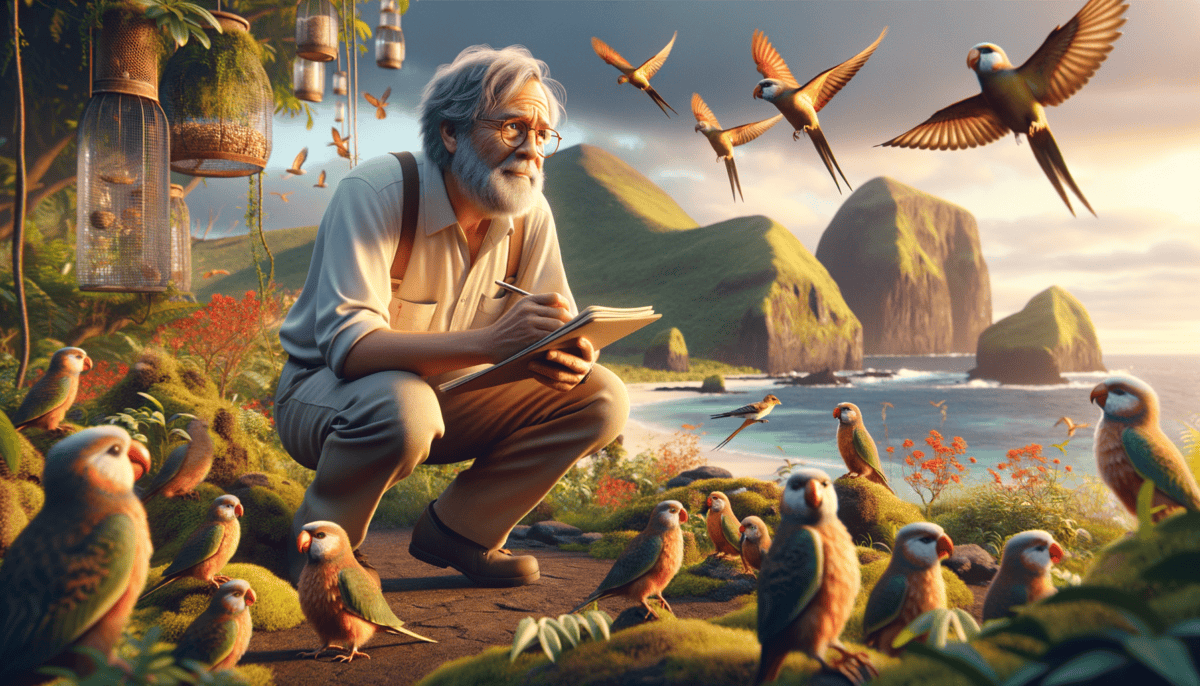
️ In September 1835, Charles jumped with excitement as he saw the Galápagos Islands appear on the horizon. These special islands would change how he thought about all living things!
“Look at those strange birds!” Charles shouted. He watched big black birds with blue feet dancing on the rocks. They were blue-footed boobies!
Meeting the Giant Friends
The first thing Charles saw were huge tortoises. They were as big as small cars!
“These tortoises are different on each island,” Charles wrote in his notebook. “I wonder why?”
He noticed something amazing – tortoises on islands with tall plants had longer necks. Those on islands with low plants had shorter necks. It was like a puzzle coming together!
The Famous Finches
Then came the birds that would make Charles famous – the finches! These little birds were everywhere, but they weren’t all the same.
Charles drew pictures of each bird’s beak:
- Big crushing beaks for tough seeds
- Small pointy beaks for catching insects
- Medium beaks for eating different foods
- Special beaks for reaching into flowers
Making Big Connections
Every day brought new surprises. Charles started to think: “What if these animals changed over time to fit their homes better?”
Marine iguanas swimming in the sea
Penguins living near the equator
Hawks that weren’t scared of people
“This is the most wonderful place I’ve ever seen!” Charles wrote to his sister. “The animals here tell a story about how life changes.”
Collecting Treasures
Charles collected as many samples as he could:
The sailors helped him catch animals and dig up fossils. Captain FitzRoy gave him special boxes to keep everything safe.
“Careful with those eggs, Mr. Darwin!” the sailors would joke as he packed his specimens.
A Special Place
The Galápagos Islands were like nothing Charles had ever seen. Each day brought new questions:
❓ Why were the animals so different from mainland animals?
❓ How did they get to these islands?
❓ Why did each island have its own special creatures?
As the Beagle sailed away from the islands, Charles knew he had seen something very special. His head was full of ideas that would change how people thought about nature forever!
The young scientist clutched his notebooks filled with drawings and notes. He didn’t know it yet, but these islands had given him the clues to solve one of nature’s biggest mysteries!
The Big Idea Takes Shape
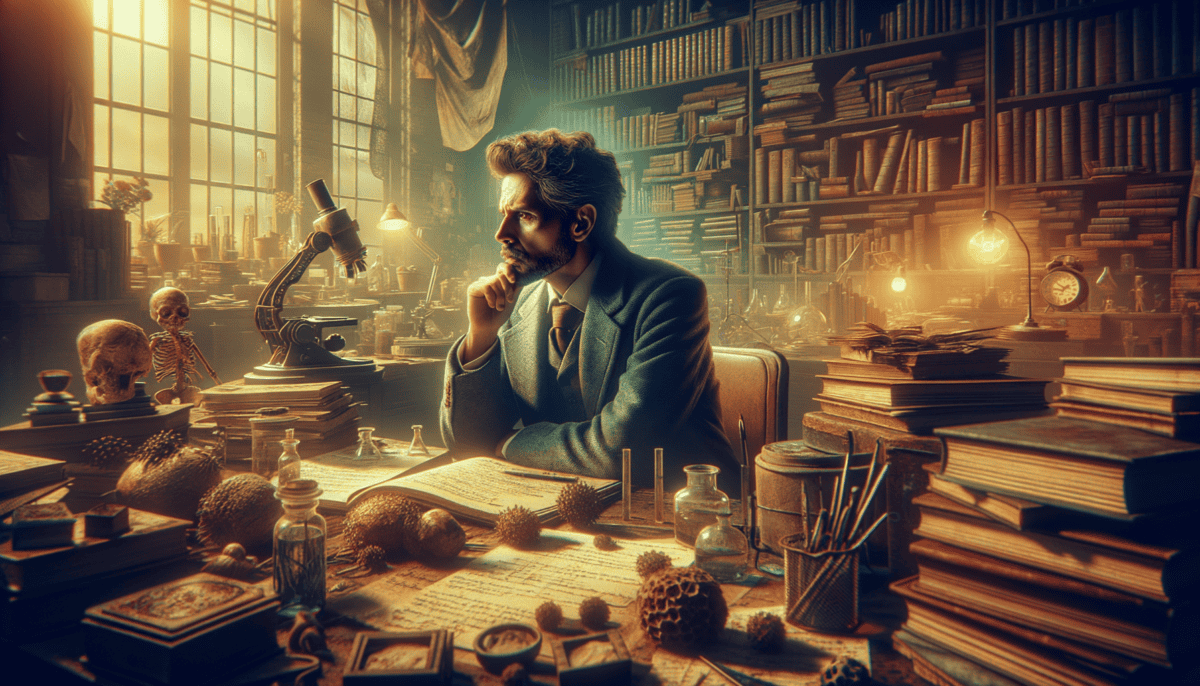
Back in England, Charles Darwin sat at his desk, looking at all his treasures from the Galápagos Islands. His mind was buzzing with big questions!
A New Way of Thinking
“Emma, come look at these finch beaks!” Charles called to his wife. “Each one is perfect for the food it eats!”
“Nature is like a clever puzzle,” Charles wrote in his journal. “Animals change little by little to survive better.”
He called his big idea “natural selection.” It means that animals that fit their homes best get to have more babies. Over lots and lots of time, this makes species change!
Worried About Sharing
But Charles was scared to tell people about his idea. Back then, most people thought animals never changed.
He worked on his idea in secret for many years. Only his close friends knew what he was thinking about.
Finding Proof
Charles needed lots of proof to show his idea was right. He did many experiments:
- Growing different plants to see how they changed
- Studying how farmers made different kinds of pigeons
- Looking at old bones in the ground
- Watching how baby snails grew up different from their parents
A Friendly Race
One day, Charles got a letter that changed everything! Another scientist named Alfred Wallace had the same idea!
“Dear Mr. Darwin, I think I know how animals change over time…” the letter said.
Charles knew it was time to be brave. He had to share his big idea with the world!
Standing Strong
Some scientists didn’t like Charles’s idea. They said mean things about him.
But Charles knew his proof was good!
He had studied nature for so many years.
His friends helped him stay strong.
Getting Ready to Share
Charles worked hard to write down all his ideas. He wanted to explain everything clearly so people could understand.
“Even if people disagree,” he told Emma, “I must share what I learned about nature’s amazing ways.”
He drew pictures, wrote examples, and explained his ideas carefully. Soon, he would be ready to tell the whole world about his amazing discovery!
Charles looked at the finch beaks on his desk. They reminded him of his wonderful journey and all he had learned. Now it was time to be brave and share his big idea with everyone!
Writing the Big Book
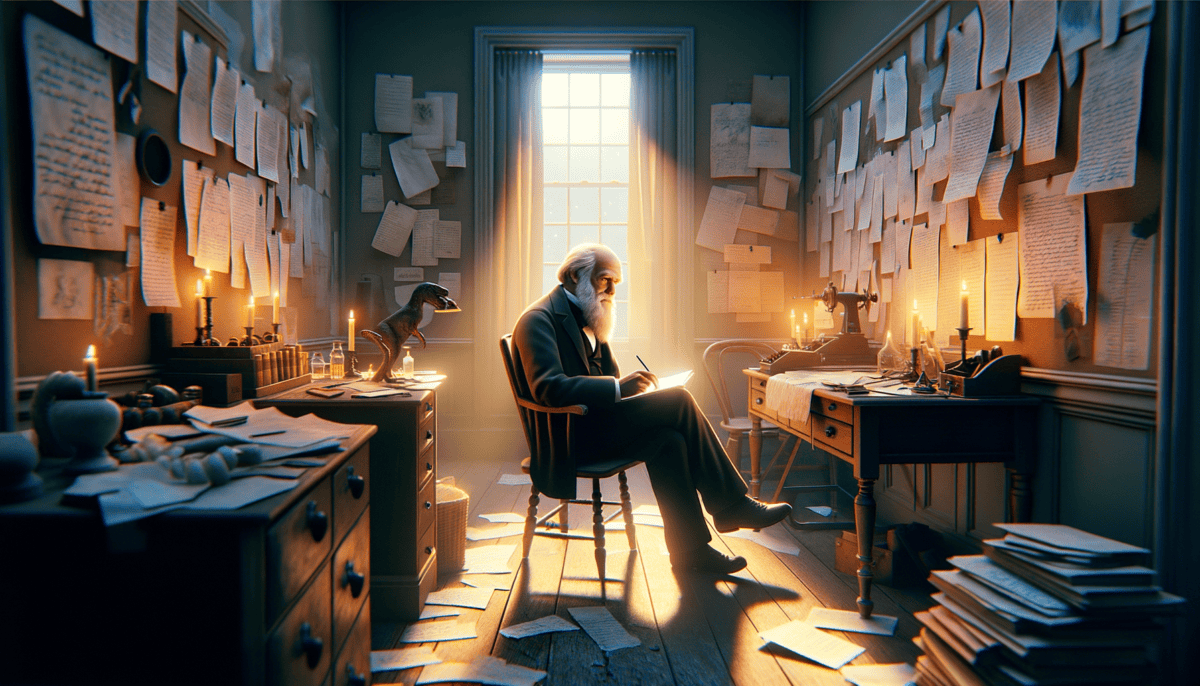
️ Charles Darwin sat at his wooden desk each morning. The sunlight streamed through his window as he began writing his most important book.
Working Hard Every Day
“My hand is tired from all this writing,” Charles told Emma one evening. His wife brought him a cup of hot tea.
“Take your time, dear,” Emma said. “Important ideas need careful words.”
Charles wrote page after page. He drew pictures of birds and turtles. He made lists of all the things he had seen on his big trip.
Help from Friends
Charles sent letters to other scientists. “Please check my work,” he wrote. “I want to make sure everything is right!”
Some days were hard. Charles got headaches and felt sick. But he kept working because he knew his book was important.
Making it Perfect
These are the things Charles put in his book:
- Stories about animals and plants
- Things he saw on his trip around the world
- Notes about his experiments
- Pictures of different creatures
- His big idea about how nature works
Getting Nervous
As the book got closer to being done, Charles felt butterflies in his tummy.
“What will people think?” he wondered. “Will they understand my ideas?”
Emma gave him a hug. “You’ve worked so hard,” she said. “Your book will help people see nature in a new way.”
The Final Touch
Charles called his book “On the Origin of Species.” It was very long – over 500 pages!
He checked every word carefully.
He made sure all his facts were right.
He hoped people would read it with open minds.
A Special Delivery
Finally, one sunny morning, Charles packed up his book. It was time to send it to the printer!
“There it goes,” he said to Emma. “Our years of hard work, off to meet the world!”
Charles watched the mail coach drive away with his precious package. Soon, everyone would be able to read about his amazing ideas about nature!
That night, Charles wrote in his diary: “I did my best to tell the truth about what I saw. Now it’s time to be brave and share it with everyone!”

A World-Changing Book
One morning in 1859, Charles Darwin’s big book finally came out! People lined up at bookstores to get their copy.
Different Reactions
Some people loved Charles’s ideas. Others weren’t so sure. But everyone was talking about it! ️
“Your book makes so much sense,” wrote one of Charles’s friends. “You’ve helped us see nature in a new way!”
Scientists around the world started testing Charles’s ideas. They found more and more proof that he was right!
Growing Famous
Charles got lots of letters from people who read his book. Some had questions. Others wanted to share their own ideas. ✉️
More Discoveries
Even though he was getting older, Charles kept studying nature. Here are some things he wrote about:
- How flowers grow
- How worms help soil
- How bees make honey
- How plants move
- How animals show feelings
A Happy Family Life
Charles spent lots of time with his family at Down House.
“Grandfather, tell us about your big trip again!” his grandchildren would say.
He loved playing with his grandkids and showing them interesting things in the garden.
Darwin’s Big Ideas Today
His work helps us understand:
How animals adapt to new places
Why there are so many different kinds of living things
How we can protect nature
Remembering Charles Darwin
Charles Darwin died in 1882, but his ideas live on!
Today, we remember him as someone who:
Looked carefully at nature
Thought deeply about what he saw
✍️ Shared his ideas with the world
Was brave enough to say something new
A Lasting Legacy
“The love of nature is a precious gift,” Charles once wrote. “It makes life richer and more wonderful.”
Thanks to Charles Darwin, we understand so much more about our amazing world. His curiosity and hard work changed science forever!
Every time we look at animals and plants, we can think about how Charles Darwin helped us see them in a whole new way. His story shows us that one person’s questions and ideas can make a big difference!