

Frozen Beginnings
The wind howled across the endless white landscape as little Aklaq peered out from his family’s warm igloo. ❄️ The Northern Lights danced in the sky, painting ribbons of green and purple above the frozen world he called home.
“Tell me again, Anaana, why do we live where it’s so cold?” Aklaq asked his mother, who was busy sewing a seal-skin coat.
Anaana smiled warmly. “This is where our people have always lived, little one. The ice and snow are our friends – they give us everything we need.” She held up the beautiful coat she was making. “See? The seals give us warm clothes and food.”
Aklaq watched as his father, Malik, returned from hunting, pulling his sled across the snow. His face lit up with excitement!
Life in the Arctic Village
The whole village gathered to help bring in Malik’s catch – a large seal that would feed many families. This was how the Inuit lived: by sharing and working together.
“Everyone has a job here,” Malik explained to Aklaq. “Your cousin makes tools from bones, your aunt knows which plants can heal, and your grandmother tells the stories that teach us how to live.”
• Strong family bonds
• Sharing with the community
• Knowledge of the land
• Special tools and skills
That evening, as the families gathered in the largest igloo, Aklaq’s grandmother began to speak. Her voice was soft but strong, like the gentle fall of snow:
“Long ago, when the world was young, our ancestors learned to read the ice and snow. They watched the animals and learned their ways. They discovered how to build warm homes from blocks of snow and make boats from animal skins. This knowledge kept us alive.”
Learning the Ways
Aklaq listened carefully as his grandmother explained how to spot safe ice and dangerous spots. These weren’t just stories – they were lessons that could save lives.
“Tomorrow,” Malik announced, “I will teach you to build a small snow shelter, just like our ancestors did.” Aklaq could hardly wait! His eyes sparkled with excitement.
As night fell and the stars filled the sky, Aklaq snuggled into his warm furs. Through the clear ice window of their igloo, he could see the moon casting a gentle glow on the snow. He thought about how lucky he was to be part of this strong community.
His mother’s soft voice came through the darkness: “Remember, little one, the cold makes us strong, and the community makes us stronger. Every challenge teaches us something new.”
Tools of Survival
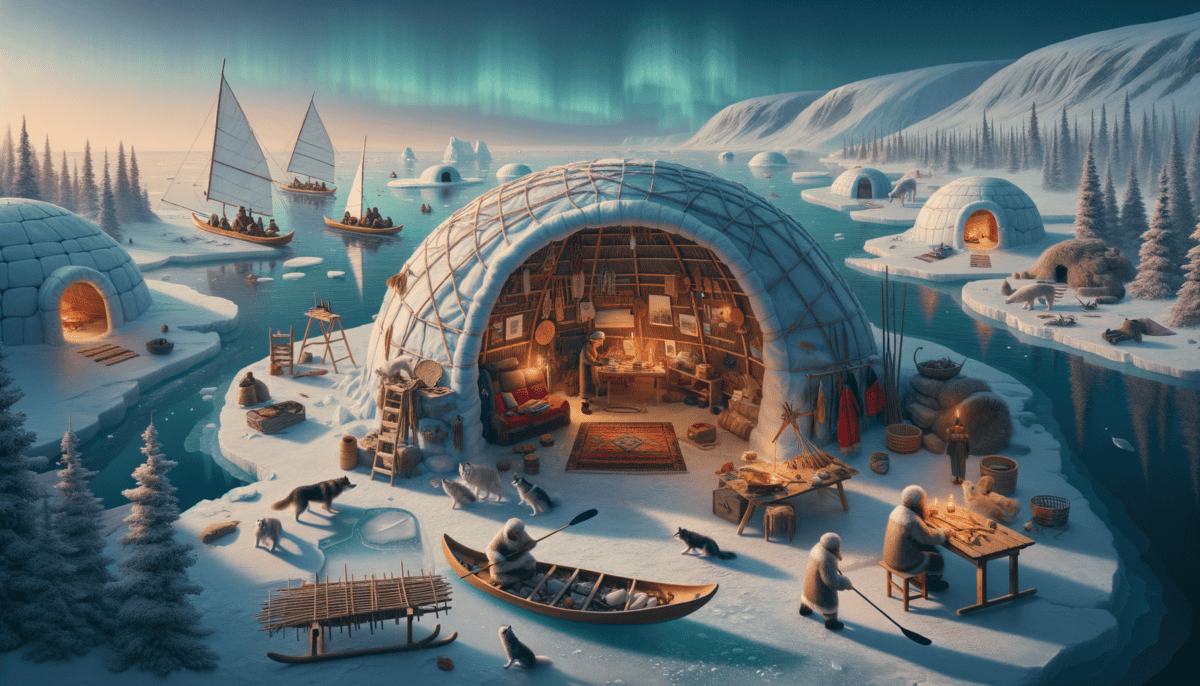
The morning sun cast long shadows across the snow as Aklaq watched his father prepare for an important lesson. Today, they would learn about the special tools that helped the Inuit survive in the Arctic. ️
“Come, Aklaq,” Malik called, holding up a beautifully crafted knife. “This is an ulu. It’s not just any knife – it’s a special tool your mother uses to cut seal skins and prepare food.”
Making Warm Clothes
Inside their igloo, Anaana showed Aklaq how she made their warm clothes. She held up two layers of caribou fur. “See how we put one layer’s fur facing in, and the other facing out? This traps warm air between them, like having a tiny heater in your coat!”
Aklaq touched the soft fur. “Is that why we never feel cold, Anaana?”
“That’s right! Our ancestors were very clever. They watched how animals stayed warm and copied their tricks.”
Building the Perfect Boat
Down by the water’s edge, Uncle Tuktu was working on something exciting – a kayak! The sleek boat was made from seal skins stretched over a wooden frame.
“A good kayak must be light enough to carry but strong enough to handle rough waters,” Uncle Tuktu explained. “Each piece must fit perfectly, just like the blocks in our igloos.”
• Warm clothes made from animal skins
• Sharp tools for hunting and preparing food
• A strong kayak or sled for traveling
• Knowledge of how to use each tool safely
Learning to Hunt
Malik took Aklaq to watch the hunters prepare their tools. They carefully checked their spears and fishing lines.
“Watch closely,” said Malik. “See how they test the strength of each line? One weak spot could mean losing a catch.”
The hunters showed Aklaq their clever hunting tools. They had special goggles made from caribou antler with tiny slits to protect their eyes from snow blindness. Their spears had special tips that could float in water if they missed their target.
Making New Things
Later that day, Aklaq helped his cousin make new tools. They used every part of the animals they hunted – nothing was wasted. Bones became needles, animal tendons became strong string, and seal oil kept their lamps burning bright.
“Our tools tell the story of who we are,” his grandmother said, watching them work. “Each one shows how we learned to live with the ice and snow, not fight against it.”
That night, as Aklaq helped put away the tools, he felt proud. These weren’t just things – they were clever solutions his people had created over many years. Each tool had a story, and now he was part of that story too.
The Storytellers’ Wisdom
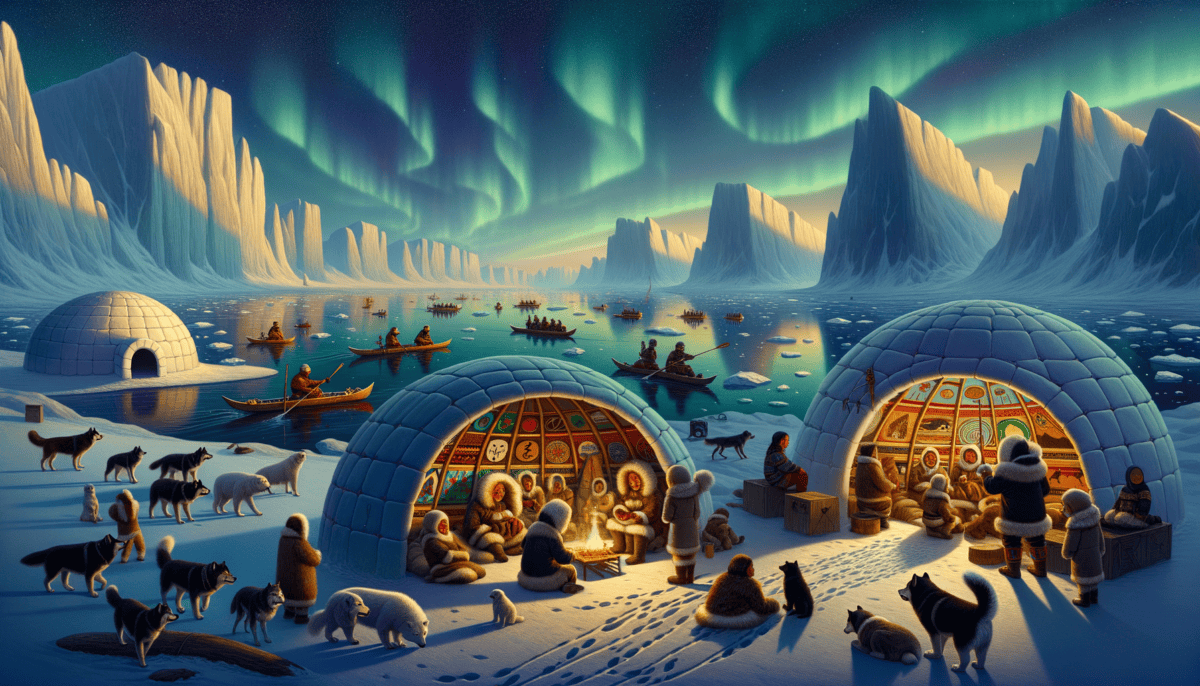
The northern lights danced across the dark winter sky as Aklaq and his family gathered inside their warm igloo. It was storytime – the special time when tales of long ago came alive.
“Tell us about Sedna!” little Aklaq begged his grandmother, Aanilliik. The old woman’s eyes twinkled as she began the ancient story.
“Long ago, there lived a beautiful girl named Sedna. She became the mother of all sea creatures and now lives at the bottom of the ocean. When hunters respect her animals, she shares them with our people…”
Stories That Teach
Aanilliik’s voice was soft but strong as she shared the tale. Each word painted pictures in Aklaq’s mind. He could almost see Sedna’s long hair flowing in the deep ocean waters.
“Why do we tell these stories?” Aklaq asked.
His father smiled. “Our stories are like treasure boxes. Inside each one are special lessons about how to live, how to hunt, and how to be kind to others.”
Keeping Stories Safe
Every night, different family members would share stories. Some made everyone laugh, like the tale of Raven playing tricks. Others taught serious lessons about respecting nature and working together.
“Without books, how do we remember all these stories?” Aklaq wondered.
“We keep them in our hearts,” Aanilliik explained. “Just as I learned them from my grandmother, and she from hers. Now you will learn them and share them with your children someday.” ❤️
• How to stay safe in the Arctic
• Why we must respect animals
• How to work together as a community
• Ways to be brave and kind
Songs and Dances
That evening, the community gathered for a special drum dance. The big drum made a deep, booming sound that seemed to match Aklaq’s heartbeat.
“Our songs tell stories too,” his mother explained. “Some are as old as the mountains. When we sing them, we connect with all the Inuit who came before us.”
New Stories for New Times
Uncle Tuktu was known for creating new stories about things happening today. He told tales about snowmobiles racing with dog sleds, and about how the ice was changing.
“Stories are like rivers,” Uncle Tuktu said. “They flow from the past to the future, always moving, always changing, but always important.”
As the evening grew late, Aklaq snuggled close to his family. The stories swirled in his mind like snowflakes in the wind. He knew these tales would stay with him forever, just as they had stayed with his people for thousands of years.
First Encounters
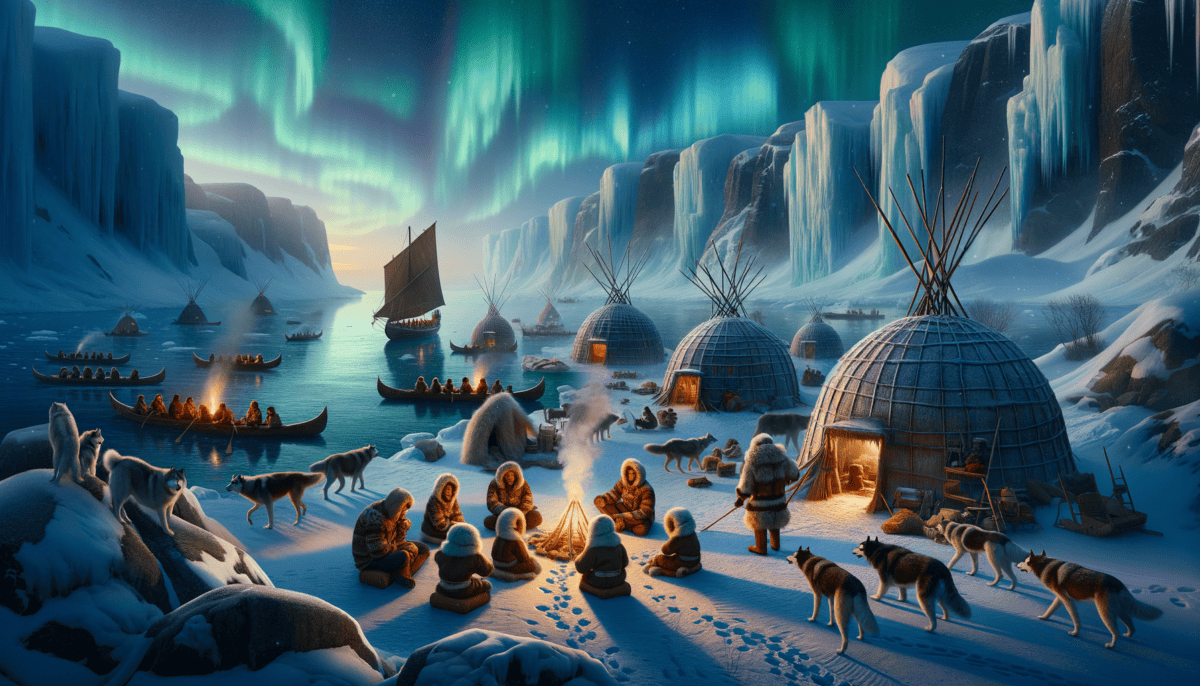
The morning sun sparkled on the frozen sea as Aklaq and his father spotted something strange on the horizon. A huge wooden shape moved across the water – nothing like their sleek kayaks.
“What is it, Father?” Aklaq asked, his eyes wide with wonder.
“It’s a qallunaat ship,” his father replied quietly. “The strangers from far away have returned.”
New Faces in the North
The whole community gathered at the shore to watch the big ship drop anchor. Men with pale skin and thick beards climbed into smaller boats and rowed toward them. They wore different clothes and spoke words no one understood.
Aanilliik remembered stories about earlier visits. “They come seeking new paths through our waters,” she explained to Aklaq. “They call it the Northwest Passage.”
Trading Stories
The visitors brought strange and exciting things – metal tools, colorful beads, and soft blankets. They traded these for warm fur clothing and help finding safe routes through the ice.
“See how their hands shake in the cold?” Aklaq whispered to his sister. “They don’t know how to live in our land.”
Some of the explorers were kind and eager to learn. Others didn’t understand or respect Inuit ways. It was a time of big changes for everyone.
Learning From Each Other
The community helped the visitors stay warm and find food. In return, the explorers shared stories about their distant homes and drew maps in books.
• How to make warm clothes
• Ways to build snow shelters
• Finding food in winter
• Traveling safely on ice
New Ways Meet Old Ways
Some things the visitors brought were helpful, like better hunting tools. But their presence also brought challenges. More ships meant fewer seals near the community. Some young people started wanting to live like the visitors.
“We must be like the sea ice,” Uncle Tuktu said wisely. “Strong enough to hold firm, but able to move with the changing tides.”
Protecting What Matters
Aklaq’s family worked hard to keep their traditions strong while learning useful new ways. They still told their ancient stories at night, but now some wrote them down in books too.
“Our ways have helped us survive here for thousands of years,” Aanilliik reminded everyone. “We can learn new things without losing who we are.”
As winter deepened, most ships sailed away. But life would never be quite the same. The world was growing bigger, and the Inuit were ready to face whatever changes came next. ⭐
Changing Horizons
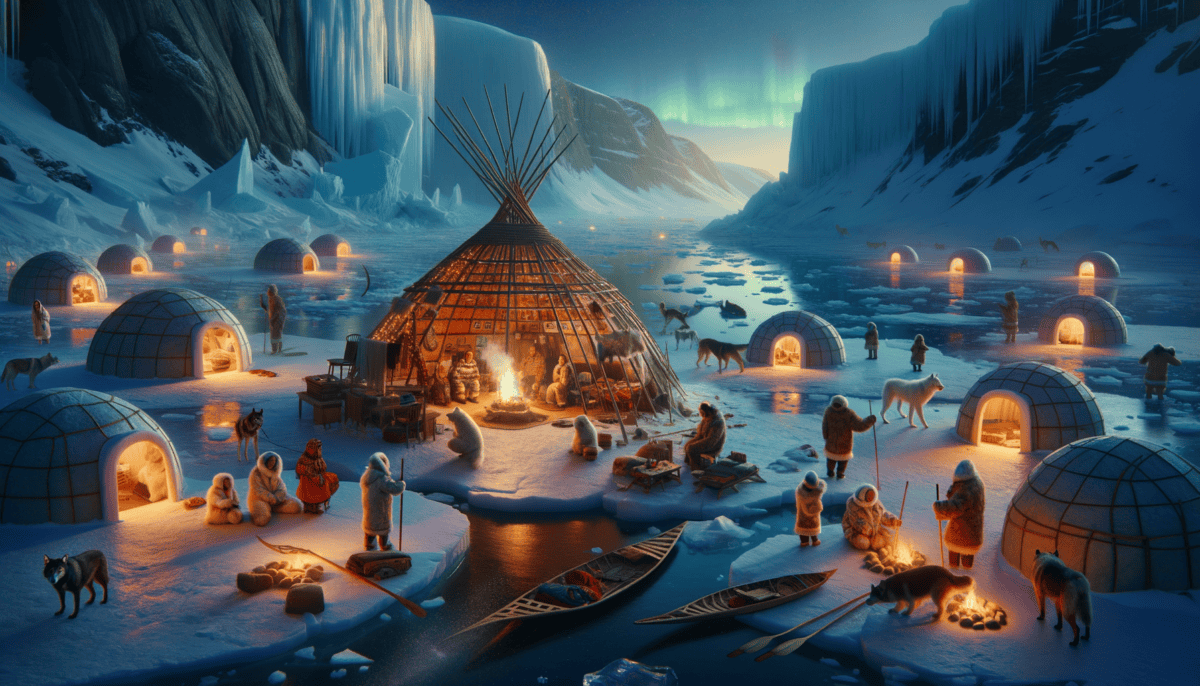
The winter wind howled outside as Aklaq sat with his grandmother, watching the sea ice shift and crack in new ways. The patterns were different from the stories she’d always told.
“The ice is changing, little one,” Aanilliik said softly. “Our world is warming.”
A Shifting World
In their cozy modern home, Aklaq looked at old photos of his community. The houses were different now. Snowmobiles zoomed where dog sleds once ran. But some things stayed the same – like the warmth of family gatherings and the taste of traditional foods.
“Tell me how we’re keeping our ways alive, Grandmother,” Aklaq asked, snuggling closer.
Keeping Traditions Strong
Aanilliik smiled and pointed to the community center across the street. “See those lights? Young people are learning traditional drum dancing right now. And tomorrow, your uncle will teach ice fishing to the children.”
“We may use new tools, but our knowledge is as old as the ice itself,” she said proudly.
The community worked hard to protect their culture. They recorded elders telling stories on videos. Children learned both English and Inuktitut in school.
Modern Life, Ancient Ways
Aklaq’s family still went hunting, but now they checked weather apps on their phones first. They stored traditional foods in modern freezers. Some young people became doctors and lawyers while still practicing traditional healing and wisdom.
• Teaching traditional skills to youth
• Speaking their language at home
• Sharing traditional foods
• Celebrating cultural festivals
• Recording elders’ stories
Guardians of the Ice
The community became leaders in speaking up about climate change. They shared their knowledge of the land with scientists. Young people like Aklaq learned to use cameras and computers to show the world what was happening in the Arctic.
“Our people have always been watchful of nature’s signs,” his father explained. “Now we must help others understand what these changes mean.”
Hope for Tomorrow
Despite the challenges, the community stayed strong. They used solar panels to power their homes. They started new businesses that respected the environment. Young people learned both computer coding and traditional hunting skills.
“We are like the Arctic fox,” Aanilliik told Aklaq. “We change our coat with the seasons, but we’re still who we’ve always been.”
As the northern lights danced overhead, Aklaq felt proud. His people were finding new ways to live while keeping their precious traditions alive. They were showing the world how to face big changes with wisdom and strength. ⭐
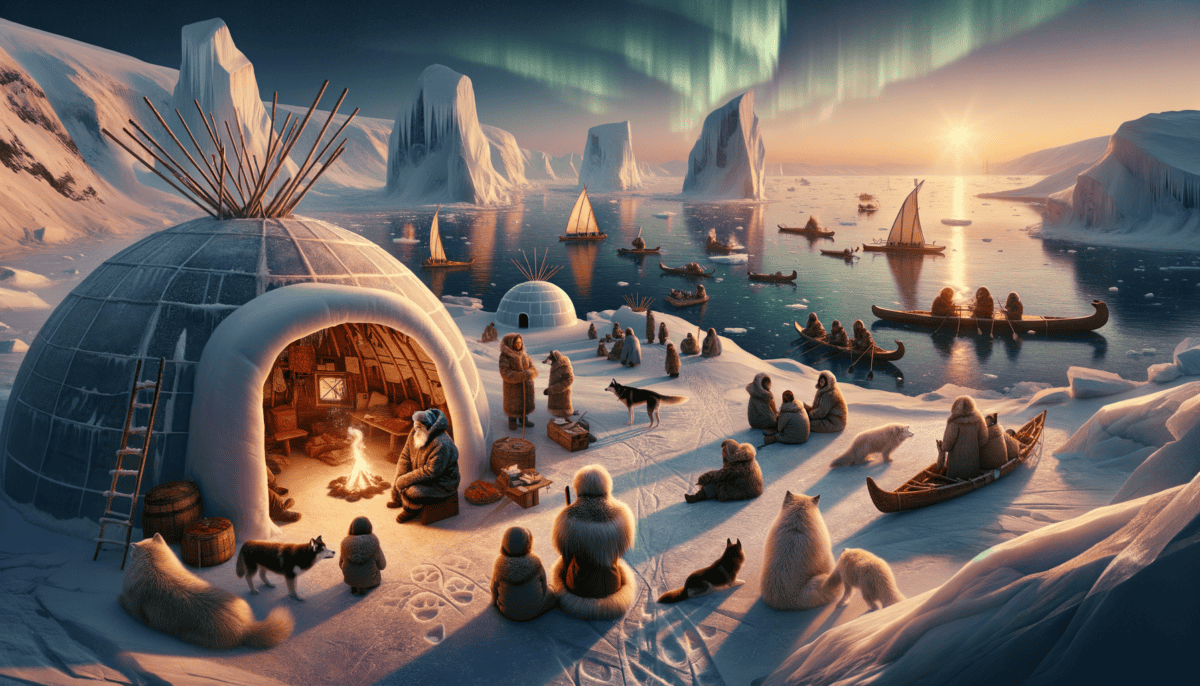
Legacy of the North
The aurora danced across the night sky as Aklaq sat with his community in their modern gathering space. Elder Aanilliik’s voice filled the room with ancient wisdom, while images from their new digital archive played on the wall.
Wisdom Shared
“Our story is like the northern lights,” Aanilliik said, her eyes twinkling. “Always changing, always beautiful, and visible to the whole world.”
Scientists now came from far away to learn from Inuit knowledge. They wanted to understand how to live with nature, not against it.
Teaching the World
Aklaq watched as his cousin showed visitors how to build a snow shelter. “Our ancestors knew how to stay warm using just snow,” she explained. “Now people everywhere want to learn about building homes that work with nature.”
“Each skill we share helps others understand the importance of living in balance with the Earth,” Aklaq’s father said proudly.
Technology Meets Tradition
Young Inuit used phones to record elders’ stories. They made apps to help learn their language. Drone cameras helped track caribou herds while respecting traditional hunting grounds.
In schools across the world, children now learned about Inuit ingenuity. They studied how kayaks were designed and how warm clothes were made from natural materials.
• Ways to live sustainably
• Knowledge about Arctic animals
• Smart building techniques
• Stories of adaptation
• Respect for nature
Dreams for Tomorrow
Aklaq looked at the young faces around him. Some would become doctors mixing traditional healing with modern medicine. Others would be engineers building eco-friendly homes inspired by igloos. Many would be storytellers using new ways to share old wisdom.
“We are like the Arctic tern,” said Aanilliik. “We can fly far and wide, but we always know our home.”
A Living Legacy
The community gathered to celebrate another successful hunt. Traditional drums beat alongside electric guitars. Children played ancient games on their tablets. The smell of seal soup mixed with pizza in the air.
“Our strength is in knowing who we are,” Aklaq realized. “We can change and stay true to ourselves at the same time.”
As stars filled the Arctic sky, Aklaq felt the power of his people’s story. Their wisdom had helped them survive for thousands of years. Now, that same wisdom was helping the whole world face new challenges. ⭐
The Inuit story wasn’t just about surviving in the cold. It was about showing how humans could live wisely on Earth. It was about keeping what matters while growing stronger. It was about sharing hope for tomorrow.