

The Curious Child
Little Rachel pressed her nose against the window, watching birds dance in her backyard. The year was 1914, and her family's farm in Springdale, Pennsylvania, was her first classroom.
"Mama, look at the robins!" seven-year-old Rachel called out excitedly. "They're building a nest!"
Her mother smiled warmly. "Why don't you write about what you see in your notebook?"
Every morning, Rachel would wake up early to explore the woods behind her house. She walked quietly, just like her mother taught her. The forest was full of secrets waiting to be discovered.
"The woods are like a big book," Rachel would tell her mother. "Every leaf and bug has a story to tell."
Rachel's father wasn't rich, but he gave her something more valuable than money – a love for the outdoors. He taught her the names of birds, flowers, and trees. Together, they would:
• Watch fireflies light up the summer nights
• Listen to cricket songs in the grass
• Look for animal tracks in the mud
• Collect pretty leaves in autumn
• Count stars in the clear country sky
A Special Gift
On Rachel's eighth birthday, she received her most treasured gift – a notebook with a green cover.
"For my little scientist," her mother said, handing her the notebook. "Write down everything you discover."
Rachel hugged the notebook close. That very day, she wrote her first nature story. It was about a family of squirrels living in the big oak tree.
Life wasn't always easy for Rachel's family. Sometimes, there wasn't enough money for new shoes or pretty dresses. But Rachel didn't mind. She had her books, her notebook, and her beloved woods.
Growing Dreams
As Rachel grew older, her stories got better and better. Her teachers noticed her special talent for writing. But what made her different was how she wrote about nature – not just with words, but with love and understanding.
"Rachel," her teacher said one day, "you see things others don't notice. That's a special gift."
Those words made Rachel's heart soar. Maybe someday, she thought, she could help others see the beauty she saw in nature. Maybe she could tell stories that would make a difference.
At night, Rachel would sit by her window, watching the moon rise over the Pennsylvania hills. The same moon that had watched over her woods for millions of years. She wrote in her notebook:
“The night is full of wonders. Somewhere out there, owls are hunting, deer are walking softly, and tomorrow will bring new discoveries.”
Young Rachel didn't know it yet, but her curiosity about nature and her love for writing would lead her on an amazing journey. Her childhood days of watching birds and writing stories were just the beginning of something much bigger – something that would one day help protect the natural world she loved so much.
Breaking Barriers
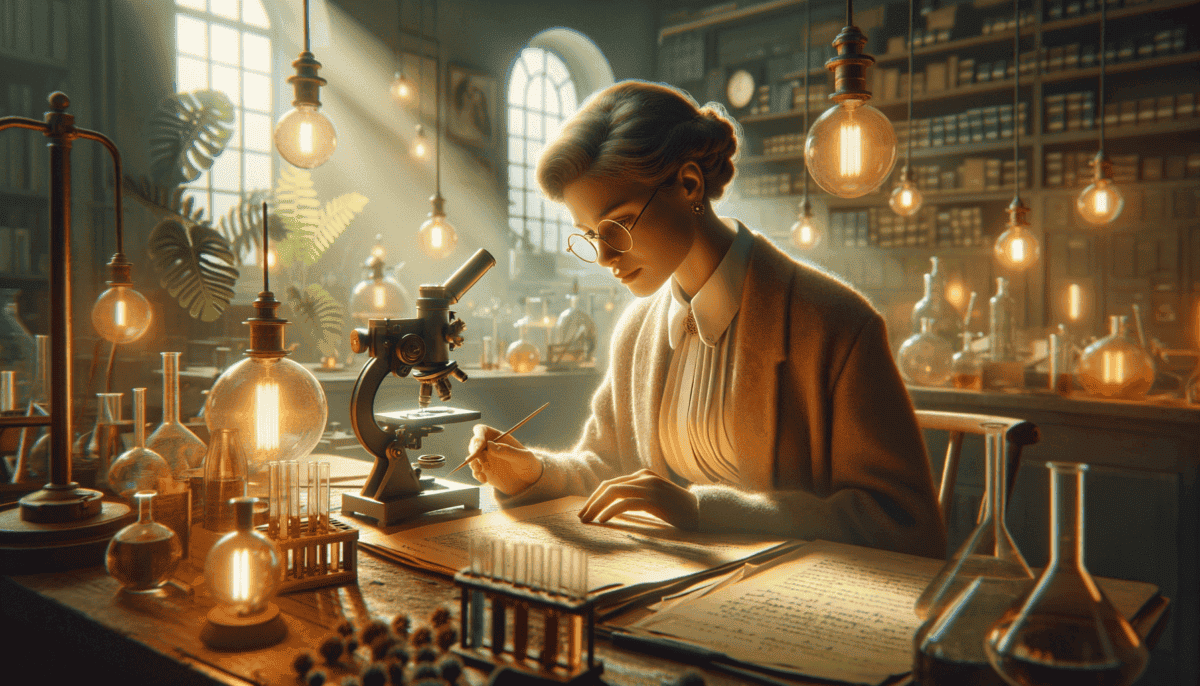
The year was 1925, and Rachel Carson stood nervously in front of Pennsylvania College for Women. Her heart beat fast as she looked at the big brick building.
“You can do this, Rachel,” she whispered to herself. She wanted to study science, even though most girls back then were told to study other things.
“But Miss Carson,” her advisor said with a frown, “wouldn’t you rather study something more… suitable for a young lady?”
Rachel sat up straighter. “I want to be a scientist,” she said firmly. “I want to understand the ocean and all its creatures.”
Making Waves
Rachel worked harder than ever before. She spent long hours in the laboratory, looking through microscopes at tiny sea creatures. At night, she wrote beautiful stories about what she learned.
Her professor noticed her special way of explaining science: “Rachel, you make complex things simple to understand. That’s a rare talent.”
After college, Rachel got a special job at the U.S. Fish and Wildlife Service. She was one of the first women there! Her job was to write about sea life and help people understand why oceans are important.
Finding Her Voice
Rachel discovered she had a special power – she could write about science in a way that made everyone excited to learn. Here’s what made her writing special:
• She used simple words to explain big ideas
• She told stories that made science interesting
• She helped people care about nature
• She wasn't afraid to speak up when things were wrong
• She showed how everything in nature is connected
“Miss Carson,” her boss said one day, “your writing helps people understand why we need to protect our oceans. Keep going.”
“The more I learn about the sea,” Rachel wrote, “the more I want to share its wonders with everyone.”
Making History
Rachel worked hard every day, even when things got tough. Sometimes people didn’t want to listen to a woman scientist, but she didn’t give up.
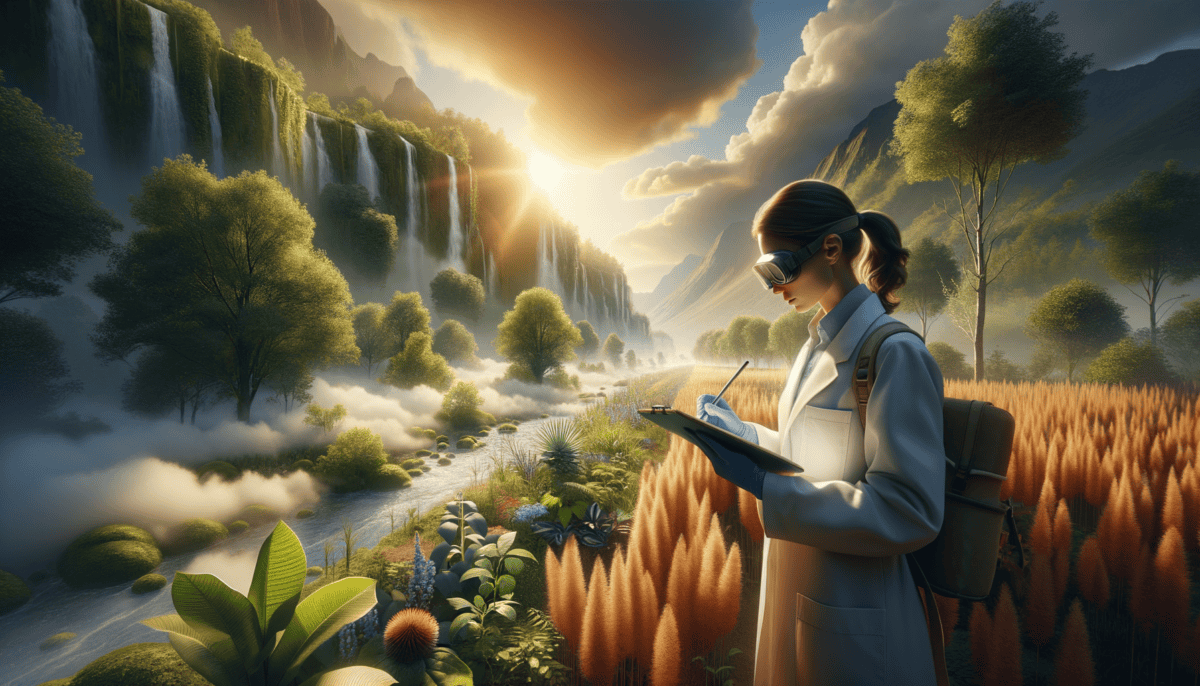
She wrote three books about the ocean that made people see the sea in a new way. But something else was starting to worry her – something that would lead her to her biggest discovery yet.
Rachel looked out her office window at the end of each day, thinking about all the animals she wanted to protect. The little girl who once watched birds in her backyard was now a respected scientist, ready to fight for the natural world she loved.
But the biggest challenge of her life was just beginning. Something was making the birds stop singing, and Rachel Carson was determined to find out why.
A Dangerous Discovery
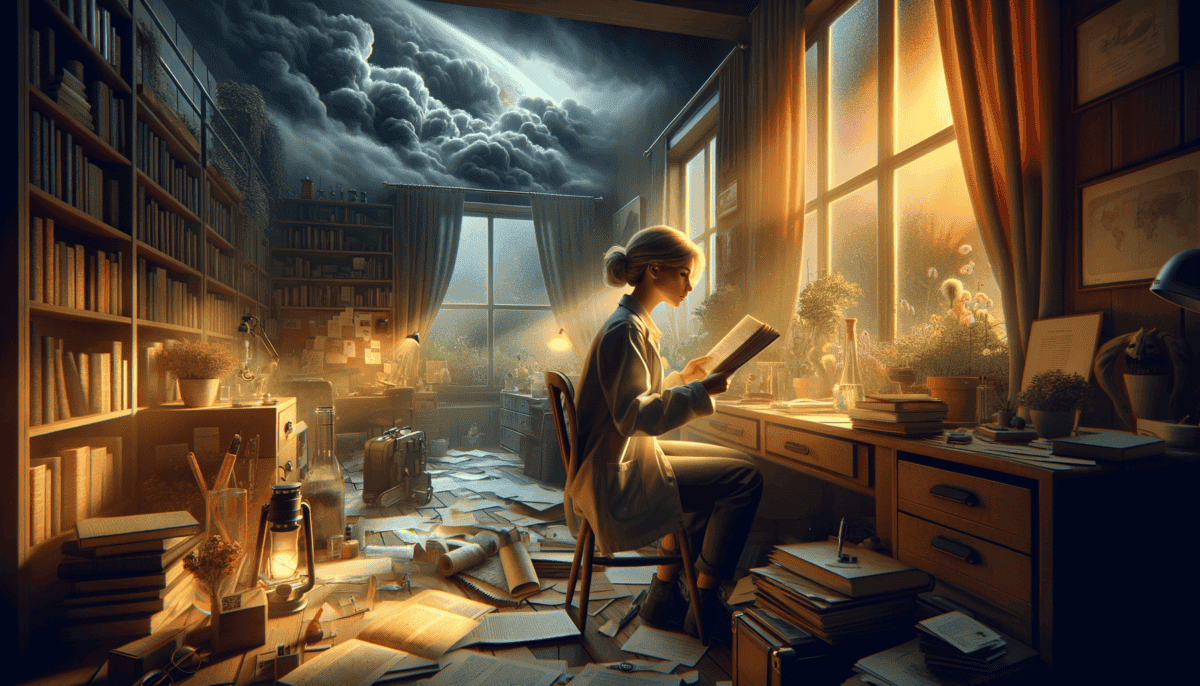
Rachel Carson sat at her desk one morning in 1958, reading a letter that made her heart sink. A friend wrote about birds falling from the sky in her neighborhood. Something wasn’t right.
“The birds just stopped singing,” Rachel whispered, reading the words again. She had been hearing similar stories from all over the country.
Following the Clues
“Look at these test results,” Rachel said to her friend Dorothy. She spread papers across her desk. “The DDT doesn’t just go away. It stays in the soil and water.”
Dorothy leaned closer. “What happens then?”
“It’s like a chain,” Rachel explained. “The little bugs eat plants with DDT. Then bigger animals eat those bugs. The DDT keeps building up.”
“Everything in nature is connected,” Rachel wrote in her notebook. “When we poison one part, we poison it all.”
Gathering Evidence
Rachel worked like a detective. She:
• Talked to scientists all over the world
• Collected stories from farmers
• Studied sick birds and fish
• Tested water from rivers and lakes
• Wrote down everything she learned
Standing Strong
“Miss Carson,” a man from the chemical company said, “these pesticides help farmers grow more food. Why cause trouble?”
Rachel stood tall. “Because the truth matters. Because birds are dying. Because our children need a safe world to live in.”
Every day, Rachel found more proof that DDT was dangerous. She saw:
– Fish floating in poisoned streams
– Sick cats and dogs in sprayed neighborhoods
– Trees where no birds sang anymore
A Personal Fight
Rachel worked harder than ever, even though she wasn’t feeling well herself. Her friend Shirley noticed she looked tired.
“Are you okay, Rachel?” Shirley asked one day.
“I have to finish this research,” Rachel said softly. “People need to know what’s happening to our world.”
At night, Rachel looked out her window at the quiet trees. She remembered the songbirds that used to wake her up each morning. “I’ll tell your story,” she promised. “I’ll make people understand.”
The time had come for Rachel to write her most important book ever. She picked up her pen and began to write about a spring without birdsong – a silent spring.
The Book That Changed Everything
Rachel sat at her typewriter in 1961, taking a deep breath. ️ The room was quiet except for the soft tapping of keys. She was writing the most important words of her life.
Making Big Ideas Simple
“How can I help everyone understand?” Rachel asked her friend Dorothy. She spread her research papers across the desk.
“Tell it like a story,” Dorothy suggested. “Like you’re talking to a friend.”
Rachel nodded and began writing again. She turned complex science into simple words:
“The rain falls on the grass. The poison in the rain stays on the grass. The bugs eat the grass. The birds eat the bugs. The poison moves from one to another, getting stronger each time.”
Fighting Through Pain
Writing wasn’t easy. Rachel was sick with cancer, but she kept working.
“Maybe you should rest,” her friend Marie said one day.
“I can’t,” Rachel replied softly. “The birds can’t wait. The earth can’t wait.”
Brave Choices
The chemical companies found out about Rachel’s book. They tried to stop her:
• They threatened to sue her
• They called her names
• They said she didn’t know what she was talking about
• They tried to scare her publisher
“We won’t publish your book,” one company warned. “It will hurt our business.”
Rachel stood firm. “I must tell the truth,” she said. “The world needs to know.”
A Friend to Earth
Each chapter of “Silent Spring” showed how chemicals hurt our world. Rachel wrote about:
Bees disappearing from flowers
Fish floating in streams
Eagles laying eggs that wouldn’t hatch
Children getting sick from playing outside
Hope for Change
“Do you think people will listen?” Dorothy asked as Rachel finished the last chapter.
Rachel smiled weakly. She was tired but hopeful. “They must listen. Our world depends on it.”
In the summer of 1962, Rachel held her finished book. “Silent Spring” was ready to tell its story. Soon, everyone would know the truth about DDT. The world was about to change.
Standing Up for Truth
The year was 1962, and Rachel Carson’s book “Silent Spring” hit the shelves. The world would never be the same.
A Storm of Voices
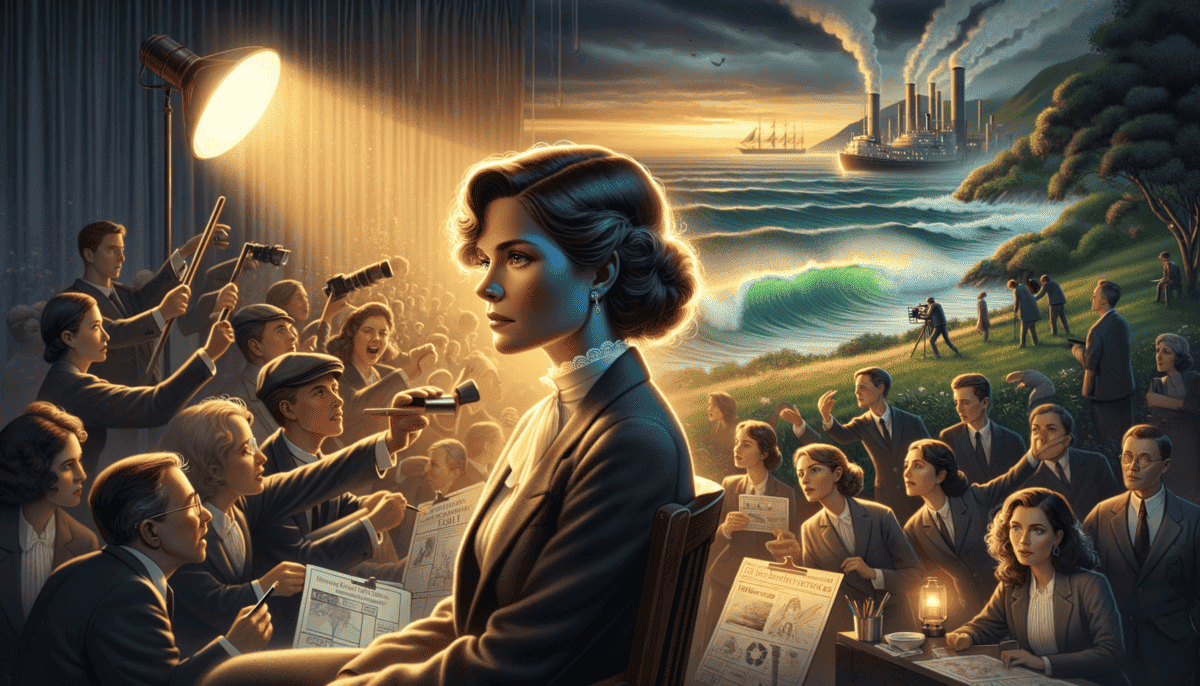
As soon as the book came out, phones started ringing. Letters filled mailboxes. Everyone was talking about Rachel’s discovery.
Many people were scared and angry about what Rachel found. Parents worried about their kids playing in sprayed parks. Farmers wondered if their food was safe.
Fighting Back Against Bullies
The big chemical companies didn’t like Rachel’s book. They spent millions of dollars trying to prove her wrong.
“She’s just a woman who likes birds,” they said.
“She doesn’t know what she’s talking about,” they claimed.
“Don’t listen to her,” they told people.
But Rachel stayed brave. She knew she was right. The proof was in her research.
Friends Step Up
Scientists began speaking up for Rachel. They had seen the same things happening:
Trees with no leaves
Missing butterflies
Fewer bees making honey
Gardens without flowers
Going to Congress
Rachel was very sick, but she went to Washington D.C. to tell Congress what she knew. Her voice was soft but strong.
“We must stop using DDT,” she told them. “It’s hurting our world.”
People Power
All across America, people started looking at their world differently. They noticed things they hadn’t seen before:
• Empty bird nests in trees
• Quiet mornings without birdsong
• Dead fish in streams
• Sick pets after playing in sprayed grass
• Strange smells from chemical sprays
Changes Begin
People wrote letters to their leaders. They marched in the streets. They demanded changes to protect nature.
“We want clean air!” they said.
“We want safe water!” they called.
“We want to save the birds!” they shouted.
A New Beginning
More and more people joined what they called “the environmental movement.” They wanted to protect nature like Rachel taught them.
“Look what one brave person can do,” Dorothy told Rachel. “You helped everyone see the truth.”
Rachel was tired but happy. Her book had started something big. People were finally listening. The world was starting to change.

A Legacy of Hope
The sun rose bright on a special morning in 1964. People all over America were talking about something new called “environmentalism.” Rachel Carson had changed how we think about our Earth forever.
Victory for Nature
Great news came from Washington D.C. Leaders were making new rules to protect the environment:
Dorothy rushed to tell Rachel the good news. “You did it!” she exclaimed. “They’re finally going to protect our birds and bees!”
A New Guard
Something amazing happened in 1970. The government made a new group called the Environmental Protection Agency (EPA). ️ Their job? To keep our air clean, our water safe, and our Earth healthy.
“This is Rachel Carson’s gift to us,” people said. “She taught us to protect nature.”
Around the World
Rachel’s ideas spread everywhere! Children in different countries learned about taking care of the Earth:
️ They picked up trash
They saved water
They made butterfly homes
They grew flowers for bees
A Special Honor
In 1980, something wonderful happened. President Jimmy Carter gave Rachel a very special award called the Presidential Medal of Freedom.
“Rachel Carson showed us how to love and protect our Earth,” the President said. “She made our world better.”
Rachel’s Dream Lives On
The Story Continues
Every spring, birds sing in the trees. Butterflies dance in gardens. Bees buzz around flowers. The world is alive with beautiful sounds – just as Rachel wanted.
“Remember,” teachers tell their students, “one person can change the world. Rachel Carson proved that.”
Our Turn Now
Rachel’s story teaches us important things:
• Stand up for what you believe in
• Take care of our Earth
• Listen to nature’s voices
• Never give up on your dreams
Today, when we see a beautiful butterfly or hear birds singing, we can thank Rachel Carson. She helped save these wonderful creatures for us to enjoy.
And just like Rachel, we can all be Earth’s helpers. We can keep her dream alive by protecting our amazing world every single day.