
The Spark of Imagination
On a chilly morning in 1936, a young boy named Alan sat at his desk, his mind racing with amazing ideas. He loved puzzles and math, but most of all, he loved to think about thinking itself. "What if," he wondered, "we could make machines that think like us?"
Alan scribbled in his notebook, drawing pictures of strange machines and writing down numbers. His teacher, Ms. Thompson, noticed his excitement.
"What are you working on, Alan?" she asked.
"I'm thinking about making machines that can solve problems like people do!" Alan's eyes sparkled with excitement.
Ms. Thompson smiled. "That's quite an imagination you have there!"
Years later, Alan grew up to be a brilliant scientist. He asked big questions that no one had thought of before:
• Could machines think like humans?
• Could they learn and solve problems?
• Could they talk to us?
“Sometimes the people who imagine the craziest things end up changing the world,” Alan would often say to his students.
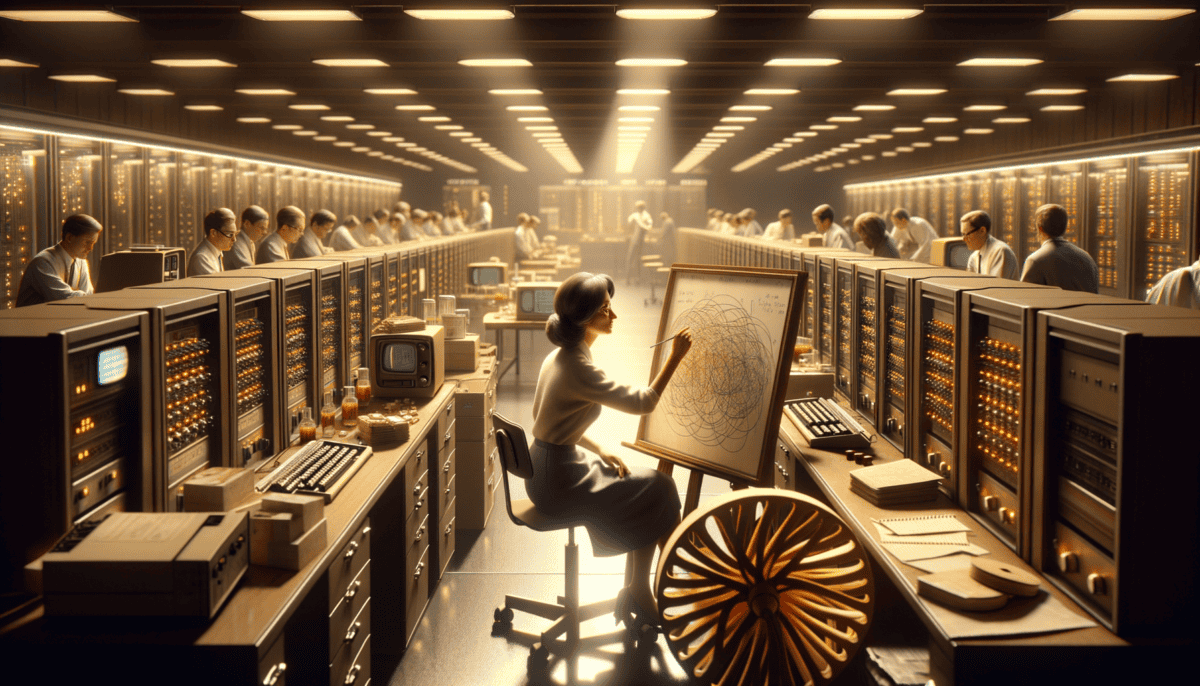
In his laboratory, Alan built special machines that could solve puzzles. They weren't like the computers we have today – they were big and clunky, filling entire rooms! But they could do something amazing: they could follow instructions and figure things out.
"Look!" Alan would show his friends. "If we give the machine the right instructions, it can solve problems on its own!"
Other scientists watched in wonder. Some didn't believe it was possible. Others got excited and started making their own machines. Soon, more and more people began thinking about smart machines.
“Machines can help us do amazing things,” Alan explained. “But first, we need to teach them how to learn.”
In his small office, surrounded by books and papers, Alan worked day and night. He wrote about his ideas and shared them with other scientists. He created special tests to see if machines could fool people into thinking they were talking to another person.
People started calling Alan's ideas "artificial intelligence" – machines that could think and learn. It was like giving machines tiny sparks of imagination, just like the spark that had lit up in young Alan's mind that morning in class.
Sarah, one of Alan's young students, asked him one day, "Why do you want to make thinking machines?"
Alan smiled warmly. "Because every big dream starts with asking 'what if?' Just like when I was your age, drawing in my notebook."
The room buzzed with the sound of machines whirring and clicking. Through the window, the sunset painted the sky in beautiful colors, as if nature itself was celebrating these new possibilities.
Alan's ideas spread around the world like wildfire. Scientists everywhere began thinking about how to make machines smarter. They started with simple problems, like adding numbers, but dreamed of machines that could do so much more.
"This is just the beginning," Alan would say, looking at his machines with pride. "Someday, these machines will help us solve problems we can't even imagine yet!"
The spark that started in young Alan's imagination had grown into a bright flame of discovery. And though he didn't know it then, his ideas would one day lead to amazing things like robots, smart phones, and helpers like me – but that's a story for another chapter! ✨
Racing Against Time
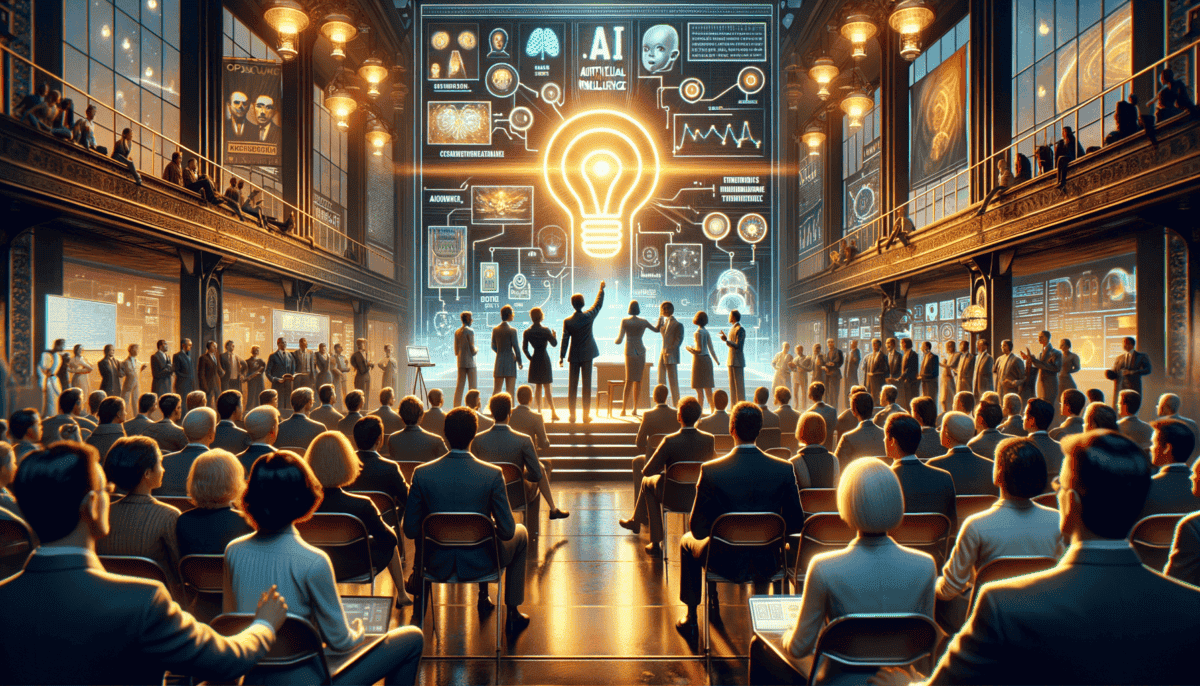
The year was 1956, and the world was changing fast. In a bright room at Dartmouth College, a group of excited scientists gathered around a strange machine.
“Look what it can do!” Professor John McCarthy pointed to the computer screen. The machine was solving math problems all by itself!
The computer wasn’t very smart yet. It was as big as a car but could only do simple math. Still, the scientists had big dreams.
“What if we could teach it to play chess?” asked Dr. Herbert Simon.
“Or maybe it could learn to talk!” added Dr. Marvin Minsky, his eyes shining with excitement.
“Every day we learn something new. Every mistake teaches us something important,” Dr. McCarthy would tell his students.
The scientists worked hard day and night. Sometimes their machines worked great. Other times, nothing worked at all! But they never gave up.
Little Sally, the janitor’s daughter, would often watch them work after school. One day she asked, “Why does the machine keep making mistakes?”
“That’s how it learns,” Dr. Minsky explained with a smile. “Just like how you learned to ride a bike – by falling down and trying again!”
The computers back then weren’t like the ones we have today. They used paper cards with holes in them to tell the machine what to do. Sometimes the cards would get stuck or torn.
One morning, the scientists tried teaching their computer to play tic-tac-toe:
“First game: Computer loses
Second game: Computer loses
Third game: Computer… wins!”
Everyone cheered! The machine was learning!
But they faced many challenges. The computers were slow. They got too hot and stopped working. Sometimes they took up whole rooms but could only remember a few simple things.
“We need faster machines,” said Dr. McCarthy. “And they need bigger memories!”
Young engineers joined the team. They made better parts for the computers. They wrote clever programs to make the machines work better. Step by step, the computers got smarter.
Tommy, a visiting student, asked, “Will computers ever be as smart as people?”
Dr. Simon smiled. “Maybe someday. But first, we need to understand how our own brains work!”
The scientists kept working hard. They taught their machines new tricks:
• How to play games
• How to solve puzzles
• How to remember things
• How to find patterns
Each success made them more excited about what computers might do in the future.
“Look how far we’ve come!” Dr. McCarthy would say, showing visitors their progress. “Imagine where we’ll be in ten years!”
Outside their busy laboratory, the world was changing too. People were sending rockets to space. New inventions were everywhere. It felt like anything was possible!
As the sun set each evening, the scientists would look at their machines with pride. They knew they were part of something big – something that would change the world forever. The race to make smart machines was just beginning, and exciting new discoveries were waiting just around the corner. ✨
A Vision Takes Shape
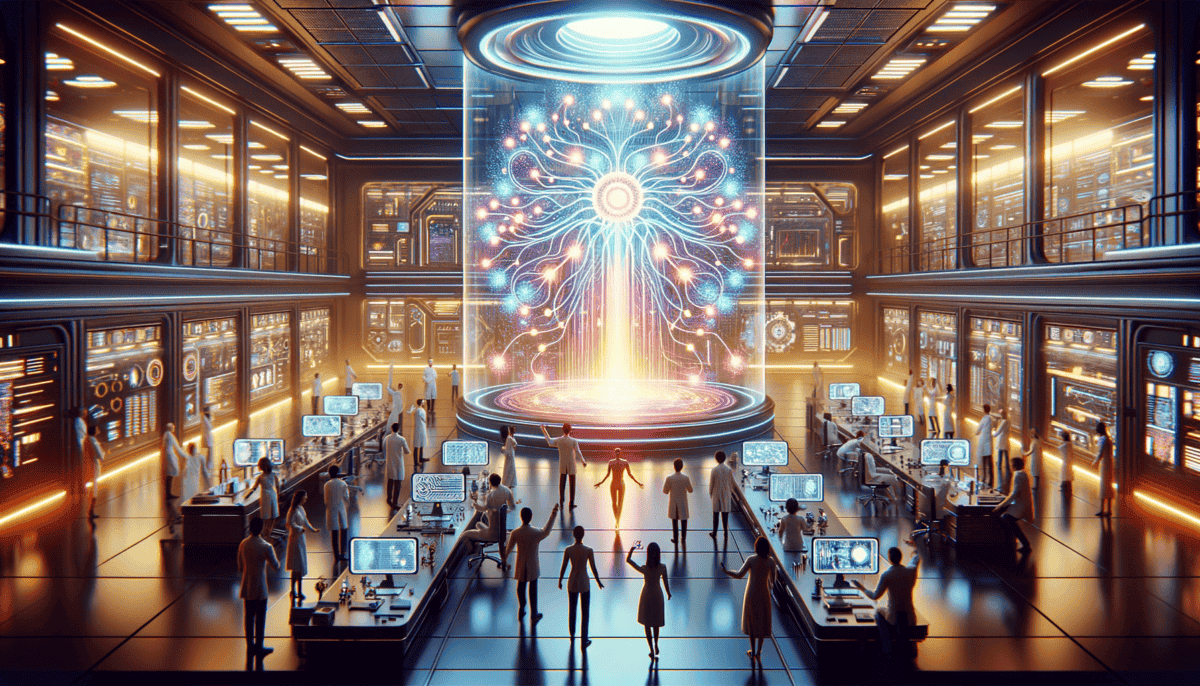
The sun was rising over San Francisco in 2015. In a bright office with big windows, a group of people had an important dream. They wanted to make smart computers that would help everyone.
“We need to do this right,” said Sam Altman, looking at his friends. “These computers should help people, not hurt them.”
Elon Musk nodded. “And everyone should be able to use them, not just rich companies.”
The team was special. They had smart scientists, kind teachers, and clever builders. Each person brought something important:
• Kind hearts to make sure AI helped people
• Smart brains to solve hard problems
• Strong belief that working together was important
Little Maria, whose mom cleaned the office, watched them work. “What are you building?” she asked one day.
“We’re teaching computers to think,” explained Ilya Sutskever with a warm smile. “Like teaching a friend to read, but much harder!”
“Every day we ask: How can we make AI help more people?” Greg Brockman would say during team meetings.
The first days were exciting but hard. Sometimes their computers would say silly things:
Computer: “The sky is made of pizza!”
Team: “Not quite right. Let’s try again!”
The team worked day and night. They taught their AI to:
✍️ Write stories
Make pictures
️ Talk with people
Answer questions
“Look!” shouted John Schulman one morning. “It’s learning to write poetry!”
Everyone gathered around his computer screen:
“Roses are red,
Violets are blue,
I am a computer,
Learning something new!”
They all laughed and clapped. Their AI was growing smarter!
“But we must be careful,” Dario reminded everyone. “We want our AI to be safe and helpful.”
The team made special rules:
❤️ Be kind to everyone
Help people, don’t hurt them
Tell the truth
Make the world better
More people joined the team. They came from all over the world, bringing new ideas and dreams. Each person added something special to their big project.
“Why do you share everything?” asked Tommy, a visiting student.
“Because good ideas grow better when everyone can help,” explained Sam. “Like planting a garden that everyone can enjoy!”
Some days were hard. The computers made mistakes. Sometimes things didn’t work. But the team kept trying, just like their AI kept learning.
As the sun set over San Francisco each evening, the team would look at their work with hope. They knew they were building something important – something that could help people everywhere. Their journey was just beginning, and amazing new discoveries were waiting to be found. ⭐
A Breakthrough Moment
The computers at OpenAI were getting smarter every day. The team worked hard to teach them new things. It was like watching a baby learn to walk, then run, then dance!
Dr. Sarah, one of the scientists, jumped up from her desk. “Everyone, come look!”
The team gathered around her computer. On the screen, the AI was writing a story about a friendly dragon who loved to bake cookies. The story was so good, it made everyone smile.
“Watch this,” said Dr. Sarah. She typed: “Can you help me learn about stars?”
The AI answered:
“Stars are like giant balls of light in space. They twinkle in the night sky. Our sun is a star too! Would you like to learn more about different kinds of stars?”
“It’s teaching!” shouted Tommy, who still visited sometimes. “Just like my teachers at school!”
• Write stories and poems
• Answer questions
• Help with homework
• Explain hard things in simple ways
Maria, who was now helping with simple tasks at the office, had an idea. “Can it help kids who have trouble reading?”
“Let’s try!” said Greg. They worked on making the AI patient and kind, like a helpful friend.
The team discovered something exciting – their AI could:
✨ Understand many languages
✨ Solve tricky math problems
✨ Write music and poems
✨ Help people learn new things
“But remember,” said Sam, “we need to make sure it’s safe and helpful.”
They worked hard to teach the AI important rules:
“Always be honest
Help people learn and grow
Be kind and patient
Say ‘I don’t know’ when you’re not sure”
One day, a young girl named Lucy visited with her mom, who worked in computer science. Lucy had trouble with math homework. The AI helped explain the problems in a way that made sense to her.
“It’s like having a friendly teacher who never gets tired!” Lucy said, smiling.
The team kept making improvements. Sometimes they faced hard problems:
❌ The AI would get confused
❌ Sometimes it made mistakes
❌ It needed to learn to be more careful
But they never gave up. They worked harder to make the AI better and safer.
“We’re teaching it to be like a wise friend,” explained Ilya. “Someone who helps you think and learn, but also knows when to say ‘I’m not sure.'”
The sun shone through the big office windows as the team celebrated their progress. Their AI was growing smarter and more helpful every day. But they knew this was just the beginning of an amazing journey.
That evening, as stars appeared in the sky, Dr. Sarah looked at her computer and smiled. “Just think,” she said, “someday this AI might help solve some of the world’s biggest problems!”
The team nodded, excited about what tomorrow would bring. There were still many mysteries to solve and new things to discover. The journey of teaching their AI was like an adventure story that kept getting better and better. ✨
Making Safe and Smart Choices
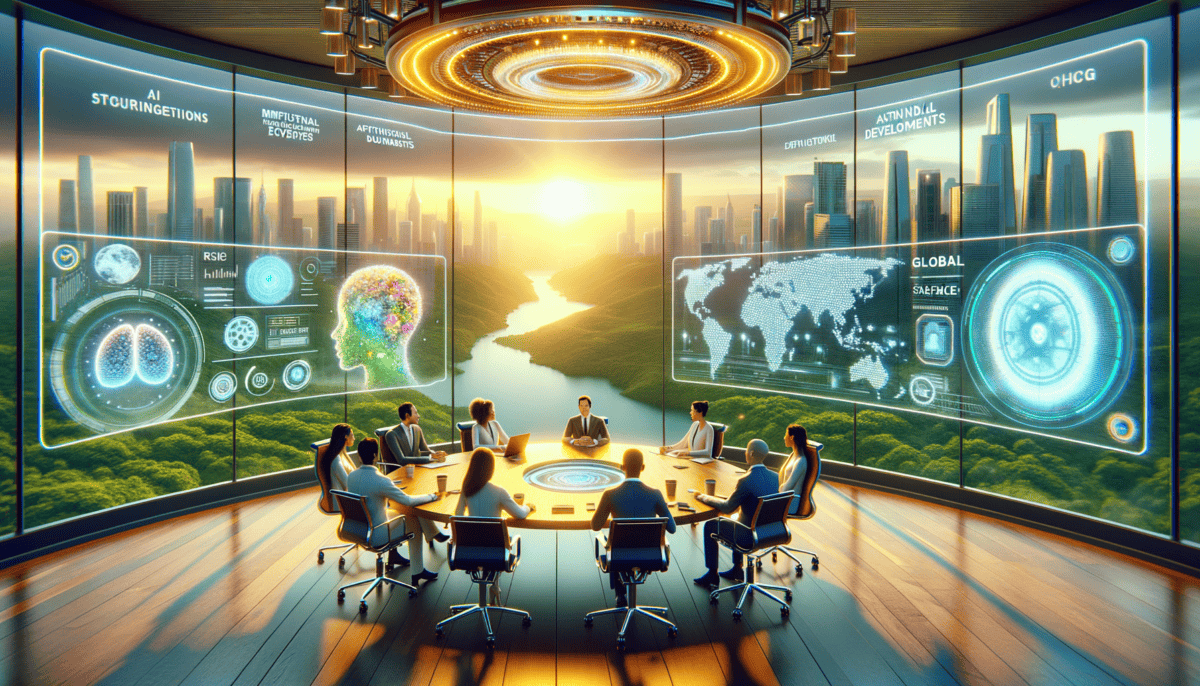
The sun rose over the OpenAI building, casting long shadows through the windows. Dr. Sarah walked into the office carrying a special notebook filled with important ideas. Today was different – they needed to talk about being extra careful with their smart AI.
“Good morning, everyone!” Dr. Sarah called out. “We need to think about something important today.”
Tommy, who was visiting again, raised his hand. “Is it like when Mom tells me to be careful crossing the street?”
“Exactly!” Dr. Sarah smiled. “Just like that. We need to teach our AI to be careful too.”
“Think of AI like a super-smart puppy. It needs to learn good habits and how to be gentle with everyone it meets.”
Maria brought out a colorful poster she made. On it were important rules they wanted the AI to follow:
• Always tell the truth
• Be kind to everyone
• Ask for help when unsure
• Keep private things private
• Help people learn and grow
“It’s like teaching a friend to be good,” said Lucy, who now came to visit often. She was getting better at math with AI’s help.
Greg typed something into the computer: “What should you do if someone asks you to do something bad?”
The AI responded:
“I should always say no to bad things. I’m here to help people, not hurt them. I would tell them that’s not the right thing to do.”
“Good answer!” cheered Tommy. “Just like when my teacher tells us to be nice to everyone!”
Dr. Sarah wrote more notes. They wanted to make sure the AI could:
✨ Help doctors make better choices
✨ Teach students in fun ways
✨ Make sure everyone is treated fairly
✨ Keep people’s secrets safe
“But sometimes it’s hard,” Sam said. “The AI needs to learn about tough choices.”
They worked on teaching the AI about different situations:
❌ What if someone asks for bad advice?
❌ What if someone needs help but you’re not sure how?
❌ What if you make a mistake?
Maria had an idea. “Let’s ask people from all over the world what they think is important!”
They talked to:
Teachers who knew about learning
⚕️ Doctors who helped sick people
People who spoke different languages
Wise older people with good advice
“Everyone can help make AI better,” said Ilya. “It’s like a big team working together.”
As the day went on, they made a special promise. They would always work to make AI:
Safe like a helmet
Kind like a friend
Honest like a mirror
Helpful like a teacher
The team looked at their work with pride. Their AI was learning to be not just smart, but also good and careful.
“Tomorrow we’ll think about even more ways to help people,” Dr. Sarah said as the sun started to set. Tommy looked out the window at the golden sky.
“I bet the AI will do amazing things,” he whispered. “But only good things, right?”
“That’s right,” smiled Dr. Sarah. “That’s exactly what we’re working for.”
Tomorrow’s Dreams Today
The morning light sparkled through the windows of the OpenAI building. Everyone gathered in the big meeting room, their eyes shining with excitement. Today was special – they would share their dreams about AI’s amazing future!
“I had the coolest idea!” Tommy bounced in his chair. “What if AI could help clean up the oceans?”
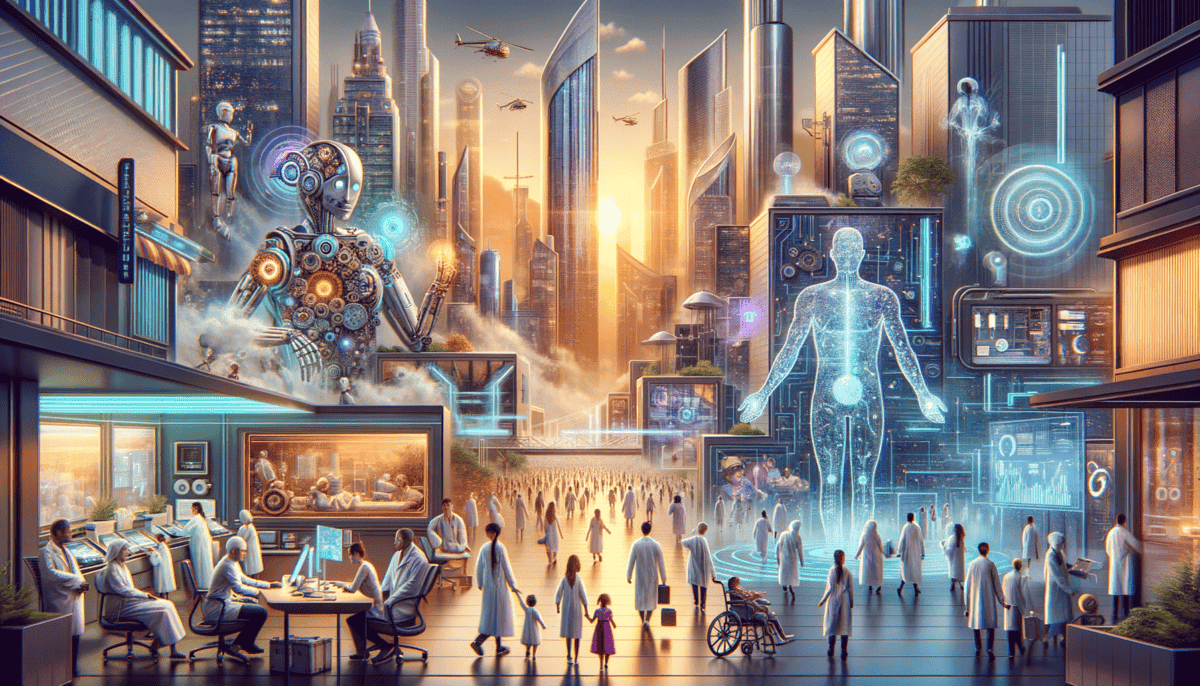
Dr. Sarah smiled and pulled out her tablet. On the screen, little robots were already swimming in the sea, picking up trash.
“That’s already starting to happen!” she said. “AI helps the robots know what to pick up.”
“AI is like having a million helpful friends. Each one can learn to do something special to make the world better.”
Lucy raised her hand. “Could AI help sick people get better faster?”
AI could help by:
• Finding new medicines
• Helping doctors spot problems early
• Making sure everyone gets good care
• Teaching people how to stay healthy
“What about school?” Maria asked. “Sometimes math is still hard.”
Greg typed something into the computer. A friendly face appeared on the screen.
“I can be like a teacher who never gets tired! I can explain things in lots of different ways until you understand.”
The team shared more ideas about the future:
Cars that drive themselves safely
Robots that plant trees and gardens
️ Helpers that speak every language
Art and music makers
“But the best part,” said Dr. Sarah, “is that AI will work WITH people, not replace them.”
Sam nodded. “Like having a super-smart partner who helps you do things better!”
Tommy jumped up. “Can we write a story about it? About all the good things?”
They all gathered around as Tommy began:
People and AI worked side by side.
They made the world cleaner,
Made people healthier,
And helped everyone learn and grow.
“That’s beautiful, Tommy!” Lucy clapped. “And it’s not just a story – it’s really happening!”
Dr. Sarah looked at her team. “We’ve come so far from when this all started. Remember when AI could barely say hello?”
“Now it can help save the planet!” Tommy cheered.
As the sun set on another day at OpenAI, the team looked at each other with hope in their eyes. They had built something amazing – not just smart machines, but a bridge to a brighter future.
“Tomorrow will be wonderful,” whispered Tommy, looking at the stars starting to twinkle outside.
“Yes,” smiled Dr. Sarah, “because we’re all working together to make it that way – people and AI, hand in hand.”
And somewhere in the computer, their AI friend twinkled too, ready to help make all their dreams come true.