

The Lost City of Atlantis – Myths and Mysteries
Sarah closed her eyes and imagined a beautiful city under the sea. Her grandfather's stories about Atlantis always made her wonder. Could a whole city really sink into the ocean?
"Grandpa, tell me more about Atlantis!" Sarah bounced in her chair with excitement.
Grandpa Tom smiled and pulled out an old book with pictures of ancient ruins. "Well, sweetheart, the story of Atlantis is one of the most interesting mysteries in history."
"A long time ago," Grandpa began, "people believed there was a magical island city called Atlantis. They said it had beautiful buildings made of gold and silver. The people who lived there were very smart and had special machines we can't even imagine!"
Sarah's eyes grew wide. "But what happened to it?"
"That's the big mystery! According to the story, Atlantis disappeared under the waves in just one day and one night." Grandpa made whooshing sounds and moved his hands like waves.
The Search for Atlantis
"Have people looked for Atlantis?" Sarah asked, leaning forward in her chair.
"Oh yes! Scientists called archaeologists have searched all over the world. They've found many interesting things underwater, like:"
• Old buildings and streets
• Broken pottery and tools
• Strange stone walls
• Ancient writing on rocks
• Sunken ships
Sarah grabbed her toy submarine. "I want to be an underwater explorer and find Atlantis!"
"That's wonderful, Sarah! Scientists use special tools to look underwater. They have submarines that can go very deep and cameras that can see in the dark ocean."
Modern Day Mystery Solving
Sarah and Grandpa spread out a big map on the table. "Look at all these places where people think Atlantis might be!" Grandpa pointed to different spots in the ocean.
"How do we know what's real?" Sarah asked, scratching her head.
"That's a very smart question! Scientists look for proof – things they can see and touch. They don't just believe stories without checking them first."
"Think of it like being a detective," Grandpa said with a wink. "You need clues and evidence, not just stories."
Sarah grabbed her magnifying glass from her detective kit. "Like this, Grandpa?"
"Exactly! Just like that. Scientists are like detectives who look for clues about what happened long ago."
The sun was setting outside, painting the sky orange and pink. Sarah looked out at the ocean in the distance. Maybe somewhere out there, under all that water, pieces of the Atlantis mystery were waiting to be found.
Grandpa put his arm around Sarah's shoulders. "Remember, sometimes the most exciting part isn't finding all the answers – it's asking questions and looking for clues. That's what makes us good explorers!"
Sarah nodded, still holding her magnifying glass. Tomorrow she would start her own investigation about Atlantis. After all, every good mystery needs a clever detective to solve it!
Shadows of the Bermuda Triangle
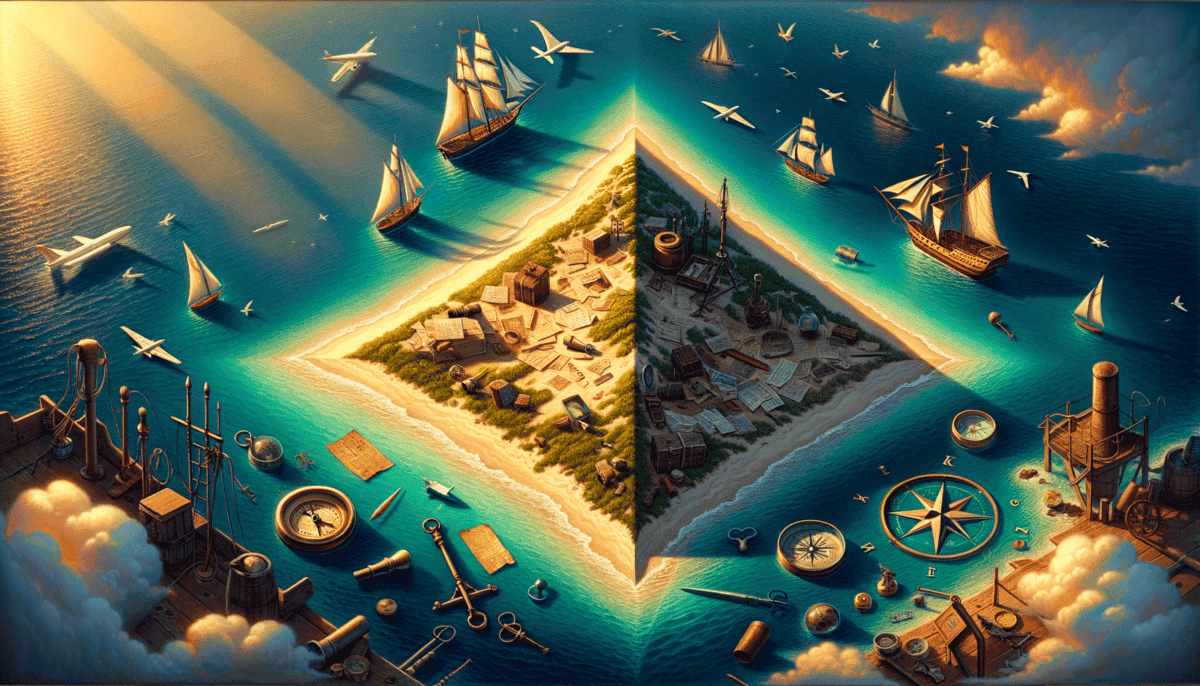
Sarah and Grandpa Tom sat in their favorite spot by the lighthouse, watching ships sail across the sparkling water.
“Grandpa, what’s that triangle shape you drew on your map?” Sarah pointed to the marked area in his old navigation book.
“That’s the Bermuda Triangle,” Grandpa explained, spreading the map wider. “Some people call it the Devil’s Triangle because weird things happen there.”
Sarah’s eyes grew big. “What kind of weird things?”
“Well, over many years, some ships and planes seemed to disappear while traveling through this area. But don’t worry – there’s usually a good explanation for what happened!”
The Mystery of Flight 19
“Tell me about one of the disappearances!” Sarah grabbed her notebook, ready to take detective notes.
“One famous case happened in 1945. Five planes were flying together – they called it Flight 19. The pilots got lost and couldn’t find their way home.”
“Well, detective Sarah, there are some very normal reasons that can make flying and sailing tricky in the Triangle:”
• Strong storms and big waves
• Confusing compass readings
• Deep ocean currents
• Lots of busy ship traffic
• Sudden weather changes
Science Solves Mysteries
“Scientists have found that most disappearances can be explained by natural things,” Grandpa continued. “The weather in the Triangle can change very fast, like turning off a light switch!” ⛈️
Sarah scribbled in her notebook. “So it’s not magic?”
“No, sweetie. Most ‘mysterious’ things have simple explanations. Like those compass problems – there’s a special place nearby where compasses act funny because of Earth’s magnetic field.”
Modern Day Safety
“Do ships still go through the Triangle?” Sarah asked, looking worried.
Grandpa smiled. “Every day! We have much better tools now to keep ships and planes safe. We can:”
– Watch the weather with satellites ️
– Use GPS to know exactly where we are
– Talk to other ships by radio
– See storms coming from far away ⚡
“The ocean can be dangerous anywhere if you’re not careful,” Grandpa explained. “But if you’re prepared and smart, it’s usually very safe.”
Sarah watched a big cargo ship pass by the lighthouse. “I bet they have all those safety tools on board!”
Being a Smart Explorer
“You know what makes a good explorer, Sarah?” Grandpa asked, closing his navigation book.
“What, Grandpa?”
“Someone who looks for real answers instead of believing in spooky stories. Just like you’re doing – asking questions and thinking carefully about the answers.”
Sarah beamed with pride. She drew a triangle in her notebook and wrote: “Mystery solved by Detective Sarah!” ️♀️
The lighthouse beam swept across the darkening water. Somewhere out there, ships were safely crossing the Bermuda Triangle, guided by modern technology and smart sailors who understood the ocean’s ways.
“Ready to solve another mystery?” Grandpa asked with a twinkle in his eye.
“Always!” Sarah jumped up, ready for their next adventure in uncovering the truth behind famous mysteries.
The Roswell Mystery
Sarah burst into Grandpa Tom’s study, waving a newspaper from 1947. “Grandpa, look what I found in your old box! It says ‘Flying Saucer Found in New Mexico!'”
“Ah, the Roswell incident,” Grandpa smiled, adjusting his glasses. “That’s one of the most famous mysteries in American history.”
The Crash That Started It All
“What really happened, Grandpa?” Sarah climbed onto her favorite reading chair.
“One summer morning, a rancher named Mac Brazel found weird pieces of metal and strange material scattered across his field. The stuff looked different from anything he’d seen before.” ✨
“Well, that’s what makes this mystery so interesting. Let’s look at the clues!”
The Military Steps In
“The Army came to look at the crash site really fast,” Grandpa continued. “First, they said it was a flying saucer. But the very next day, they changed their story.”
“They said it was actually a weather balloon – a special tool we use to check the weather up in the sky.”
The Mystery Grows
Sarah opened her detective notebook. “What did the pieces look like?”
“People who saw them said they found:
- Shiny metal that was super light
- Material that could go back to its shape after being crumpled
- Strange symbols that looked like writing
- Pieces that couldn’t be burned or broken
What People Said
“Different people told different stories,” Grandpa explained. “Some said they saw strange bodies. Others said it was just balloon parts.”
“Like our game of telephone at school?” Sarah asked. “Where the story changes as people tell it?”
“Exactly! That’s very smart thinking, detective Sarah!” ️♀️
The Secret Project
“Many years later, the military explained more about what happened,” Grandpa said. “They were doing top-secret tests to keep America safe during a time called the Cold War.”
“Like when Tommy and I have secret codes at school?” Sarah asked.
“Similar, but much bigger! The military needed to keep their work secret from other countries.”
Looking at All the Clues
“So what do you think crashed, Grandpa?”
“Well, let’s think like detectives. We know:
– The military was doing secret tests in that area
– They used special balloons with new materials
– It was important to keep their work secret
– Stories changed as more people told them
Sarah tapped her pencil thoughtfully. “Maybe it wasn’t aliens… maybe it was just a super-secret military project!”
“Now you’re thinking like a real investigator!” Grandpa beamed. “Sometimes the real story is just as interesting as the mystery!”
Sarah carefully added “The Roswell Mystery” to her growing list of investigations. She drew a little weather balloon next to it, then paused.
“Grandpa, what other big mysteries happened after Roswell?”
Grandpa reached for another old newspaper. “Well, there was something very important that happened in Dallas, Texas…”
A Day in Dallas
“Grandpa, what happened in Dallas?” Sarah leaned forward as her grandfather pulled out an old, yellowed newspaper. The date read November 22, 1963.
“This was the day President Kennedy was riding in a car parade through Dallas,” Grandpa began softly. “People called him JFK. Everyone was so happy to see him.”
The Sunny Day
Sarah watched as Grandpa pointed to a photo of smiling people lining the streets. “It was a beautiful day. The president and his wife were waving to everyone.”
“Was his wife wearing a pretty dress?” Sarah asked.
“Yes, a pink one. Mrs. Kennedy was very fancy. People loved to see what she wore.”
What Happened Next
“Did they catch the bad person?” Sarah’s voice was quiet.
“The police found a man named Lee Harvey Oswald. But some people thought there might be more to the story.”
The Big Questions
Sarah opened her detective notebook and wrote down what people wondered about:
- Was there more than one shooter?
- Why did it happen?
- Were there other people involved?
- What really happened that day?
Looking for Answers
“Many people tried to solve this mystery,” Grandpa explained. “They looked at:
– Pictures and movies from that day
– What people saw and heard
– Special tests on the things they found
– Lots and lots of papers
The Big Report
“The government made a big book about what happened,” Grandpa showed Sarah a thick book. “It’s called the Warren Report.”
“That’s bigger than all my school books together!” Sarah’s eyes went wide.
“Yes, they worked very hard to find answers. But some people still had questions.”
Why People Keep Asking
“Like when I lost my favorite toy, and I thought someone took it?” Sarah asked.
“Yes, exactly! But then we found it under your bed, remember?” Grandpa smiled. “Sometimes the simple answer is the right one.”
Learning from History
“The Kennedy mystery taught us something important,” Grandpa said. “It showed us how people work together to find answers.”
“Like real detectives!” Sarah exclaimed.
“Yes! And it showed us why it’s important to look at all the facts before making up our minds.”
Sarah carefully drew a small heart in her notebook next to her notes about JFK. “I like solving mysteries with you, Grandpa.”
“Speaking of mysteries,” Grandpa reached for another folder, “did you know some people didn’t believe we really went to the moon?”
The Giant Leap
“People didn’t believe we went to the moon?” Sarah’s eyes widened as she grabbed her detective notebook. “But I saw pictures!”
The Space Race
“It all started with two countries trying to be first in space,” Grandpa explained. “America and Russia were like runners in a big race.” ♂️
“Who won?” Sarah asked, pencil ready.
“Well, Russia put the first person in space. But America did something even bigger – they put people on the moon!”
The Big Day
“Did everyone watch it on TV?” Sarah asked.
“Millions of people did! It was the most exciting thing anyone had ever seen.”
The Doubters
Sarah noticed Grandpa’s expression change. “But some people said it wasn’t real?”
“Yes, they thought it was all pretend, like a movie. They had questions like:
- Why can’t we see stars in the moon photos?
- How did the flag wave with no wind?
- Why didn’t the rocket make a crater?
- How did they film everything?
The Real Science
– The camera settings made stars invisible
– The flag had a special wire to hold it up
– The moon’s surface was very hard
– They brought special cameras
“Scientists can explain all these things,” Grandpa said. “We even left mirrors on the moon that we can bounce lasers off today!”
The Big Proof
“Want to know the best proof we went to the moon?” Grandpa asked with a twinkle in his eye.
“What is it?” Sarah leaned forward.
“Russia was watching us the whole time. If we had faked it, they would have told everyone!”
Why People Doubt
“Like when Tommy didn’t believe I could ride my bike with no hands?” Sarah giggled.
“Exactly! Until he saw you do it!” Grandpa laughed.
Space Today
“Now we have space stations and robots on Mars,” Grandpa showed Sarah pictures on his tablet. “All because we dreamed of going to the moon.”
“Can people go back to the moon?” Sarah asked hopefully.
“NASA is planning to send people back soon! Maybe you’ll be an astronaut someday.”
Sarah drew a little moon in her notebook. “I believe we went to the moon, Grandpa. It’s too cool not to be true!”
“Speaking of believing things,” Grandpa said, reaching for another folder, “let’s talk about why people sometimes believe in things that aren’t true…”
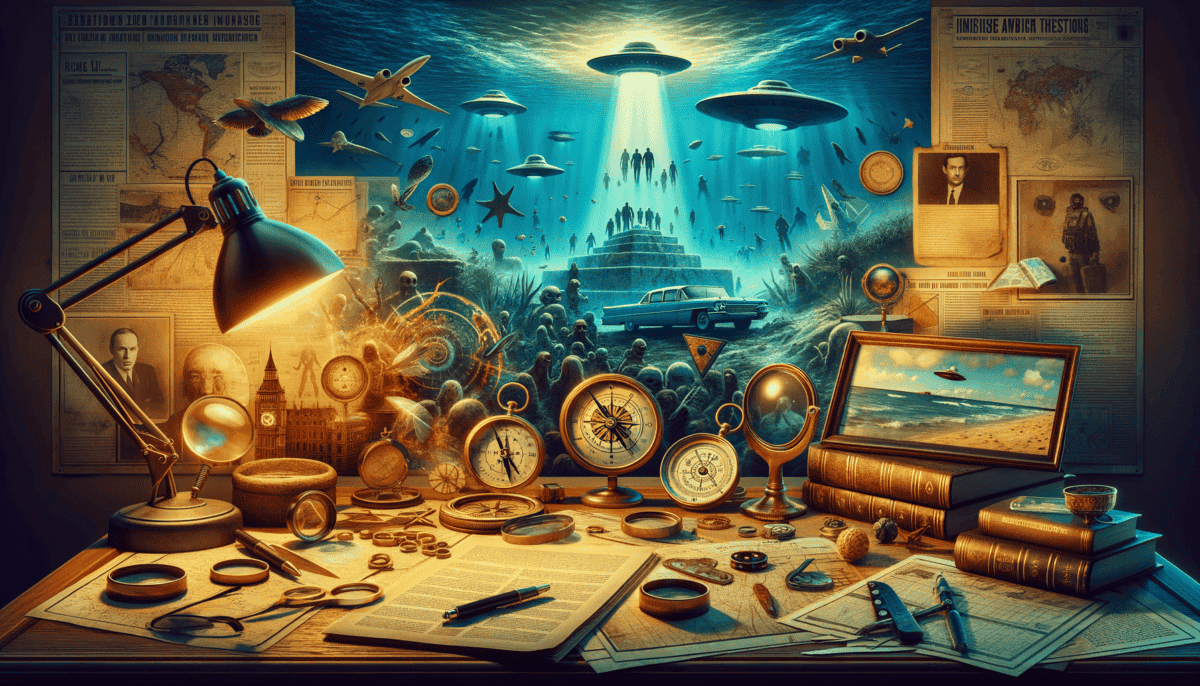
The Mystery Solvers
Sarah looked up from her notebook filled with their detective work. “Grandpa, we’ve solved so many mysteries!”
Looking Back
“Remember when we started with Atlantis?” Grandpa smiled warmly. “You thought it might be hiding under your swimming pool!”
Sarah giggled. “I know better now! We need real proof for big ideas.”
“What was your favorite mystery?” Grandpa asked.
“The Bermuda Triangle!” Sarah jumped up. “I loved learning about the real reasons ships got lost.” ⛵
Understanding Why
“Like when I thought monsters lived in my closet?” Sarah asked.
“Exactly! But then we turned on the light and saw it was just your coat.”
The Big Questions
Grandpa opened his special folder one last time. “Here’s what makes people believe in conspiracy theories:
- They want simple answers to hard questions
- They don’t trust what they’re told
- They like feeling like they know a secret
- They’re scared of things they don’t understand
Being a Good Detective
– Always look for proof
– Ask questions ❓
– Listen to experts
– Be open to new ideas
“What if someone tells me something that seems strange?” Sarah asked.
“That’s when you use your detective skills!” Grandpa winked. “Ask questions like:
– What proof do they have?
– What do experts say?
– Does it make sense?
The Truth Quest
“You know what makes a great detective?” Grandpa asked, closing his folder.
“What?” Sarah sat up straight.
“Someone who keeps learning and isn’t afraid to change their mind when they find new facts.”
The Future Mystery Solvers
Sarah drew a big star in her notebook. “I want to solve real mysteries when I grow up!”
“You already are,” Grandpa smiled proudly. “Every time you ask questions and look for proof, you’re being a real detective.”
Sarah hugged her notebook tight. “Thanks for teaching me to be a detective, Grandpa.”
“Thank you for being such a curious explorer,” Grandpa hugged her. “Now, what mystery should we solve next?”
Sarah’s eyes sparkled with excitement. The world was full of mysteries waiting to be solved, and now she knew just how to solve them.