

The City of Dreams
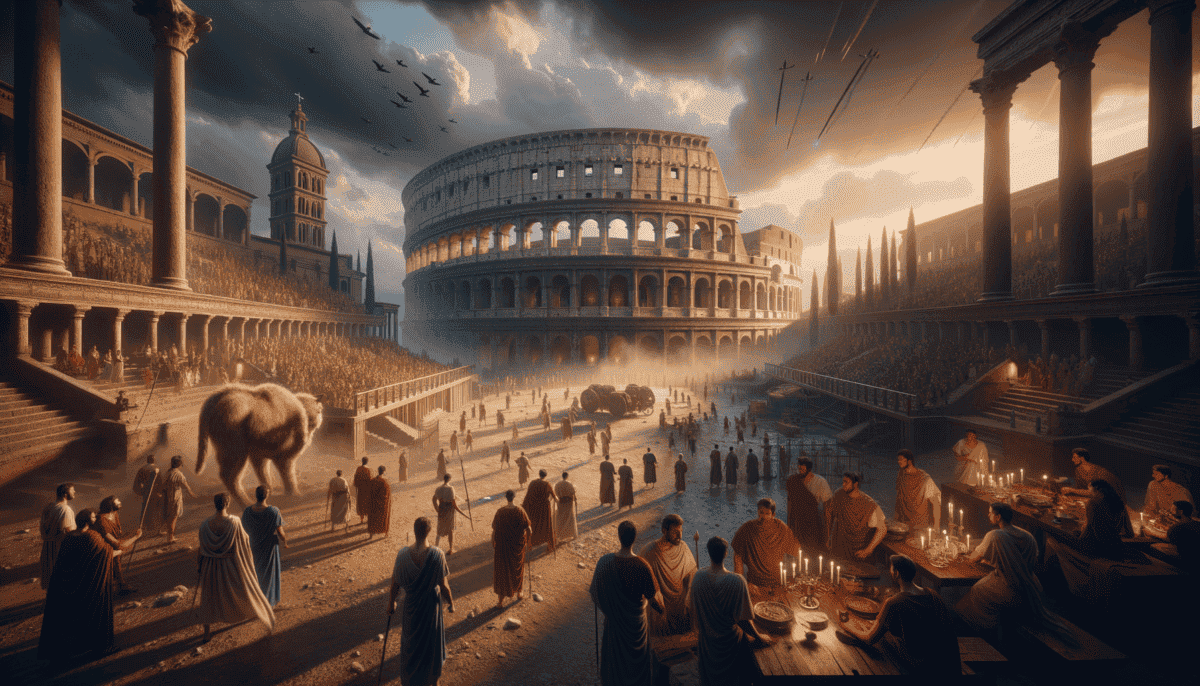
The morning sun peaked over the seven hills of Rome, painting the city in gold. Marcus rubbed his sleepy eyes and jumped out of bed, excited for another day in the greatest city in the world. At twelve years old, he lived with his family in a busy neighborhood near the Forum.
"Marcus! Time for breakfast!" his mother called from downstairs.
The smell of fresh bread made his tummy rumble. Marcus raced down the wooden stairs of their apartment building, called an insula. Their home wasn't fancy like the big houses where rich people lived, but it was cozy and filled with love.
"Good morning, Mother!" Marcus hugged her tight. "Is Father at the shop already?"
His mother nodded while serving him warm bread and honey. "Yes, dear. The bakery gets busy early. But he wants you to visit him later – he has something special to show you."
Marcus loved visiting his father's bakery. The sweet smells and warm ovens made it feel magical. But today felt different – more important somehow.
On his way to the bakery, Marcus watched the city come alive. Merchants set up their stalls in the marketplace. Workers carried heavy loads on their backs. Important-looking men in white togas hurried toward the Senate house.
"One day," Marcus whispered to himself, "I'll wear a toga too. I'll help make Rome even better."
A group of children played ball in the street. "Hey Marcus!" his friend Claudia called out. "Want to play?"
"Later!" he promised. "I have to see Father first!"
The bakery sat on a busy corner. When Marcus walked in, the familiar warmth hugged him like a blanket. His father stood behind the counter, talking to a very important-looking customer.
"Ah, Marcus!" his father smiled. "Come meet Senator Flavius."
Marcus's eyes went wide. A real Senator! The man wore a bright white toga with a purple stripe – a sign of his high rank.
"So this is young Marcus," the Senator smiled kindly. "Your father tells me you're interested in politics?"
Marcus nodded eagerly. "Yes, sir! I want to help make Rome great!"
"Rome is great because of citizens like your father," Senator Flavius said. "Hard-working people who care about their community. But we also need young people with big dreams." He turned to Marcus's father. "The Senate is holding a special youth assembly next week. Perhaps Marcus would like to attend?"
Marcus could hardly believe his ears. Real Senate meetings were held in the grand building called the Curia. Only the most important people in Rome went there!
"Can I go, Father? Please?" Marcus bounced on his toes with excitement.
His father laughed. "If you promise to work hard and learn everything you can."
"I promise!" Marcus said quickly. "I'll make you proud!"
That night, Marcus could barely sleep. From his window, he could see the great buildings of the Forum glowing in the moonlight. The Temple of Jupiter stood tall on the Capitoline Hill, watching over the sleeping city.
“Rome wasn’t built in a day,” his father always said. “It was built by people who dreamed big and worked hard.”
Marcus smiled into the darkness. Tomorrow would bring new adventures, new lessons, and maybe – just maybe – the first steps toward his own big dreams for Rome.
From somewhere in the distance, an owl hooted softly. The eternal city slept, but Marcus's mind raced with possibilities. His journey was just beginning.
Lessons in Leadership
The day of the youth assembly arrived bright and early. Marcus put on his best tunic, carefully folded and pressed by his mother. His heart beat fast as he walked toward the magnificent Senate building. ️
“Remember to stand tall,” his father had said that morning. “You represent our family today.”
The Curia looked even bigger up close. Its marble columns reached toward the sky like giant trees. Other young people gathered on the steps, all looking nervous and excited.
Senator Flavius appeared at the top of the steps. “Welcome, young citizens of Rome! Today you will learn how our great Republic works.”
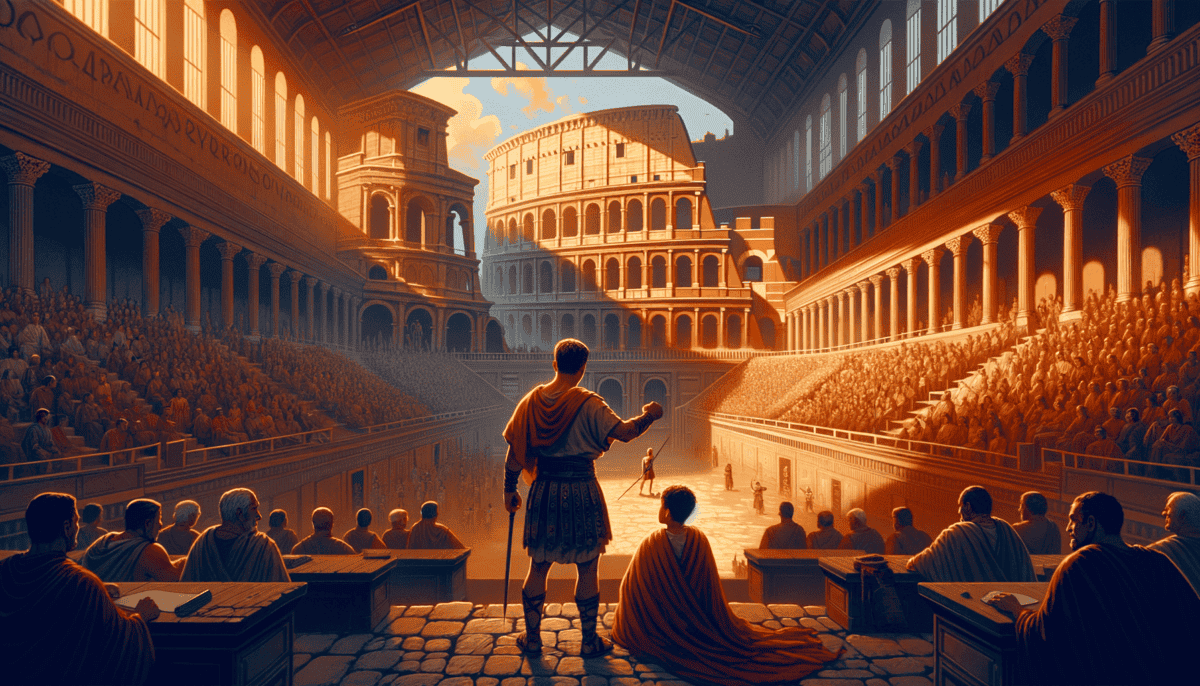
Inside, Marcus gasped. The Senate chamber was huge! Red curtains hung from tall walls. Wooden benches curved in rows like a theater. Everything seemed to shine.
“Each seat represents a Senator,” explained Flavius. “They come here to speak for the people who chose them.”
A girl raised her hand. “Do they all agree with each other?”
The Senator laughed. “No, Julia. They often disagree! But that’s how democracy works. We listen to different ideas and then vote on what’s best for Rome.”
Marcus watched as older students acted out a Senate debate. One side wanted to build a new aqueduct. The other thought the money should go to fixing roads.
“What do you think, Marcus?” Senator Flavius asked. “Which is more important?”
Marcus thought carefully. “Well… people need water every day. But broken roads make it hard to bring food to the city. Maybe we could do both, but start with the most broken roads first?”
“Very good!” Flavius smiled. “Sometimes the best answer isn’t just yes or no. It’s finding a way to help everyone.”
“Leadership isn’t about being right,” Senator Flavius told them. “It’s about doing right by the people you serve.”
After lunch, they visited the Temple of Vesta, where sacred fires burned day and night. The Vestal Virgins tended these flames that protected Rome.
“Look!” whispered Julia, pointing to a procession of priests climbing the hill. “They’re going to make offerings to the gods!”
Marcus watched in awe as the priests carried beautiful golden bowls. Their white robes sparkled in the sun. ✨
Later, Senator Flavius gathered them in the Forum. “Being a leader means understanding both politics and tradition. Rome is strong because we remember our past while building our future.”
On their way out, Marcus noticed a poor old man struggling with heavy bags. Without hesitating, he ran to help.
“Thank you, young man,” the elder smiled. “What’s your name?”
“Marcus, sir. I want to help make Rome better.”
“You already are,” Senator Flavius said, appearing behind them. “True leadership starts with small acts of kindness.”
Walking home that evening, Marcus felt different. The Forum wasn’t just pretty buildings anymore. It was where people worked together to solve problems. The temples weren’t just old stones. They kept Rome’s spirit strong.
“How was your day?” his mother asked when he got home.
Marcus grinned. “Amazing! I learned that being a leader means listening to everyone and finding ways to help. Even small things matter!”
That night, Marcus wrote everything he’d learned in a little clay tablet. He wanted to remember this day forever. Outside his window, the city buzzed with life. Somewhere, decisions were being made. Problems were being solved. And maybe, just maybe, he would help make those decisions someday.
The Warrior’s Honor
Marcus couldn’t sleep. His mind kept racing about the day ahead. Today, he would meet Lucius, the famous retired gladiator who now trained young fighters. ️
“Remember to be respectful,” his mother said as she adjusted his tunic. “Gladiators may fight in the arena, but they have much wisdom to share.”
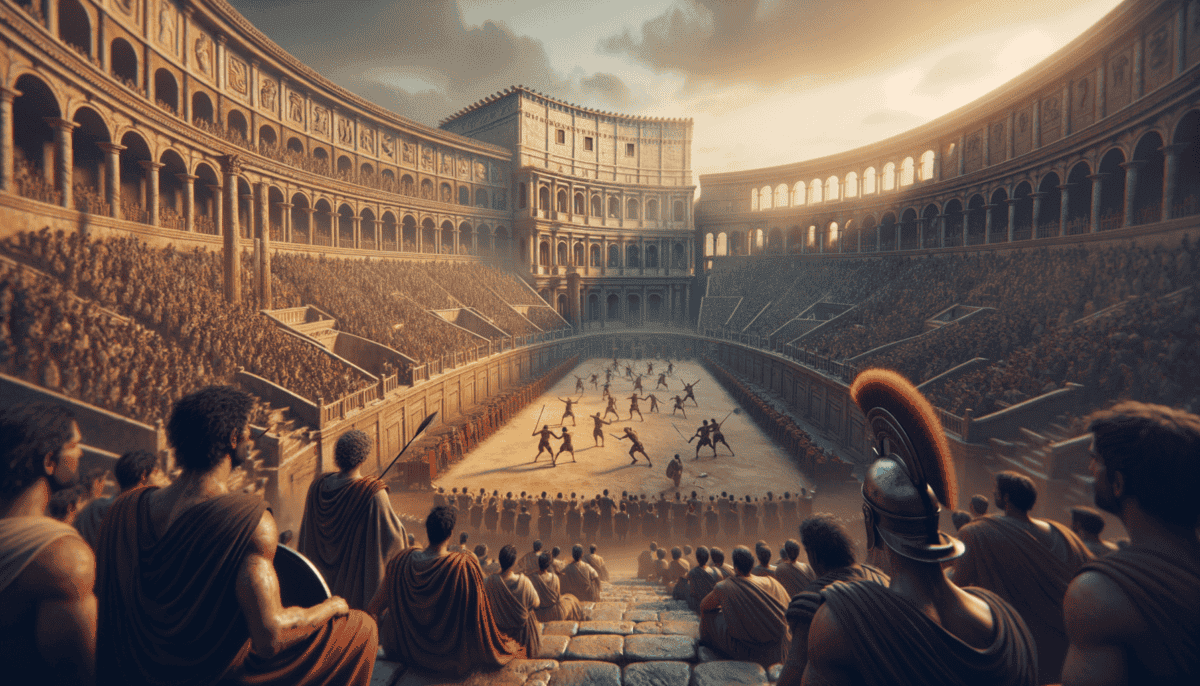
The training ground buzzed with activity. The sound of wooden swords clashing filled the air. Dust swirled as fighters practiced their moves.
A tall man with a scarred face approached. His eyes were kind despite his fierce appearance.
“Welcome, young Marcus,” Lucius smiled. “Senator Flavius told me you wish to learn about honor and courage.”
“Yes, sir!” Marcus stood straighter. “I want to understand how gladiators stay brave when facing big challenges.”
Lucius picked up two wooden training swords. “First lesson: true strength isn’t about muscles. It’s about what’s in here.” He tapped his chest where his heart was.
“A warrior’s greatest weapon is not his sword, but his honor,” Lucius explained. “Without honor, victory means nothing.”
They walked past training pairs. Some practiced with nets, others with shields. Each had their own special way of fighting.
“Look at them, Marcus. What do you see?”
Marcus watched carefully. “They’re all different, but they work together. Like in the Senate!”
“Exactly!” Lucius beamed. “Just as Rome needs different voices in the Senate, the arena needs different types of gladiators. Each brings their own strength.”
A young gladiator stumbled nearby. Without thinking, Marcus rushed to help him up.
“Well done,” Lucius nodded. “That’s lesson two: even opponents deserve respect.”
They watched a practice match. Two fighters bowed to each other before starting.
“Why do they bow?” Marcus asked.
“To show respect. In the arena, we fight with honor, not hate. Sometimes the bravest thing is showing kindness to those who stand against you.”
Lucius handed Marcus a small wooden shield. “Hold this. What do you feel?”
“It’s heavy!” Marcus struggled to lift it.
“Yes. Like responsibility. A shield protects not just you, but those behind you. Remember that when you become a leader.”
Marcus spent the afternoon learning basic stances. His arms got tired, but he didn’t give up.
“You have spirit,” Lucius praised. “But remember, the strongest muscle must be your heart.”
As the sun began to set, Lucius gathered everyone around. “Today’s final lesson: true victory isn’t about defeating others. It’s about overcoming your own fears and weaknesses.”
Walking home, Marcus felt stronger, but not just in his arms. He understood now that real courage wasn’t about being the biggest or strongest.
“How was your day with Lucius?” his father asked at dinner.
Marcus sat up proudly. “I learned that being brave doesn’t mean not being scared. It means doing what’s right even when you are scared.”
That night, Marcus added new words to his clay tablet: Honor, Respect, Courage. Outside, the stars twinkled over the great city. In the distance, he could hear the night guards making their rounds, protecting Rome’s dreams.
Storms of Change
Dark clouds gathered over Rome as Marcus hurried through the bustling streets. The city felt different today. People whispered in corners, and worry lined their faces. ️
“Marcus!” Senator Flavius called from the Senate steps. “Come quickly. Something important is happening.”
Inside the grand Senate building, voices echoed off marble walls. Two groups of senators argued loudly. Marcus had never seen them so angry.
“What’s wrong?” Marcus asked his mentor.
“Some senators want to give more power to one person,” Flavius explained. “Others say that’s dangerous for Rome.”
Marcus remembered Lucius’s lessons about honor. “But shouldn’t they work together, like gladiators do?”
“If only it were that simple, young friend.” Flavius sighed.
“Leadership isn’t just about being strong,” Flavius said. “It’s about making hard choices while staying true to what’s right.”
Suddenly, Marcus spotted his father across the room. He looked worried as he talked with other senators.
“Your father stands for what he believes in,” Flavius nodded. “Even when it’s not easy.”
Thunder boomed outside. The rain started falling hard, matching the mood inside. ️
“Marcus,” his father called. “Come here. You should see this.”
The senators were voting on a big decision. Each one stepped forward to speak their mind. Some voices were loud, others quiet, but all were important.
“Watch carefully,” his father said. “This is how free people make choices together.”
Marcus noticed something interesting. When senators disagreed, they still listened to each other. Most stayed polite, even when they were upset.
“Father,” Marcus tugged his sleeve. “Why don’t they just fight like in the arena?”
His father smiled. “Because words can be stronger than swords, son. In Rome, we use our minds to solve problems.”
Later that day, Marcus sat with Flavius in his study. Maps and scrolls covered the walls.
“Today was hard,” Marcus admitted. “I didn’t like seeing everyone argue.”
“Sometimes the hardest battles aren’t fought with swords,” Flavius replied. “They’re fought with words and ideas.”
A messenger burst in, soaking wet from the rain. “News from the north! Caesar’s army is moving!”
The room grew quiet. Marcus felt the weight of something big about to happen.
“What does this mean?” he asked.
Flavius looked out at the rainy city. “It means Rome is changing, Marcus. We must all be ready.”
That evening, Marcus wrote in his diary:
As night fell, the storm passed. Stars peeked through breaking clouds. Marcus watched the city lights flicker below his window. Rome felt different now. Bigger. More complicated. But he was starting to understand it better.
His mother found him still watching the city.
“What are you thinking about?” she asked.
“About Rome,” Marcus answered. “And about how hard it is to do the right thing sometimes.”
She hugged him tight. “That’s what makes it worth doing.”
The night air smelled fresh after the rain. Tomorrow would bring new challenges. But Marcus felt ready to face them, carrying the lessons of both the arena and the Senate in his heart.
Winds of Change
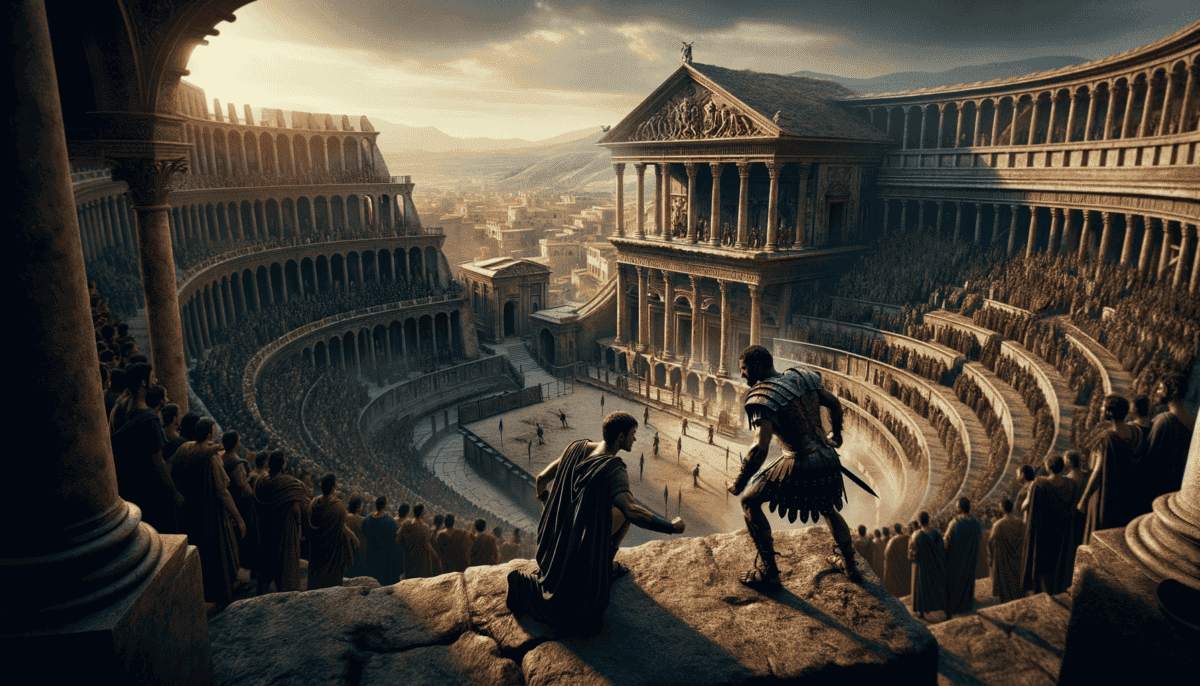
Marcus stood at his window, watching Julius Caesar’s soldiers march into Rome. Their red capes flowed like rivers of blood through the streets. ️
“Father, why are there so many soldiers?” Marcus asked, his voice trembling.
His father’s face was grave. “Caesar has crossed the Rubicon river. He’s come to take control of Rome.”
The streets buzzed with worried voices. People rushed to gather food and water. Some packed their belongings to leave the city.
“What should we do?” Marcus asked Lucius, who had come to check on them.
The old gladiator placed a strong hand on Marcus’s shoulder. “We must be brave, like in the arena. But also wise, like in the Senate.”
“Sometimes the bravest thing isn’t fighting,” Lucius said softly. “It’s knowing when to stand your ground and when to step back.”
Senator Flavius arrived, looking tired. “Marcus, your father and I must make an important choice. Caesar wants all senators to join him.”
Marcus watched his father pace. “What will you do, Father?”
“I believe in Rome’s freedom,” his father replied. “But I also want to protect our family.” ️
That night, Marcus couldn’t sleep. He heard his parents talking in hushed voices:
“But this is our home,” his father answered. “Where would we go?”
The next morning, Marcus visited the gladiator school. The training yard was empty.
“Even warriors must choose their battles,” Lucius explained. “Many have left to join Caesar or Pompey.”
Marcus felt lost. Everything was changing so fast.
Back home, he found his father writing letters. “Marcus, come here. What do you think Rome needs most right now?”
Marcus thought about his lessons from the Senate and the arena. “Peace,” he answered. “And brave people who stand up for what’s right.”
His father smiled proudly. “You’re learning wisdom, son.”
A messenger arrived with news: Caesar wanted to meet with Marcus’s father!
“This is your moment of truth,” Flavius told his father. “Whatever you decide, stay true to your principles.”
Marcus watched his father dress in his best toga. “I’m scared,” Marcus admitted.
“Me too,” his father said. “But being brave means doing what’s right, even when we’re afraid.”
Before leaving, his father gave Marcus an important task: “Guard our family’s honor. Remember everything you’ve learned.”
The day grew long. Marcus waited with his mother and Lucius. Finally, as the sun set, his father returned.
“What happened?” Marcus asked.
“I told Caesar I would help build a peaceful Rome,” his father said. “But only if he respects our laws and traditions.”
That night, Marcus wrote in his diary:
Later, Lucius found Marcus practicing with his wooden sword.
“What are you fighting?” the old gladiator asked.
“My fears,” Marcus answered.
Lucius nodded. “That’s the greatest battle of all. And you’re winning it.”
As darkness fell over Rome, Marcus realized something important: change wasn’t always bad. Sometimes it helped you grow stronger and wiser. The city would be different now, but its spirit would live on in people who stayed true to their values.
A New Dawn for Rome
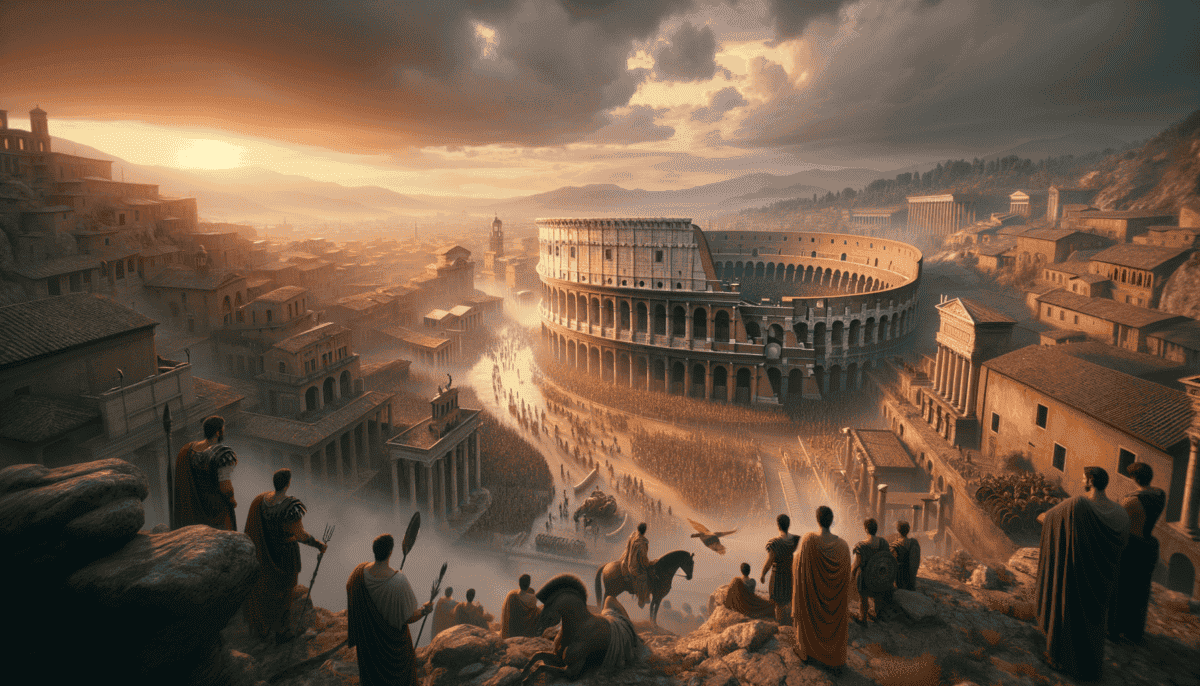
The morning sun painted Rome’s buildings in golden light. Marcus walked through the Forum with his father, watching people rebuild their lives under Caesar’s rule.
“Rome feels different now,” Marcus said, touching the smooth marble of a new column.
His father nodded. “Change can be like the seasons, Marcus. Winter always leads to spring.”
In the marketplace, they saw Lucius teaching young children about honor and bravery. The old gladiator had opened a small school.
“Look who’s here!” Lucius called out. “Our young philosopher!”
The children gathered around Marcus eagerly. “Tell us a story!” they begged.
Marcus smiled and sat on a stone bench. “Let me tell you about the time I learned what true courage means…”
“It’s not the size of your sword that matters,” he told them, “but the strength of your heart and the wisdom of your mind.”
Later, Senator Flavius joined them for dinner. The old friends talked about Rome’s future. ️
“And Marcus will help shape it,” his father added proudly.
Marcus had grown taller and stronger over the past year. But his biggest changes were inside. He understood more about leadership and courage.
“What will you do now?” his mother asked over dinner.
“I want to help people,” Marcus replied. “Like Father does in the Senate, and like Lucius does with his teaching.”
The next day, Marcus started his own project. He gathered young Romans to clean up their neighborhood.
“See?” he told them. “We don’t need an army to make Rome better. We just need to work together.”
Word of Marcus’s group spread. Soon, other neighborhoods started their own cleanup teams.
Lucius watched proudly. “You’ve become a leader, Marcus. Not with force, but with wisdom.”
At home, Marcus found his old wooden sword. It felt small now. He handed it to his youngest cousin.
“Sometimes the best battles,” he said, “are the ones we win with kindness.”
That evening, the family gathered on their rooftop garden. The city glowed in the sunset.
Looking out over the city he loved, Marcus thought about his journey. He had learned from the Senate’s wisdom, the gladiators’ courage, and his family’s love.
Now he understood that true strength came in many forms:
- In standing up for what’s right
- In helping others grow
- In building instead of breaking
- In choosing peace over power
As stars appeared above Rome’s seven hills, Marcus smiled. His city had changed, and so had he. But the most important things stayed the same: honor, wisdom, and hope.
“Ready for tomorrow?” his father asked.
“Yes,” Marcus answered confidently. “There’s still so much good we can do.”
And so, our young Roman continued his journey, knowing that every day brought new chances to make Rome – and himself – even better. The best adventures, after all, were the ones that never really ended. ⭐
That night, before sleep, Marcus wrote his final diary entry: