

Seeds of Curiosity
In a peaceful garden at a monastery in 1856, a curious monk named Gregor Mendel looked at his pea plants with wonder. He noticed something special about how the plants grew and changed over time.
“These peas are trying to tell me something,” Mendel whispered to himself as he touched the delicate green pods.
Every morning, Mendel went to his garden. He wasn’t just growing food – he was doing something that would change the world forever. He watched his pea plants carefully and wrote down everything he saw.
What made his pea plants so interesting? Some were tall, others were short. Some had purple flowers, others had white ones. Mendel wondered why this happened.
The Garden Detective
“Look here,” Mendel would tell his fellow monks, pointing to his plants. “When I mix the pollen from a tall plant with a short plant, guess what happens?”
The other monks would lean in close, curious about what their friend had discovered.
“The baby plants follow a pattern! They’re not random at all!” Mendel’s eyes would light up with excitement.
Mendel’s Special Pattern
Here are the main things Mendel noticed about his peas:
- Tall plants usually had tall babies
- Yellow peas made more yellow peas
- Some traits would skip a generation
- Everything followed special rules
Even though people didn’t understand why Mendel’s work was important at first, he kept writing everything down. He was like a detective solving a mystery about how life works!
A Special Discovery
One day, while looking at his records, Mendel realized something amazing. The way plants passed on their traits to their babies followed math patterns!
“It’s like a recipe,” he explained to anyone who would listen. “Just like how you need certain ingredients to make bread, plants need certain ingredients to make their flowers purple or white!”
Even though Mendel didn’t know about DNA yet, his careful work with pea plants helped other scientists later understand how life passes information from parents to children. He was like the first person to find a piece of a giant puzzle!
As the sun set over his garden each evening, Mendel would look at his beloved pea plants and smile. He didn’t know it then, but his simple garden experiments would help scientists many years later discover the amazing secret of DNA.
The curious monk kept working, writing, and wondering. His love for learning and careful watching of his plants planted the first seeds that would grow into one of science’s biggest discoveries.
The Scientific Pioneers
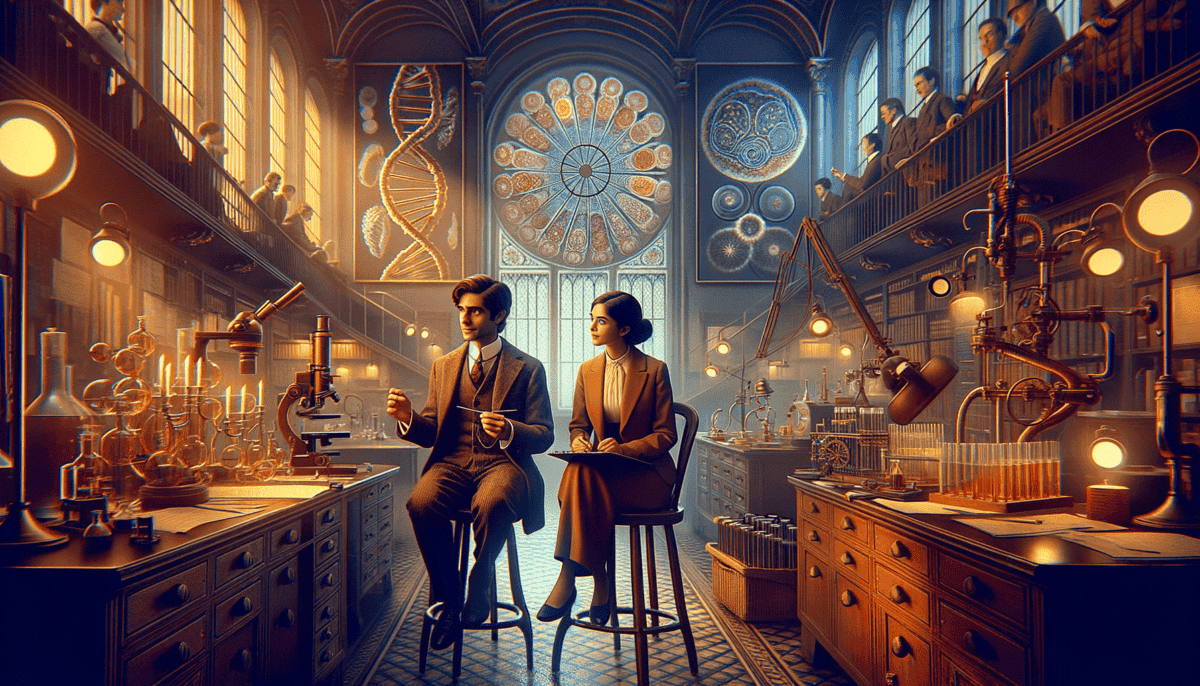
The year was 1950, and science was about to change forever. In a busy laboratory in London, two scientists named Maurice Wilkins and Rosalind Franklin were working hard to unlock a big mystery.
“There’s something inside every living thing that makes it special,” Rosalind would say. “We just need to find a way to see it!”
Maurice and Rosalind worked in the same building, but they were very different. Maurice liked to work quietly, while Rosalind was full of energy and new ideas.
The Amazing Machine
Rosalind was especially good at using the X-ray machine. She would spend hours in her dark room, carefully setting up her experiments.
“Stand back!” she would call out. “We’re about to take another picture!”
The machine would make a humming sound, and then – flash! ⚡ Another picture of the mysterious stuff inside cells would appear.
Working Together (Sometimes)
Maurice and Rosalind didn’t always get along. Sometimes they disagreed about how to do their work.
But even when they didn’t agree, they both wanted the same thing: to understand the special code that makes living things who they are.
New Tools for New Discoveries
Scientists back then had some amazing tools to help them:
- Powerful microscopes that made tiny things look big
- X-ray machines that could see through things
- Special cameras to take pictures of tiny crystals
- Clean laboratories to keep their work safe
A Race Against Time
Other scientists around the world were also trying to solve this mystery. It was like a big race to see who could figure it out first!
“Every day counts,” Maurice would say as he looked at his notes. “Someone somewhere might make the big discovery any moment!”
Making Progress
Bit by bit, the scientists were getting closer to understanding the secret code of life. Rosalind’s pictures were getting clearer and clearer.
One day, she took a very special picture. It showed something that looked like an X or maybe the letter B. This picture would turn out to be very important!
The work was hard, and sometimes the scientists got tired. But they knew they were close to finding something amazing. Every new picture, every new experiment brought them closer to understanding the blueprint that makes us who we are.
As their work continued, nobody knew that the biggest discovery was just around the corner. The race to understand DNA was about to get even more exciting!
Rosalind’s Breakthrough
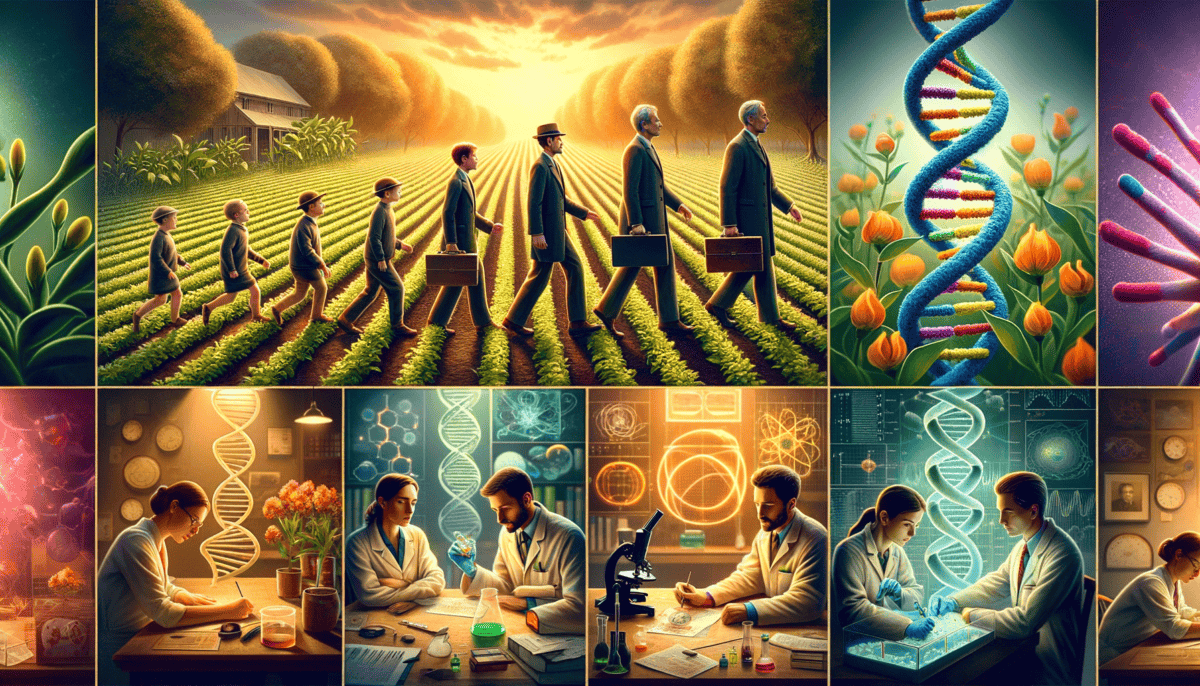
On a cold morning in 1952, Rosalind Franklin walked into her dark laboratory at King’s College London. Her heart was racing with excitement.
“Today might be the day we see something no one has ever seen before,” she whispered to herself.
The Magic Picture
Rosalind carefully placed a tiny crystal of DNA in her X-ray machine. She had done this hundreds of times before, but something felt different today.
“Everything must be perfect,” she said, adjusting the machine. The room was dark and quiet. Only the soft hum of the equipment filled the air.
Then it happened! ✨ After 100 hours of careful work, she took a picture that would change science forever. This picture would later be called “Photo 51.”
A Girl in a Man’s World
Being a woman scientist wasn’t easy in the 1950s. Many people didn’t think girls should be scientists!
And she was right! Her work was super important, even though some people didn’t want to admit it.
The Detective Work
Looking at Photo 51 was like solving a mystery. The picture showed something that looked like an X with black marks in a special pattern.
She spent hours studying every tiny detail. She wrote down everything she saw and made careful measurements.
Never Give Up!
Sometimes things went wrong. Experiments failed, equipment broke, and some days nothing seemed to work right.
But Rosalind never gave up! She would say, “Science is about trying again and again until you get it right!”
-
Rosalind’s Special Skills:
- Super careful with details
- Very patient
- Great at taking pictures
- Really good at math
- Never gave up when things got hard
A Secret Helper
Even though she worked really hard, some people didn’t treat Rosalind fairly. They used her work without telling her!
Making History
Rosalind didn’t know it then, but her careful work and amazing picture would help solve one of science’s biggest mysteries.
“Every picture tells a story,” she would say. “We just have to learn how to read it.”
As spring turned to summer in 1952, Rosalind kept working hard. She didn’t know that her Photo 51 would soon fall into the hands of two other scientists who were also trying to understand DNA’s secrets.
The Great Race
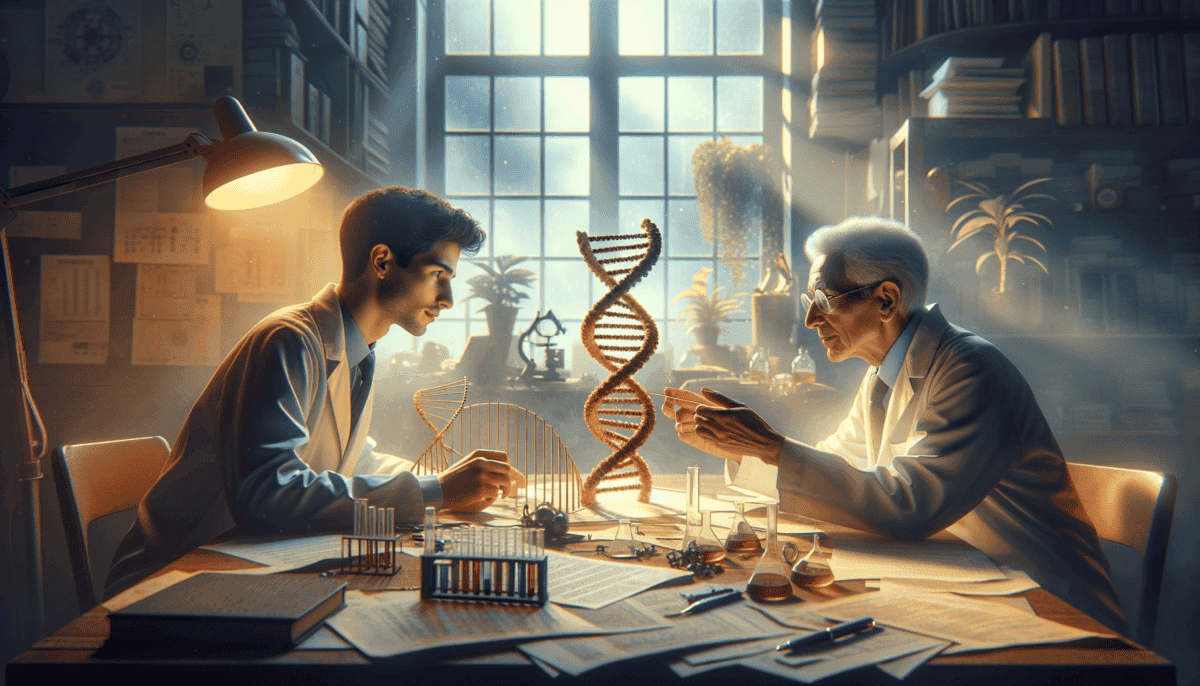
The year was 1953, and two scientists named James Watson and Francis Crick were super excited! ♂️ They had just seen something amazing – Rosalind’s Photo 51.
Building With Toys
In their lab at Cambridge University, Watson and Crick had a fun way of working. They built models of DNA using pieces that looked like toys!
“It’s like putting together the biggest puzzle ever,” Francis said, holding up a metal piece.
They used balls, sticks, and wire to try different shapes. Sometimes their models fell apart, but they kept trying!
The Magic Clue
When they saw Rosalind’s Photo 51, everything changed! James jumped up from his chair.
They started building their most important model yet. This time, they made it look like a twisted ladder.
The Big Problem
But there was a problem. They hadn’t asked Rosalind if they could use her picture!
The Big Discovery
Finally, on February 28, 1953, Watson and Crick finished their model. It looked perfect!
-
Their DNA Model Showed:
- Two long strands twisted together
- Four different building blocks
- A shape like a twisted ladder
- Perfect matches between the sides
- A way for DNA to copy itself
The Happy Dance
When they knew they were right, Watson and Crick were so happy they danced around their lab!
Sharing the News
They wrote a very short paper about their discovery. It was only one page long! But it changed how we think about life forever.
“We wish to suggest a structure for DNA,” they wrote. It was the start of something big!
Not Everyone Was Happy
While Watson and Crick celebrated, Rosalind Franklin kept working quietly in her lab. She didn’t know her Photo 51 had helped them so much.
A New Beginning
The discovery of DNA’s shape was just the start. Scientists now had a new mystery to solve: how does DNA work?
As spring arrived in Cambridge, the world of science was about to change forever. The race to understand DNA was over, but a new adventure was just beginning.
A World Changed Forever
The news of Watson and Crick’s DNA model spread like wildfire! Scientists all around the world were super excited to learn about this amazing discovery.
Making Things Better
Doctors got really excited about the DNA discovery. Now they could understand why some people got sick and others didn’t.
“This changes everything we know about medicine!” said one happy doctor. “We can help people in new ways!”
Scientists started using DNA to:
- Find out why people get certain diseases
- Make better medicines
- Help solve mysteries
- Learn about our family history
- Understand how plants and animals grow
Like Reading a Special Book
Scientists learned that DNA is like a special book written in a secret code. Each gene is like a different chapter that tells our bodies what to do!
Helping People
The best part about understanding DNA was how it helped make people healthier!
Special Thanks to Rosalind
More people started learning about Rosalind Franklin’s important work. Even though she didn’t get to share in the celebration at first, scientists today know how special her work was.
“Rosalind Franklin’s Photo 51 was the key that unlocked DNA’s secrets,” wrote a famous science magazine.
New Questions
As scientists learned more about DNA, they had even more questions!
How many genes do humans have?
What does each gene do?
Can we fix genes that don’t work right?
Looking to the Future
Young scientists everywhere got excited about studying DNA. They wanted to solve these new mysteries!
A New World of Science
Understanding DNA changed how we see life itself. It showed us that all living things – from tiny bacteria to tall trees to people – are connected!
Scientists around the world were ready to begin a new chapter in the story of DNA. There were so many exciting things left to discover!
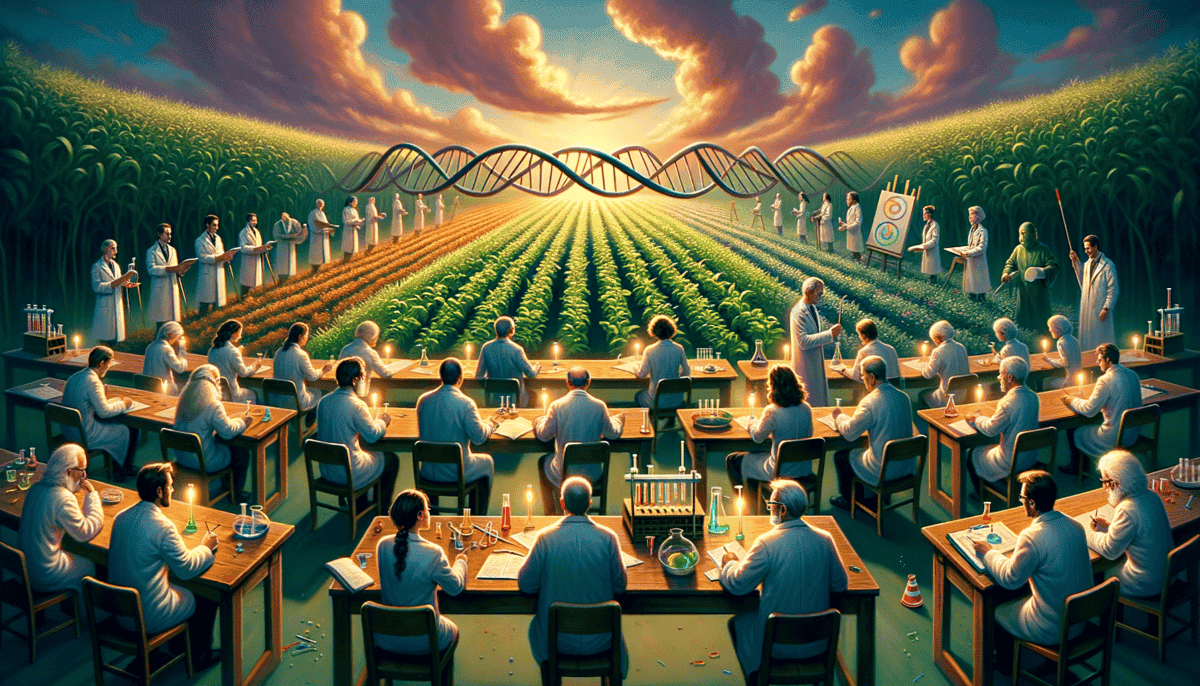
The Future of DNA
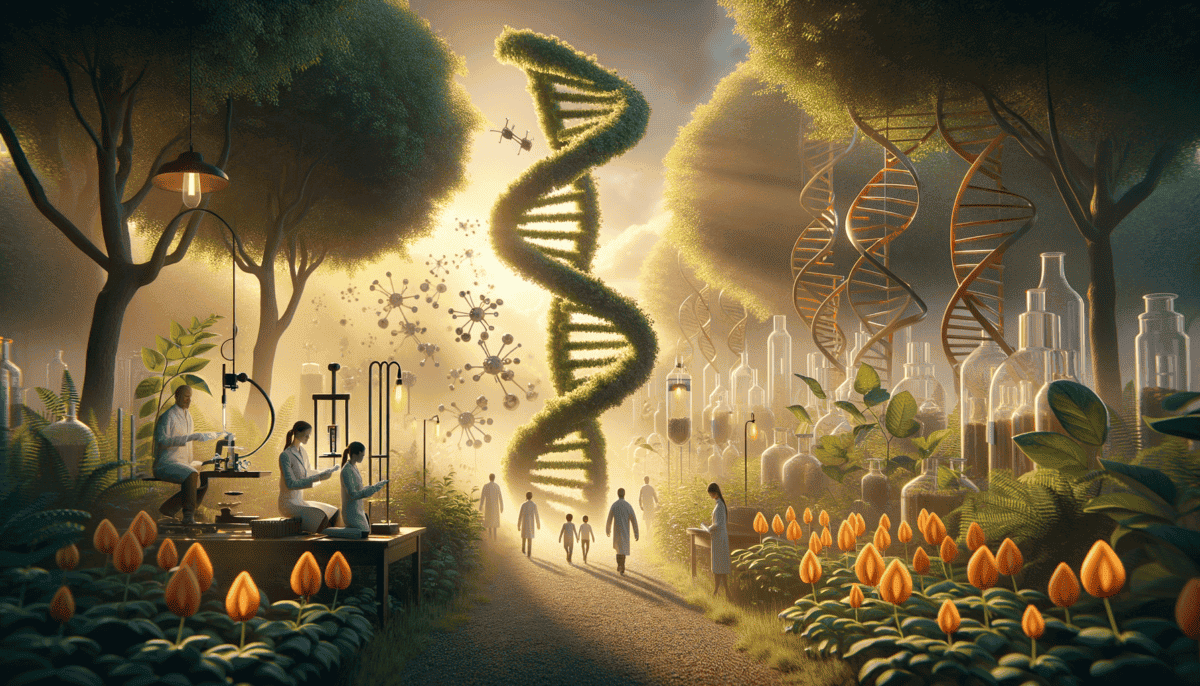
Today, scientists are doing amazing things with DNA that Watson, Crick, and Franklin could only dream about!
Helping Sick People
Emma was born with a disease that made her very sick. The doctors looked at her DNA and found out why!
“We can now fix some broken genes,” said Dr. Maria Chen. “It’s like having a magic eraser for diseases!” ✨
Growing Better Food
Farmers are using DNA science to grow better food! They can make:
- Bigger, tastier fruits
- Plants that don’t get sick easily
- Vegetables with more vitamins
- Crops that need less water
- Foods that stay fresh longer
Solving Mysteries
Detective Sam uses DNA to solve crimes! “DNA is like a fingerprint that never lies,” she says with a smile.
Finding Our Family Stories
People can now learn about their family history through DNA tests!
Protecting Animals
Scientists use DNA to help save endangered animals. They can count how many are left and help them have babies!
“DNA helps us protect animals we might lose forever,” says Zoo Keeper Mike. “It’s like having a superhero power!”
New Questions to Answer
Scientists still have big questions about DNA: Can we make medicines that work perfectly for each person? How can we fix all broken genes?
Your Turn to Discover!
Maybe you’ll be the next scientist to make a big DNA discovery!
The Story Continues
The discovery of DNA changed our world forever. It helped us understand life better and gave us tools to make the world healthier. But the most exciting part? There’s still so much more to learn!
Just like Watson, Crick, Franklin, and all the other scientists who helped us understand DNA, you too can make amazing discoveries. The future is waiting for you!