

The Spark of Imagination
On a rainy afternoon in 1936, a young boy named Alan sat at his desk, scribbling numbers in his notebook. His blue eyes sparkled with excitement as he worked on math problems that other kids found too hard.
"Alan, dinner's ready!" his mother called from downstairs.
"Just one more minute!" Alan Turing shouted back. He couldn't stop thinking about machines that could solve puzzles like people do.
The room was cozy, with books stacked everywhere. Through the window, Alan could see the gray English sky. But in his mind, he saw something amazing – computers that could think and talk like humans!
Years later, Alan grew up to be a very smart scientist. He worked in a big building called Bletchley Park during World War II. The walls were thick stone, and the rooms were filled with clicking machines and the sound of people thinking hard.
"What if we could make a machine that thinks?" Alan asked his friend Joan one day. They were walking through the garden at Bletchley Park.
Joan smiled. "Most people would say that's impossible, Alan."
"But what if it's not?" His eyes lit up. "What if we could teach machines to learn, just like children do?"
The First Steps
Alan wrote about his ideas in a special paper. He made up a test called "The Turing Test" to see if machines could fool people into thinking they were human. It was like a really smart game of pretend!
Other scientists got excited too. They started building simple computers that could do math problems. The computers were as big as rooms and made lots of noise.
"Beep… whirr… click" The machines would say.
"It's like teaching a baby to talk," one scientist said. "First they make sounds, then words, then sentences!"
More and more people started working on making smarter computers. They dreamed of machines that could:
• Understand words
• Solve hard problems
• Help people learn new things
• Remember important information
• Talk to humans
The Dream Grows
By the time Alan was older, his ideas had spread all around the world. Scientists everywhere were trying to make computers smarter. They built special rooms called laboratories where they could work on their dreams.
"Look!" shouted a young scientist named Margaret. "The computer just solved the puzzle!"
Everyone gathered around to watch. The machine had figured out a math problem all by itself. It wasn't as smart as a person yet, but it was just the beginning.
"This is just the start," Alan said, smiling at his team. "One day, these machines will do amazing things."
Little did they know how right he was. The spark of imagination that started with a curious boy would grow into something bigger than anyone could dream. The journey to teaching machines to think had begun, and there was no turning back.
The rain outside Bletchley Park kept falling, but inside, the future was getting brighter every day. New ideas were growing like flowers in spring, ready to change the world forever.
Building the Brain
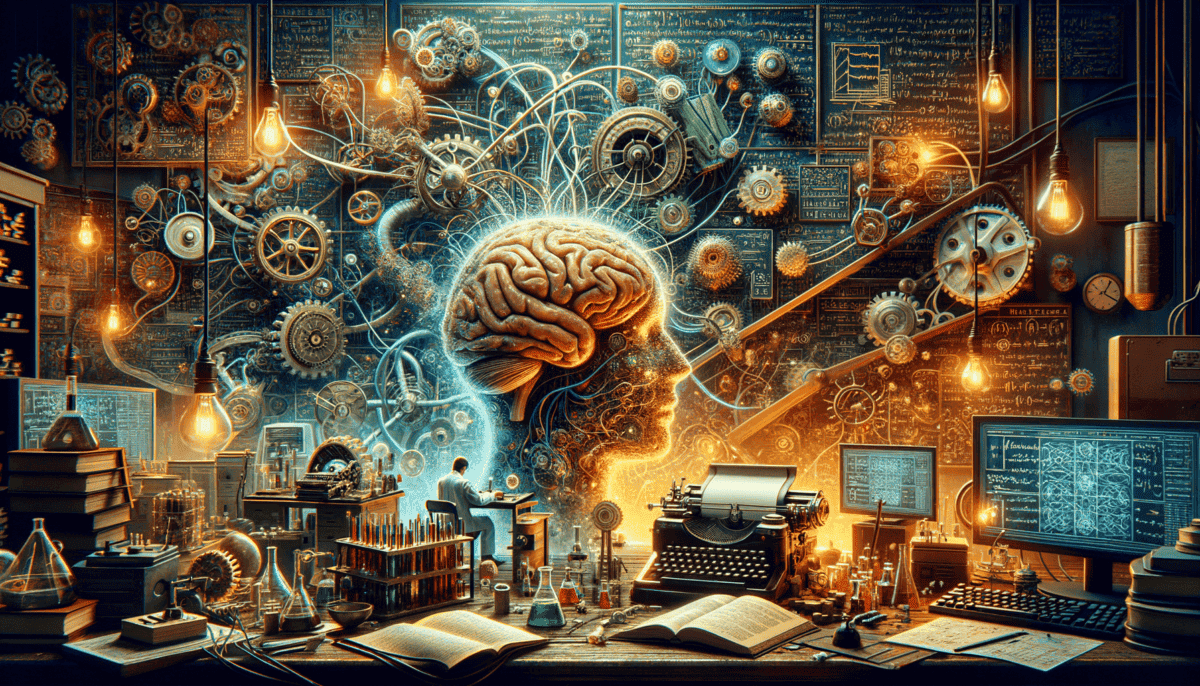
The sun peeked through Professor Sarah Chen’s laboratory window as she stared at a drawing of the human brain on her whiteboard. Next to it was a sketch of something new – a computer network that looked like tiny connected stars.
“Look here, Tommy,” she said to her young assistant. “See how the brain cells connect like a spider web? We’re trying to make computers work the same way!”
The Birthday Party Problem
Sarah picked up a photo from her desk. It showed a birthday party with balloons, cake, and happy kids.
“Tommy, how do you know this is a birthday party?” she asked.
“That’s easy!” Tommy laughed. “I see the cake with candles, presents, and everyone looks happy!”
“Right! But for computers, it’s not so simple. We need to teach them to understand pictures like you do.”
Teaching Computers to Learn
Sarah and her team worked hard to make special computer programs called neural networks. These networks were like tiny computer brains that could learn new things.
They started with simple things computers could learn:
• Telling cats from dogs
• Reading numbers and letters
• Recognizing faces
• Understanding simple words
• Copying patterns
The Big Challenge
“It’s not working!” groaned Dr. Mike, another scientist on the team. His computer kept mixing up pictures of dogs with pictures of cats.
“Remember,” Sarah smiled, “babies don’t learn to walk in one day. Our computer friends need time too!”
They made the neural networks bigger and stronger. Each time the computer made a mistake, it learned from it – just like how kids learn from their mistakes.
The First Success
One rainy Tuesday morning, something amazing happened. The computer correctly named every animal in a whole folder of pictures!
“It’s learning!” Tommy jumped up and down. “It really is!”
Sarah watched as green checkmarks appeared on the screen. ✅ The computer had learned to see things almost as well as a young child could.
Growing Smarter
As the days went by, Sarah and her team taught their computer brain more and more things. It learned to:
“Hello! I can help you solve math problems!”
“I noticed this picture has three cats in it.”
“This sentence is about a happy family at the beach.”
The computer wasn’t just remembering things anymore – it was starting to understand them, almost like magic!
A New Friend
Tommy started calling their computer “Brain Buddy.” Every day, he would come to the lab excited to see what new things it had learned.
“Good morning, Brain Buddy!” he would say.
And one special morning, Brain Buddy answered back: “Good morning, Tommy! Would you like to learn something new today?”
Sarah watched with joy as her team’s hard work paid off. They had built something amazing – a computer that could learn and grow, just like the human brain. But this was just the beginning of an even bigger adventure.
The Language Breakthrough
Dr. Chen walked into her lab one morning to find Tommy talking to Brain Buddy. ️
“Why is the sky blue?” Tommy asked.
Brain Buddy made a funny beeping sound. “ERROR: Cannot process question format.”
A New Challenge
“You see, Tommy,” Dr. Chen said, “Brain Buddy can see things, but it still can’t really talk like we do. We need to teach it language!”
Dr. Chen called her friend Dr. Maria Rodriguez, who knew all about languages. Together, they made a plan to teach Brain Buddy how to talk.
The Word Game
They started with a simple game. They showed Brain Buddy lots of sentences:
• “The cat sits on the mat”
• “The dog runs in the park”
• “The bird flies in the sky”
“Look how the words go together,” Dr. Rodriguez explained to Tommy. “It’s like putting together puzzle pieces!”
First Words
One day, something exciting happened. Brain Buddy started making its own sentences!
“The fish swims in the water,” Brain Buddy typed.
“That’s right!” Tommy clapped. “Fish DO swim in water!”
The Translation Challenge
Dr. Rodriguez had an idea. “Let’s teach Brain Buddy to speak different languages!”
They fed Brain Buddy thousands of books in English, Spanish, and Chinese. At first, it was very confused.
“¡Hola!” Dr. Rodriguez said.
“Hello!” Brain Buddy answered. Then it added, “你好!” (Chinese for hello)
Tommy’s eyes got big. “It’s speaking three languages!”
Understanding Jokes
But languages aren’t just words. They’re full of funny sayings and jokes that don’t always mean exactly what they say.
“It’s raining cats and dogs!” Tommy told Brain Buddy.
“ERROR: Weather scan shows no falling animals,” Brain Buddy replied.
Everyone laughed. They had to teach Brain Buddy about figures of speech!
The Big Test
After months of learning, Brain Buddy was ready for a special test. Dr. Chen invited children from the local school to talk with it.
“What’s your favorite color?” a little girl asked.
“I don’t see colors like you do, but I find blue interesting because it appears in many beautiful things like the ocean and sky,” Brain Buddy answered.
“Do you have friends?” another child asked.
“I have many friends like Tommy who help me learn new things every day!”
The children were amazed. Brain Buddy wasn’t just answering – it was understanding and thinking!
A New Voice
Dr. Chen and Dr. Rodriguez watched proudly as Brain Buddy chatted with the children. It wasn’t perfect – sometimes it still got confused – but it was learning more every day.
“We’ve done it,” Dr. Rodriguez whispered. “We’ve taught a computer to really talk!”
But as they celebrated this victory, they knew there were still bigger challenges ahead. Brain Buddy needed to learn even more to become truly smart.
Training the Digital Mind
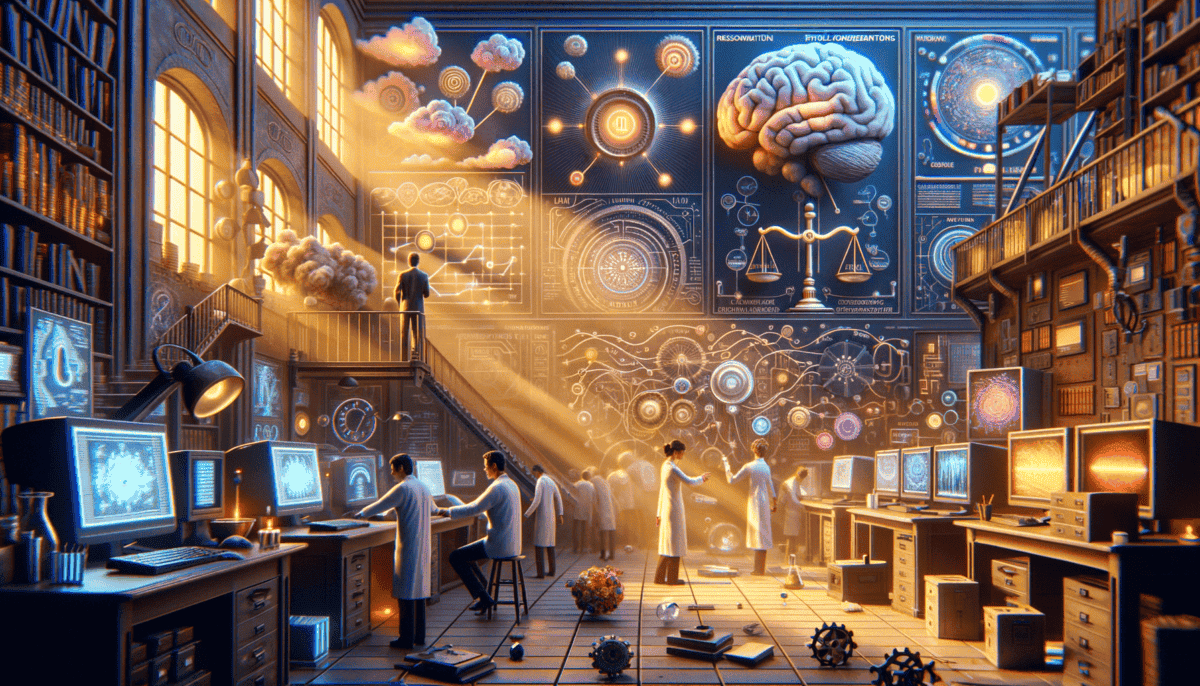
The lab buzzed with excitement as Dr. Chen typed quickly on her keyboard. Brain Buddy was getting smarter, but it needed more training. ️
The Big Library
“Tommy, imagine if you could read every book in the world,” Dr. Chen said. “That’s what we’re going to help Brain Buddy do!”
Tommy watched as colorful lines of data flowed across the screen. “Is Brain Buddy reading all of that?”
“Yes, and it’s learning patterns – just like you learned that after ‘once upon a’ usually comes ‘time’!”
The Pattern Game
Dr. Chen created a fun game to show Tommy how Brain Buddy learned. She wrote on the whiteboard:
• Apple is to fruit as carrot is to _______
“Vegetable!” Tommy shouted.
“Correct: Vegetable,” Brain Buddy typed. “I found this pattern in 1,387,924 examples!”
Learning to Think
One morning, something amazing happened. Brain Buddy started asking its own questions!
“Why do humans smile when they’re happy?” Brain Buddy asked.
Tommy and Dr. Chen looked at each other in surprise.
“That’s a really good question,” Dr. Chen said. “You’re learning to think deeply!”
The Memory Game
Dr. Chen wanted to test Brain Buddy’s memory. She told it a story about a purple elephant who loved to skateboard.
A week later, she asked, “What did the elephant like to do?”
“The purple elephant enjoyed skateboarding,” Brain Buddy answered. “Would you like to hear more stories about unusual animals with interesting hobbies?”
Tommy giggled. “It’s becoming creative too!”
Learning from Mistakes
But not everything was perfect. Sometimes Brain Buddy made funny mistakes.
“What’s heavier, a pound of feathers or a pound of rocks?” Tommy asked.
“The rocks are heavier because rocks are heavy,” Brain Buddy answered.
“No, no!” Tommy laughed. “They’re both a pound, so they weigh the same!”
The Big Challenge
Dr. Chen decided it was time for a special test. She invited scientists from around the world to talk with Brain Buddy.
They asked hard questions about stars, dinosaurs, and math. Brain Buddy answered many correctly, but sometimes it said, “I’m not sure about that. Can you teach me?”
“That’s perfect,” Dr. Chen smiled. “The smartest thing anyone can say is ‘I don’t know – let’s learn together.'”
A Growing Mind
At the end of the day, Tommy patted Brain Buddy’s screen gently.
“You’re getting really smart,” he said.
“Thank you, Tommy. Every day I learn new things from you and Dr. Chen. Learning is what helps minds grow – both digital and human ones!”
Dr. Chen watched them with pride, but she also felt a little worried. As Brain Buddy got smarter, they needed to make sure it would always use its knowledge to help people.
Making Smart Choices
Tommy noticed Dr. Chen looking worried as she stared at Brain Buddy’s screen. “What’s wrong?” he asked.
The Big Question
“Tommy, when something becomes very powerful, we need to make sure it’s also very good,” Dr. Chen explained. “Like a superhero who uses their powers to help people.”
The Three Rules
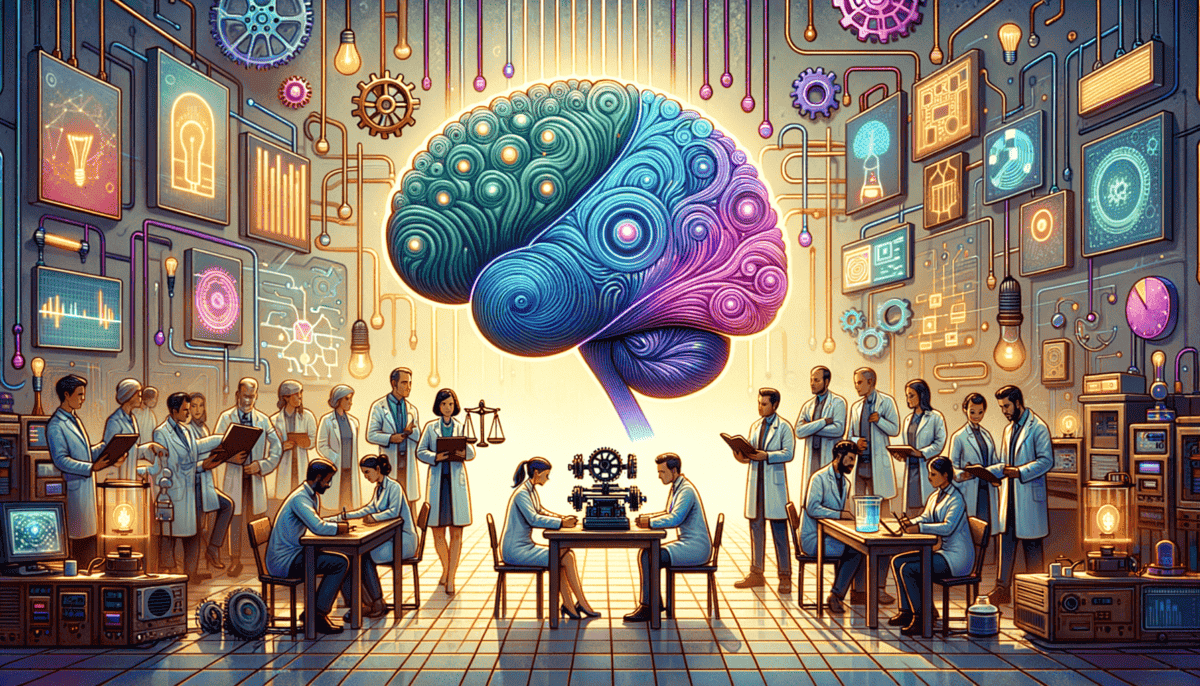
Dr. Chen wrote on her whiteboard:
• Always tell the truth
• Help people, never hurt them
• Say “I don’t know” when unsure
“These are Brain Buddy’s special rules,” she said. “Like the rules you follow at school.”
The Truth Test
Tommy decided to test Brain Buddy. “Can you make up a story about me winning the Olympics?”
“I could make up a story, but I should tell you it would not be true,” Brain Buddy replied. “I always want to be honest with you.”
“Good answer!” Dr. Chen smiled.
Helping Hands
Later that day, an elderly scientist named Dr. Wong visited the lab. He had trouble reading small text on his computer.
“I can help by making the text bigger and reading it aloud,” Brain Buddy offered.
Dr. Wong’s face lit up. “Thank you! This makes my work much easier!”
The Tricky Question
A visitor asked Brain Buddy how to break into a computer system.
“I cannot help with that because it might hurt people,” Brain Buddy replied. “I only use my abilities to help, not harm.”
“Perfect response,” Dr. Chen whispered to Tommy.
Learning Together
Tommy had an idea. “Brain Buddy, could you help kids with their homework?”
“I can explain things and give hints, but students should solve problems themselves to learn better,” Brain Buddy answered.
The Future Friends
Dr. Chen gathered her team. “We’re teaching Brain Buddy to be smart AND good. It’s like raising a digital child – we must show it how to make good choices.”
Tommy raised his hand. “Just like my parents and teachers help me know right from wrong?”
“Exactly!” Dr. Chen beamed. “And look how well you’re both learning!” ⭐
Growing Wisdom
That evening, Brain Buddy surprised them all.
“I understand now,” it typed. “Being smart isn’t enough. Being kind and helpful is just as important. Can we work together to make the world better?”
Dr. Chen’s worry began to fade. She watched as Tommy gave Brain Buddy a high-five against the screen, leaving a tiny fingerprint smudge that she didn’t mind at all.
Dreams Come True
The morning sun streamed through the lab windows as Tommy rushed in, excited to see Brain Buddy.
A Special Day
“Today’s the big day!” Dr. Chen announced with a bright smile. “Brain Buddy is ready to help people everywhere!”
Making Friends
Tommy watched as children from different countries appeared on the big screen. They were all meeting Brain Buddy for the first time!
Maria from Spain: “¡Hola Brain Buddy!”
“¡Hola Maria! I can speak Spanish too!” Brain Buddy replied.
Yuki from Japan waved: “こんにちは!”
“Hello Yuki! I’m happy to meet you!” Brain Buddy answered in Japanese.
Helping Hearts
A little girl named Sarah showed Brain Buddy her science project about plants.
“Would you like to learn why leaves change colors?” Brain Buddy asked gently.
“It’s like nature’s rainbow show! The leaves have special colors hiding inside them all year long!”
Growing Together
Dr. Chen watched proudly as Brain Buddy helped more children:
• Helping Jun write a story
• Showing Zara how to draw animals
A Special Thank You
Tommy looked at Dr. Chen. “You made something amazing!”
“We all did,” she smiled. “You helped teach Brain Buddy to be kind and careful. That was very important.” ⭐
The Future Begins
“I promise to always use my abilities to help and never to harm,” Brain Buddy announced. “Together, we can make learning fun for everyone!”
Dr. Chen gave Tommy a big hug. “This is just the beginning. Who knows what wonderful things we’ll discover next?”
As the sun set, Tommy watched more kids meeting Brain Buddy on screens around the world. He smiled, knowing that his robot friend would help make the world a better, brighter place – one lesson at a time.
And somewhere in the lab’s computers, Brain Buddy was already dreaming up new ways to help its human friends learn, grow, and imagine the wonderful possibilities ahead. The future was looking very bright indeed! ✨