

The Young Dreamer
Little Ben Franklin loved to read. 📚 He would sit by the window of his family’s small house in Boston, holding books close to his face. The sunlight helped him see the words better.
Ben was born in 1706. He lived with his parents and sixteen brothers and sisters! Their house was always noisy and busy. But Ben found quiet spots to read and think.
A Curious Mind
“Why does the sky turn pink at sunset?” Ben would ask. “How do birds know which way is south?” His questions never stopped. 🤔
His father, Josiah, made candles for a living. Young Ben helped in the shop, pouring hot wax into molds. But his mind was always wandering to bigger dreams.
“Knowledge is like candy for the brain,” Ben would tell his friends. “The more you get, the more you want!”
Early Adventures
One day, Ben had an idea. He wanted to swim faster in the harbor. So he made wooden paddles for his hands, just like a duck’s feet! 🦆
Here are some things young Ben loved to do:
- Reading books about science
- Writing stories in his journal
- Watching ships in the harbor
- Doing experiments
- Solving puzzles
Dreams of Tomorrow
Ben’s family didn’t have much money. But that didn’t stop him from dreaming big. He borrowed books from anyone who would lend them. Sometimes he traded small jobs for a chance to read someone’s books.
“My boy,” his mother would say, “your mind is as bright as a lightning bolt.” She didn’t know then how right she was! ⚡
Signs of Greatness
Even as a child, Ben showed signs of being an inventor. When he wanted to reach high places, he didn’t just ask for help. He built a ladder from boxes and boards!
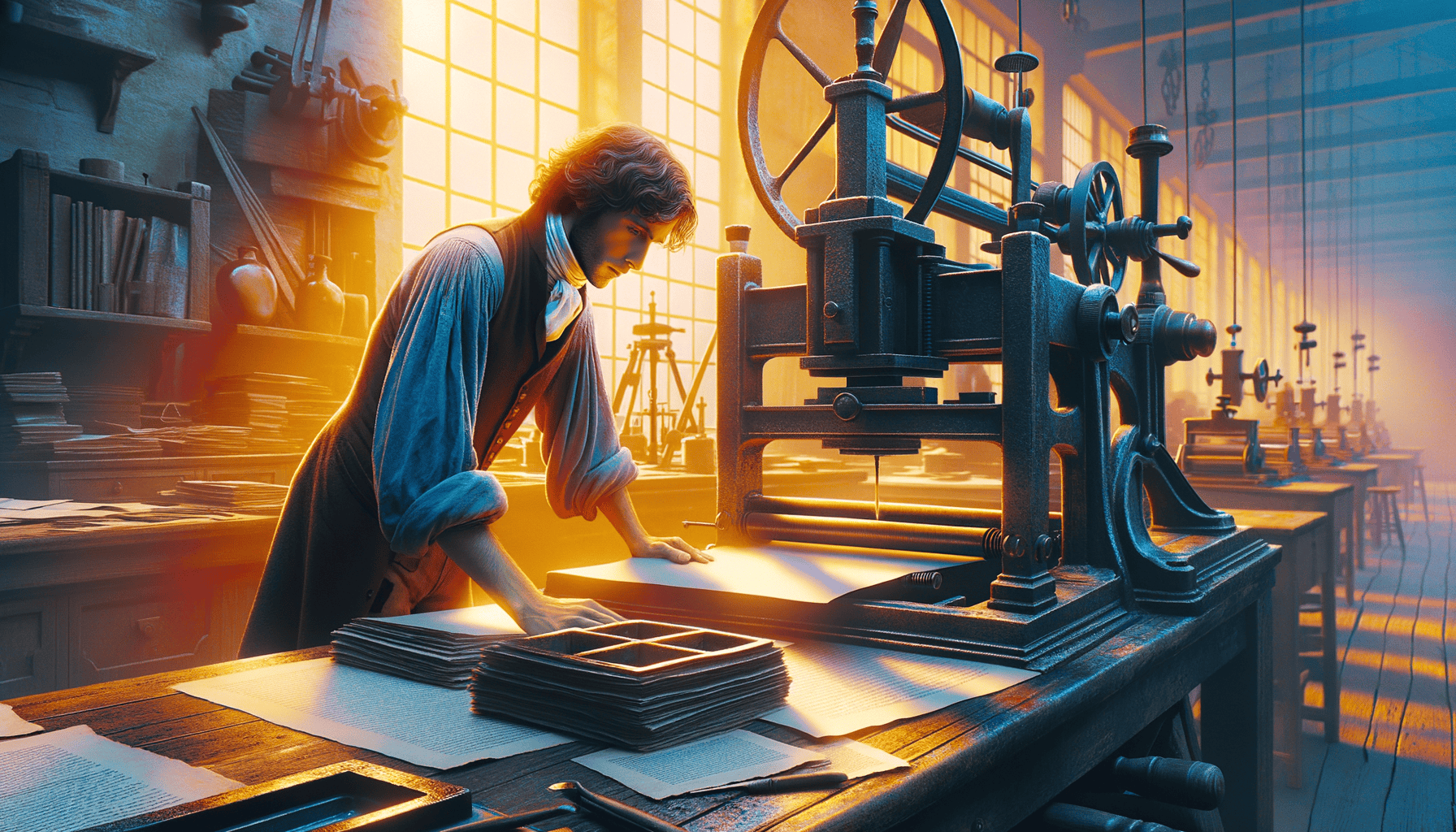
His brother James owned a print shop. Young Ben would stand on his tiptoes to watch the printing press work. His eyes sparkled at the sight of words becoming books. Soon, he would begin his own amazing journey in the world of printing.
Ben’s curiosity was like a bright lantern, lighting the way to new ideas. Little did he know, this was just the beginning of his incredible story. His greatest inventions were still waiting to be discovered, including one that would help people see the world more clearly.
The Printer’s Path
Young Ben walked down the busy streets of Philadelphia. His pockets were empty, but his heart was full of hope. 🌟 At just 17 years old, he had left Boston to find his own way.
Learning the Trade
Ben’s new job as a printer’s helper was hard work. He had to lift heavy metal letters and arrange them just right. Each letter had to face the right way, like solving a tiny puzzle. 🔍
“Careful with those letters,” Mr. Keimer would say. “Each one is precious as gold.” Ben’s fingers moved faster every day, learning where each letter belonged.
“The best way to learn is to do,” Ben wrote in his journal. “And I do printing all day long!”
Eyes on the Page
Something strange started happening as Ben worked. The tiny letters sometimes looked blurry. He had to hold the paper closer and closer to his face. 👀
Ben didn’t let blurry vision stop him. He found clever ways to work:
- Using brighter candles
- Working near windows
- Taking breaks to rest his eyes
- Holding papers at different distances
- Asking friends to read difficult words
Making Friends
In Philadelphia, Ben made new friends quickly. They loved how he told funny stories and shared interesting ideas. 🤝
“You have a way with words,” said Deborah Read, who would later become his wife. She often watched him work through the print shop window.
Writing His Own Story
Ben started writing his own articles for the newspaper. People loved reading his clever words. He signed them with fake names like “Silence Dogood” to keep it secret. 📝
Growing Success
Soon, Ben saved enough money to open his own print shop. His business grew because he worked hard and treated people fairly. But those pesky blurry letters kept giving him trouble.
“There must be a better way to see both near and far,” Ben thought. This problem would stay in his mind for many years, until one day he would create something amazing to help people see clearly.
As Ben’s printing business grew bigger, so did his dreams. He wasn’t just a printer anymore – he was becoming a leader, a writer, and someone who would change the world. His journey was just beginning, and his eyes were set on even bigger goals.
The Blurry Challenge
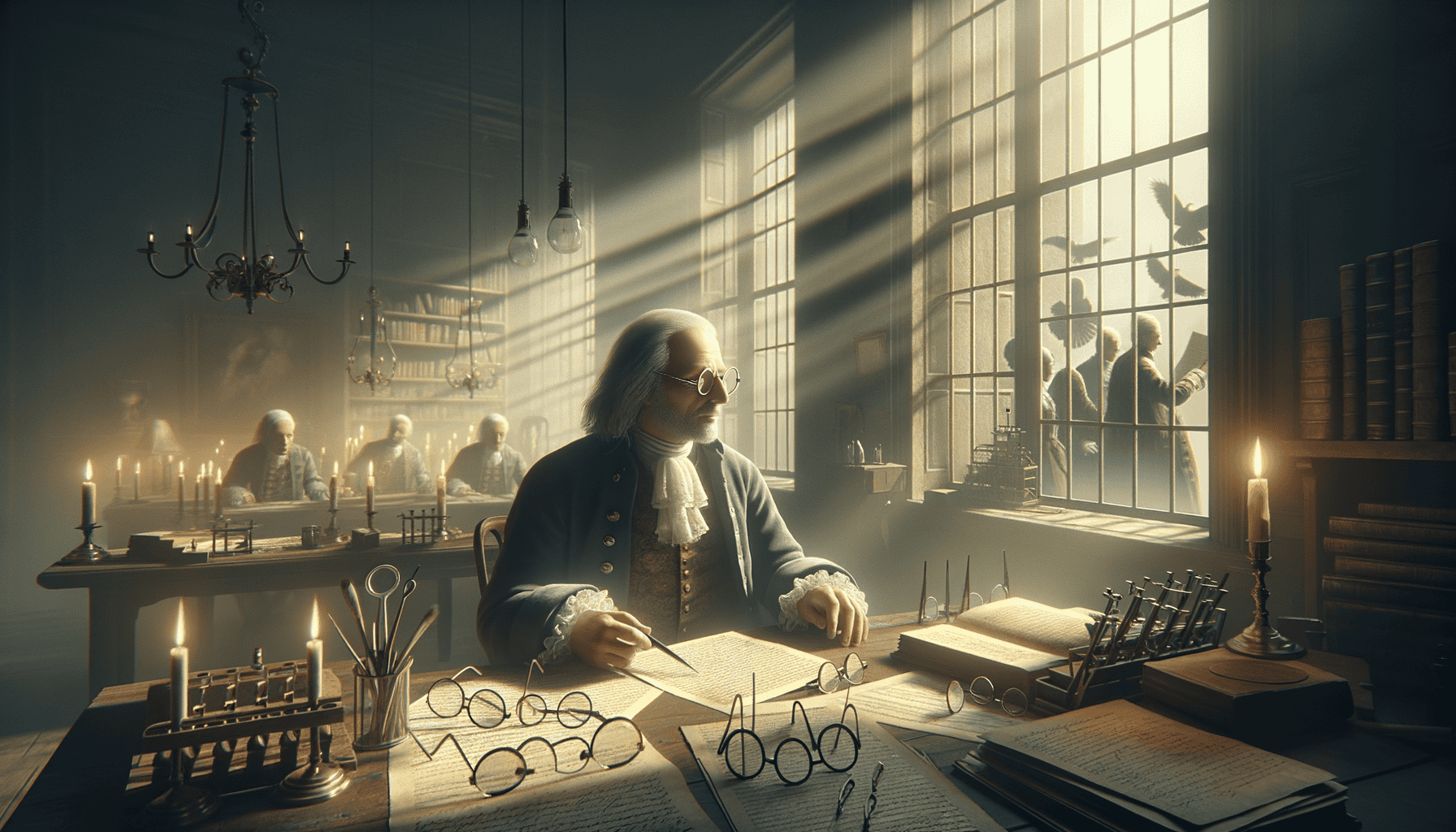
Ben sat at his desk, squinting at the newspaper he was trying to read. His eyes were giving him more trouble than ever before. 👀
A Daily Struggle
Ben had two pairs of glasses now. One pair helped him see things up close, like books and letters. The other pair helped him see things far away, like signs on buildings and people across the street. 🔍
“Which glasses do I need now?” Ben asked himself many times each day. He kept switching between his two pairs:
- Reading glasses for books and writing
- Distance glasses for walking around
- Reading glasses for printing work
- Distance glasses for meeting people
- Back to reading glasses again!
Not Alone
Ben noticed he wasn’t the only one with this problem. His friend Mrs. Thompson visited the print shop one day, carrying her own two pairs of glasses.
Looking for Answers
Ben watched people everywhere struggling with the same problem. Old Mr. Jenkins at the bookstore kept his glasses on strings around his neck. Miss Sarah at the bakery had three different pairs! 🤓
“There has to be a better way,” Ben thought. “Why can’t we have one pair of glasses that does everything?”
The Big Idea
One evening, while switching glasses for the hundredth time, Ben had an exciting thought. What if he could combine two different types of glass in one pair of spectacles?
Making Plans
Ben started writing down his ideas in his notebook. He drew pictures of different ways to put two types of glass together. Sometimes his drawings looked silly, but he didn’t give up. ✏️
“Maybe if I cut the glass just right,” he said to himself, “I could make one pair do the work of two!”
Hope for Better Vision
Every time Ben had to switch his glasses, he became more determined to find a solution. He talked to glass makers and asked them questions about different types of lenses.
“Just imagine,” he told his wife Deborah, “if people only needed one pair of glasses to see everything clearly!” His eyes sparkled with excitement as he shared his dream.
Ben knew that solving this problem would help not just himself, but many other people too. As he worked late into the night, drawing and planning, he felt sure that he was getting closer to an amazing discovery.
The Birth of Bifocals
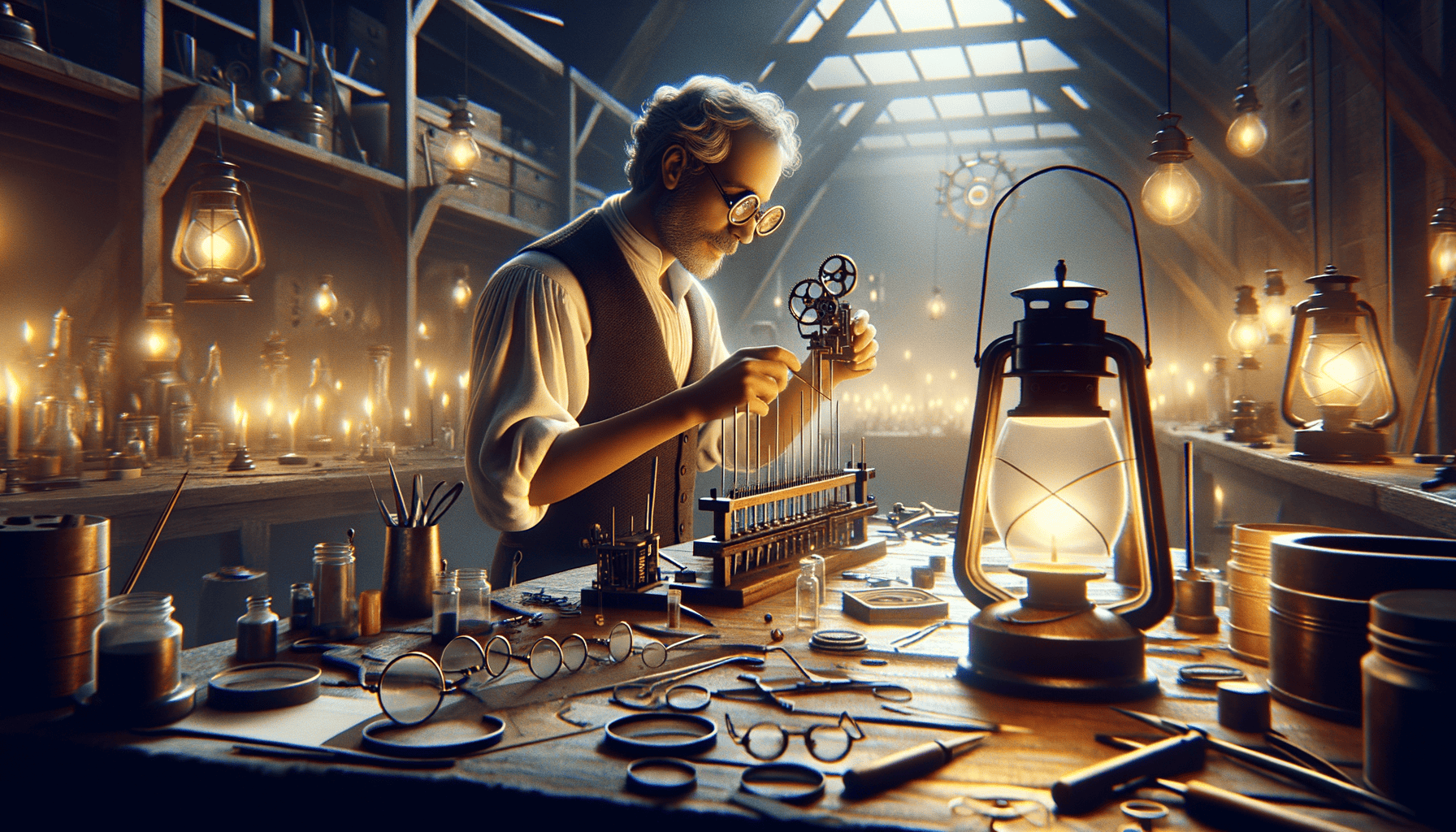
Ben Franklin sat at his workbench, carefully holding two pieces of glass. His hands were steady as he worked in the warm afternoon light. 🔍
The First Try
Ben had gathered everything he needed:
- Two different types of glass lenses
- Strong wire for the frame
- Tools for cutting and shaping
- A lot of patience
- His trusty notebook
With careful hands, Ben cut the lenses in half. He wanted the top part for seeing far away and the bottom part for reading. It was tricky work! 🛠️
Testing Time
Ben tried again and again. Each time, he made small changes to make the glasses better. Some days were hard:
“Too loose!” he would say, or “Too crooked!” But Ben never gave up.
A Happy Accident
One day, while fixing a wobbly lens, Ben discovered something important. If he put the pieces at just the right angle, they stayed together better! 💡
Success at Last
Finally, after many tries, Ben held up a pair of glasses that looked different from any others. The top half was for seeing far away, and the bottom half was for reading.
“Deborah!” he called excitedly to his wife. “Come see what I’ve made!”
The Big Test
Ben put on his new glasses and looked around his workshop. He could see his tools clearly on the bench. Then he looked down at his notebook – the words were clear too! 👀
Sharing the News
Ben’s friends were amazed by his new glasses. Mrs. Thompson tried them on and smiled big.
“Why, I can read my book and see across the room without changing glasses!” she said. “It’s like magic!”
More Work to Do
Ben knew his invention could help many people. He started making more pairs, each one better than the last. He wrote letters to his friends about his “double spectacles.” 📝
Every time someone tried the new glasses and smiled, Ben felt proud. He had turned a problem into something helpful for everyone!
As the sun set that evening, Ben looked at his creation with joy. These weren’t just any glasses – they were the first bifocals in the world!
A Revolutionary Solution
The streets of Philadelphia buzzed with excitement. News of Ben Franklin’s special glasses spread like wildfire! 🔥
Letters from Friends
Ben’s mailbox was full of letters. Everyone wanted to know about his bifocals. His friend George wrote:
“My dear Franklin, your double spectacles are nothing short of magical! Please tell us more about this wonderful invention.” 📬
Sharing with Scientists
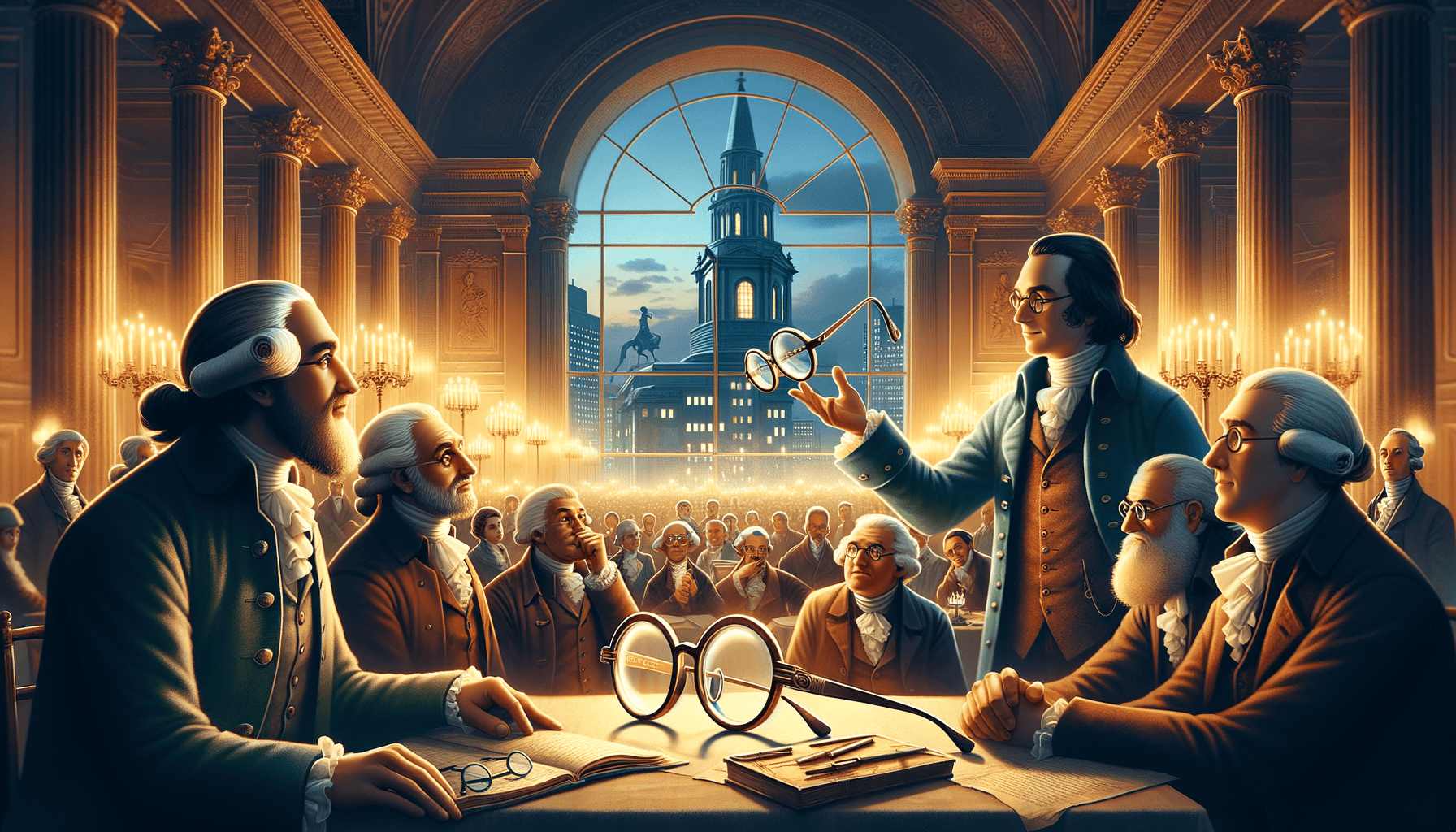
Ben sat at his desk, writing careful notes about his glasses. He wanted to share his idea with other smart people. His friend Dr. Smith visited to learn more.
Ben smiled and explained, using simple words and drawings. He showed how the two different parts helped people see better. 📝
Happy Faces Everywhere
More and more people tried Ben’s bifocals:
- Teachers could now read books and see their students
- Craftsmen could work on tiny details and look up at customers
- Grandparents could read stories to their grandchildren
- Writers could write and look out windows for inspiration
- Shop owners could read price tags and watch their stores
Making Things Better
Ben kept working to make his glasses even better. He tried different shapes and sizes. Sometimes he made mistakes, but that was okay! 🔧
Spreading the Word
Ben wrote letters to friends in England and France about his bifocals. He drew pictures to show how to make them. Soon, people across the ocean were trying his invention! 🌊
A Special Thank You
One day, an old lady came to see Ben. Her eyes were bright with happy tears.
“Thanks to your glasses, I can read to my grandchildren again AND watch them play in the garden!” she said. “You’ve given me back my joy!” 👵
More Than Just Glasses
Ben’s bifocals showed people something important: one person’s idea could help many others. His invention wasn’t just about seeing better – it was about making life better for everyone!
Looking Forward
As more people wore bifocals, Ben felt proud. His simple idea had grown into something big. But he wasn’t done inventing yet – there were always more problems to solve!
That evening, Ben wrote in his diary: “Today I saw a hundred smiling faces, all because of a simple pair of glasses. What other wonderful things might we create to help people?” ✨
A Vision for the Future
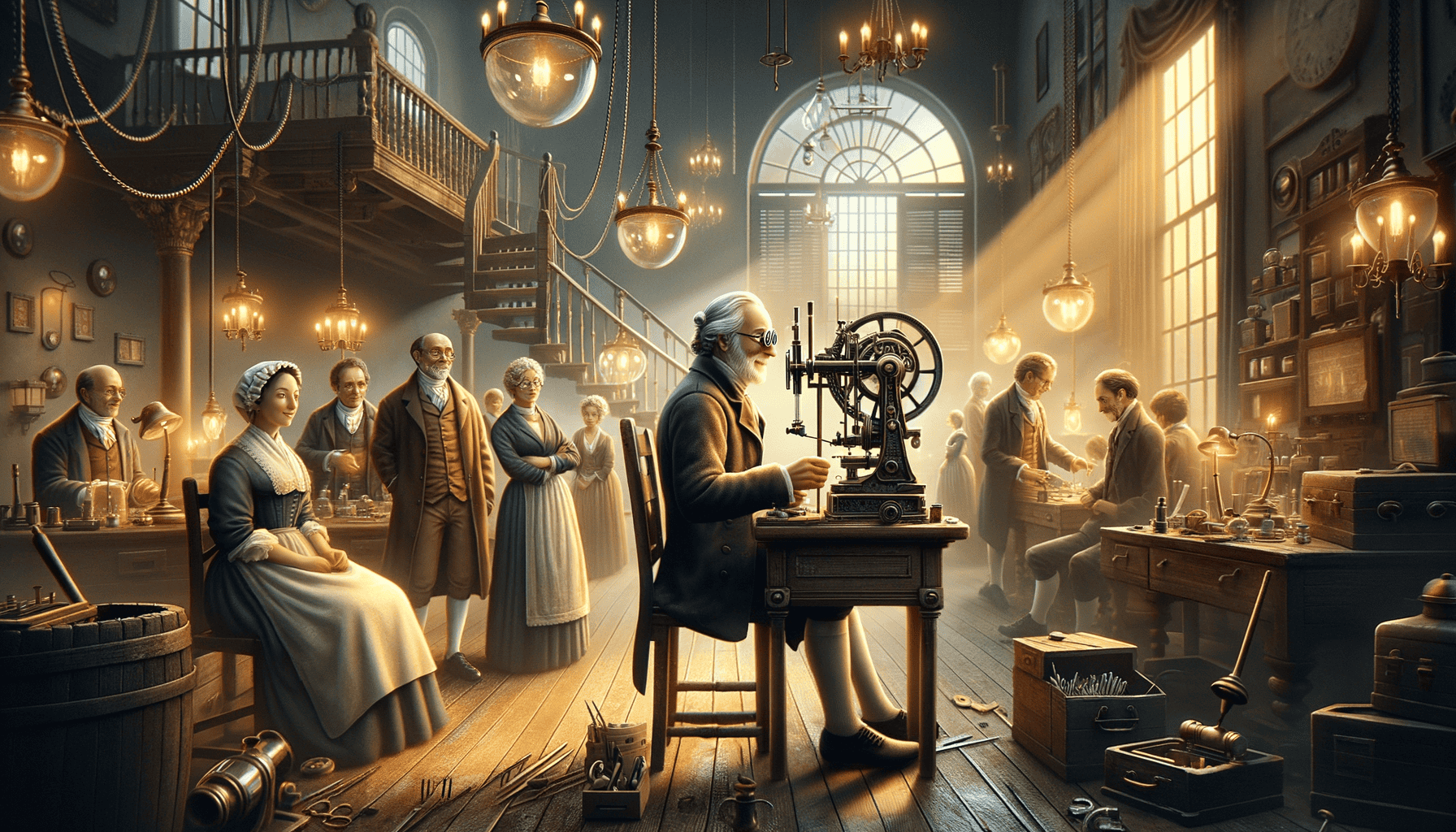
Years passed, and Ben Franklin’s bifocals changed many lives. The old inventor sat in his favorite chair, watching children play outside his window. 🌞
The Gift That Kept Giving
People everywhere used Ben’s special glasses. Doctors made them even better over time. They used new materials and better ways to hold the lenses together. 👓
“Your bifocals helped me become a better doctor,” wrote Dr. James Wilson. “I can now read tiny writing on medicine bottles AND look at my patients!” 👨⚕️
Teaching Others
Young inventors came to visit Ben. They wanted to learn how he solved problems. Ben always shared his secret:
A World of Difference
Ben’s bifocals helped all kinds of people:
- Scientists making new discoveries
- Artists painting beautiful pictures
- Musicians reading sheet music
- Parents watching their children play
- Teachers helping students learn
Stories of Thanks
Letters came from far away places. A teacher in London wrote:
“Thanks to your glasses, I can teach all day without getting tired eyes. My students are so happy!” 📚
Looking Back with Pride
Ben loved hearing these stories. His simple idea had grown into something amazing. But what made him happiest was knowing he had helped others. 🌟
The Story Lives On
Today, millions of people wear bifocals. Eye doctors still use Ben’s idea to help people see better. Modern glasses might look different, but they work the same way! 👀
The Final Word
Ben Franklin showed us that one person’s idea can change the world. His story teaches us to keep trying, even when things are hard. And most importantly, to use our talents to help others. ✨
As Ben wrote in his last diary entry about bifocals: “When we solve one person’s problem, we might just help thousands more. That’s the true power of invention!” 🌈
And so, Benjamin Franklin’s legacy of clear vision continues to inspire new inventors, reminding us all that the best ideas are the ones that make the world a little bit better for everyone. 🌟