

The Day Everything Changed
Sarah Matthews sat on her front porch swing, watching the dust dance in the crisp October air. The wooden boards creaked beneath her feet as she pushed back and forth, her pigtails swaying with each movement. At twelve years old, she didn't understand why her parents seemed so worried lately.
"Sarah, come help set the table!" her mother called from inside their modest farmhouse.
The warm Oklahoma sun was setting, painting the sky in shades of orange and pink. Inside, the radio crackled with news that made her father's face grow darker with each passing minute.
“Stock market crashes! Worst trading day in history!” the announcer’s voice boomed through their small kitchen.
"What's wrong, Papa?" Sarah asked, noticing how her father's hands trembled as he held his coffee cup.
John Matthews tried to smile, but it didn't reach his eyes. "Well, sweetheart, remember how I told you about people buying stocks? Today, something big happened in New York that's going to change things for a lot of people."
Sarah's mother, Emma, wiped her hands on her apron and joined them at the table. "We'll get through this together," she said firmly, though her voice quivered slightly.
The next few days brought more changes than Sarah could count:
• Her father spent more time looking at papers with numbers
• Neighbors started visiting to share worried whispers
• The general store began turning people away who couldn't pay
• Some families packed up and left town entirely
"But we still have our farm, right Papa?" Sarah asked one evening, helping him feed the chickens.
John patted her head gently. "Yes, darling. And that's something to be thankful for. Many folks in the city have lost everything."
A Different Kind of Harvest
As autumn turned to winter, Sarah noticed fewer treats at the store. Her mother started making clothes from flour sacks, and their Sunday dinners became simpler. But the Matthews family had something many others didn't – their land and each other.
"Remember, Sarah," her mother said while teaching her to mend socks, "being rich isn't just about money. We're rich in love and determination." ❤️
The radio brought more worrying news each day. Banks were closing, and people were losing their homes. But in their little farmhouse, Sarah's family gathered each evening to share stories, sing songs, and plan for tomorrow.
One night, Sarah overheard her parents talking in hushed voices after they thought she was asleep:
"John, what if things get worse?"
"Then we'll work harder, Emma. We've got good land, strong backs, and each other. That's more than most can say right now."
Sarah hugged her pillow tighter, thinking about how lucky she was to have her family. Even as the world outside seemed to be falling apart, their love for each other only grew stronger.
| Before the Crash | After the Crash |
|---|---|
| Weekly treats from the store | Homemade everything |
| New clothes from catalogs | Flour sack dresses |
| Fancy Sunday dinners | Simple, home-grown meals |
As winter settled in, Sarah learned new ways to help. She gathered eggs more carefully than ever, helped her mother preserve every bit of food they could, and even learned to knit using yarn from old sweaters. The whole family worked together to make sure nothing went to waste.
The morning frost painted delicate patterns on her window as Sarah watched more neighbors pack up their belongings. Some headed west, chasing rumors of work in California. Others moved in with relatives in other states.
"Papa," she asked one evening, "will we have to leave too?"
Her father looked out at their fields, his face thoughtful. "Not if we can help it, Sarah. This land is part of who we are. But whatever happens, we'll face it together."
The radio might bring bad news, and the newspapers might tell sad stories, but in their little farmhouse, hope still lived. Sarah knew that as long as they had each other, they could weather any storm – even one as big as this.
Dust and Dreams
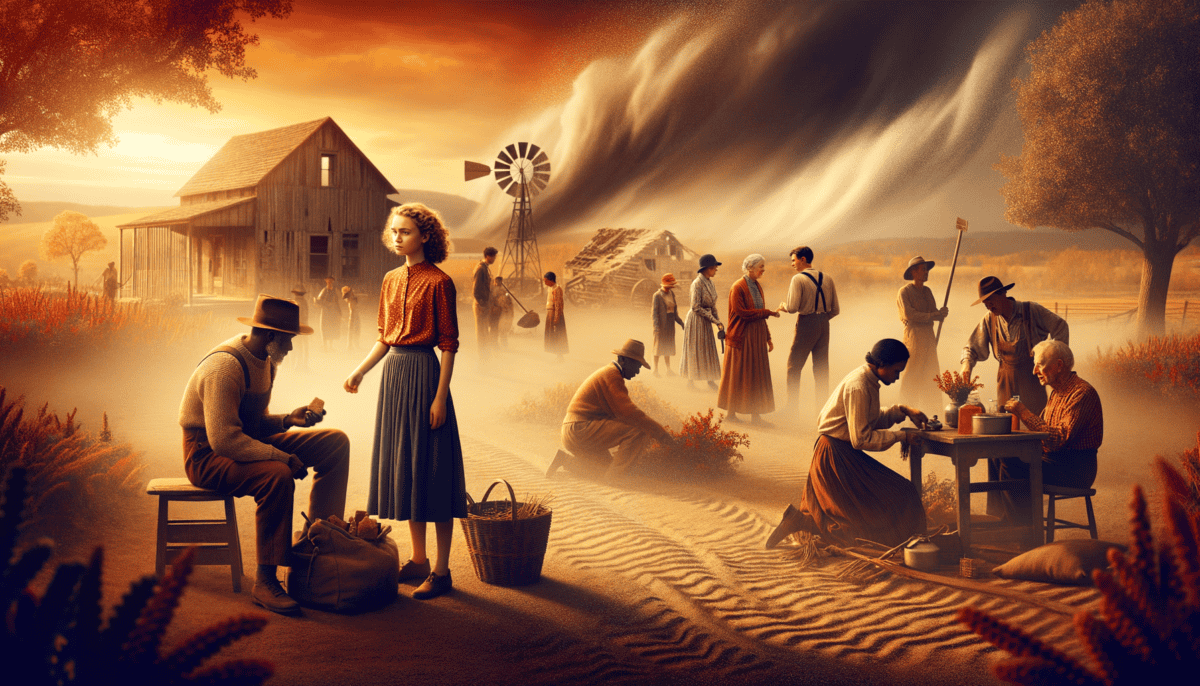
The wind howled outside Sarah’s window, carrying more than just sound. A fine layer of dust covered everything in sight, sneaking through the tiniest cracks in their farmhouse. It had been six months since Black Tuesday, and now a new enemy threatened their farm – the dust. ️
“Mama, why is the sky brown again?” Sarah asked, helping her mother hang wet sheets over the windows to catch the dust.
Emma Matthews wiped her brow, leaving a muddy streak across her forehead. “The earth is tired, sweetheart. Too many farmers plowed too much land, and now the soil is too loose.”
Fighting the Dust
Every morning brought new challenges. Sarah helped her family fight against the relentless dust:
• Cover windows with wet sheets
• Sweep floors three times a day
• Wear wet bandanas over faces outside
• Clean dust from farm equipment
• Save every drop of clean water
“Look what I found!” Sarah called out one morning, pointing to tiny green shoots pushing through the dusty soil. Her father came running, hope lighting up his tired face.
“Those plants are fighters, just like us,” John Matthews said, kneeling to inspect the brave little sprouts. “They remind us to never give up.”
The community pulled together during these hard times. Neighbor helped neighbor, sharing what little they had. Mrs. Johnson from next door taught Sarah’s mama how to make soup from almost nothing. Mr. Wilson fixed their truck when it broke down, asking only for help with his harvest in return.
One particularly bad day, a massive dust storm rolled in. The sky turned black as night at noon. Sarah huddled with her family around their kitchen table, listening to the wind shake their house.
“Tell us a story, Papa,” Sarah whispered, trying to be brave.
John’s voice was steady and warm as he began: “Once there was a little farm that faced many challenges. But the family who lived there had something special – they had hope and each other…”
| Problem | Solution |
|---|---|
| Dusty air | Wet sheets on windows |
| Dying crops | New farming methods |
| Little food | Community sharing |
Sarah learned new skills every day. She helped her mother make butter from their cow’s milk, collected eggs from their remaining chickens, and even learned to patch clothes with tiny, neat stitches.
“You’re becoming quite the young lady,” her mother said proudly one evening, watching Sarah mend a torn shirt.
The dust storms kept coming, but so did moments of joy. Sarah found beauty in the way sunlight filtered through the dust clouds, creating strange and wonderful colors. She discovered that even in the hardest times, wildflowers would sometimes push through the cracked earth, bringing spots of color to their brown world.
One morning, Sarah woke to find her father already out in the fields, trying something new. He was planting trees in long rows.
“These will be our windbreak,” he explained. “They’ll help stop the soil from blowing away. It might take years, but good things are worth waiting for.”
That evening, as the family sat on their porch watching the sunset paint the dusty sky in shades of purple and gold, Sarah realized something important. Even though times were hard, they were learning to be stronger, smarter, and kinder. Maybe that was worth more than all the money in the world.
The Matthews family faced each new challenge with determination and hope. They might not be able to stop the dust storms, but they could face them together, finding ways to adapt and survive. Each small victory – a successful crop, a mended fence, or a helping hand from a neighbor – made them stronger.
The Long Road West
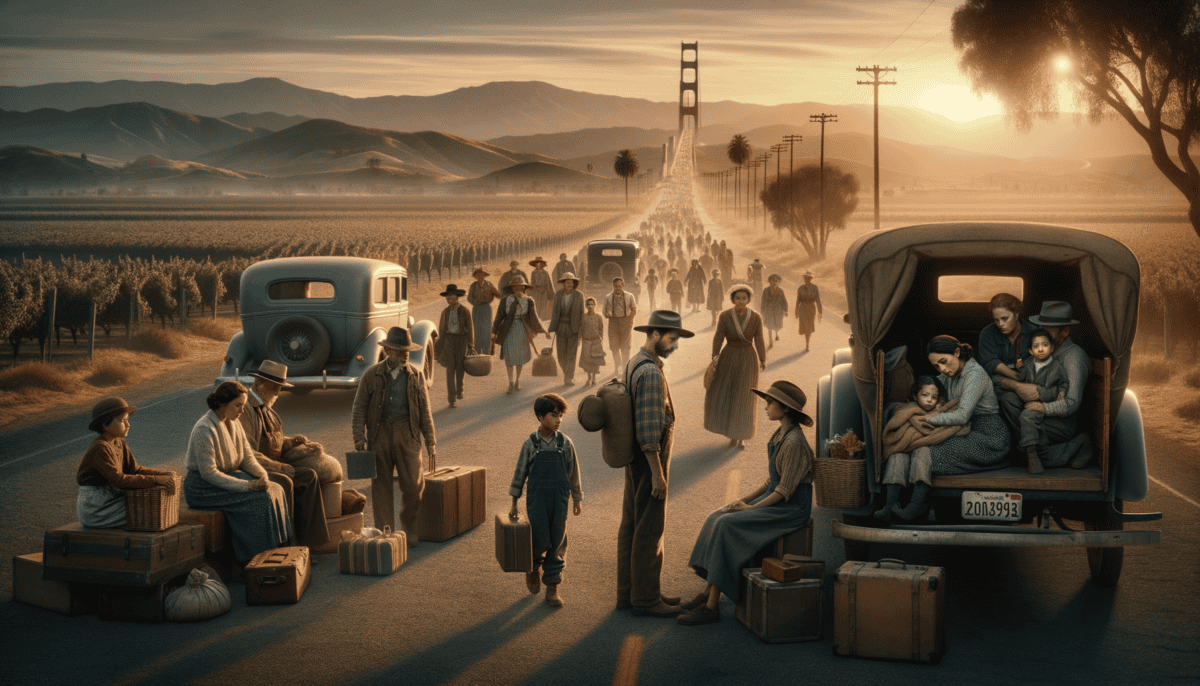
The old truck groaned under the weight of everything the Matthews family owned. Sarah sat between Mama and Papa in the front seat, watching their farmhouse disappear in the dusty distance.
“Are you sure California has no dust storms?” Sarah asked, clutching her favorite doll.
Emma squeezed her daughter’s hand. “That’s what Uncle Joe’s letters say. He writes about green valleys and lots of work picking fruits and vegetables.”
Their truck wasn’t alone on Route 66. Other families traveled the same path, their vehicles packed high with belongings. Sarah saw children her age in other cars, their faces pressed against windows, looking just as worried as she felt.
Friends Along the Way
At their first campsite, Sarah met Lucy, a girl from Texas. Their families shared a campfire and stories:
“My pa says California’s got work for everyone,” Lucy said, her eyes bright with hope. “Maybe we’ll pick oranges together!”
The journey wasn’t easy. Sometimes the truck broke down, and Papa had to fix it. Other times, they had to choose between buying gas or food. But everywhere they stopped, they found other families willing to help.
| Challenge | Solution |
|---|---|
| Empty gas tank | Trading skills for fuel |
| Hungry bellies | Sharing meals with others |
| Tired truck | Help from fellow travelers |
At night, families gathered in camps by the roadside. Adults shared news about jobs and road conditions while children played games. Sarah learned new songs and stories from kids from all over the country.
“Look!” Papa called out one morning. “Those mountains mean we’re getting closer to California!”
The landscape changed as they drove. The flat, dusty plains gave way to rocky hills and eventually, tall mountains. Sarah had never seen anything like it. ️
“The air smells different,” she noticed, taking deep breaths of mountain air.
One evening, they met an old man who played guitar at the camp. His songs told stories about people looking for better lives:
Carrying hope in heavy loads,
California’s calling sweet and low,
That’s why west we chose to go.”
Sarah helped Mama cook simple meals on their camping stove. They learned to make meals stretch further by adding wild vegetables they found along the way. Papa taught her to identify safe plants to eat.
Sometimes, when the road got rough, Sarah would tell stories to keep everyone’s spirits up. She made up tales about the adventures they’d have in California:
“And we’ll live in a house with real windows,” she’d say, “and grow the biggest oranges anyone’s ever seen!”
The journey taught Sarah important lessons about sharing and kindness. When their bread was stale, another family offered fresh cornbread. When Lucy’s family ran out of gas, Papa shared some of theirs.
“Remember this,” Mama said one night under the stars. “Even when we have nothing else, we can always offer kindness.”
As they got closer to California, more cars joined them on the road. Sarah counted license plates from different states – Oklahoma, Texas, Arkansas, Kansas. Each car carried families just like hers, all heading west with dreams of a better life.
Through dusty windows, Sarah watched America roll by. Towns, farms, deserts, and mountains – each new sight filled her with wonder. Maybe, she thought, this journey wasn’t just about leaving home. Maybe it was about finding a new kind of home, one made of hope and courage and the kindness of strangers.
The Matthews family drove on, their old truck carrying not just their belongings, but their dreams too. California waited ahead, and with it, the promise of a new beginning.
A New Beginning in California
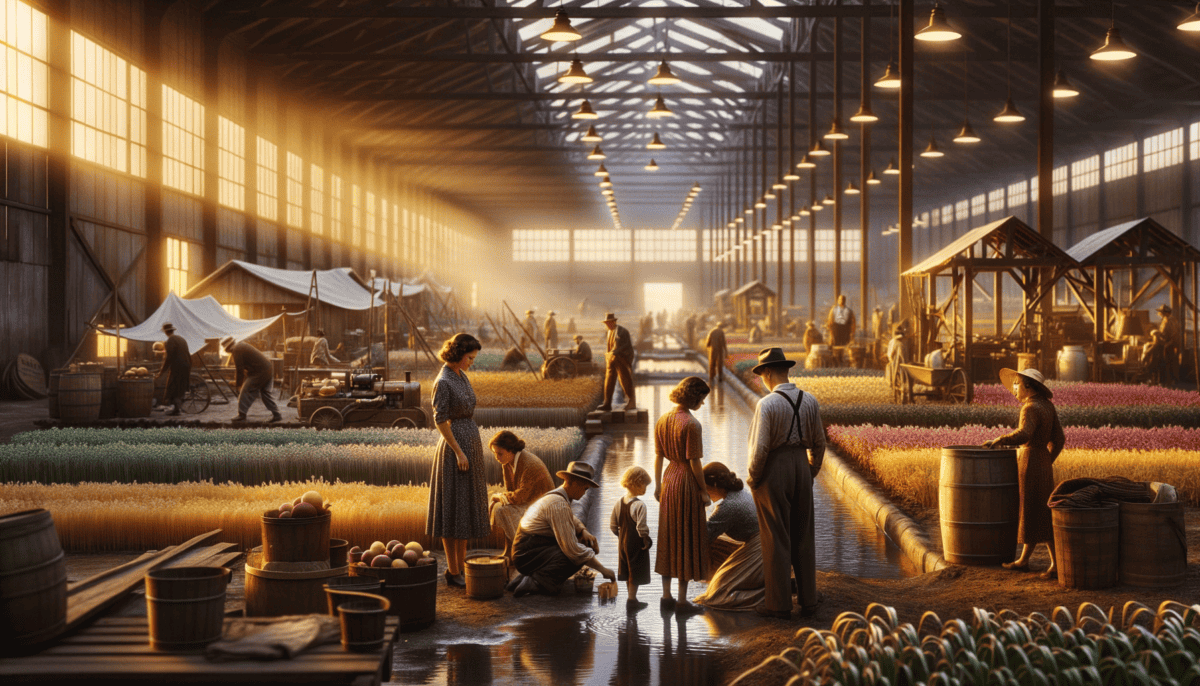
Sarah’s eyes widened as their truck rolled into California’s San Joaquin Valley. Green fields stretched as far as she could see. After weeks on dusty roads, the sight of growing things made her heart leap.
“Look at all the trees, Papa!” Sarah pressed her nose against the window. Rows of fruit trees marched across the landscape like soldiers.
The Matthews family found space in a camp near Fresno. Other families lived in tents and small wooden shelters. Sarah noticed right away that things weren’t as easy as Uncle Joe’s letters had promised.
“We’ll make do,” Mama said, setting up their tent. “We’re together, and that’s what matters.”
Making New Friends
Sarah met Maria, whose family came from Texas months ago. Maria taught Sarah Spanish words while they played with dolls made from corn husks.
Papa found work picking peaches. The sun was hot, and the work was hard, but he never complained. Mama took in washing from other families to earn extra money. Sarah helped by hanging clothes on lines strung between trees.
| Daily Tasks | Who Helped |
|---|---|
| Cooking meals | Everyone took turns |
| Getting water | Children carried buckets |
| Teaching lessons | Camp mothers shared duties |
Life in the camp wasn’t always easy. Sometimes there wasn’t enough food. But people shared what they had:
- Maria’s mama taught them to make tortillas
- The Johnson family shared their vegetable soup
- Old Mr. Pete played his harmonica for evening entertainment
- Mrs. Wong showed the children how to fold paper birds
Sarah started attending the camp school. It wasn’t like her old school – classes met under a big tree, and they shared just a few books. But the teacher, Miss Thompson, made learning fun.
One day, a government lady visited the camp. She talked about something called the “New Deal” and how President Roosevelt wanted to help families like Sarah’s. The camp would get real bathrooms and clean water.
“Things are getting better,” Papa said that night. “Slowly, but they’re getting better.”
Sarah helped in the community garden where families grew vegetables. She loved watching the tiny seeds turn into food they could eat. It reminded her of their farm back home, but this time, everyone worked together.
“The soil here is different,” she told Maria as they pulled weeds. “But good things still grow.”
At night, families gathered around campfires to share stories. Sarah learned about places she’d never seen – Texas ranches, Missouri farms, Arizona deserts. Each family had their own journey, but now they were all part of the same community.
Sometimes, Sarah missed their old home. But she was learning that home wasn’t just a place – it was people who cared about each other. The camp had become a different kind of home, filled with new friends and shared hopes.
One evening, as the sun painted the sky orange, Sarah watched children playing baseball with a makeshift ball and stick. Their laughter echoed across the camp. Even with all the hardships, there was still joy to be found.
“Papa,” she asked, “do you think we’ll stay in California forever?”
He smiled and pulled her close. “I don’t know about forever, Sarah. But right now, we’re where we need to be, making the best life we can.”
The camp buzzed with energy as people worked together to build something new. Through sharing and caring, they were all learning that even the hardest times could bring unexpected blessings.
Standing Together
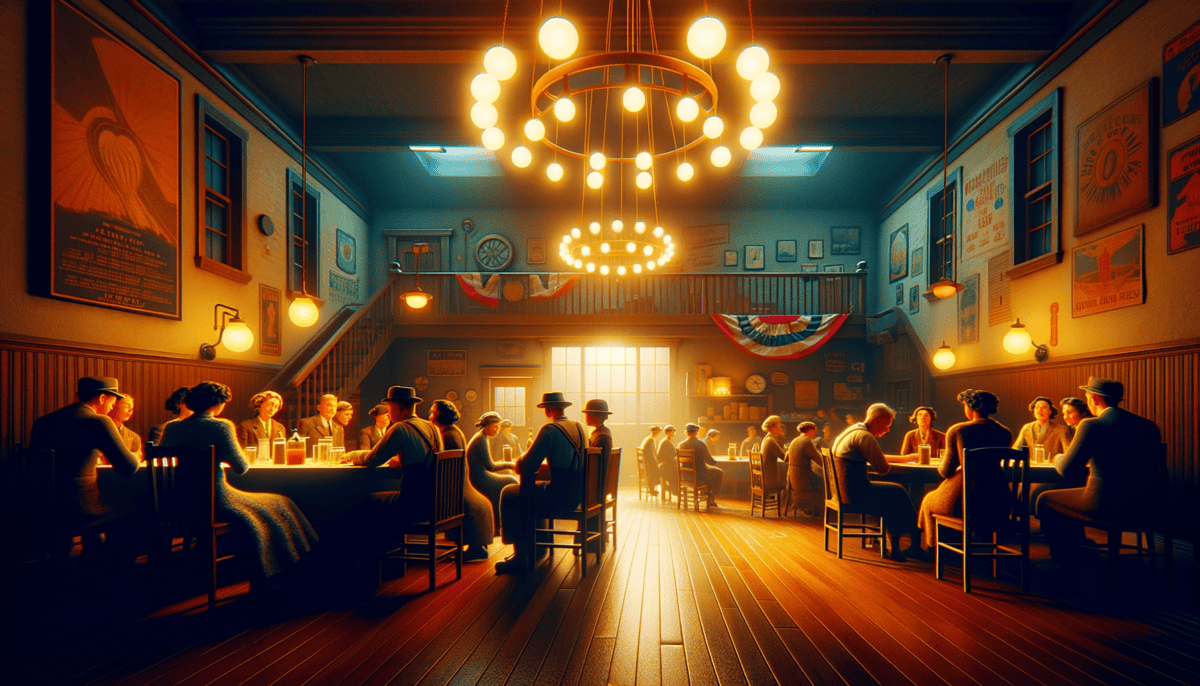
Spring brought new energy to the migrant camp. Sarah watched as people gathered for a big meeting under the old oak tree. Papa said workers were joining together to ask for better pay.
“Unity is our strength,” Mr. Rodriguez told the crowd. Sarah sat on Papa’s shoulders to see better. More than a hundred people had come!
Mama helped organize a camp kitchen where families took turns cooking for everyone. The smell of beans and fresh tortillas filled the air.
“When we share what we have, no one goes hungry,” Mama said, stirring a big pot of soup.
Making Their Voices Heard
Sarah and Maria helped make signs for the workers’ meeting. They used bright colors and big letters:
“We Are All Human!”
“Together We Rise!”
The camp became busier than ever. New families arrived every day, bringing stories and songs from different places. Sarah learned that being different made their community stronger.
| Community Projects | How People Helped |
|---|---|
| Building a playground | Everyone brought materials |
| Starting a library | Sharing books and teaching |
| Making music | Evening sing-alongs |
The community worked together in new ways:
- Taking care of sick neighbors
- Teaching each other new skills
- Sharing news and information
- Supporting families in need
Small Victories
After weeks of meetings, something amazing happened. The farm owners agreed to raise wages! People celebrated with music and dancing.
Sarah noticed changes in herself too. She was braver now, ready to speak up when things weren’t fair. When new kids came to the camp, she helped them feel welcome, just like Maria had done for her.
The community garden grew bigger. Families planted flowers along with vegetables. “Beauty matters too,” Miss Thompson said. “It gives us hope.”
One day, a newspaper reporter visited the camp. She took pictures and wrote about how the families worked together. Sarah felt proud seeing their story in print.
Growing Stronger
“Remember when we first got here?” Maria asked as they picked tomatoes. “Everything seemed so scary.”
Sarah nodded. “Now it feels like home. A different kind of home, but still home.”
The camp had changed too. Thanks to everyone working together, they now had:
– A real school building
– Better houses replacing tents
– A community meeting hall
One evening, as families gathered for their weekly community dinner, Sarah looked around at all the faces. Some she’d known since Oklahoma, others she’d met here. All were part of her bigger family now.
Papa stood up to speak. “Times are still hard,” he said, “but together, we’re finding ways to make them better. That’s what community means.”
Sarah squeezed Mama’s hand. The future still held questions, but they weren’t facing them alone anymore. That made all the difference.
As the sun set, casting long shadows across the camp, children played while adults talked about tomorrow. The evening air filled with hope – not the desperate kind they’d started with, but a stronger hope built on working together.
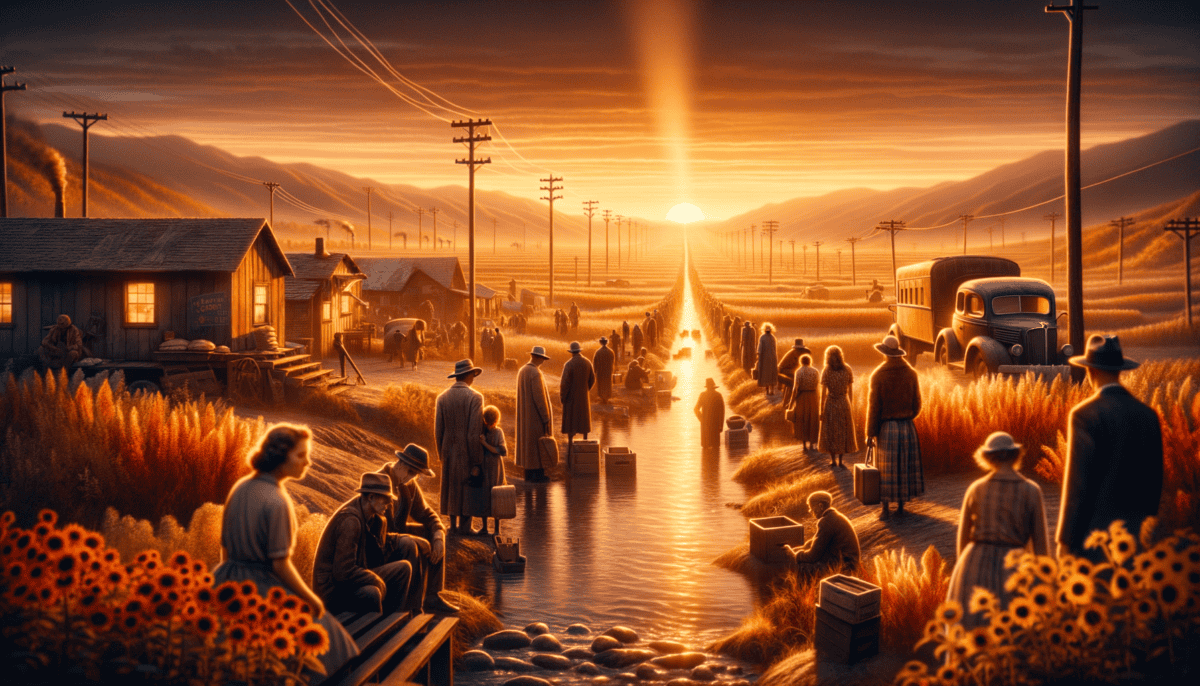
Dawn of a New Era
The radio crackled with exciting news in early 1942. “America Needs Workers!” Sarah listened closely as Papa explained how the war was creating new jobs.
“Things are different now,” Mama said, folding laundry. “Remember when we first came here? Now look at us!” Sarah smiled, thinking about how far they’d come.
New Opportunities
Papa got a job at an airplane factory. The pay was better than farm work, and they could finally rent a small house.
“We’re building a future here,” Papa said proudly, showing Sarah his first paycheck.
Sarah, now fourteen, helped Miss Thompson teach younger kids at the camp school. She loved seeing their faces light up when they learned something new.
Looking Back, Moving Forward
Sarah and Maria sat under their favorite tree, sharing an orange. They talked about how things had changed:
| Then | Now |
|---|---|
| Living in tents | Real houses |
| No steady work | Good jobs |
| Hungry often | Enough food |
| Feeling scared | Feeling hopeful |
The community still helped each other. When Mr. Rodriguez needed help fixing his truck, everyone pitched in. When new families arrived, they found welcome and support. ❤️
- More children going to school
- Better houses for everyone
- Regular doctor visits
- Community celebrations
Dreams Taking Flight
Sarah started dreaming bigger. “I want to be a teacher,” she told Mama. “I want to help other kids learn, just like Miss Thompson helped me.”
Mama hugged her tight. “You can do anything now, mija. The hard times taught us that.”
One evening, the whole community gathered for a celebration. There was music, dancing, and lots of good food. Sarah looked around at all the happy faces. Some families were moving to bigger cities for work, but they promised to stay in touch.
“Remember the dust storms?” Maria asked, twirling in her new dress. “Now look at us dancing!”
Papa stood up to make a speech. His voice was strong and proud:
As the stars came out, Sarah thought about her journey from Oklahoma. She had grown from a scared little girl into someone who helped others. The Depression had been hard, but it taught her important lessons:
– Help others when you can
– Stay together as a family
– Keep learning and growing
That night, Sarah wrote in her diary: “We lost our farm, but we found something better – we found out how strong we are together. Now I know that no matter what happens, we’ll be okay.”
As summer approached, the Matthews family looked forward to their new life. Sarah would start high school in the fall. Mama had a garden full of vegetables. Papa’s job was steady. They had come so far from those dusty days in Oklahoma.
“The world is changing,” Papa said, “and we’re changing with it. That’s what matters.”
Sarah knew he was right. Their story wasn’t just about surviving hard times – it was about learning to hope, to help others, and to build a better tomorrow. The Great Depression had ended, but the strength it taught them would last forever.