

Brooklyn Beginnings
On a busy street in Brooklyn, New York, in 1899, a baby named Alphonse Capone was born. His mom and dad came from Italy to find a better life in America.
Little Al grew up in a small apartment with his eight brothers and sisters. The streets were always noisy with people talking, horses pulling carts, and kids playing games.
“Mama, can I go play with the other kids?” young Al would ask.
His mother Teresa would smile and say, “Be careful, bambino, and come home before dark.”
Al was a bright student who loved music. He learned to play the mandolin and would make his family smile with happy tunes. But school wasn’t always easy for him.
Growing Up on the Streets
The Brooklyn streets were like a big playground, but they could also be dangerous. Young Al started hanging out with older kids who weren’t always nice. They called themselves the Junior Forty Thieves gang.
One day, everything changed. Al got into trouble at school and hit a teacher. He was only 14 years old when he stopped going to school forever.
Instead of studying, Al started working different jobs:
• Candy store clerk
• Bowling alley pin setter
• Paper delivery boy
• Helper at his dad's barbershop
• Worker at a munitions factory
But the streets kept calling him. Al met a man named Johnny Torrio, who would change his life forever. Torrio ran a gang and liked how smart Al was.
The Start of Something Big
Al started working at a bar called the Harvard Inn. He wasn’t just serving drinks – he was learning about the underground world of crime.
Even as a teenager, Al was different from other gang members. He was smart and could make friends easily. He knew how to talk to people and make them trust him.
By the time he was 20, Al had married a girl named Mae Coughlin. They had a baby boy named Albert Francis. Al wanted to be a good father, but the gang life was pulling him in deeper.
The Big Decision
In 1919, something big happened. Johnny Torrio asked Al to move to Chicago. He said there were more opportunities there.
“Chicago is going to be different, Mae,” Al told his wife. “We can have a better life there.”
Little did Al know that this move would turn him into one of the most famous – or infamous – people in American history.
Looking out at the Brooklyn Bridge one last time, young Al Capone packed his bags. His journey from a poor immigrant’s son to the most powerful gangster in America was about to begin.
The Windy City Welcomes
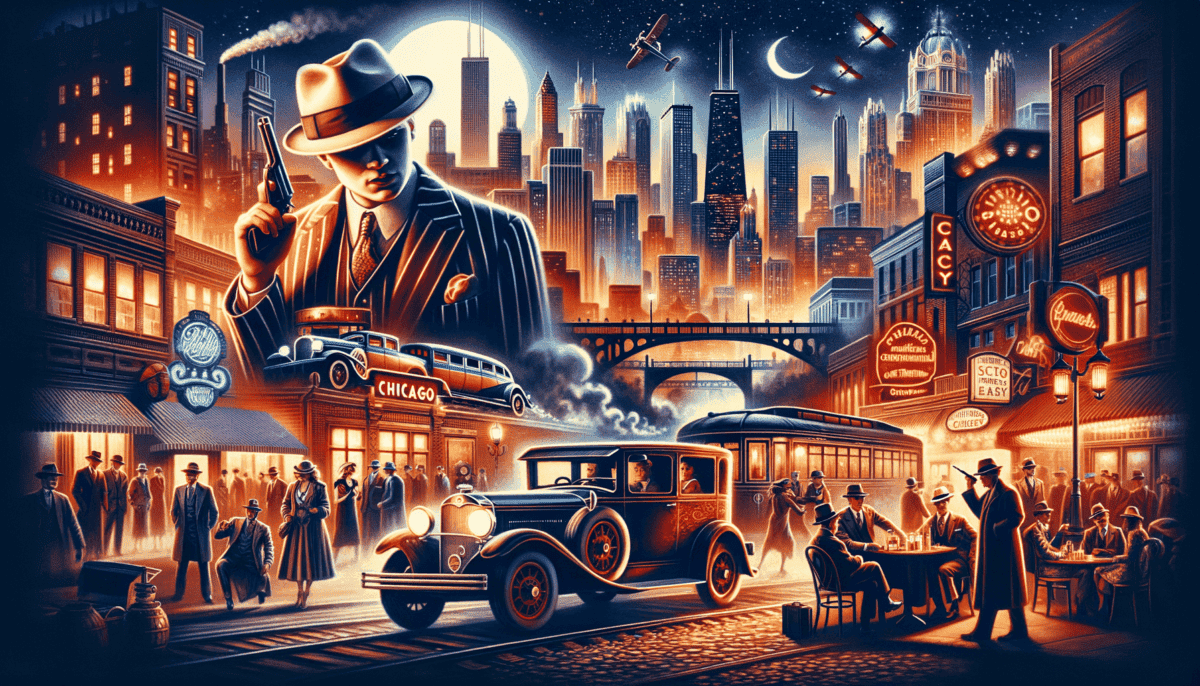
The train pulled into Chicago’s bustling station in 1919. Al Capone, now 20 years old, stepped onto the platform with his wife Mae and baby Albert. The city was big and loud, filled with tall buildings that seemed to touch the sky. ️
Johnny Torrio met them at the station. “Welcome to your new home, Al,” he said with a big smile. “Things are different here. This city is full of chances to make money.”
A New Kind of Business
Something big was about to happen in America. The government made a new rule called Prohibition. This meant no one could sell drinks with alcohol anymore.
“People still want their drinks, Al,” Johnny explained. “And we’re going to give them what they want.”
Al started working at a place called The Four Deuces. It looked like a normal club, but it had secret rooms where people could buy drinks. Al was good at making friends with important people:
• Police officers who looked the other way
• Shop owners who needed protection
• Politicians who wanted favors
• Regular folks who just wanted to have fun
Learning the Business
Johnny Torrio was like a teacher to Al. He showed him how to run things smart, not just tough. Al learned fast and people started to notice.
Mae didn’t like all the late nights, but Al would tell her, “Don’t worry, honey. I’m building something big for our family.”
Moving Up Fast
By 1922, Al wasn’t just a helper anymore. He was Johnny’s right-hand man. When things got rough, people came to Al to fix problems.
One day, Johnny called Al into his office. “You’re ready for more responsibility,” he said. “I want you to run some of our places by yourself.”
Al was excited but nervous. Running things meant dealing with tough guys who didn’t always play nice. But he was ready for the challenge.
Making New Rules
Al did things his own way. He was nice to people who worked for him and shared money fairly. But if someone tried to hurt his friends or family, Al could be very scary.
“In this business,” Al would say, “you need both a smile and a fist.”
He started wearing fancy suits and big diamond rings. People on the streets would tip their hats when he walked by. Everyone knew Al Capone was becoming someone important.
The small-time gang member from Brooklyn was about to become the king of Chicago. Nobody knew it yet, but Al Capone was going to change the city forever.

Empire Rising
It was 1925, and Al Capone sat in his new office at the Lexington Hotel. The room was fancy, with dark wood walls and a big desk. At just 26 years old, he was now the boss of Chicago’s biggest gang.
The Business Grows
“Boss, we got another order for 50 cases,” said Frank, one of Al’s helpers. People wanted drinks, and Al’s team knew how to get them. They had secret places all over the city where they made and stored drinks.
Al picked up his phone. “Hello? Yeah, send three trucks to the south side. Make sure our friends in blue know they’re coming.” He had police officers who helped keep his trucks safe.
“You gotta take care of people who take care of you,” Al always said.
The Money Machine
Al’s business wasn’t just drinks. He owned:
• Restaurants where people could dance and have fun
• Places where people could bet on games
• Shops that paid him for protection
• Hotels where rich people stayed
• Movie theaters where families watched shows
Taking Care of Business
“Mr. Capone,” a shop owner named Tony came in shaking. “Some bad men said they’d hurt my family if I didn’t pay them.”
Al stood up. “Don’t worry, Tony. Nobody hurts my friends.” He turned to his guards. “Find these guys. Show them we protect our people.”
The Good Boss
During the hard times called the Great Depression, Al opened soup kitchens. Poor people could get free food. He gave money to churches and hospitals too.
“I’m just a businessman giving the people what they want,” Al told reporters.
Growing Problems
One morning, Al looked out his window at Chicago. “This city’s getting too hot,” he said to his brother Ralph. Other gangs were causing trouble, and the police were getting braver about stopping his trucks.
But Al wasn’t worried. He had friends in high places – judges, police chiefs, and even mayors. When someone needed a favor, they came to Al. When Al needed a favor, doors opened.
The little boy from Brooklyn had built something huge. But big things can be hard to control, and Al was about to learn that being on top means everyone is trying to knock you down. The biggest fights were still to come.

At The Top
February 14, 1929 – a cold morning in Chicago. Al Capone was far away in Florida, but something big was about to happen back home. ❄️
The Valentine’s Day Surprise
Seven men from a rival gang were in a garage on North Clark Street. They thought they were waiting for a good deal on stolen cars. Instead, two police cars pulled up outside.
But these weren’t real police officers. They were Al’s men in costumes! They lined up the rival gang members and used their Tommy guns. This became known as the Valentine’s Day Massacre.
Living Like a King
Al loved being famous. He wore fancy suits and big diamond rings. People would point at him on the street and whisper, “That’s Al Capone!”
“When I sell liquor, they call it bootlegging. When my patrons serve it on silver trays on Lake Shore Drive, they call it hospitality.”
Being Nice to People
During this time, many people were poor and hungry. Al opened soup kitchens where anyone could get a free meal. Here’s what his kitchens gave away every day:
• Hot soup
• Fresh bread
• Coffee
• Sandwiches
• Fruit
“Nobody goes hungry in my neighborhood,” Al would say. He wanted people to like him, even if they knew he was a gangster.
Big Parties
Al threw huge parties at his hotel. Famous people came to drink his bootleg drinks and eat fancy food. Movie stars, politicians, and rich business owners all wanted to be his friend.
The Price of Being Famous
“Boss, reporters are downstairs again,” his guard would say almost every day.
Al liked talking to newspapers. He would smile and tell jokes. But sometimes he got angry when they wrote bad things about him.
“All I do is satisfy a public demand,” he’d tell them. “I give the people what they want.”
Problems Getting Bigger
Being at the top wasn’t easy. Other gangs wanted Al’s business. The police were always trying to catch him. And now a new group of government men called “The Untouchables” were coming after him.
But Al wasn’t worried. He had more money and friends than anyone else in Chicago. He thought he was untouchable. But sometimes, the bigger you are, the harder you can fall. Storm clouds were gathering, and Al didn’t see them coming. ️

The Law Catches Up
The year was 1931. Al Capone had lots of money and power, but he was about to face his biggest problem yet.
The Secret Plan
A special agent named Eliot Ness wasn’t trying to catch Al for his gangs or bootlegging. Instead, he had a clever idea – catch Al for not paying his taxes!
“We can’t prove he’s breaking the law with his gangs, but everyone has to pay taxes,” Eliot told his team.
The Investigation
Government workers called “accountants” started looking at all of Al’s money. They found out he had been hiding millions of dollars!
“Where did all this money come from?” they asked Al.
“I don’t know what you’re talking about,” Al would say with a smile.
The Big Trial
On October 6, 1931, Al had to go to court. The judge wasn’t happy with him at all. Here’s what they found:
• Al hadn’t paid taxes for five years
• He owed over $200,000 to the government
• He had been lying about his money
• He tried to bribe people on the jury
The Verdict
After a long trial, the judge made his decision. Al Capone was guilty! He had to:
• Go to prison for 11 years
• Pay a big fine of $50,000
• Pay all the taxes he owed
“The party’s over, Mr. Capone,” the judge said. ️
Going to Prison
First, Al went to a prison in Atlanta. But he was still trying to run his gang from inside! So they sent him somewhere special – Alcatraz. ️
Life Behind Bars
Prison was very different from Al’s fancy life in Chicago:
• No more fancy suits – just prison clothes
• No more big parties or fancy food
• No more giving orders to his gang
• No more talking to reporters
Al tried to be a good prisoner, but he wasn’t happy. He worked in the prison making shoes and doing laundry. Sometimes he played banjo in the prison band.
Health Problems
While in prison, Al started getting sick. He had a disease called syphilis that made him confused and weak. The doctors tried to help, but the medicine back then wasn’t very good.
The law had finally caught up with the King of Chicago. But Al’s story wasn’t over yet. Even in prison, he was still one of the most famous people in America.

The Final Days
By 1939, Al Capone wasn’t the scary gangster he used to be. He was very sick and needed help.
Leaving Alcatraz
The prison doctors said Al was too sick to stay at Alcatraz. They moved him to a different prison in California. His mind was getting weaker every day.
“Mr. Capone isn’t the same man anymore,” one guard said. “He just sits and plays his banjo, talking about the old days.”
Going Home
In 1947, Al finally got to go home. His wife Mae was waiting for him at their big house in Florida.
Life was very different now:
• He couldn’t run his gang anymore
• He spent most time in his pajamas
• He liked to fish and sit in the sun
• He played cards with his family
The Last Chapter
Al’s mind kept getting worse. Sometimes he thought he was still a young man in Chicago. His wife Mae took good care of him. ❤️
The End of an Era
On January 25, 1947, Al Capone died at his home. He was only 48 years old.
“In the end, he wasn’t Scarface anymore. He was just a sick man who missed his family,” said one of his doctors.
What People Remember
Even today, people still talk about Al Capone. His story teaches us important lessons:
A Lasting Story
Al Capone’s story is in many books and movies. People are still interested in how a poor boy from Brooklyn became the most famous gangster in America.
The story of Al Capone shows us that no matter how rich or powerful someone gets by breaking the law, they can’t run from what’s right forever. In the end, it’s better to be good than to be famous for being bad.
People will always remember Al Capone, but not in the way he wanted. His life is a reminder that the most important things aren’t money or power – they’re family, health, and doing what’s right.