

A Tale of Two Friends
The warm Jerusalem sun bathed the courtyard in golden light. Two young boys raced through the stone archways, their laughter echoing off the ancient walls. Judah Ben-Hur and Messala were more than best friends – they were like brothers.
"Can't catch me!" Judah called out, his dark curls bouncing as he ran.
Messala's sandals slapped against the tiles as he chased after his friend. "Just wait!"
The boys grew up together in this beautiful city. Judah's family was rich and important. They lived in a big house with tall columns and pretty gardens. Messala stayed with them even though his own family was far away in Rome.
"Always," Judah promised. "Nothing will ever change that."
But things did change. As the boys grew into young men, Rome's soldiers filled the streets of Jerusalem. More and more Romans came to their city. They made new rules and told everyone what to do.
Messala changed too. He started spending more time with the Roman soldiers. He wore their red cloaks and learned their ways.
One day, Messala came to visit Judah. But something was different. His friend stood tall and proud in his Roman armor, a sword at his side.
"Join us, Judah," Messala said. His voice was cold now, not warm like before. "Rome is powerful. We can have everything we want."
Judah shook his head. "This is wrong, Messala. The Romans hurt our people. They take what isn't theirs."
Anger flashed in Messala's eyes. "Then you are my enemy now."
The words hit Judah like a slap. He watched his childhood friend march away, red cape swishing behind him. The happy memories of two boys playing in the sunshine seemed very far away now.
That night, Judah couldn't sleep. He walked through the quiet house, remembering:
- The games they played
- The secrets they shared
- The promises they made
- The dreams they had
- The brotherhood they lost
Sometimes the people we trust the most can hurt us the worst. Messala chose power over friendship, and nothing would ever be the same.
The next morning, Judah stood on his rooftop. He watched Roman soldiers march through the streets below. Their armor gleamed in the sun, just like Messala's. But now instead of feeling proud of his friend, Judah felt afraid.
He knew dark days were coming. His city was changing. His friend was gone. And soon, his whole life would be turned upside down.
Judah whispered a prayer to God as the sun rose over Jerusalem. He would need strength for what was ahead. The boy who once played chase in the courtyard was gone. In his place stood a young man who would have to fight for everything he loved.
The wind carried the sound of marching feet and clanking armor through the streets. Somewhere in the city, Messala was leading his Roman soldiers. The two paths that had run side by side for so long now split forever – one toward Rome's glory, the other toward an uncertain future.
And so began the story of Ben-Hur, a tale of friendship lost and the hard road to forgiveness. The happy days of childhood were over. Now Judah would learn just how much it costs when power corrupts and loyalty dies.
Chains of Destiny
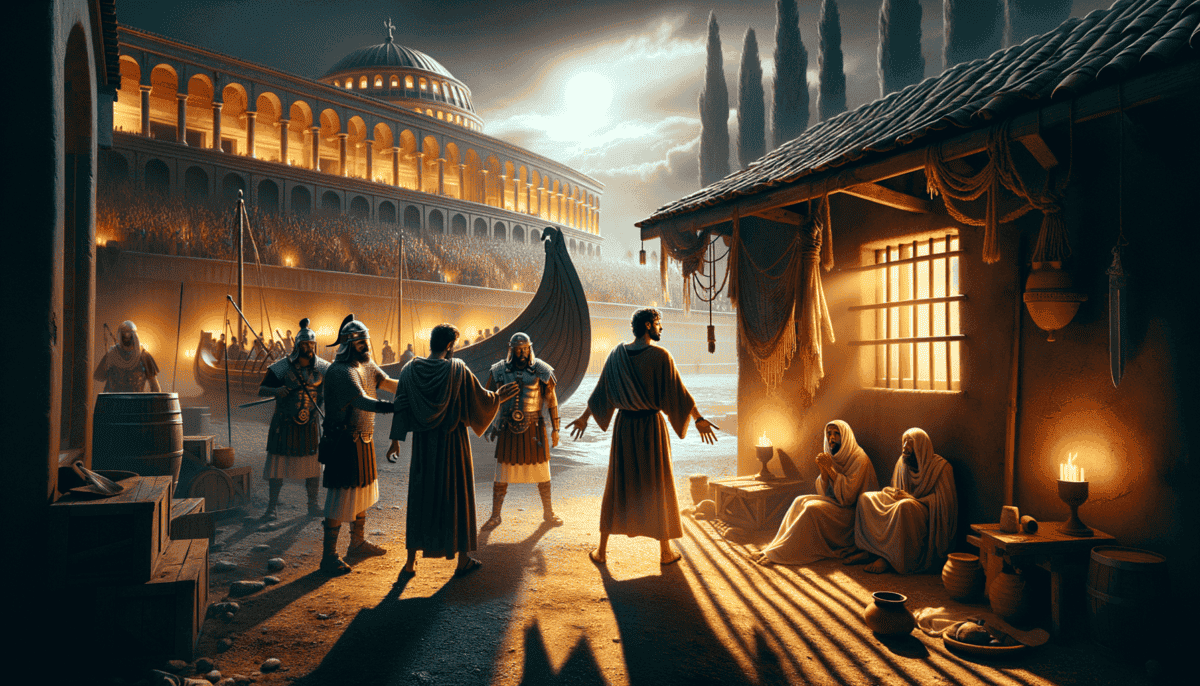
The morning sun had barely touched Jerusalem’s walls when the soldiers came. Their heavy boots thundered through the quiet streets. Judah’s little sister Tirzah peeked through the window.
“Brother, look! So many Romans!” she whispered.
Judah’s heart beat faster. Something was wrong. Very wrong. The new Roman governor was visiting today, and the streets were lined with people. As Judah watched from his roof, a loose tile slipped. It fell, nearly hitting the governor’s horse!
Soldiers burst into their home. Judah tried to explain about the accident, but Messala wouldn’t listen. His old friend’s eyes were cold as ice.
“Please, Messala!” Judah begged. “We did nothing wrong!”
“Take him to the galleys,” Messala ordered. “His mother and sister to prison.”
The soldiers grabbed Judah. He fought hard, but there were too many. They dragged him through the streets he once played in as a boy. People watched with sad eyes, but no one helped.
“I will come back!” Judah shouted to his family. “I promise!”
They took him to a dark place full of other prisoners. His fine clothes were replaced with rags. Heavy chains were locked around his ankles. The guards pushed him onto a cart with other men.
For days, they traveled through hot desert sands. Judah’s throat burned with thirst. His wrists hurt from the chains. But worse than any pain was thinking about his family. Where were they? Were they safe?
The guards gave them little food or water. They walked for many days until they reached the sea.
Finally, they arrived at a huge ship. Judah had never seen anything so big. But this was no pleasure boat – it was a galley ship, where slaves rowed huge oars to make the boat move.
A mean guard with a whip showed Judah his place on a wooden bench. “Row when we tell you to row. Stop when we tell you to stop. Disobey and feel the whip!”
Judah’s hands weren’t used to the rough oar. They started bleeding after just a few hours. His back ached. The air was hot and stuffy below deck. But he refused to give up.
At night, chained to his bench, Judah would look up through the cracks in the deck. He could see tiny stars twinkling:
- One star for his mother
- One for Tirzah
- One for his lost home
- One for hope
- One for revenge
Days turned into weeks. Weeks into months. Judah’s hands grew tough with calluses. His arms became strong from rowing. But his heart stayed soft, keeping love for his family alive.
One stormy night, as waves crashed over the ship, an old slave next to Judah whispered: “Keep faith, young Hebrew. God has not forgotten you.”
Lightning flashed across the dark sky. Thunder roared like an angry lion. The ship rocked on giant waves. But deep in the galley, Judah Ben-Hur gripped his oar and stayed strong. He had lost everything – except his will to survive.
The stars still shone above, though he couldn’t see them through the storm. Somewhere out there, his family waited. Somewhere, justice waited too. All he had to do was stay alive long enough to find them.
Waves of Change
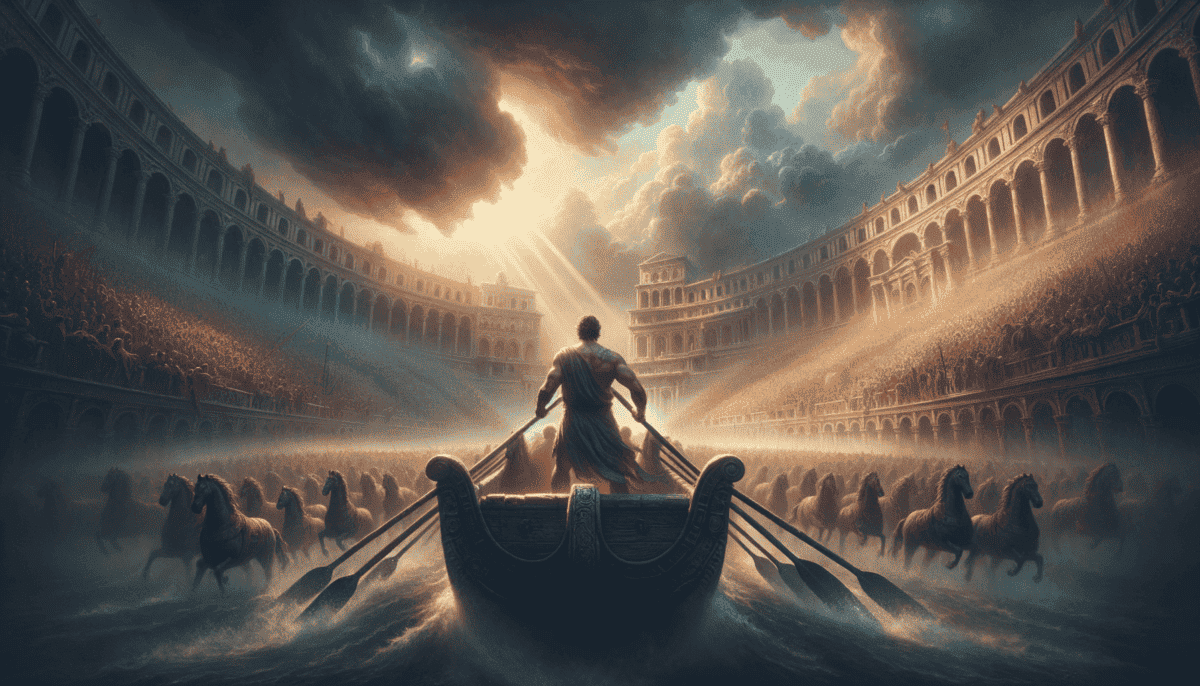
The sea roared like an angry beast. Rain poured down on the galley ship. Judah’s muscles burned as he rowed harder than ever before.
“Pull!” shouted the drum master. “Pull for your lives!”
“Keep rowing!” A tall Roman officer appeared on the stairs. This was Quintus Arrius, the ship’s commander. His eyes found Judah’s.
“You there! Slave 41! Your strength impresses me.”
Judah kept rowing, but something in the Roman’s voice was different from the other officers. It held no cruelty.
“The sea shows no mercy,” Arrius said. “But neither do we Romans.”
Suddenly, a massive wave hit the ship. Wood splintered. Men screamed. Cold water rushed in!
“We’re sinking!” someone yelled.
The other officers ran to save themselves. But Arrius moved through the galleys, unlocking chains. When he reached Judah, their eyes met again.
“Save yourself if you can, 41,” he said, freeing Judah’s chains.
Instead of swimming away, Judah helped Arrius when another wave knocked him down. Together, they found a piece of floating wood.
All night they floated on the dark sea. Judah could have let the Roman drown. But something told him to show mercy.
“Why did you save me, slave?” Arrius asked as dawn broke.
“My father taught me that hate only brings more hate,” Judah replied.
Arrius smiled. “You are no ordinary slave. Tell me your story.”
As the sun rose, Judah told him everything – about Jerusalem, his family, and Messala’s betrayal. Arrius listened quietly.
A rescue ship found them that morning. But Judah didn’t return as a slave. Arrius took him to Rome as his adopted son! ️
In Rome, Judah learned new things:
- How to read and write Latin
- How to fight with a sword
- How to race chariots
- How to speak like a Roman
- How to plan for his future
Every night, Judah looked at the stars over Rome. They were the same stars he saw from the galley ship. The same stars that shone over Jerusalem. His mother and sister were still out there. And Messala too.
“Patience,” Arrius would say. “Learn everything I can teach you. One day, you’ll return home stronger and wiser.”
One afternoon, watching chariot races at the Circus Maximus, Judah had an idea. This was how he would face Messala – not with swords, but with horses and wheels!
“Teach me to race,” he asked Arrius. “Teach me everything.”
The old Roman nodded. “First, you must learn to truly know the horses. They are not just animals – they are your partners in victory.”
As Judah walked through the stables that evening, touching the soft noses of the horses, he felt hope growing in his heart. The sea had changed him. Rome was changing him. But his love for his family burned as bright as ever.
Tomorrow’s training would begin before dawn. Judah was ready. Each crack of the whip, each pull of the oar, each day of slavery had made him stronger. Now, that strength would serve a new purpose.
Racing Destiny
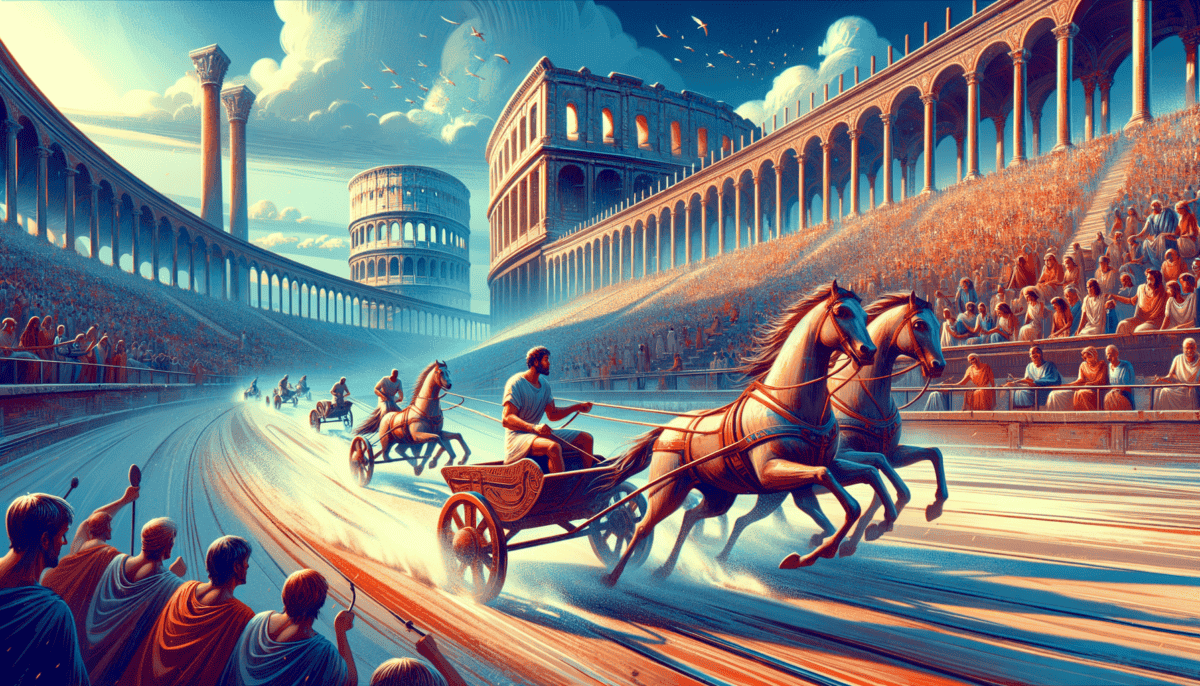
The morning sun painted Rome’s hills golden. Judah stood in the empty Circus Maximus, breathing in the quiet. Soon these stands would roar with thousands of voices.
“Are you ready?” Arrius appeared beside him. Four beautiful white horses followed, their coats gleaming.
“They’re perfect,” Judah whispered, touching their soft noses.
“These are yours now,” Arrius smiled. “But remember – a chariot team is only as strong as the trust between horses and driver.”
Every morning, Judah worked with his horses:
- Feeding them by hand
- Learning their personalities
- Teaching them commands
- Running beside them
- Building their trust
“Talk to them,” Arrius taught him. “They understand more than you think.”
The horses had names: Thunder, Lightning, Storm, and Wind. They were fast as shooting stars! ⭐
One morning, a messenger arrived breathless. “News from Jerusalem!”
Judah’s mother and sister were alive! They were in prison, but alive. And Messala was now in charge of the biggest chariot races.
“It’s time,” Judah said, his heart pounding. “I must go home.”
Arrius nodded sadly. “You’re ready. But remember what the sea taught you about mercy.”
Before leaving, Judah visited his favorite place in Rome – a small garden where he met other people from his homeland. An old man there often spoke of a new teacher in Jerusalem.
“He speaks of love, not hate,” the old man said. “Of forgiveness, not revenge.”
Judah packed his things: racing gear, special reins for his horses, and a small bag of Roman coins.
The journey home was long. Judah’s horses traveled in the finest wagon. At night, he slept under the stars, thinking of his family.
Finally, Jerusalem’s walls appeared! But the city had changed. Roman flags flew everywhere. Soldiers marched through the streets.
“Look who’s returned!” a familiar voice called. Messala stood there, older but still proud. “The slave who became a Roman!”
Judah stood tall. “I’ve come to race.”
That night, Judah visited his old home. It was empty and dark. But in the garden, a small flower grew through the cracks – just like hope grew in his heart.
In the stables, he brushed his horses and spoke softly to them. “Tomorrow, my friends. Tomorrow we race for everything.”
Thunder nuzzled his shoulder. Lightning stamped his foot. Storm and Wind tossed their beautiful manes. They were ready.
As Judah lay down to sleep, he heard the words of the old man in Rome: “Love, not hate. Forgiveness, not revenge.”
But could he forgive Messala? Could love win over hate? The answer would come with tomorrow’s rising sun.
Thunder in the Arena
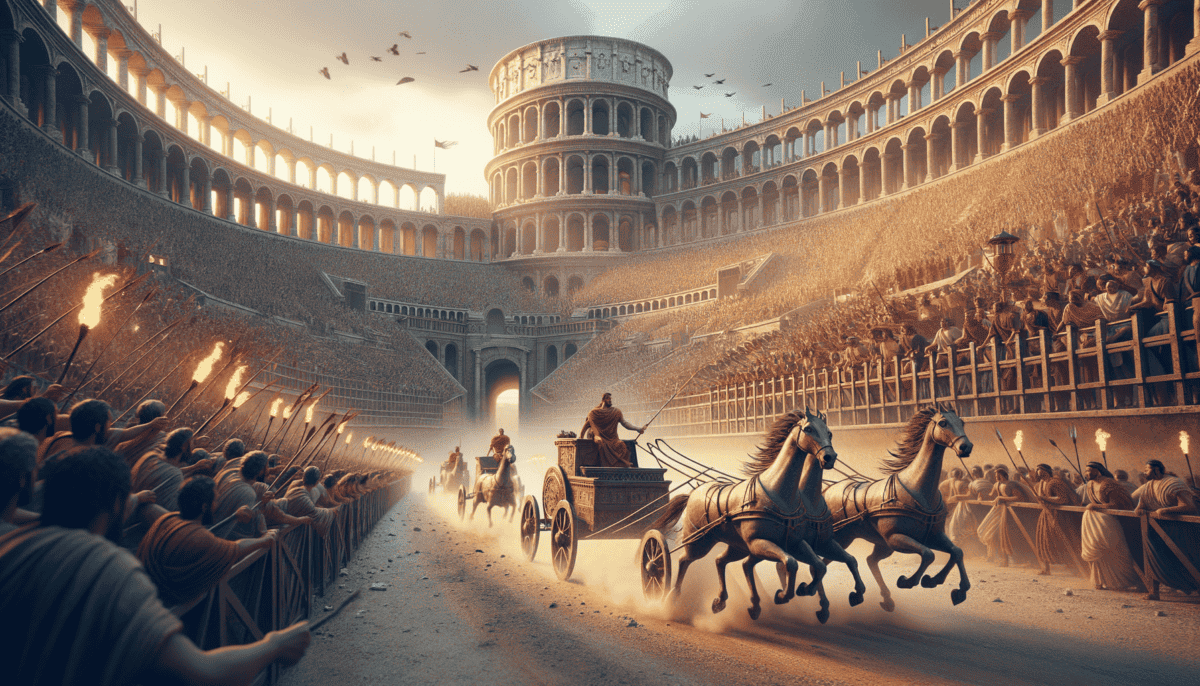
The Circus Maximus buzzed like an angry beehive. Thousands of people filled the seats, waving colorful flags. The morning sun made everything sparkle.
“Look at these crowds!” a little boy shouted. “They say the Jewish racer has magic horses!”
Judah smiled as he checked his chariot. The wooden wheels were strong. The leather reins felt soft in his hands. His four white horses stood proud and tall.
“Beautiful day for a race,” Messala appeared, wearing shiny black armor. His black horses pawed the ground. “Ready to lose, old friend?”
“I’m not here to lose,” Judah said quietly.
“Remember,” Arrius’s voice echoed in his mind, “steady hands, calm heart.”
The trumpets blared! All nine chariots lined up at the starting line. The horses danced with excitement.
• Seven laps around the track
• No pushing other chariots
• First to finish wins everything
“Racers ready!” the announcer shouted. The crowd got quiet.
Judah whispered to his horses: “Thunder, Lightning, Storm, Wind – let’s fly!”
BANG! The race began!
Wheels rumbled like thunder. Dust flew everywhere. Three chariots crashed right away! But Judah stayed steady, his horses running as one.
“Ha!” Messala yelled, trying to push Judah into the wall. “Still too soft!”
But Judah remembered the sea. He remembered being calm in storms. He pulled back just a little…
CRASH! Messala’s chariot hit the wall instead! His wheels broke apart like toy blocks!
The crowd jumped up, screaming! Judah’s white horses thundered ahead. Their hooves barely touched the ground. They were flying!
Across the finish line! Winners!
But instead of celebrating, Judah ran to where Messala lay hurt. Their eyes met.
“Why?” Messala whispered. “Why help me now?”
“Because hate only makes more hate,” Judah said. “I choose something better.”
That evening, as the sun set, Judah walked to the prison. He carried the winner’s scroll that would free his family. His heart felt light, like it could float away.
His horses watched from their stable, happy and tired. They knew their master had won more than just a race today.
In the quiet evening, a kind voice taught nearby: “Love your enemies. Do good to those who hurt you.” Judah smiled. Now he understood.
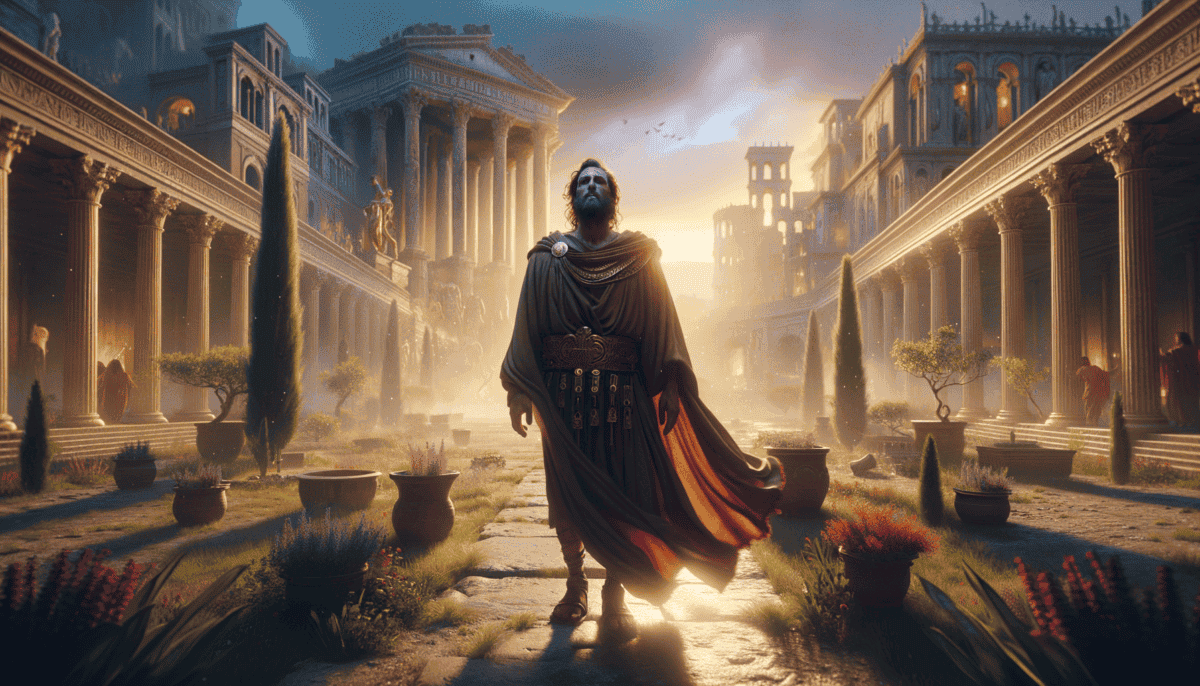
A New Dawn
The setting sun painted Jerusalem’s walls golden. Judah walked through the prison gates, his winner’s scroll held tight. His heart beat like a drum.
“Mother? Tirzah?” Judah’s voice shook. Two figures stepped from the shadows.
“Judah?” His mother’s voice was soft as a whisper. “Is it really you?”
Tears fell as they hugged. They were thin and pale, but alive. That’s all that mattered now. ❤️
“We heard about the race,” Tirzah smiled. “Our brave brother, the champion!”
Outside, the city celebrated. But inside this quiet room, a family came back together like puzzle pieces finding their place.
The next morning, Judah visited Messala in the healing house. His old friend lay wrapped in bandages.
“Why do you come?” Messala asked weakly.
“To forgive,” Judah said. “And to ask forgiveness.”
Messala’s eyes grew wet. “After everything I did?”
“Hate made us both prisoners,” Judah smiled. “It’s time to be free.”
Days turned into weeks. Spring flowers bloomed in Jerusalem.
Judah’s family grew strong again. Their house filled with laughter and love. Even Messala came to visit, walking with a cane but smiling more each day.
“Remember when we were boys?” Messala asked one evening. “Racing our wooden horses?”
“Now look at us,” Judah laughed. “Old friends again.”
In the stables, his four white horses munched hay happily. They had helped win more than just a race. They had helped win back peace.
One quiet morning, Judah walked to the highest hill. The sun rose over Jerusalem like a golden promise.
“What will you do now?” Messala asked, standing beside him.
Judah smiled. “Teach others what I learned. That love is stronger than hate. That forgiveness sets us free.”
“And maybe,” he added with a twinkle in his eye, “teach you to race better!”
They laughed together as the new day began. Two friends. One city. And a story of how love can change everything.