

A Boy Named Benito
In a small town called Predappio, in Italy, there lived a little boy named Benito Mussolini. He was born on July 29, 1883. His house was not fancy – it was a simple brick building where his family lived above his father's blacksmith shop.
Little Benito was not like other children. He had a fiery temper and often got into fights. His mother would say, "Benito, you must learn to be gentle." But being gentle was not in young Benito's nature.
"I want to be important someday!" Benito would tell his friends. "I want everyone to know my name!"
His days were filled with watching his father work in the shop and listening to grown-ups talk about politics. His father loved to talk about helping poor workers have better lives. These talks made young Benito think a lot about power and how to make changes in the world.
School Days
School was hard for young Benito. He didn't like following rules. One day, he got so angry that he stabbed another student with his penknife! The teachers were very upset, and they sent him away to a boarding school.
At his new school, Benito started to change. He learned to read lots of books and became very good at public speaking. His teachers noticed that he could make other students listen when he talked.
“That boy has a way with words,” his teachers would say. “He knows how to make people believe in what he’s saying.”
Growing Up Fast
As Benito grew older, he started working as a teacher, just like his mother. But he didn't stay a teacher for long. He had bigger dreams. He wanted to be in charge and tell others what to do.
He began writing for newspapers. His words were strong and angry. He wrote about how Italy needed to change and become stronger. Many people started to listen to what he had to say.
The little boy from the small town was growing up to be a man who wanted to change the world. He didn't know it yet, but his life would become one of the most important stories in Italian history.
Young Benito kept thinking about power and control. His father's words about helping workers mixed with his own dreams of being important. These thoughts would lead him down a path that would change not just his life, but the lives of millions of people.
Night after night, he would stay up late reading books about great leaders and powerful empires. His mind was full of dreams about becoming someone important – someone who would make everyone remember the name Mussolini.
| Early Life Facts | Details |
| Birthday | July 29, 1883 |
| Birthplace | Predappio, Italy |
| Father’s Job | Blacksmith |
| Mother’s Job | Teacher |
The quiet streets of Predappio would never be the same after their most famous son began his journey. The little boy who played in his father's blacksmith shop would grow up to become one of the most powerful men in Italy.
People in town would later say they remembered him as the boy who always wanted to be the leader in games, who always had to win, and who never gave up until he got his way. Those childhood traits would shape the man he would become.
War and Change
The loud sounds of war changed everything for Benito. It was 1915, and World War I was making the whole world shake! Benito joined the army and went to fight. The scary sounds of bombs and guns made him think differently about the world.
A New Way of Thinking
When the war ended, Benito came home with big ideas. He didn’t want to help workers anymore like his father did. Now he wanted Italy to be powerful, like a mighty lion!
“Italy can be the greatest country in the world!” he would shout to crowds. People liked hearing this. They were tired and sad after the war, and Benito’s words made them feel better.
“We need new ideas!” Benito would say. “We need to make Italy strong and proud again!”
The Black Shirts
Benito started a new group. They wore black shirts and marched in the streets. People called them the Blackshirts. They were like a team, but not a nice one. They would hurt anyone who didn’t agree with Benito.
Growing Power
More and more people started following Benito. He made a new way of thinking called Fascism. It was like being on a team where everyone had to follow the leader and do what they were told.
| Fascist Ideas | What They Meant |
| Strong Leader | Everyone must follow one person |
| Proud Country | Italy is better than other places |
| No Arguments | Everyone must agree with the leader |
Benito would stand on balconies and give big speeches. His voice was loud and strong, and he would wave his arms like a conductor leading a band.
“Look at me!” he would shout. “I will make Italy great! Follow me, and we will be the strongest nation in the world!”
A New Party
Benito made his own political party. It was like a big club, but with strict rules. Everyone had to wear black shirts and do special salutes. They had to say “Yes!” to everything Benito wanted.
His party grew bigger and bigger. Poor people joined because they thought Benito would help them get jobs. Rich people joined because they thought he would protect their money. Even some who didn’t like him joined because they were scared not to!
The streets of Italy were changing. Where there used to be many different groups talking about different ideas, now there were mostly just Benito’s Blackshirts marching and shouting. The little boy who once watched his father work in the blacksmith shop was becoming the most powerful man in Italy.
Every day, more people joined Benito’s movement. They believed his promises about making Italy strong and important again. But not everyone was happy about this. Some people worried about what would happen next. The quiet life of old Italy was going away, and something new and scary was taking its place.
The March to Rome
The weather was cold and rainy in October 1922. Benito had a big plan. He wanted to take over Italy! ️
The Big March
Thousands of Blackshirts started walking to Rome. They carried flags and sticks. Some rode on trains, while others walked for days. The streets were full of people wearing black shirts and shouting Benito’s name.
King Victor Emmanuel III was scared. He had to make a big choice: should he stop Benito or let him take over? The king chose to let Benito become the boss of Italy.
“I will make Italy strong again!” Benito promised the king. “Trust me to lead our country!”
Becoming the Boss
At just 39 years old, Benito became Italy’s Prime Minister. He was now the youngest prime minister Italy ever had!
Making New Rules
Once Benito was in charge, he started making lots of new rules. He was like a strict teacher who wanted everyone to follow his way.
| Old Italy | New Italy |
| Many different newspapers | Only newspapers that liked Benito |
| People could say what they wanted | People had to agree with Benito |
| Many political parties | Only Benito’s party allowed |
Making People Listen
Benito used pictures and radio to make people like him. He wanted everyone to think he was special and strong.
He made pictures of himself looking brave and strong. Sometimes he would pose:
• Riding horses
• Flying planes ✈️
• Working in fields with farmers
• Speaking to huge crowds ️
Changing Everything
Life in Italy changed a lot. Benito wanted to control everything. He told people:
This meant that everyone had to do what the government said. All the clubs, schools, and even sports teams had to follow Benito’s rules.
People who didn’t agree with Benito got in big trouble. Some had to leave Italy. Others were put in jail. It was a scary time for anyone who wanted to think differently.
“We are watching everything,” Benito would say. “We are everywhere!”
But some things did get better. Benito built new roads and schools. He made trains run on time. He gave jobs to people who didn’t have work. Some people thought life was better with Benito in charge.
The little boy from the small town was now the most powerful man in Italy. He controlled what people read, what they learned in school, and even what they could say. Italy was becoming exactly what Benito wanted – a place where he made all the rules.
Growing Bigger and Stronger
After becoming Italy’s leader, Benito wanted to make his country bigger and stronger. He started making lots of changes to Italy. ️
Making Life Better
Benito worked hard to fix Italy’s problems. He built new buildings and roads. He made sure more children could go to school. Many people got new jobs. ️
He helped farmers grow more food. He built new towns in places where nobody lived before. Some towns even had special names that reminded people of old Roman times.
Making New Friends
In Germany, there was another leader named Adolf Hitler. He and Benito became friends. They thought the same way about many things.
“Together we will be very strong!” Benito told Hitler when they met.
Going to Africa
Benito wanted Italy to have more land. He looked at Africa and saw a country called Ethiopia. It was one of the few places in Africa that wasn’t controlled by other countries.
The Ethiopian people tried to fight back, but Italy had better weapons. Soon, Ethiopia became part of Italy’s growing empire.
Getting Ready for War
Benito started making lots of weapons. He wanted Italy to have a strong army, just like in the old Roman times. Here’s what he built:
| Military Items | What They Did |
| Big ships | To control the sea |
| Fast planes | To fly over enemies |
| Strong tanks | To fight on land |
Teaching Kids to Be Soldiers
Boys and girls had to join special groups. They learned how to march and follow orders. They wore uniforms and carried flags. ♂️
The groups had special names:
• Sons of the Wolf (for little kids)
• Young Fascists (for bigger kids) ️
• Young Italian Women (for girls)
Making People Proud
Benito wanted Italians to feel proud of their country. He put up big pictures and posters everywhere. The posters showed strong soldiers and happy families. ️
He made movies about how strong Italy was. He had musicians write songs about Italy’s power. Everyone had to learn these songs and sing them at special events.
Big Changes Coming
But dark clouds were gathering. In Europe, countries were starting to fight with each other. A big war was coming, and Benito would have to choose which side Italy would join. ️
The time for making Italy bigger and stronger was almost over. Soon, Benito would have to prove if all his preparation was enough for what was coming next.
Dark Days of War
The big war that everyone feared finally came. In 1939, World War II began, and Benito had to make a very important choice.
Joining the War
At first, Benito didn’t want to fight. But his friend Hitler was winning many battles. In 1940, Benito decided Italy should join the war too.
Things Go Wrong
Italy’s army wasn’t as strong as Benito thought. They lost many battles. In Africa, British soldiers pushed them out of Ethiopia. In Greece, the Italian army couldn’t win either. ⚔️
“Please help us!” Benito had to ask Hitler for help. This made many Italians sad and angry.
Trouble at Home
Life in Italy became very hard. There wasn’t enough food. Bombs fell on Italian cities. People started to lose faith in their leader.
• No food in stores
• Homes destroyed by bombs
• Soldiers dying in battle
• People getting very poor
The Enemy Gets Closer
In 1943, something big happened. American and British soldiers landed in Sicily, an island that’s part of Italy. They started moving north toward Rome.
| What Happened | Where |
| Enemy ships arrived | Sicily |
| Cities surrendered | Southern Italy |
| People celebrated | In the streets |
People Turn Against Benito
Even Benito’s friends didn’t support him anymore. Many Italian leaders met in secret. They decided it was time for Benito to stop being the leader.
The Great Escape
After losing power, Benito was arrested. But Hitler sent special soldiers to rescue him. They took him to northern Italy, where Hitler still controlled things.
Benito tried to be a leader again in the north, but it wasn’t the same. Most Italians didn’t want him anymore. They were tired of war and wanted peace. ️
The once-powerful leader now watched as his dream of a strong Italy crumbled. The Allied forces kept moving north, and more Italian cities fell to them. Benito’s grand plans had led to disaster, and there was no way to fix things anymore.
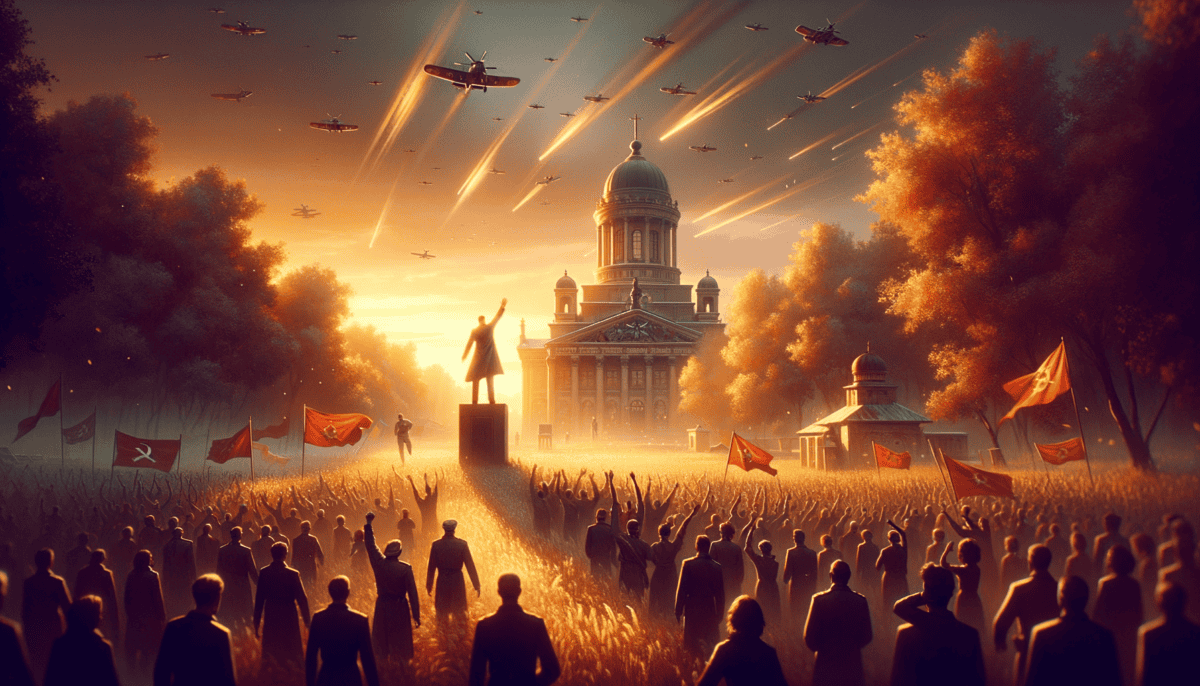
The Final Days
Spring came in 1945. Benito Mussolini knew he was in big trouble. The war was almost over, and he was losing.
Running Away
Benito tried to escape to Switzerland. He put on a German soldier’s coat to hide who he was. He joined a group of German soldiers in trucks heading north.
The Capture
But Benito didn’t get far. On April 27, 1945, Italian fighters found him near Lake Como. They were people who had fought against him during the war. They were called partisans.
The mighty leader who once ruled Italy was now caught hiding in a truck, wearing someone else’s clothes.
The End of Mussolini
The next day, the partisans decided what to do with Benito. They thought about all the bad things he had done to Italy. They decided he had to be punished. On April 28, 1945, Benito Mussolini’s life ended.
• The war in Italy ended
• People celebrated in the streets
• Italy became free again
• The country stopped being fascist
A New Italy
Italy started to heal after the war. The Italian people chose a new way to run their country. They didn’t want one person to have all the power anymore.
| Old Italy | New Italy |
| One leader had all power | People vote for leaders |
| No freedom to speak up | Freedom to speak freely |
| Always at war | Wants peace |
What We Learned
Benito Mussolini’s story teaches us important things. It shows us that having one person with too much power can be dangerous. It reminds us that working together and being kind is better than being mean and bossy.
The story of Mussolini shows us how important it is to be careful about who we choose as leaders. It teaches us that peace is better than war, and that treating everyone fairly is the right thing to do. ️
Even though this is a sad story, it helped Italy become a better country. The Italian people learned to stand up for what’s right and to work together to make their country strong in a good way. They showed the world that after dark times, there can always be light.