

A Boy’s Dream in Ancient Rome
The sun rose over the hills of Arpinum, a small town far from the busy streets of Rome. A young boy named Marcus sat under an olive tree, practicing his speech. He was different from other kids. While they played games, he loved to learn and talk.
"Marcus!" his father called. "Time for your lessons!"
Marcus Tullius Cicero jumped up with excitement. He wasn't like most Roman boys. His family wasn't rich or famous. But he had something special – a dream to become a great speaker.
The Little Speaker
"Father, tell me again about the great speakers in Rome," Marcus asked eagerly.
His father smiled. "They stand in the Forum, Marcus. Their words can change minds and hearts. But it's not easy for someone from our town to become like them."
Marcus didn't care that it was hard. Every day, he:
• Practiced speaking loudly
• Read lots of books
• Learned new words
• Listened to smart people talk
The Big City Dreams
One day, Marcus's father took him to Rome. The boy's eyes grew wide at the sight of the huge buildings and busy streets. ️
"Wow!" Marcus gasped. "It's so big!"
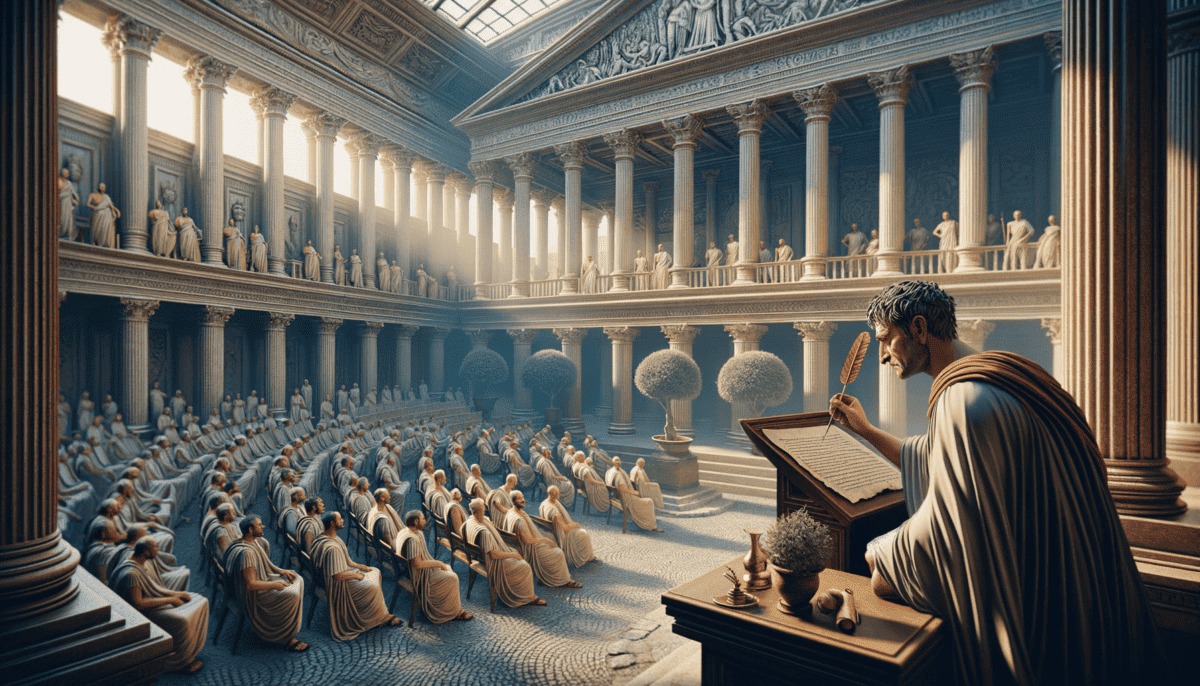
In the Forum, they watched a famous speaker. People listened closely to every word. Marcus knew right then what he wanted to do with his life.
"Father," he said firmly, "I want to be just like that man."
Learning and Growing
Life wasn't easy for Marcus. Rich kids made fun of him because he wasn't from a fancy family. They called him a "new man" – someone whose family had never been important in Rome.
But Marcus worked harder than everyone else. He woke up early to study. He wrote and rewrote his speeches. He learned Greek and Roman history.
His teacher Apollonius once said, "Marcus, you have everything it takes to be great. But it makes me sad that Greece's best gift – the art of speaking – will now go to Rome through you."
The Big Decision
One evening, as the sun set over Arpinum, Marcus made a big choice. He would go to Rome and become a speaker, no matter how hard it would be.
"I'll show them," he said to himself. "I'll show them that a boy from Arpinum can be the greatest speaker Rome has ever known."
His mother worried. "It will be very hard, my son."
Marcus stood tall. "The harder it is, the greater the glory will be."
And so began the journey of Marcus Tullius Cicero, the boy who would one day become Rome's greatest speaker. With his books under his arm and his dreams in his heart, he took the first steps toward his amazing future.
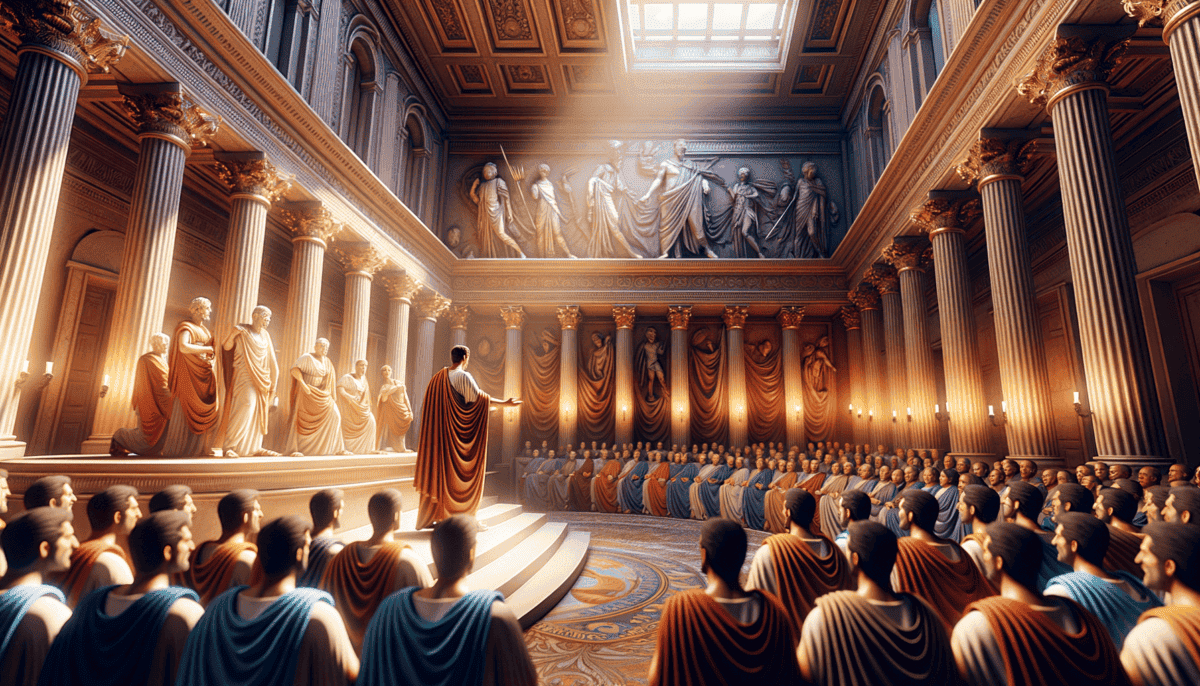
The Climb to Power
Young Marcus was now a man. People called him Cicero. He worked as a lawyer in Rome’s big courts. Every day, he helped people who needed someone to speak for them. ⚖️
The Big Case
“Cicero, will you help me?” asked Roscius, a man wrongly blamed for a crime. “No other lawyer will take my case. They’re all scared.”
This was Cicero’s chance to show what he could do. The bad guy was friends with Sulla, the scariest man in Rome! But Cicero wasn’t afraid.
Moving Up in Rome
After winning big cases, Cicero started working in the government. He had special jobs called “offices.” To get these jobs, he had to make friends with important people.
“Remember,” his friend Atticus told him, “in Rome, you need friends to succeed.”
Cicero worked harder than anyone. He:
• Helped poor people in court for free
• Made speeches that everyone loved
• Wrote smart letters to important people
• Always told the truth, even when it was hard
The Big Election
Now Cicero wanted to be consul – the most important job in Rome! But many rich people didn’t want someone from a small town to have this big job. ️
“You can’t win,” some people said. “You’re not from an old family.”
But Cicero had a secret weapon – his words. He gave amazing speeches. He showed everyone he was the best person for the job.
Trouble Coming
Being consul was hard work. Rome had lots of problems. Some bad people wanted to hurt Rome.
“Something’s not right,” Cicero told his wife Terentia. “I can feel it.”
He was right! A mean man named Catiline was making secret plans. He wanted to burn Rome and take over!
Getting Ready
Cicero knew he had to save Rome. He started gathering clues about Catiline’s bad plans.
“We must be careful,” he told his friends. “But we must also be brave.”
Every night, Cicero stayed up late, writing speeches and making plans. He knew the biggest fight of his life was coming.
As consul, he had to protect everyone in Rome. The poor people, the rich people, even the people who didn’t like him. He wouldn’t let anyone hurt his beloved city.
Standing on his balcony one night, looking at the lights of Rome, Cicero took a deep breath. Tomorrow would bring danger, but he was ready. He had come so far from that little boy in Arpinum. Now he had the power to save Rome – if he was brave enough to use it.
The Great Battle
Bad things were happening in Rome. A man named Catiline had a scary plan. He wanted to burn down the city!
The Secret Meeting
One dark night, Cicero got a letter. It told him about a secret meeting at a house outside Rome.
“We must find out what they’re planning,” Cicero whispered to his friend. He sent smart spies to listen.
The Big Speech
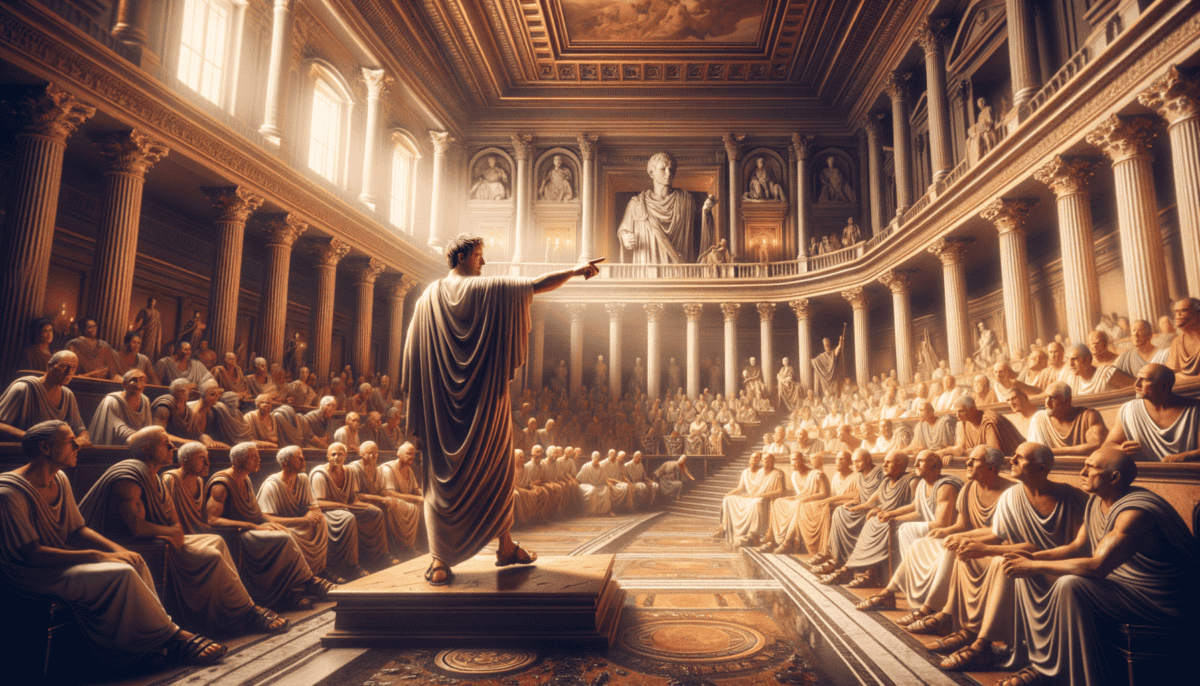
The next morning, Cicero walked into the Senate. Catiline was sitting there, acting like nothing was wrong.
“How dare you come here!” Cicero shouted. “I know what you’re planning!”
Everyone in the room was quiet. Then Cicero gave one of his best speeches ever. He told everyone about Catiline’s bad plans:
• Setting fires in Rome
• Hurting good people
• Taking over the government
• Making himself king
The Chase
Catiline ran away from Rome that night. But his friends were still in the city. They were very dangerous! ♂️
“We must catch them before they hurt anyone,” Cicero told the guards.
For many days and nights, Cicero worked hard to keep Rome safe. He didn’t sleep much. He was always watching and listening.
The Hard Choice
Now Cicero had to decide what to do with the bad guys. Some people said to let them go. Others wanted them punished.
“What should I do?” Cicero asked his wife Terentia.
“Do what’s right for Rome,” she said.
Saving Rome
Cicero made the hard choice. The bad guys had to be punished to keep Rome safe. It wasn’t fun, but it was right. ⚖️
“You saved us all!” people said to Cicero. They called him “Father of his Country.”
Meanwhile, Catiline and his army fought against Rome’s soldiers. But they lost! Rome was safe again.
That night, Cicero walked through the streets of Rome. The city was peaceful. People were safe in their homes. He smiled, knowing he had done the right thing.
But some people were angry that Cicero had been so tough with the bad guys. They would try to cause trouble later. For now, though, Rome was safe, and that’s what mattered most.
The Thinking Man
After saving Rome from bad guys, Cicero needed a break. He went to his quiet house by the sea to write books.
Special Writing Place
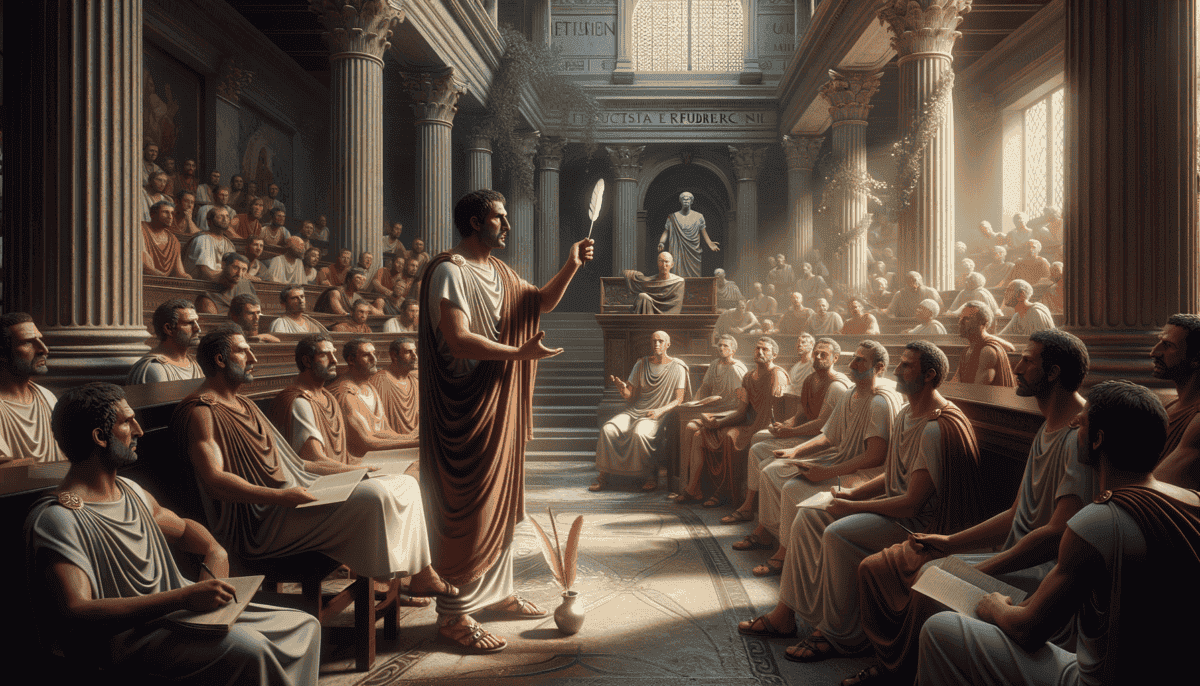
Cicero loved his seaside house. He could hear waves and birds while he wrote. He had a big desk full of scrolls.
“Here I can think and write,” he said to his friend Atticus. “Rome needs more than just brave soldiers. It needs smart ideas too!”
Teaching Others
Young people came from far away to learn from Cicero. He taught them how to:
• Speak well
• Think clearly
• Be good leaders
• Help others
“Being smart isn’t enough,” Cicero told his students. “You must also be kind and fair.”
Trouble with Caesar
But not everything was peaceful. A strong general named Julius Caesar was getting too powerful.
“One person shouldn’t have all the power,” Cicero worried. “That’s not how Rome works!”
Hard Choices
Caesar invited Cicero to join his team. It would be safer and easier to be Caesar’s friend.
“No thank you,” Cicero said bravely. “I must do what’s right for Rome.”
This made Caesar angry. But Cicero kept writing his books about good government and fair laws.
Family Time
During this time, Cicero spent lots of time with his daughter Tullia. She was very smart, just like him!
“Tell me about your new book, Father,” Tullia would say.
“It’s about friendship,” he’d answer. “True friends help us be better people.”
Standing Strong
More and more people started following Caesar. But Cicero didn’t give up his beliefs.
“We must protect our laws,” he said. “One person shouldn’t be king. Rome belongs to all Romans!”
Cicero kept writing and speaking about what he believed. His words were so powerful that people still read them today!
The sky was getting darker over Rome. Big changes were coming. But Cicero stayed brave and kept fighting for what was right – not with swords, but with words and wisdom.
Dark Clouds Over Rome
The world was changing fast in Rome. Two powerful men, Caesar and Pompey, were fighting to be in charge.
A City Divided
People had to pick sides. Some joined Caesar, others followed Pompey. Cicero felt stuck in the middle.
“Which side should I choose?” Cicero asked his friend Atticus. “I love Rome more than either of them!”
Hard Times
Cicero tried to make peace between the two men. He wrote letters to both of them.
“Please don’t fight,” he begged. “Think about what’s best for Rome!”
But neither man would listen. Soon, soldiers filled the streets. Many of Cicero’s friends had to leave Rome.
Sad News
During this scary time, something very sad happened. Cicero’s beloved daughter Tullia got sick and died.
“My heart is broken,” Cicero wrote. “She was the light of my life.”
Caesar Wins
After many battles, Caesar won the fight. He became the most powerful person in Rome.
Caesar tried to be nice to Cicero. “Come work with me,” he said.
But Cicero worried. He saw how Caesar was changing Rome’s old rules. Things that had worked for hundreds of years were being thrown away.
Speaking Up
Even though it was dangerous, Cicero kept speaking up for what he believed in. He wrote these important ideas:
• Leaders should follow the law
• Power should be shared
• People should work together
• Freedom is precious
Hope for Tomorrow
Even in dark times, Cicero didn’t give up hope. He kept teaching young Romans about good government.
“Maybe I can’t fix things today,” he thought. “But I can help tomorrow’s leaders be wise and fair.”
The fighting wasn’t over. More tough times were coming. But Cicero stayed strong, using his words to fight for what he believed in.
Big changes were coming to Rome. Caesar’s power grew stronger every day. But Cicero wouldn’t stop defending the ideas he loved – even if it put him in danger.
The Last Battle
The sun rose over Rome one last time for Cicero. He knew this would be his biggest fight ever.
A New Enemy
After Caesar died, a mean man named Marc Antony wanted to take over Rome. He didn’t care about being fair or following rules.
“We can’t let him destroy everything we love,” Cicero told his friends. His hands shook, but his voice was strong.
The Final Speeches
Cicero wrote fourteen amazing speeches. People called them the Philippics.
“Rome belongs to all of us!” he declared. “Not just to one person!”
Many people cheered for Cicero. Young Romans especially loved his brave words. But Marc Antony got very angry.
Danger Grows
Cicero’s friends warned him to leave Rome. “It’s not safe here anymore,” they said.
“I’m too old to run,” Cicero answered. “I must stand up for what’s right.”
The Final Days
Marc Antony sent soldiers to find Cicero. They caught up with him near his favorite villa by the sea.
When the soldiers came, Cicero faced them bravely. His last words were about his love for Rome.
A Hero’s Legacy
Cicero died defending what he believed in. But his ideas lived on!
His words and speeches were saved and copied. For hundreds of years, people read them to learn about:
• Being brave
• Standing up for what’s right
• Using words instead of weapons
• Working together for the good of all
The Story Lives On
Today, thousands of years later, people still read Cicero’s words. They learn from his bravery and wisdom.
In schools and courts around the world, people remember how Cicero used his voice to fight for what was right.
He taught us that words are stronger than swords. That standing up for what you believe in matters more than being safe. And that one brave person can make a difference.
Cicero’s story reminds us that we all have a voice. And when we use it to speak up for what’s right, we can help make the world better – just like he did.