

Roots of Courage
The sun was barely peeking over the trees when little Araminta “Minty” Ross opened her eyes. The year was 1822, and she lived on a big farm in Maryland. But this wasn’t just any farm – it was a plantation where people were kept as slaves.
Five-year-old Minty snuggled close to her mama, Ben Ross and Rit Green’s youngest daughter. The wooden floor of their tiny cabin was cold, but Mama’s love kept her warm. Outside, she could hear the roosters crowing.
“Time to wake up, little one,” Mama whispered, gently stroking Minty’s curly hair. “We have work to do.”
Even though Minty was just a child, she had to work hard every day. She didn’t get to play with toys or go to school like some other children. Instead, she had to help take care of a baby who belonged to her owner’s family.
“Mama, why do we have to work for other people?” Minty asked one day.
“Because that’s how things are right now,” Mama answered softly. “But remember, you are strong. You are brave. And you are loved.”
Minty learned quickly that being a slave meant facing many hard things. Sometimes she didn’t get enough food to eat. Sometimes she had to work even when she was sick. But something special lived inside her heart – courage.
One day, when Minty was a little older, she saw another slave being punished. She felt so sad and angry that she tried to help. Even though she got hurt trying to protect the other person, she didn’t run away. This showed how brave she was, even as a young girl.
At night, Minty would look up at the stars through the cracks in the cabin roof. She dreamed of a different life – a life where she could be free. Her father had taught her about the North Star and how it could help people find their way.
“The stars are like little lights of hope,” her father told her. “They remind us that even in the darkest night, there’s always a way forward.”
Life was hard for young Minty, but she never gave up. She learned important lessons that would help her later in life:
- Be brave even when you’re scared
- Help others whenever you can
- Never lose hope for a better tomorrow
- Remember that every person deserves to be free
As Minty grew, so did her spirit. She worked in the fields, sang songs with her family, and listened to stories about people who escaped to freedom. These stories lit a fire in her heart that would never go out.
Something terrible happened when Minty was still young. She was hit in the head with a heavy weight by an angry overseer. This hurt her badly, and she would have headaches for the rest of her life. But even this couldn’t break her strong spirit.
Every night before she went to sleep, Minty would think about freedom. She would imagine what it would be like to make her own choices, to walk wherever she wanted to go, and to help others who were trapped like she was.
Her mama’s words would echo in her mind: “You are strong. You are brave. And you are loved.” These words were like seeds planted in her heart, growing stronger every day.
The little girl who started life as Araminta Ross would grow up to become someone very special. Her courage, which started in those early days on the Maryland plantation, would one day help change the world.
The Path to Freedom
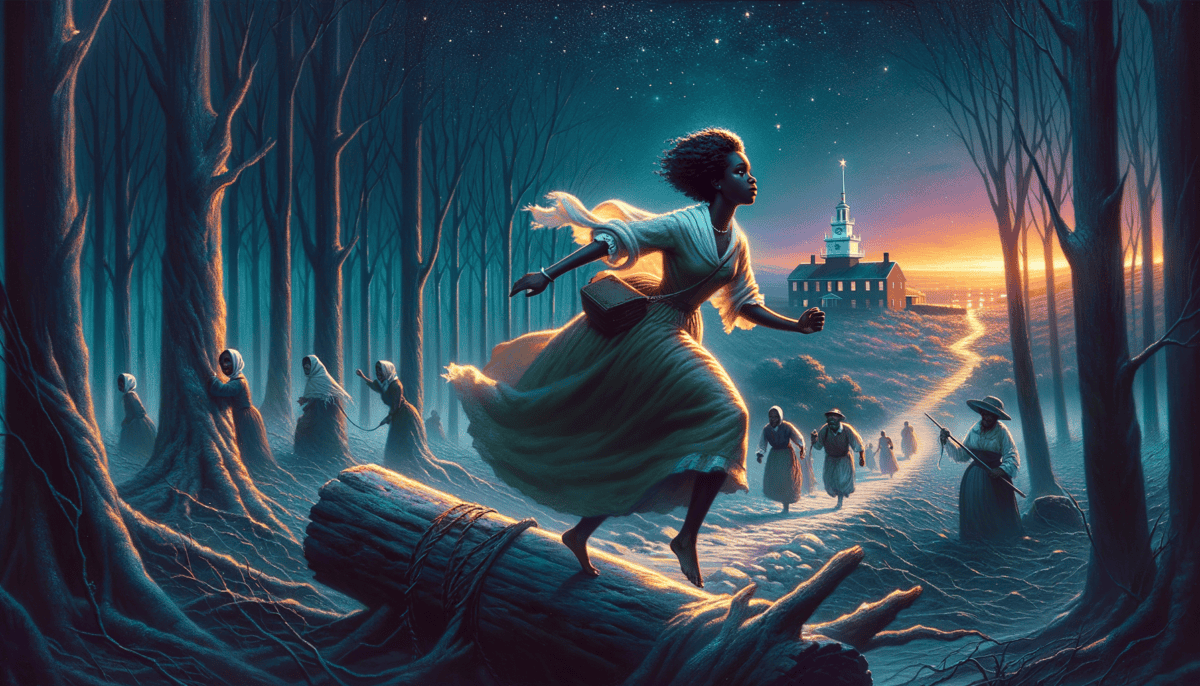
The stars twinkled brightly in the dark sky as Harriet, now a young woman, made the biggest decision of her life. It was 1849, and she was ready to escape to freedom.
“I had reasoned this out in my mind,” Harriet whispered to herself. “There was one of two things I had a right to: liberty or death. If I could not have one, I would have the other.”
One quiet night, Harriet packed a small bundle with food and a warm sweater. She looked at the North Star, just like her father had taught her. The star would help guide her way to freedom in Philadelphia.
“God’s time is always near,” she said softly. “He set the North Star in the heavens. He gave me the strength in my limbs. I should be free.”
The journey was long and scary. Harriet had to:
- Travel at night to stay hidden
- Find safe places to rest during the day
- Follow the North Star to know which way to go
- Trust kind people who helped along the way
Sometimes, Harriet would hide in wagons filled with hay. Other times, she would crawl through dark tunnels. She walked through forests and waded through streams. Her feet hurt, but she kept going.
“Follow the drinking gourd,” they would tell her, using a secret code. The drinking gourd was another name for the Big Dipper, which points to the North Star.
One night, Harriet heard dogs barking nearby. Her heart beat fast as she hid in a potato hole under a cabin floor. She stayed very quiet until the danger passed.
“Every great dream begins with a dreamer,” Harriet thought. “I can do this. I must do this.”
After many days and nights of walking, hiding, and being brave, Harriet finally crossed the line into Pennsylvania. She was free!
But even though Harriet was now free, her heart was heavy. She thought about her family and friends who were still slaves. She made a brave promise to herself: she would go back and help others escape too.
In Philadelphia, Harriet found work as a house cleaner. She saved every penny she could. This money would help her go back to Maryland and rescue others. She learned the safest routes and made friends with people who would help.
The young woman who had escaped in the night was becoming something more – a hero who would lead many others to freedom. Her own journey to freedom was just the beginning of an amazing story. ⭐
Harriet’s feet had carried her to freedom, but her heart would soon carry her back. She was ready to become a conductor on the Underground Railroad, helping others find their way to freedom just as she had done.
Becoming Moses
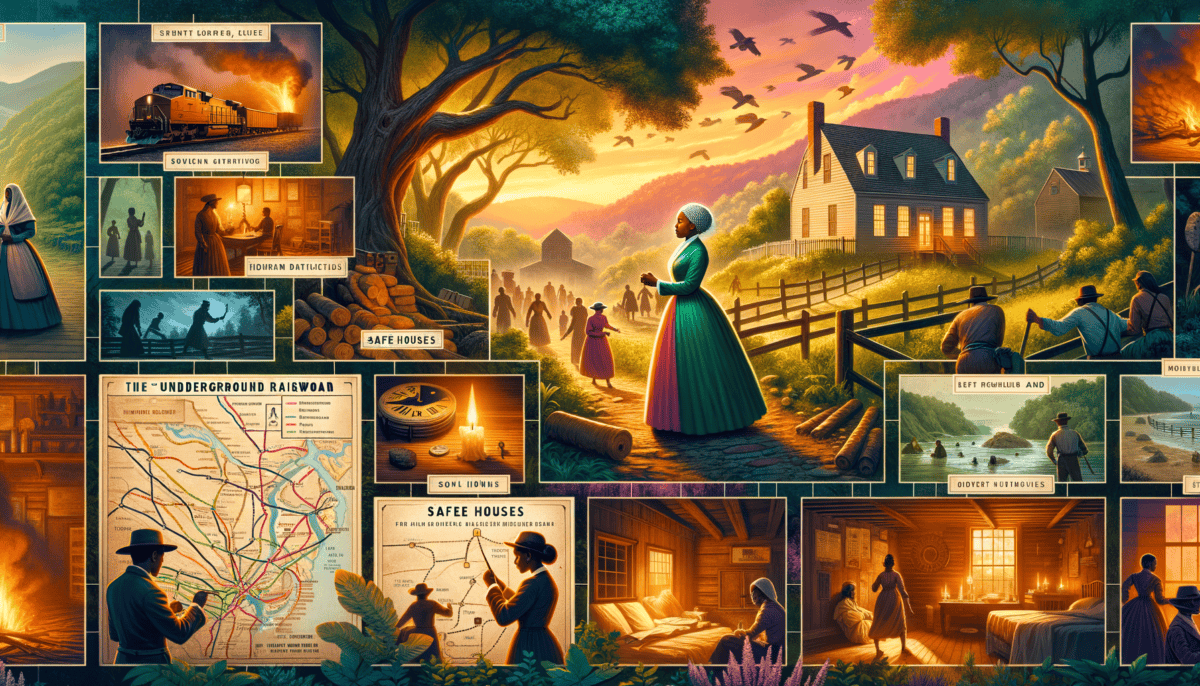
The cool autumn breeze rustled through Philadelphia’s trees as Harriet packed her small bag. She was going back to Maryland – not as a slave, but as a hero.
“I go to free them or die trying,” Harriet said with fire in her eyes. She knew every hidden path and secret trail. The stars would be her map.
Her first rescue mission was to save her sister and her sister’s children. Harriet snuck back into Maryland at night, moving like a shadow. She wore a disguise and carried a piece of paper with fake writing on it.
“Hush now,” she whispered to her scared family. “Follow me to freedom. Trust in the Lord and keep moving north.”
Harriet became very good at helping people escape. She had special tricks:
- Used songs to send secret messages
- Carried sleeping medicine for crying babies
- Traveled in winter when nights were longer
- Never lost a single person she helped
Sometimes, slave catchers would come close with their dogs. But Harriet was smart! She would put special pepper on the ground to confuse the dogs’ noses.
“Keep going,” she would tell tired travelers. “Wade in the water to hide your tracks. God’s gonna trouble the water.”
One cold night, a man wanted to go back. He was scared and tired. But Harriet pulled out a gun and said, “You go on or die a slave! Live free or die!” He kept going.
“Children, if you are tired, keep going. If you are scared, keep going. If you are hungry, keep going. If you want to taste freedom, keep going!”
Harriet made friends with many people who helped her mission. William Still in Philadelphia kept records of everyone who escaped. Thomas Garrett in Delaware gave food and shoes to tired travelers.
Even with all this danger, Harriet never gave up. She would look at the North Star and say, “My people are free!” Every person she saved made her heart sing with joy. ⭐
People started telling stories about the brave “Moses” who appeared like magic to lead slaves to freedom. Some said she had special powers because she was never caught.
Harriet had become more than just a conductor on the Underground Railroad. She was a symbol of hope. When slaves heard that Moses was coming, they knew freedom was near.
Frederick Douglass, another brave fighter for freedom, said: “I know of no one who has willingly encountered more perils and hardships to serve our enslaved people than Harriet Tubman.”
The little girl who once dreamed of freedom had grown into a mighty leader. But Harriet’s work wasn’t done yet. Soon, a big war would start, and she would find new ways to fight for freedom.
A Warrior’s Heart
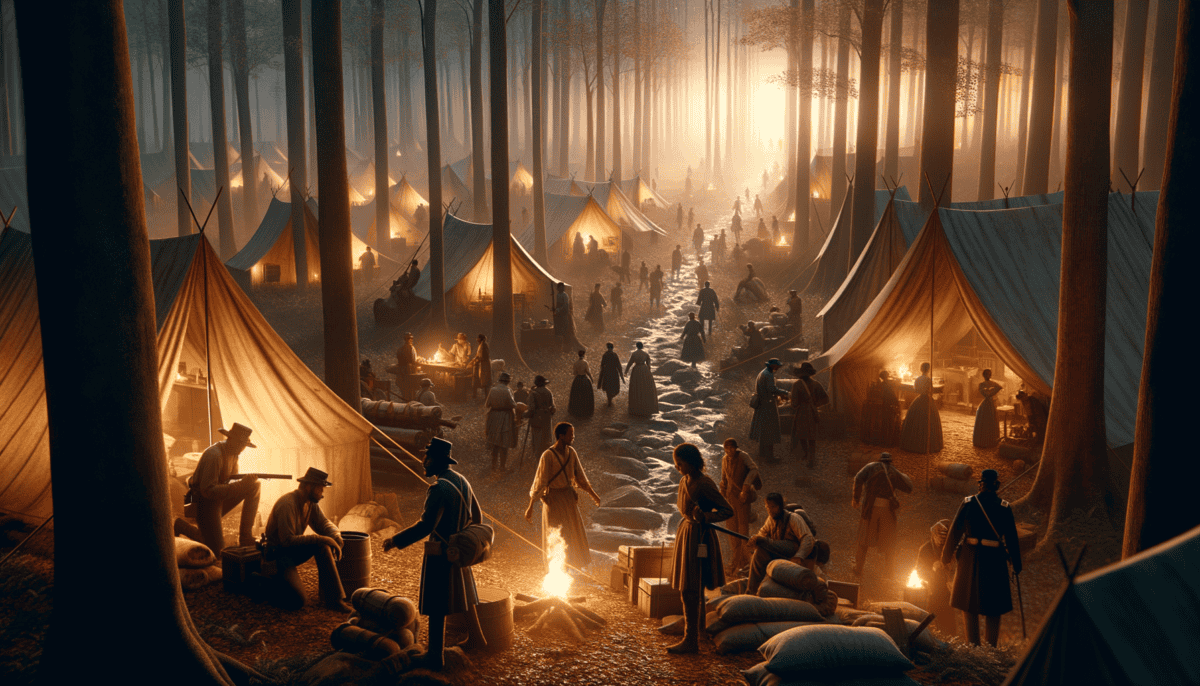
The year was 1861. Dark clouds of war rolled across America. Harriet Tubman stood tall, ready to help the Union Army fight slavery. ⚔️
“I can help,” Harriet told the Union generals. “I know these lands better than anyone.” She had walked them many times in the dark, leading people to freedom.
“The Lord made me strong,” she said. “Now I’ll use that strength to help end slavery for good.”
As a spy, Harriet did brave things:
- Sneaked behind enemy lines to gather secret information ️♀️
- Led Union boat raids along South Carolina rivers
- Helped free over 700 slaves in one big mission
- Made medicine from special plants to heal sick soldiers
One day, Harriet led Union boats up the Combahee River. She knew where the Confederate soldiers had put bombs in the water. ♀️
“Come on, children!” she called out. “God’s time is now! Run to the boats!” Many people cried with joy when they saw Harriet. Some remembered her from her Underground Railroad days.
In the army camps, Harriet worked as a nurse. She took care of sick and hurt soldiers. She knew which plants could help make them feel better.
“Every person deserves to be healthy and free. I’ll help anyone who needs me.”
The soldiers called her “General Tubman” because she was so brave and smart. But the army didn’t pay her much money. They didn’t think a Black woman deserved the same pay as others.
Still, Harriet kept working hard. She believed in freedom more than money. When she saw freed slaves dancing and singing, she knew her work was worth it.
“Look at my people,” she would say with pride. “They taste freedom for the first time!” Her heart sang when she saw families reunite after being apart for so long. ❤️
One cold night, Harriet helped a group of escaped slaves find warm clothes and food. An old woman hugged her and said, “You’re our Moses and our General now!”
The war was hard and scary. But Harriet never gave up. She remembered what she learned as a conductor: “Keep going, no matter what!”
When the Union won the war in 1865, Harriet smiled. Her work had helped end slavery forever. But she knew there was still more work to do. Black people were free, but they needed help building new lives.
The brave spy and nurse headed north to Auburn, New York. There, she would start a new chapter in her life, fighting for rights in different ways. The war was over, but Harriet Tubman’s mission for justice was far from finished.
Building New Dreams
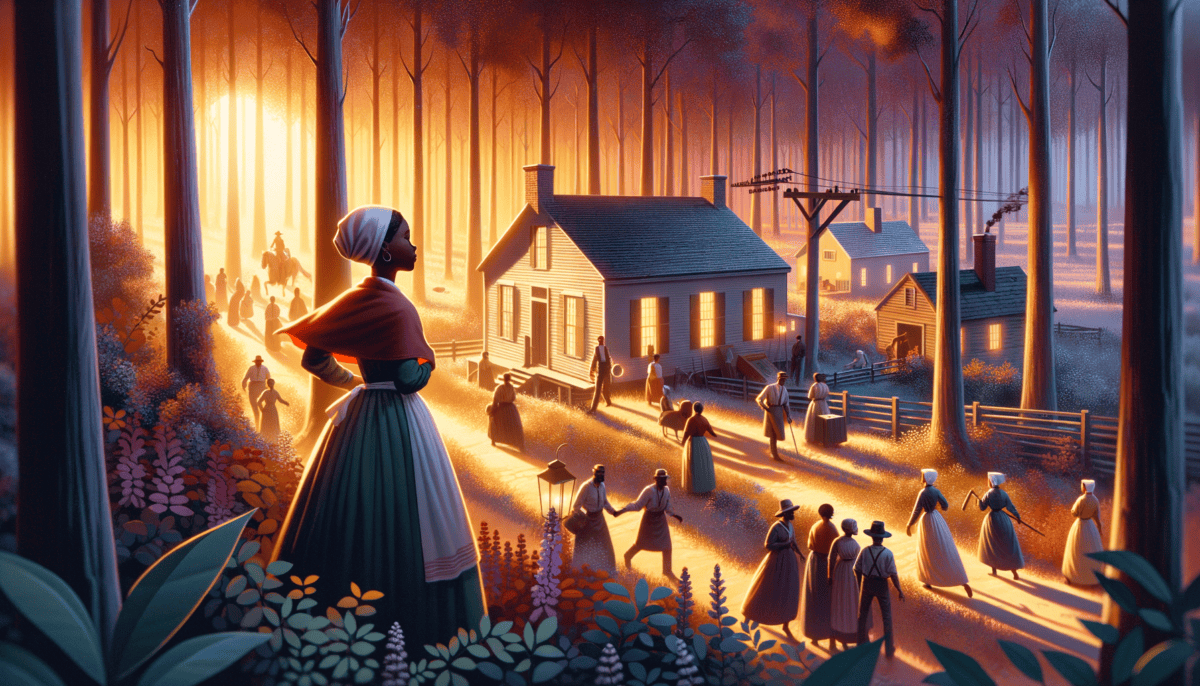
After the Civil War ended, Harriet Tubman moved to Auburn, New York. She had a big dream – to help freed slaves start their new lives.
“Everyone deserves a warm bed and good food,” Harriet said. She opened her doors to anyone who needed shelter. Her home became known as the Tubman Home for Aged and Indigent Colored People. ❤️
“We ain’t free until we all got a place to call home,” Harriet would say. “And I aim to help make that happen.”
Life wasn’t easy. Harriet still didn’t have much money. She grew vegetables in her garden and raised chickens to feed her guests. Sometimes she sold eggs and vegetables to buy more supplies.
But Harriet wasn’t just helping people find homes. She started fighting for women’s rights too! She joined meetings where women talked about getting the right to vote.
“I fought too long for freedom to be quiet now,” she said at a big meeting in New York. “Women deserve to have their say!” People clapped when she spoke. They knew she was right.
“God’s time is always near. He gave me my freedom, and He meant for all to be free.”
Harriet’s home became a special place where people shared stories and made plans for a better future. Young children would sit at her feet while she told tales about the Underground Railroad. ✨
Some people worried about Harriet. She worked so hard but had little money for herself. Her friends wrote letters asking the government to give her a pension for her war work. Finally, after many years, they said yes!
Harriet used the money to make her home even better. She added more rooms and bought warm blankets. “Every person who comes here should feel special,” she said.
In town, people respected Harriet. Children would run up to her shouting, “Tell us a story, Aunt Harriet!” She always had time for them, sharing lessons about courage and kindness.
Some days were hard. Her head still hurt from that old injury, and sometimes she felt tired. But seeing people smile in their new free lives made everything worth it.
One spring morning, a young girl asked Harriet, “Aren’t you tired of helping people?” Harriet smiled and said, “As long as I have breath in my body, I’ll keep working for freedom.”
The years passed, and Harriet’s hair turned white. But her spirit stayed strong. She kept fighting for what was right, showing everyone that one person’s love could change many lives. Her work wasn’t done yet – there were still more dreams to build.
A Light That Never Dims
The sun was setting in Auburn, New York, as Harriet Tubman sat in her rocking chair. She was now an old lady with silver hair, but her eyes still sparkled with the same fire that had guided so many to freedom.
“Auntie Harriet,” a young girl asked one day, “aren’t you afraid of anything?” Harriet smiled and replied, “I learned long ago that fear is a waste of time when there’s work to be done.”
“I never ran my train off the track, and I never lost a passenger,” Harriet would proudly tell visitors. And it was true – she had saved over 70 people!
People came from far and wide to meet the famous “Moses.” They wanted to hear her stories about the Underground Railroad and the Civil War. Harriet always made time to share her wisdom.
In 1913, Harriet knew her long journey was coming to an end. But she wasn’t sad. She had lived to see so many changes! African Americans were free, and women were getting closer to winning the right to vote.
On her last days, she was surrounded by loved ones. They sang the songs she had used to guide people to freedom. The same songs that had given hope to so many.
“I go to prepare a place for you,” she whispered, just as she had done so many times before on the Underground Railroad.
Harriet Tubman died on March 10, 1913. She was about 90 years old. The whole town of Auburn came to say goodbye to their beloved hero.
Schools, museums, and parks now carry her name. In 2016, it was announced that her face would appear on the $20 bill – a great honor for a woman who once had to escape slavery!
Children today learn about her courage and kindness. They read books about her adventures and dream of being brave like her.
Her home in Auburn became a National Historical Park. People visit from all over the world to walk where Harriet walked and learn about her amazing life. ️
But perhaps Harriet’s greatest legacy is the lesson she taught us all: that one person with courage can change the world. That no matter how dark things seem, there’s always hope. ⭐
Years later, a visitor to her home wrote: “The light of freedom that Harriet Tubman lit still shines bright today, showing us the way forward, just as it did for those she guided to freedom so many years ago.”
Harriet Tubman’s story reminds us that heroes don’t always wear capes. Sometimes they wear simple clothes, carry a lantern in the dark, and have a heart full of courage and love for others. She showed us that anyone can make a difference if they’re brave enough to try.