

A Dream of Finding Asia
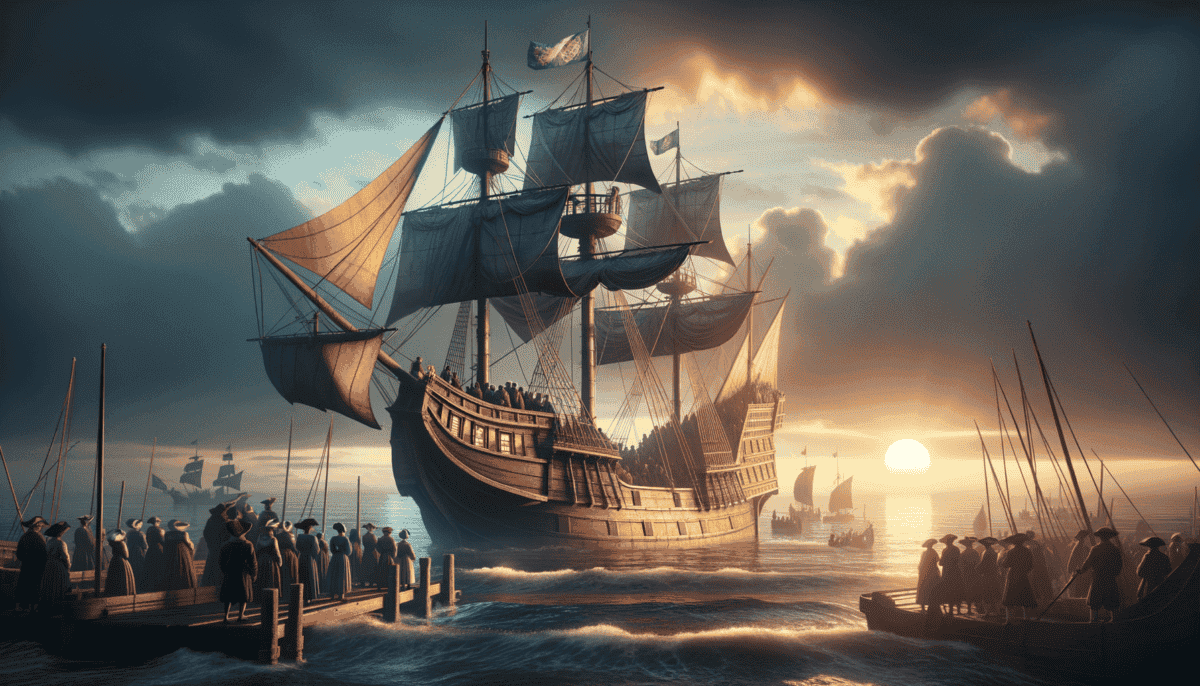
The salty sea breeze ruffled Henry Hudson's hair as he stood at the docks of London. It was 1609, and he had a big dream. He wanted to find a new way to sail to Asia!
"Just think of it," Henry said to his young son John, who stood beside him watching the ships. "If we can find a path through the north, we'll make history!"
Henry loved the sea since he was a little boy, just like you. He grew up learning about ships and stars. Now he was one of the best ship captains in all of England.
"But Father," John asked, looking worried, "isn't it dangerous to sail where no one has gone before?"
Henry smiled and put his hand on John's shoulder. "Sometimes we must be brave to make new discoveries. The Dutch East India Company is giving us a chance to find this new route!"
The Dutch East India Company was a group of rich merchants who wanted to trade with Asia. They gave Henry a special ship called the Half Moon. They also gave him money to buy food and tools for the trip.
Henry's Important Items for the Journey:
• Maps and star charts
• Food for many months
• Warm clothes for cold weather
• Tools for fixing the ship
• Gifts for new people they might meet
"Captain Hudson!" called out Robert Juet, his trusted friend and writer. "The crew is ready to meet you!"
Henry looked at the group of men gathering near the Half Moon. Some looked excited, others nervous. They would all need to work together on this big adventure.
"Remember what I always say," Henry told his son with a twinkle in his eye. "The sea is full of mysteries waiting to be found!"
“A true explorer’s heart is as vast as the ocean itself.” – Henry Hudson
As the sun began to set, casting orange and pink colors across the water, Henry knew their great adventure was about to begin. He had no idea that this journey would change maps forever and make his name famous for hundreds of years to come.
That night, as Henry looked at his maps one last time, he thought about all the amazing things they might see. Would they find giant sea creatures? New lands? Different people? Tomorrow, they would start their search for a path to Asia, and Henry could hardly wait.
The stars twinkled above the harbor, like tiny lanterns lighting the way to new discoveries. Soon, Henry Hudson and his brave crew would sail into history – but first, they needed a good night's sleep for the big day ahead!
Setting Sail into the Unknown
The morning sun sparkled on the water as the Half Moon left Amsterdam’s harbor. Henry Hudson stood proudly at the wheel. His heart beat fast with excitement.
“Captain,” called First Mate Robert Juet, “all sails are up and ready!”
The Half Moon was a special ship called a Dutch yacht. It wasn’t very big – only about as long as two school buses put together! But it was strong and built to handle big waves.
As they sailed into the open ocean, the weather started to change. Dark clouds rolled in, and the waves grew bigger.
“Hold tight, men!” Henry called out as the ship rocked back and forth. “This is just the ocean saying hello!”
Some of the sailors looked scared. They had never been on such a long trip before. But Henry knew what to do. He had been sailing since he was young.
“A good captain stays calm when the sea gets rough.” – Henry Hudson
To find their way across the huge ocean, Henry used special tools:
Henry's Navigation Tools:
• A compass to show which way was north
• Maps of the stars
• A special stick called a cross-staff to check the sun's position
• An hourglass to tell time
• Deep-sea line to measure water depth
“Look there!” shouted a sailor named John King, pointing to something in the water. A group of friendly dolphins was swimming alongside the ship!
But not everything was fun and games. The food was getting boring – mostly dried meat and hard bread. Some sailors started to complain.
“We’ve been at sea for weeks now,” grumbled one sailor.
“Patience,” Henry replied with a kind smile. “The best discoveries take time.”
At night, Henry would write in his captain’s log by candlelight. He wrote about the weather, the stars, and which way they were going. These notes would be very important later!
“Today we saw many strange birds. The wind blows from the north. The men are tired but brave.”
One morning, after many weeks at sea, something exciting happened. The air started to feel different. Seabirds they had never seen before flew overhead.
“Land birds!” shouted the lookout from high up in the crow’s nest. “That means we must be getting close to something!”
Henry’s heart jumped with joy. Could this be the start of their big discovery? He grabbed his telescope and looked ahead. What new adventures would they find?
The crew members gathered at the ship’s rail, all hoping to be the first to spot land. The Half Moon sailed on, carrying these brave explorers toward their destiny. No one knew what they would find, but they were ready for anything!
The sun was setting now, painting the sky in beautiful colors. Henry kept the ship steady, following the stars. Tomorrow would bring new sights and maybe, just maybe, the path to Asia they were looking for.
New Shores and Native Friends
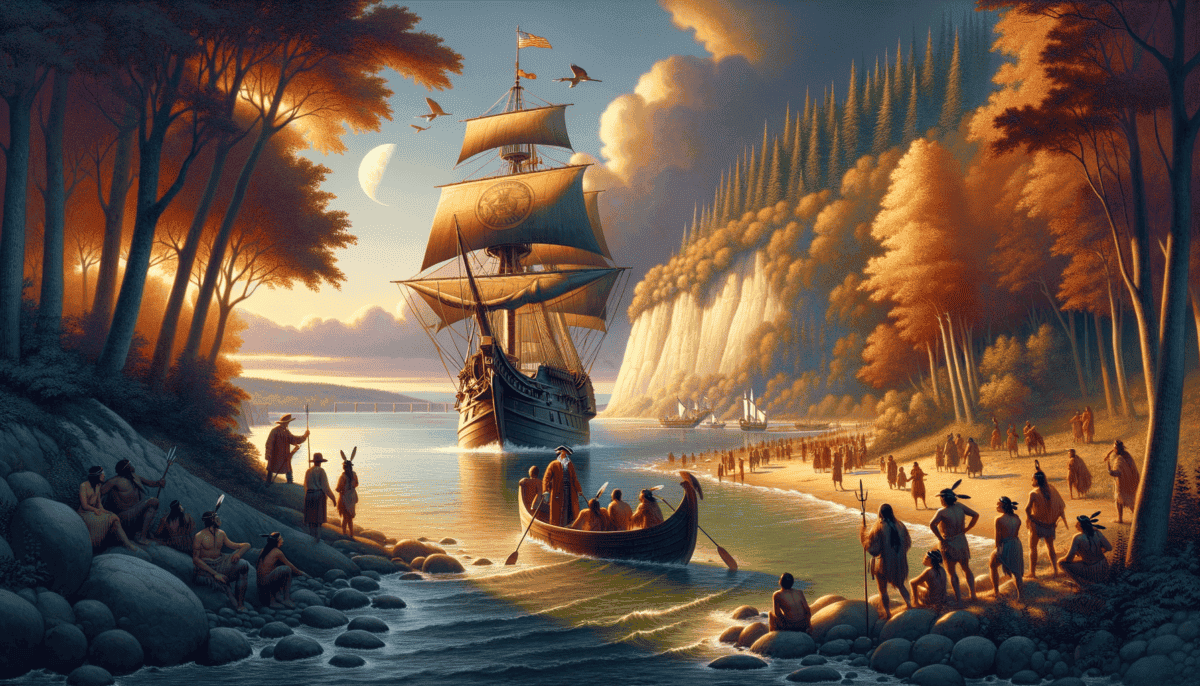
The morning mist cleared to show something amazing – land! The Half Moon’s crew cheered as they saw trees and beaches ahead.
“Look at those tall trees!” young sailor John King shouted. “They touch the sky!”
Henry Hudson steered the ship toward a wide river mouth. The water was deep and clear. Fish jumped all around them, making silver splashes in the sunlight.
As they sailed up the river, something caught their eye on the shore. Smoke was rising from small fires, and wooden canoes were gliding across the water.
“Captain!” called First Mate Juet. “There are people living here!”
Henry grabbed his telescope and looked. Native Americans in colorful clothes were watching the ship from the riverbank. Some waved friendly greetings.
“Remember men,” Henry said, “we are guests in their land. We must be kind and respectful.”
The Native Americans paddled out in their canoes to meet the strange ship. They brought gifts of corn, pumpkins, and soft animal furs.
“Look at these beautiful furs!” Henry said, feeling the soft beaver pelts. He gave the Native Americans some cloth and small bells in return.
While some crew members traded with the natives, others worked on making maps. They drew pictures of the riverbanks and wrote down how deep the water was.
• Big hills and mountains
• Places where the river turned
• Good spots for ships to stop
• Villages they found
• Special landmarks
But not everything was going well. Some sailors were getting grumpy. They had hoped to find a way to Asia, but this was clearly a new land.
“We should turn back,” one sailor whispered to another. “Winter will come soon.”
Henry heard them but kept sailing north. He wanted to see where this big river would lead. Maybe it would still show them the way to Asia!
The weather started getting cooler. Colorful leaves fell from the trees onto the deck. The Native Americans warned them about the cold winters here.
“The ice will come,” they said, using hand signals to communicate. “Many moons of snow.”
Henry wrote everything in his captain’s log:
Each night, Henry would look at the stars and think about what to do next. Should they keep exploring? Should they head back? The decision was getting harder every day. ⭐
One morning, they found something strange – the river water was starting to taste less salty.
“Fresh water!” Henry exclaimed. “That means we’re far from the ocean now.”
The crew saw more amazing things: deer drinking at the river’s edge, eagles soaring overhead, and mountains that seemed to touch the clouds. But tensions were rising on the ship, and Henry could feel it.
Some sailors started arguing about which way to go. Others worried about their food supplies. Even First Mate Juet, usually so loyal, began to look worried.
The Half Moon had sailed farther than any European ship before, but at what cost? As the autumn wind grew colder, Henry Hudson faced some big decisions about what to do next.
Winter’s Harsh Grip
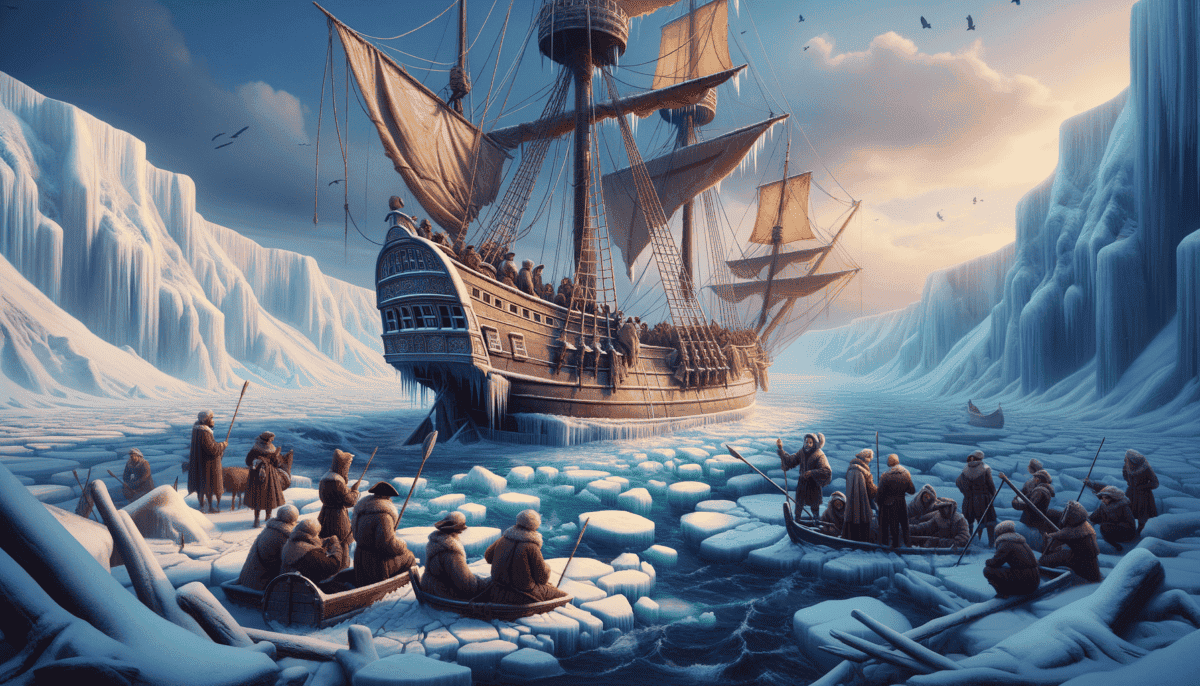
The wind turned icy as the Half Moon struggled against the current. Snowflakes started to dance in the air. ❄️
“Captain, we must find shelter!” First Mate Juet called out, his beard covered in frost.
Henry Hudson knew they needed to act fast. He steered the ship into a quiet bay where tall cliffs would block the fierce wind.
“Drop anchor!” he ordered. The heavy iron anchor splashed into the dark water.
“We’ll stay here until the worst of winter passes,” Henry told his crew. “We must work together to survive.”
The crew got busy right away. Some men built shelters on deck using extra sails. Others checked their food supplies. Young John King counted what they had left:
• Half barrel of salted meat
• Some hard bread
• A few dried peas
• One barrel of water
• Fish they could catch
“It’s not enough food,” John whispered to Henry. “We’re in trouble.”
The days grew shorter and colder. Ice formed around the ship, trapping them in place. The crew had to break the ice every day to keep the Half Moon from getting crushed.
“My hands are frozen!” complained sailor William Wilson, chipping at the thick ice.
Henry taught the men how to catch fish through holes in the ice, just as he had learned in his Arctic voyages. Some friendly Native Americans showed them how to track deer in the snow.
At night, the crew huddled around small fires in their deck shelters. They told stories about home to keep their spirits up. But Henry could see the worry in their eyes.
“Remember the warm taverns in Amsterdam?” one sailor sighed.
“And fresh bread from the baker,” another added sadly.
The cold seemed to freeze everything – even hope. Some men got sick with fever and coughs. Henry shared his own blankets with the sickest sailors.
One morning, they woke to find their water barrel frozen solid!
“How will we drink?” worried John King.
Henry showed them how to melt snow for water. “See? Nature provides if we’re clever,” he said with a smile.
But not everyone stayed positive. First Mate Juet started whispering to others about Henry’s leadership.
“He’s going to get us all killed,” Juet muttered. “We should have turned back months ago.”
The crew’s anger grew with each frozen day. They were tired of being cold, tired of being hungry, tired of being scared.
Henry tried to keep them busy with repairs to the ship and hunting trips. He knew idle hands could lead to dangerous thoughts.
“Spring will come,” he promised. “We just need to hold on.”
But as January turned to February, and February dragged into March, even Henry started to wonder. Had he pushed too far? Had his dream of finding a new route become a nightmare for his crew?
The ice creaked around them like angry voices in the night. And in the darkness of the ship’s hold, some men were making plans – plans that would change everything.
Breaking Point
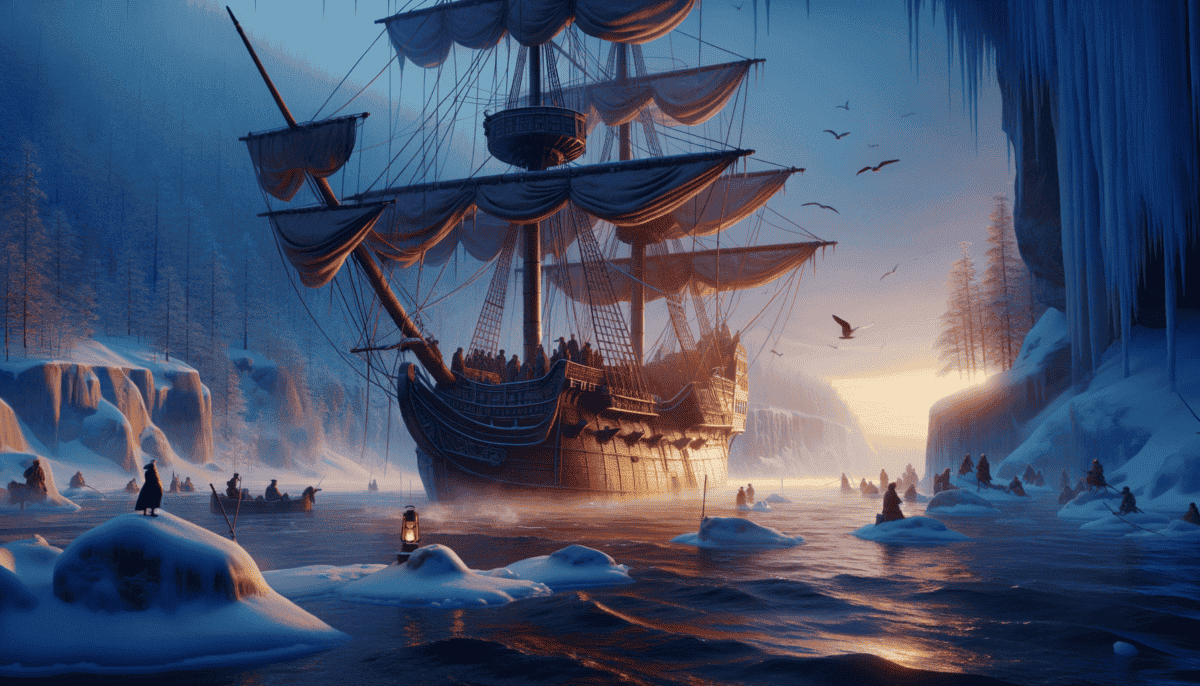
Dark clouds gathered over the Half Moon as tension filled the air. The crew’s patience was wearing as thin as the remaining food supplies. ⛈️
“Another moldy biscuit,” grumbled William Wilson, tossing the hard bread aside. “I can’t take much more of this.”
First Mate Juet gathered a group of sailors in the ship’s hold late one night. Their whispers echoed against the wooden walls.
“Hudson’s pride will be our death,” Juet said. “We must take control of our fate.”
Up on deck, young John King overheard the secret meeting. His heart raced as he ran to warn Captain Hudson.
“Captain! The men… they’re planning something bad!” John’s voice shook.
Henry Hudson’s face grew serious. He had seen this coming, like watching storm clouds build on the horizon. ️
The next morning, Hudson called the crew together. Some men wouldn’t meet his eyes. Others glared openly.
“I know you’re suffering,” Hudson began. “But we’ve come too far to give up now.”
“Too far?” shouted Wilson. “We’re lost in this frozen waste!”
More angry voices joined in:
“Our families think we’re dead!”
“There is no passage to Asia!”
Hudson tried to stay calm. “The ice is melting. Spring brings new chances—”
“Spring brings nothing but more of your lies!” Juet stepped forward. “Men, it’s time to choose. Follow Hudson to your graves, or take control with me!”
The crew split into two groups. Most stood with Juet. Only John King and a few others stayed by Hudson’s side.
“Think carefully about what you’re doing,” Hudson warned. “This is mutiny.”
Juet laughed coldly. “No, this is survival.”
That night, Hudson heard footsteps approaching his cabin. He gripped his sword, ready for whatever came next. ️
The door burst open. Juet led a group of armed men inside.
“Henry Hudson,” Juet announced, “you are no longer captain of this ship.”
John King watched from the shadows, tears in his eyes. The Half Moon had become a battlefield, and the war for control was just beginning. ⚔️
The explorer who had faced fierce storms and crushing ice now faced his greatest challenge: his own men. As darkness fell, the fate of the expedition hung by a thread as thin as the last rays of sunset.
Above them, the stars that had guided their journey seemed to dim, as if they too were turning their backs on Henry Hudson’s dream of discovery.
A Legacy Written in Ice
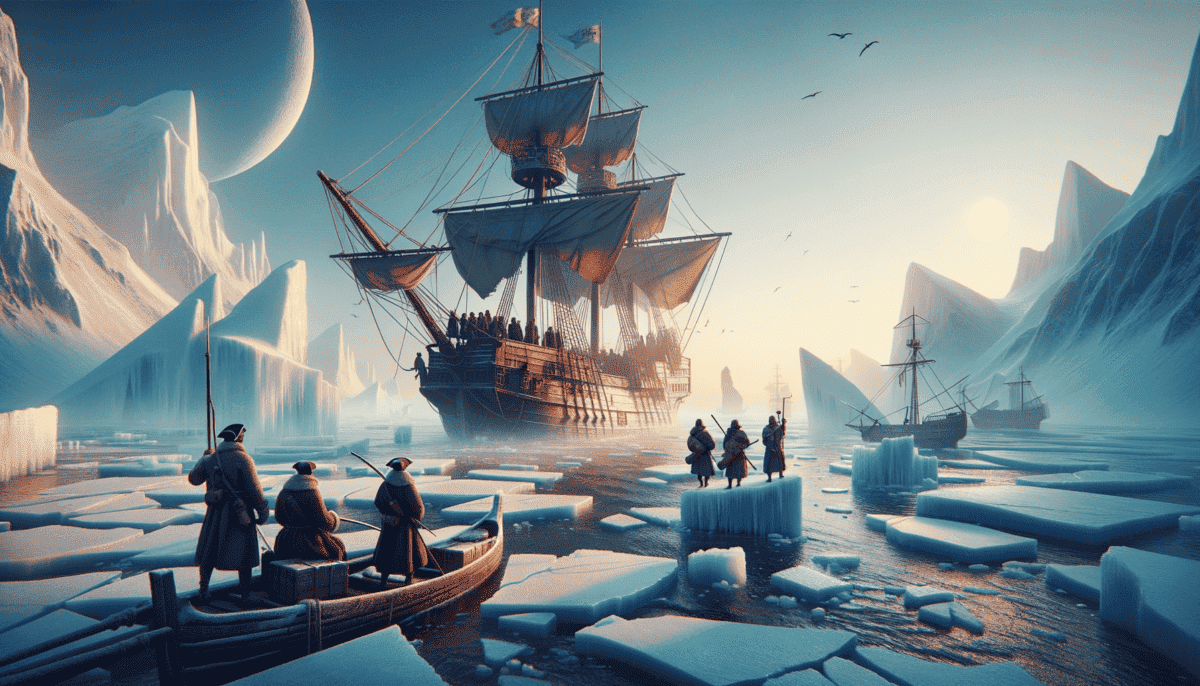
The cold morning brought no mercy. Hudson, his young son John, and seven loyal sailors found themselves forced into a small wooden boat. ♂️
“Father, I’m scared,” John whispered, huddling close to Hudson.
Hudson wrapped his coat around his son’s shoulders. “Be brave, John. We are explorers, and explorers never give up.”
“Remember this day,” Juet called from the ship’s deck. “The day Hudson’s pride finally sank him.”
The small boat drifted away from the Half Moon. Hudson watched his beloved ship grow smaller, his heart heavy but his spirit unbroken.
Back in Europe, news of Hudson’s fate sparked outrage. Ships were sent to search for him, but the great explorer was never found.
“What happened to Hudson?” became a question that echoed through history.
• Hudson River became a gateway to America
• Hudson Bay opened new trading routes
• Hudson Valley became home to millions
• His courage inspired countless explorers
Years later, a young sailor stood at the helm of his ship in the Hudson River. He held an old map, tracing the route of the great explorer who came before him. ️
“Captain,” his first mate called, “why do they still talk about Hudson after all these years?”
The captain smiled, watching the sunrise over the river that bore Hudson’s name. “Because some dreams are bigger than one life, and some explorers never truly die.”
Along the shores of the Hudson River today, children play where Native Americans once greeted the Half Moon. Cities rise where Hudson once saw wilderness. Ships sail daily through the waters he charted.
“The greatest explorers don’t just discover new places – they open doors for others to follow.”
And somewhere in the vast waters of Hudson Bay, perhaps the spirit of a brave explorer still sails on, forever searching for that Northwest Passage, forever reminding us that the greatest journeys begin with a single dream. ⭐
The story of Henry Hudson reminds us that every great adventure comes with risks, and sometimes the biggest discoveries happen when we’re brave enough to sail into the unknown.