

The Crossroads of Empires
The morning sun peeked over the marble columns of Athens as I raced through the bustling streets. My sandals slapped against the stone paths while merchants called out their wares. My name is Marcus, and I'm a Roman boy living in this amazing Greek city.
"Marcus! Don't run so fast!" my mother called after me. She was born in Rome but loves Athens just as much as I do. Her long dress swished as she hurried to catch up.
The city was already alive with excitement. Greek children played with spinning tops while Roman soldiers marched past in their shiny armor. Everyone spoke different languages, but somehow we all understood each other.
I stopped at my favorite spot – a huge statue of Athena, the Greek goddess of wisdom. She looked so tall and strong against the blue sky. Next to her stood a newer statue of a Roman emperor.
"Papa says we're lucky to live here," I said to my friend Alexandros, who appeared beside me. He was Greek, and his family had lived in Athens forever.
"Your papa is right," Alexandros smiled. "Look at all the amazing things we have!" He pointed to the buildings around us – some old Greek temples and some new Roman buildings. They looked different but beautiful together.
The streets were filled with wonderful smells:
• Fresh bread from the baker
• Sweet honey cakes
• Roasting meat
• Salty fish from the sea
• Fragrant olive oil
My stomach growled loudly, making Alexandros laugh. "Come on," he said. "My mother made spanakopita today. You can try some!"
I loved trying Greek food, even though my Roman grandmother sometimes shook her head about it. But that's what made Athens special – we could enjoy the best of both worlds.
"Marcus!" called my father's voice. He stood tall in his Roman toga but wore Greek sandals. "Time for your lessons, son."
I hugged Alexandros goodbye and ran to Papa. As we walked home, he pointed out different buildings.
"See how the columns are different?" he asked. "The Greeks taught us Romans so much about building beautiful things."
“But Papa,” I asked, “if the Greeks are so smart, why did Rome take over?”
He stopped walking and knelt down to my level. "Marcus, being strong isn't just about who can fight better. It's about learning from each other and growing together. That's why Athens is special – it's where Roman strength meets Greek wisdom."
I thought about this as we walked past a group of children playing with a ball. Some spoke Latin like me, others spoke Greek like Alexandros. But when they played together, it didn't matter what language they spoke.
That night, as I lay in bed, I could hear the mix of Latin and Greek voices floating up from the street. The sounds blended together like a beautiful song. Maybe that's what Papa meant about growing together.
I closed my eyes, excited for tomorrow's adventures in my wonderful city where two great worlds came together. The statue of Athena would watch over us all – Romans and Greeks alike – as we learned to live as one big family in this amazing place called Athens.
Through my window, I could see the stars twinkling above the Acropolis. Tomorrow would bring new friends, new words to learn, and new ways to discover how Romans and Greeks could share this beautiful city we all called home.
Warriors and Philosophers
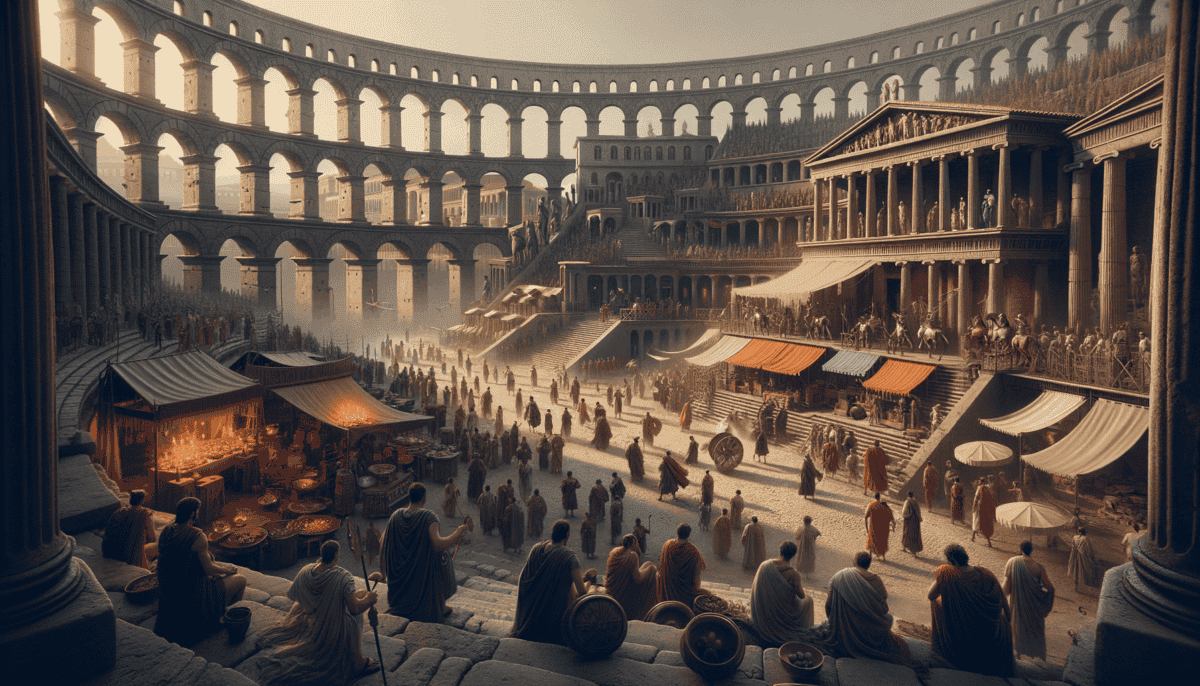
The sun was barely up when I hurried to meet my new teacher. My heart raced with excitement as I climbed the stone steps to the Academy. Today was my first day learning from Sophocles, a wise Greek philosopher.
“Welcome, young Marcus,” Sophocles smiled warmly. His white beard reminded me of clouds on a sunny day. He wore a simple Greek robe and sat in a garden filled with olive trees.
Other students arrived – both Roman and Greek boys. Among them was my friend Alexandros, and a new face – a tall Roman boy named Lucius who carried himself like a soldier.
“Today,” Sophocles began, “we will learn about both wisdom and strength.” He picked up a stick and drew shapes in the dirt. “The Greeks believe in training both the mind and body.”
Lucius raised his hand. “My father says Romans are warriors. We don’t need philosophy.” His voice was proud but not unkind.
Sophocles smiled. “Ah, but the greatest warriors are also the wisest. Watch this…”
He called two boys forward – one strong and one small. They were to solve a puzzle involving moving rocks. The smaller boy won by thinking carefully instead of using strength.
Things We Learned That Day:
• How to solve puzzles
• Greek letters and words
• Stories about brave heroes
• Ways to be strong AND smart
• How to respect different ideas
After our morning lessons, we went to the training grounds. Roman soldiers taught us how to stand straight and march. Greek athletes showed us how to run and jump.
“See?” Alexandros whispered to me. “We’re learning from each other!”
Lucius surprised everyone by being good at both fighting AND thinking. During lunch, he sat with us and shared his Roman bread while trying our Greek olives.
“Maybe,” Lucius said thoughtfully, “being a good warrior means knowing when NOT to fight.”
Later that day, we heard shouting in the marketplace. Some Greek merchants were arguing with Roman guards about taxes. My stomach felt tight – I didn’t like seeing people fight.
Sophocles gathered us close. “Watch and learn,” he said quietly. “Sometimes the greatest battles are won with words, not swords.”
We watched as older Greeks and Romans talked calmly, found a fair solution, and shook hands. The argument ended peacefully.
“Tomorrow,” Sophocles announced, “we’ll learn more about being both brave and wise. For now, remember that strength comes in many forms.”
Walking home with my new friends, I felt different – stronger somehow, but not just in my muscles. Lucius and Alexandros walked beside me, talking about tomorrow’s lessons.
The setting sun painted Athens in golden light. Above us, an eagle soared – free and strong, just like our minds after a day of learning. I couldn’t wait to tell Papa about everything I’d learned about being both a warrior and a thinker.
The Marketplace of Ideas
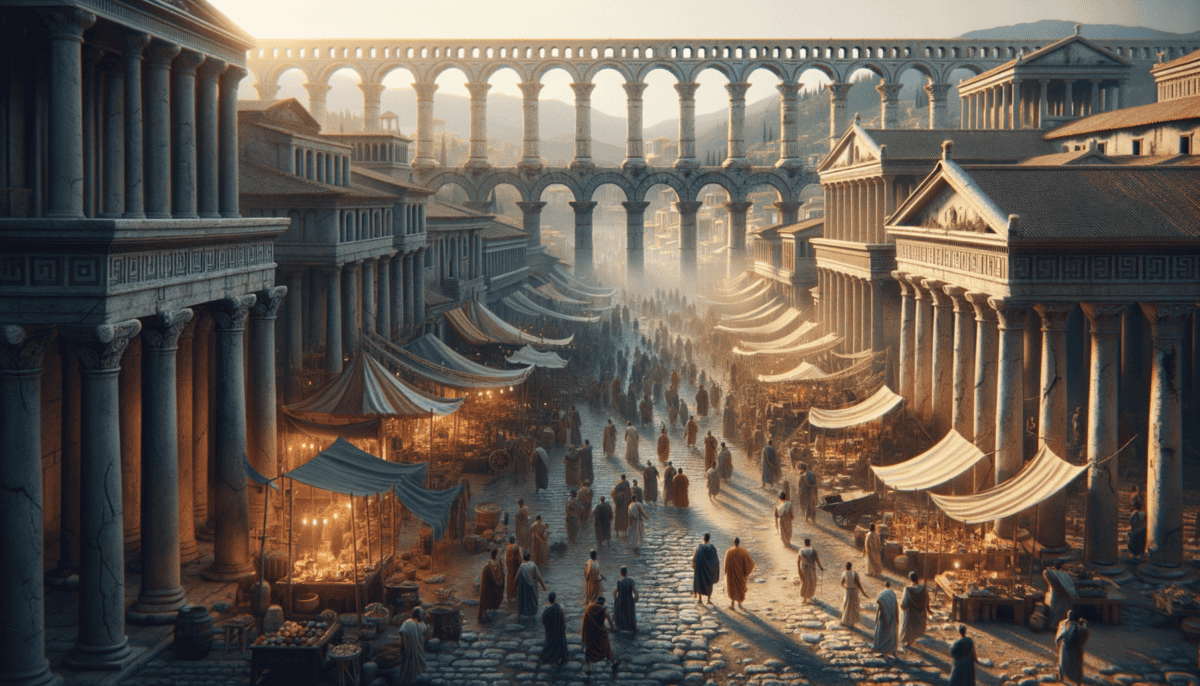
The Athenian marketplace buzzed with life as I walked through the crowded streets with Alexandros and Lucius. Colorful stalls stretched as far as I could see, filled with treasures from all over the world.
“Look, Marcus!” Alexandros pointed to a merchant selling bright purple cloth. “That’s from Phoenicia – my father trades with them.”
The air smelled of spices, fresh bread, and salty fish. Merchants called out in Greek and Latin, selling their goods. I heard languages I didn’t even know!
“Want to try some honey cakes?” A friendly Greek baker waved us over. Her wrinkled face reminded me of my grandmother. “Made with real Egyptian honey!”
As we munched on the sweet treats, we watched people haggling over prices. A Roman soldier was bargaining with a Greek pottery maker.
“These pots tell stories,” the potter explained, pointing to the painted figures. “See? This one shows the tale of Hercules!”
Suddenly, we heard loud voices near the fountain. A group of children were arguing over who could draw water first.
“I have an idea,” Lucius said. He walked over and showed them how to make a line and take turns. Soon they were all smiling and sharing the water.
Near the philosophers’ corner, we found Sophocles talking with other teachers. They sat in a circle, sharing ideas just like they shared bread and olives.
“Come join us,” Sophocles called. “Today’s lesson is happening right here in the marketplace!”
What We Saw in the Marketplace:
• People from different lands trading peacefully
• Greeks and Romans working together
• New foods and items from far away
• Everyone learning from each other
• Friends helping solve problems
A Persian merchant taught us about his beautiful carpets. An Egyptian showed us how to write our names using picture symbols. Even Lucius, who used to think only Roman ways were best, was excited to learn new things.
“It’s like a big puzzle,” I said. “Everyone brings a different piece, and together we make something amazing!”
As the sun began to set, lanterns lit up the marketplace. Musicians played both Greek and Roman songs. People danced together, forgetting about their differences.
Walking home, my arms full of small treasures I’d bought, I felt happy. The marketplace showed me how people from different places could be friends.
“Tomorrow’s market day too,” Alexandros said excitedly. “Maybe we’ll learn more new things!”
But as we turned the corner, we saw a group of angry men putting up posters. They didn’t look happy about Romans and Greeks being friends. A worried feeling grew in my stomach – was trouble coming to our peaceful marketplace?
Storms of Change
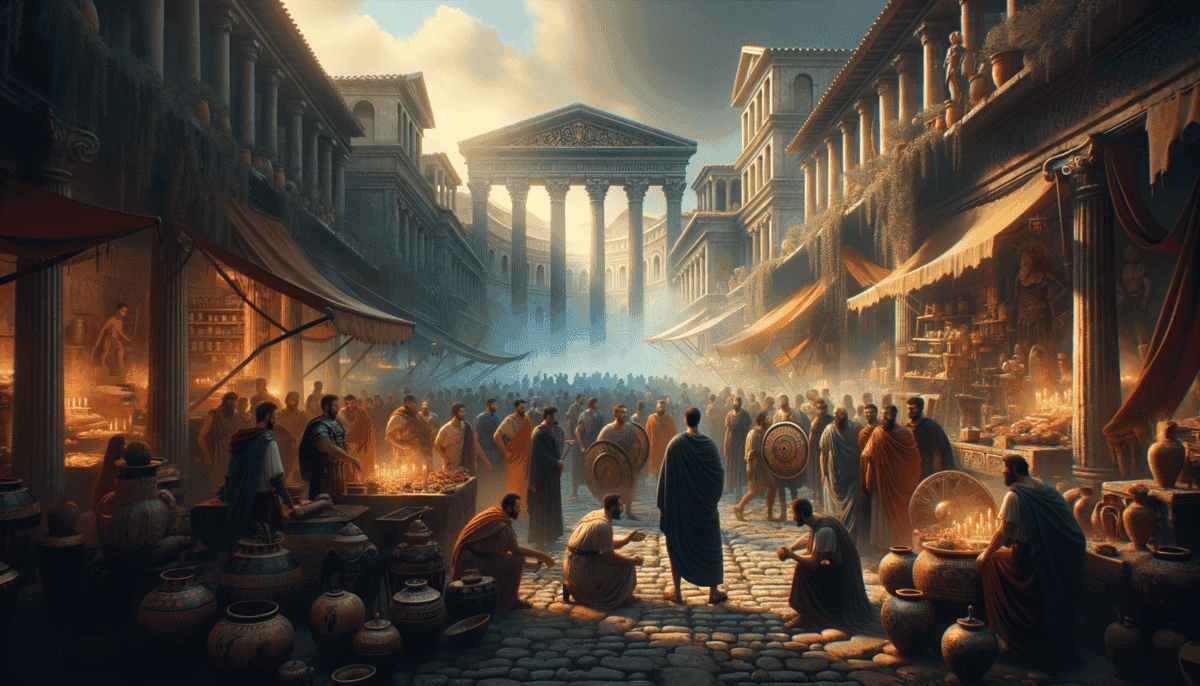
Dark clouds gathered over Athens as I hurried through the streets. The happy marketplace from yesterday felt different now. People whispered in corners and gave each other worried looks.
“Marcus!” Alexandros ran up to me, his face serious. “Did you see the new signs? Some Greeks don’t want Romans here anymore.”
My heart felt heavy. Just yesterday, everyone was dancing together. Now the streets felt cold and unfriendly.
“What’s happening?” I asked Sophocles during our lesson. His wise eyes looked sad.
“Some people are scared of change, young Marcus. They forget that we can learn from each other.”
That afternoon, I saw Roman soldiers taking down the angry posters. A crowd gathered, and some Greeks started shouting.
“This is our city!” someone yelled.
“We’re all living here together now,” a Roman merchant replied calmly. “My children were born in Athens too.”
Later, I found Lucius sitting alone by the olive grove. His father was a Roman officer, but his best friend was Alexandros, a Greek.
“I don’t know what to do,” he said quietly. “Some Roman kids say I shouldn’t play with Alexandros anymore.”
My stomach felt like it was tied in knots. These were all my friends – Romans and Greeks both. Why did they have to fight?
That night at dinner, my father noticed I wasn’t eating.
“What troubles you, son?” he asked.
“Why can’t everyone just get along like before?” I pushed my plate away. “The marketplace was perfect yesterday!”
The next morning, I had an idea. I asked Sophocles to help me write a speech in both Greek and Latin. Then I went to find my friends.
“Meet me at the big olive tree after sunset,” I told everyone. “Both Romans and Greeks. Please come.”
As the sun went down, people started gathering. Some looked angry, others nervous. I climbed onto a stone and took a deep breath.
“Look around,” I said in Greek, then repeated in Latin. “These are our neighbors. Our friends. Remember yesterday in the marketplace? That’s who we really are.”
Alexandros stepped forward first. “Marcus is right. I don’t want to lose my Roman friends.”
Slowly, others began to nod. An old Greek woman brought out honey cakes. A Roman soldier shared his water.
But not everyone was ready to make peace. As we walked home, I saw more angry posters going up. Some people still shouted in the streets.
“What do we do now?” Lucius asked.
I looked at my friends – Greek and Roman together – and squared my shoulders. “We keep trying. We show them a better way.”
The stars came out over Athens, twinkling on both sides of the city. Tomorrow would bring new challenges, but tonight, under one sky, we were just people hoping for peace.
Bridges of Hope
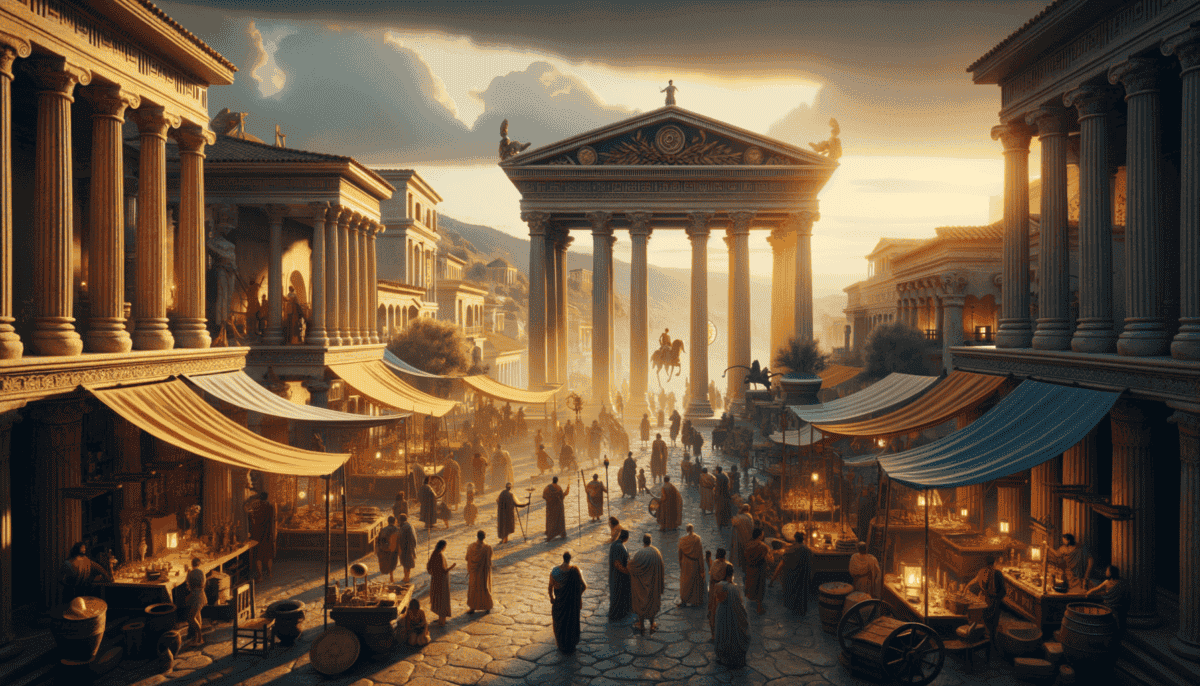
The morning sun rose over Athens, painting the Acropolis in golden light. I stood with my friends – both Romans and Greeks – looking at the mess from yesterday’s fights.
“We need to do something big,” Alexandros said, picking up torn posters.
Lucius nodded. “Something to show we’re stronger together.”
I ran to find Sophocles, my heart racing with excitement. He was in his garden, tending to his olive trees.
“Teacher,” I called out, “can we use the old theater for something special?”
“The theater has always been a place where stories bring people together,” he smiled. “What do you have in mind?”
My plan was simple but brave – a play showing both Roman and Greek stories, performed by children from both sides.
“Marcus!” my sister Julia came running. “The Roman governor wants to meet you!”
In his big marble house, Governor Claudius listened carefully to our festival idea.
“Young man,” he said kindly, “you remind me that wisdom can come from any age. You have my support.”
The next weeks were busy and wonderful:
• We practiced our play
• Greeks taught Romans their dances
• Romans shared their music
• Everyone helped decorate the theater
• Mothers from both sides cooked together
But not everything was easy. Some people still didn’t want to join in.
“My grandfather says Romans ruined everything,” a Greek boy named Demetrius grumbled.
“And my uncle says Greeks are trouble,” Roman girl Lucia sighed.
The day of the festival arrived. The old theater filled with people – Romans in togas, Greeks in chitons, all mixed together.
Our play told the story of Romulus and Remus in Greek, then a Greek myth in Latin. The audience laughed and clapped together.
“See?” Alexandros whispered backstage. “When we tell each other’s stories, we understand each other better.”
After the play, something magical happened. A Greek grandmother taught a Roman boy a traditional dance. Roman soldiers shared their shield-making secrets with Greek craftsmen.
Governor Claudius made a surprising announcement: “From now on, this will be our yearly Festival of Two Peoples!”
That night, watching Romans and Greeks celebrate together, I felt like my heart might burst with joy.
“You did it, Marcus,” Sophocles said proudly. “You built a bridge between two worlds.”
Looking around at my friends – Greek and Roman faces glowing in the festival lights – I knew things would still be hard sometimes. But now we had proof that peace was possible.
“This is just the beginning,” I said, as fireworks lit up the Athenian sky.
A New Dawn
The morning after our big festival, Athens felt different. The sun sparkled on the marble buildings, and everywhere I looked, Romans and Greeks walked together, smiling and talking.
“Marcus!” Alexandros called, waving from his family’s bakery. “Come see what we made!”
Inside, Roman and Greek treats sat side by side. Sweet honey cakes next to Roman bread. People lined up to try both!
“My mother and Julia’s mother made these together,” Alexandros said proudly. “They’re calling it ‘friendship bread!'”
At school, things were changing too. Sophocles had a surprise for us.
“Today,” he announced, “we’ll start learning both Latin AND Greek. Everyone together!”
Even better news came from Governor Claudius:
• New schools would teach both languages
• Markets would welcome all traders
• Festivals would celebrate both cultures
• Teams would mix Romans and Greeks
• Everyone could share their stories
“You started something wonderful,” Father told me at dinner. “Athens is becoming a new kind of city.”
Walking through the marketplace one day, I saw little kids playing together – some Roman, some Greek. They didn’t care about differences. They just had fun!
“But I’m Roman and he’s Greek!” Lucia laughed.
“That’s what makes it perfect,” Demetrius smiled.
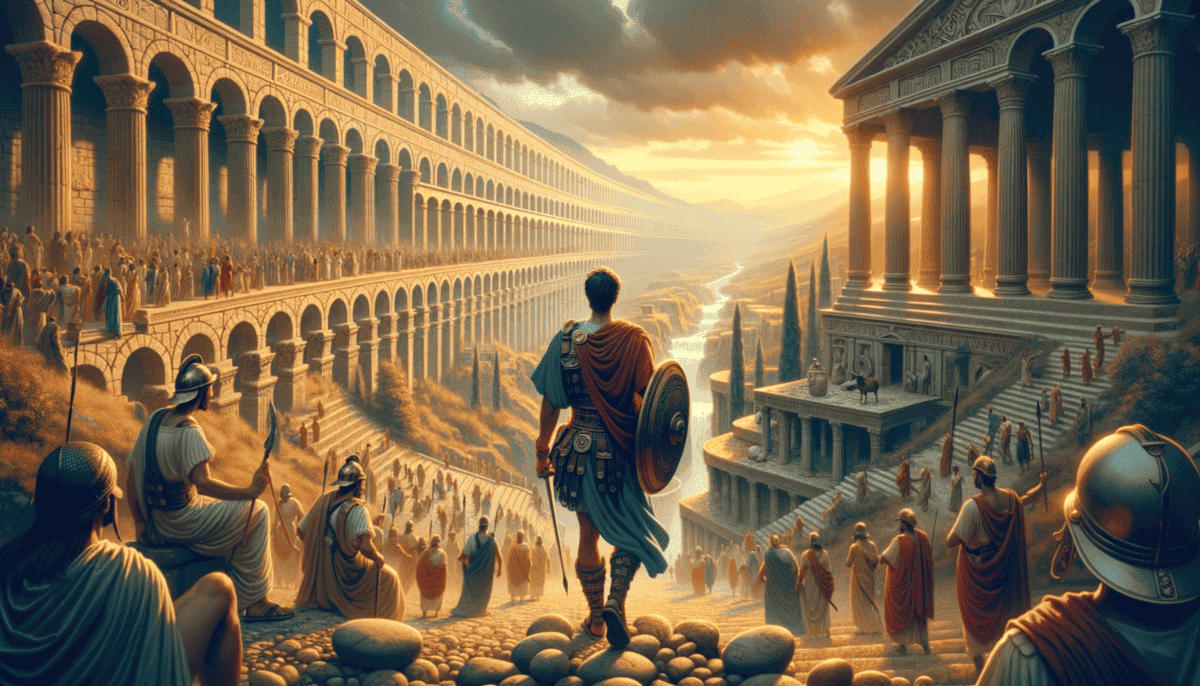
One evening, Sophocles took me to the top of a hill overlooking Athens.
“Look down there, Marcus. What do you see?”
I saw my beautiful city – temples and houses, markets and schools. But most importantly, I saw people living together in peace.
“I see the future,” I answered.
Sophocles nodded. “You helped build this future, young friend. Remember – when hearts are open, wonderful things happen.”
Years later, I still remember that special time. I’m grown now, with children of my own. They ask me to tell stories about the old days, when Romans and Greeks first learned to be friends.
“Tell us about the festival!” they beg.
And I do. I tell them how a group of kids helped change their world. How being brave and kind can make magic happen. How understanding others makes everyone stronger.
My story ends here, but Athens’ story goes on. Every day, people still work together, share stories, and build bridges between different worlds.
And somewhere, right now, another child is learning that the best adventures happen when we open our hearts to new friends. ⭐