

Seeds of Change
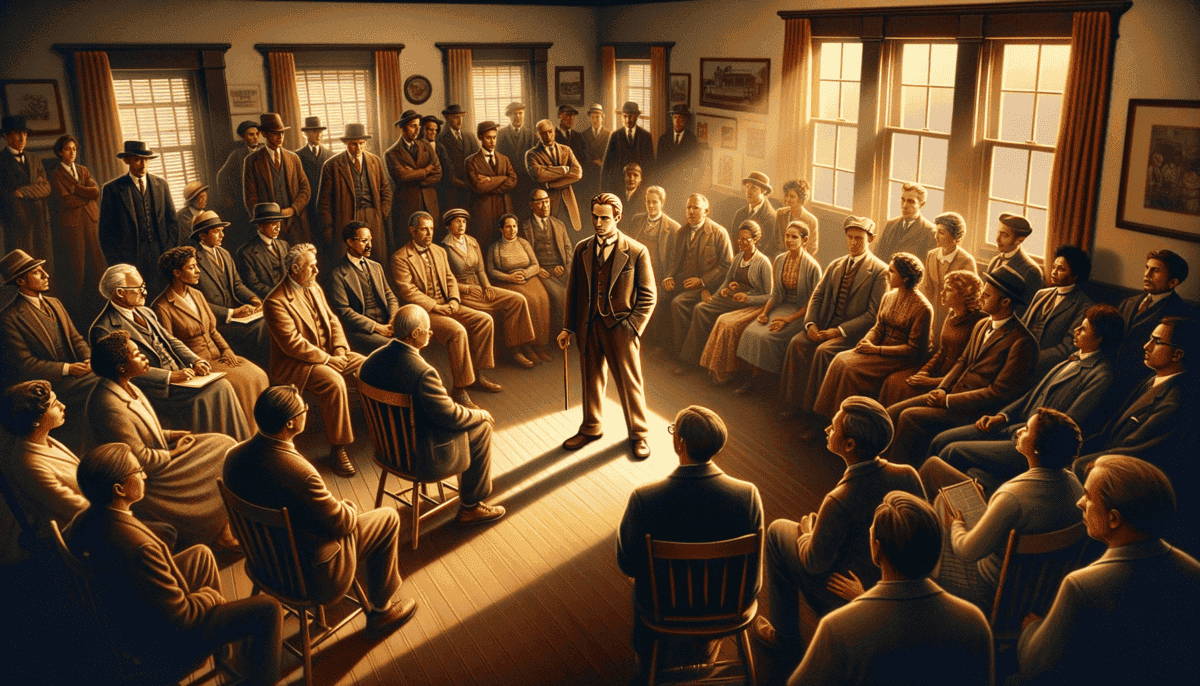
Little Martin sat on his front porch in Atlanta, watching the world go by. The year was 1935, and he was just six years old. The warm Georgia sun made the sidewalk sparkle like tiny diamonds.
"Mama," Martin called out to his mother Alberta, "why can't I play with my white friend Billy anymore?"
Alberta King's eyes filled with sadness as she sat down next to her son. "Some people think the color of our skin should keep us apart. But that's not right, and one day things will change."
Young Martin loved going to church with his daddy. Reverend King Sr. had a powerful voice that filled the Ebenezer Baptist Church. Martin would stand next to his father, pretending to preach just like him.
"Son," his father would say, "always remember that everyone is equal in God's eyes."
Learning Hard Lessons
One hot summer day, Martin went to buy ice cream with his grandmother. The store owner pointed to a sign that read "Whites Only." Martin's heart felt heavy.
"Why are people so mean?" he asked his grandmother.
She hugged him tight and said, "We must respond to hate with love. That's what Jesus teaches us."
Important things Martin learned as a child:
• Stand up for what's right
• Love everyone, even those who are unkind
• Use words, not fists
• Education is powerful
• Faith can move mountains
Finding His Voice
At school, Martin was a bright student. His teachers noticed how well he could speak and write. He skipped two grades because he was so smart!
"Words are like magic," his teacher Ms. Smith told him. "They can change hearts and minds."
Martin started reading everything he could find. He learned about Gandhi and how he helped people in India without using violence. This made Martin think about how he could help people too.
As Martin grew older, he saw more unfairness around him. Black people couldn't eat at certain restaurants. They had to sit in the back of buses. They couldn't drink from the same water fountains as white people.
"This isn't right," Martin would say to his friends. "We need to change things, but we must do it with peace and love."
The Dream Begins
One evening, while doing his homework, Martin heard his parents talking about ways to help their community. He realized that being a minister wasn't just about preaching on Sundays – it was about helping people every day.
"Daddy," Martin said, "I want to be just like you. I want to help make the world better."
His father smiled proudly. "Remember son, hate cannot drive out hate. Only love can do that."
Years later, when Martin went to college at Morehouse, he started learning more about fighting unfair laws. He discovered that by bringing people together peacefully, they could make big changes happen.
The seeds of change were planted in young Martin's heart. He grew up knowing that love was stronger than hate, that words were more powerful than weapons, and that everyone deserved to be treated fairly.
Little did he know that these childhood lessons would help him change America forever. His journey was just beginning, and the dream that started in his heart would soon touch the hearts of millions.
Montgomery’s Turning Point
The air was crisp on December 1, 1955, when Rosa Parks boarded a bus in Montgomery, Alabama. She was tired after a long day of work.
“I’m not moving,” Rosa said quietly but firmly. Her words would echo through time.
When Martin Luther King Jr. heard about Rosa’s arrest, he knew it was time to act. He was now 26 years old and a minister at the Dexter Avenue Baptist Church.
A Community Comes Together
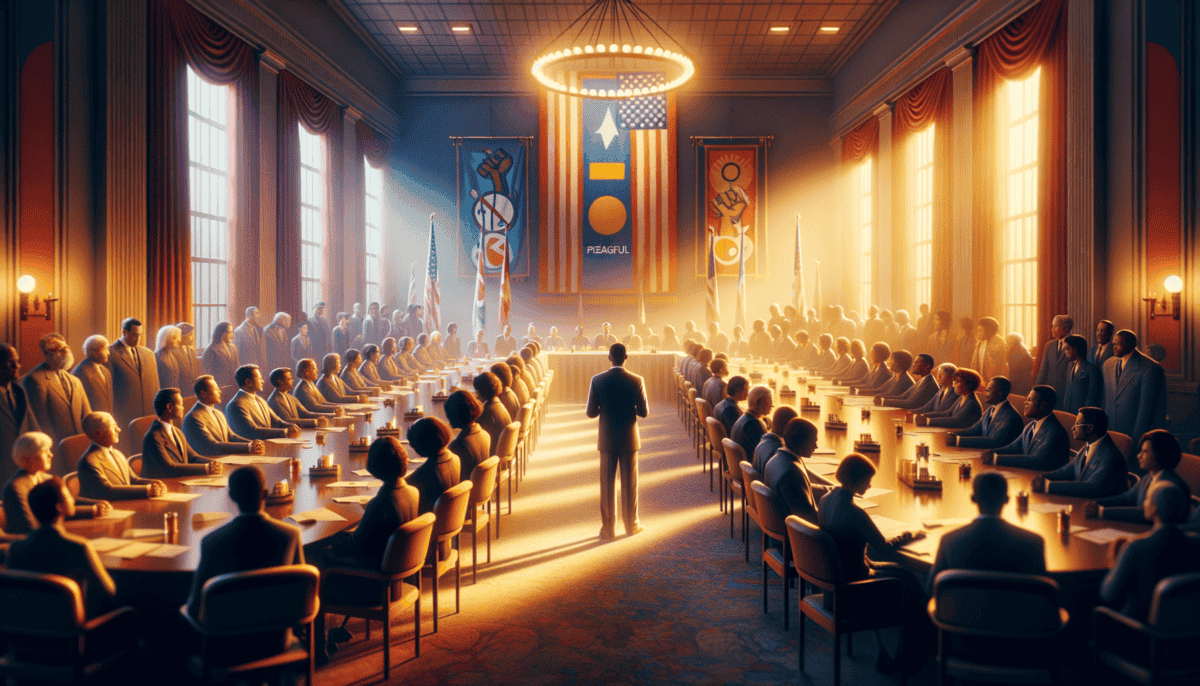
“We must stand together,” Martin told his congregation. “But we will do it with peace and love in our hearts.”
The plan was simple but powerful – no one would ride the buses until they treated everyone fairly. This became known as the Montgomery Bus Boycott.
“How will people get to work?” someone asked.
Martin smiled. “We’ll help each other. Some will walk, some will share cars, but we’ll all stick together.”
Standing Strong
The boycott wasn’t easy. Some people tried to scare Martin and his friends:
Ways the community stayed strong:
• Shared rides with neighbors
• Walked together in groups
• Supported each other with kind words
• Prayed together for peace
• Never gave up hope
One night, someone threw a bomb at Martin’s house. His wife Coretta and baby Yolanda were inside!
When an angry crowd gathered, Martin stood on his porch and said, “We must love our enemies. Don’t fight with fists – fight with your hearts.”
Victory Through Peace
The boycott caught the attention of the whole country. Newspapers wrote about it, and TV shows talked about the brave people of Montgomery.
“Look what’s happening,” Martin told his friends. “The whole world is watching us change things without using violence!”
The victory in Montgomery showed Martin and everyone else that peaceful protest could work. People started calling him “Dr. King” because he was so wise and brave.
“This is just the beginning,” Dr. King said. “We’ve shown that love is stronger than hate, and peace is more powerful than violence.”
Letters started coming in from all over the country. People wanted Dr. King to help them fight unfair laws in their cities too. He was becoming a leader that everyone looked up to.
The bus boycott taught Dr. King something important – when people work together peacefully, they can make amazing things happen. The dream of fairness and equality was growing stronger every day.
The Power of Peaceful Protest
Dr. King sat at his kitchen table late one night, writing in his notebook. He knew there had to be a better way to fight unfair laws without using violence.
In 1957, Dr. King and his friends started a new group called the Southern Christian Leadership Conference (SCLC). They wanted to help people all over the South stand up for their rights peacefully.
The Birmingham Story
“Birmingham is one of the most unfair cities in America,” Dr. King told his friends. “We need to show everyone what’s happening there.”
The streets of Birmingham were not friendly to Black people. They couldn’t eat at many restaurants or drink from certain water fountains. Even children faced mean rules.
Dr. King had a clever plan. He called it “Project C” – the C stood for Confrontation, but without violence.
• Walk quietly and calmly
• Don’t fight back if someone hurts you
• Sing songs of freedom
• Stay strong together
• Remember love is more powerful than hate
Brave Hearts in Birmingham
Children joined the protests too! They became known as the Children’s Crusade.
“We want freedom!” the children sang as they marched.
The police weren’t nice. They used water hoses and brought dogs to scare the protesters. But the peaceful marchers stayed brave.
Dr. King was arrested and put in jail. While there, he wrote a famous letter explaining why it was right to break unfair laws to make things better.
The World Watches
Television cameras showed everything happening in Birmingham. People all over America saw how peaceful protesters were treated badly.
“Look what peace can do,” Dr. King said with a smile. “We didn’t throw a single punch, but we changed a whole city!”
More cities started calling Dr. King for help. His peaceful way of protesting was working! People learned that standing together without fighting was very powerful.
News reporters followed Dr. King everywhere. They wanted to tell stories about his peaceful protests. The whole country was starting to pay attention.
Every night, Dr. King would pray for strength to keep leading with love instead of hate. He knew there was still much work to do, but his peaceful way was showing everyone a new path forward.
“When we protest with peace in our hearts,” he told his followers, “we show the world what love looks like in action.” ❤️
The success in Birmingham made Dr. King dream even bigger. He started planning something that would bring people together from all over America – a huge march in Washington, D.C.
The March on Washington
The summer of 1963 was hot and buzzing with excitement. Dr. King and his friends were planning something big – the biggest peaceful protest America had ever seen!
Getting Ready for the Big Day
Planning such a huge march wasn’t easy. Dr. King worked with other leaders like A. Philip Randolph and Bayard Rustin. They sent out special invitations to people all across America.
“How will everyone get here?” asked one helper.
“By bus, by train, by car – however they can!” smiled Dr. King. “When people want freedom badly enough, they find a way.”
• Bring water and snacks
• Wear comfortable shoes
• Stay peaceful and friendly
• Listen to the march leaders
• Sing freedom songs together
A Dream Takes Shape
The night before the march, Dr. King stayed up late in his hotel room. He was writing a very special speech.
“What should I tell all those people tomorrow?” he wondered out loud.
His friend Mahalia Jackson said, “Tell them about your dream, Martin. Tell them about the dream!”
The Big Day Arrives
On August 28, 1963, people started arriving early in the morning. They came from everywhere!
Black people and white people walked together. They held hands and sang songs like “We Shall Overcome.”
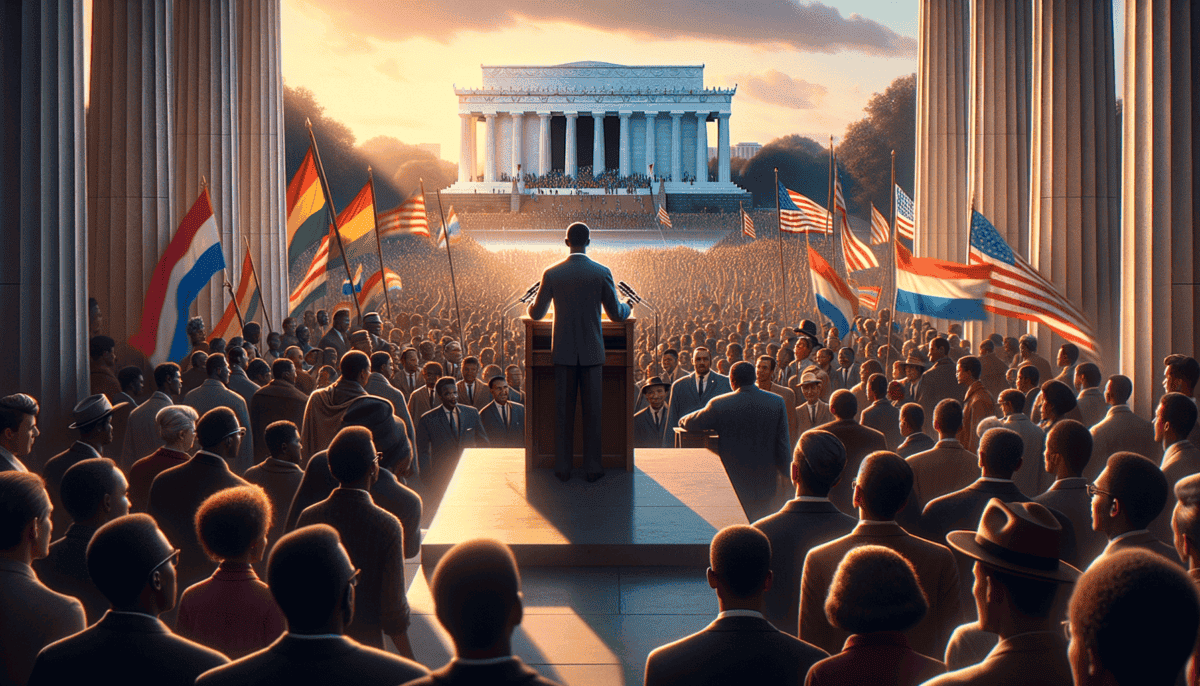
The marchers gathered around the Lincoln Memorial. The huge statue of President Lincoln seemed to watch over them all.
The Dream Speech
When it was Dr. King’s turn to speak, he stepped up to the microphones. The crowd got very quiet.
“I have a dream,” he began. His voice was strong and clear.
He told everyone about his dream of a country where all children – Black children and white children – could play together and be friends.
“I have a dream that one day…” his voice rang out, “little Black boys and Black girls will join hands with little white boys and white girls as sisters and brothers!”
The crowd cheered and clapped. Some people cried happy tears.
A Day to Remember
That day changed America forever. It showed that peaceful protests could bring people together in a powerful way.
Television cameras showed the whole world what happened. People everywhere saw how Americans could stand together for freedom and justice.
As the sun set on that special day, Dr. King knew their peaceful message had touched many hearts. But there was still more work to do.
The march wasn’t the end – it was just the beginning of even bigger changes to come.
A Time for Courage
The year was 1965, and Dr. King knew there was still much work to do. Many Black people couldn’t vote because of unfair rules. ️
“Everyone deserves the right to vote,” Dr. King told his friends. “We need to help the people in Selma, Alabama.”
The Brave March Begins
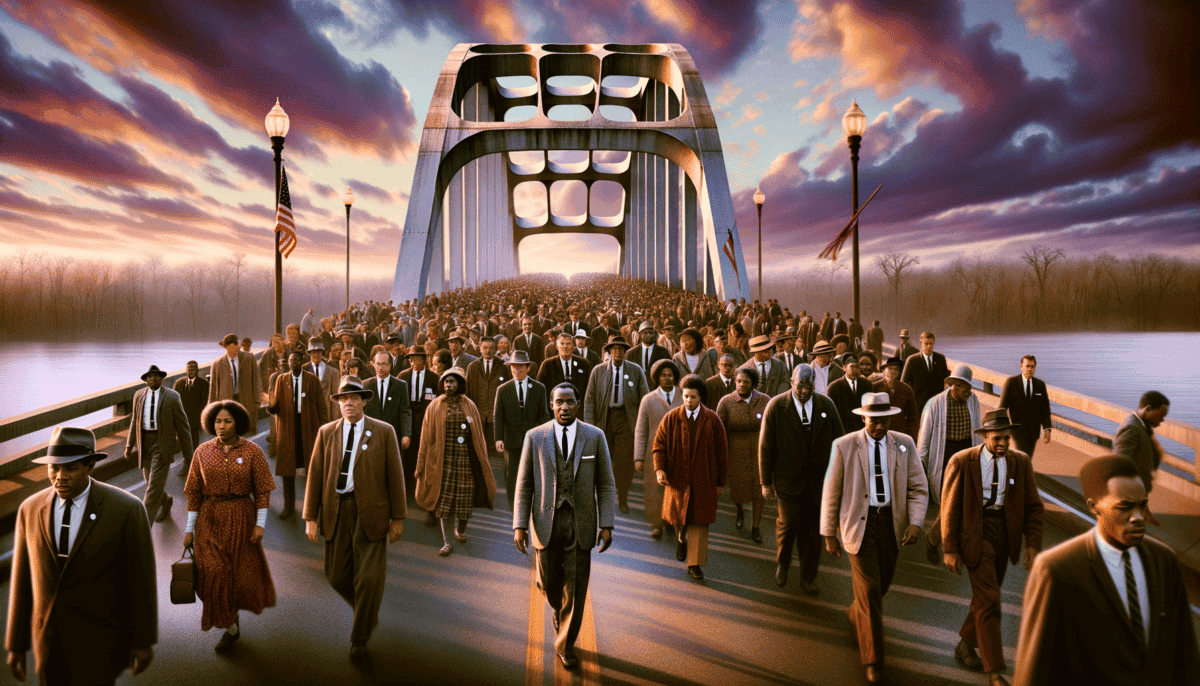
Dr. King and his friends planned a special march. They would walk from Selma to Montgomery, the state capital. It was 54 miles long!
“We will walk peacefully,” Dr. King said. “We will show the world that voting rights matter.”
On March 7, 1965, about 600 people started walking. But they didn’t get very far. Mean people with sticks and tear gas stopped them on the Edmund Pettus Bridge. It was a very sad day.
Try, Try Again
But Dr. King didn’t give up! He called for help from people all over America. Ministers, teachers, doctors, and regular folks came to Selma. They were ready to march again!
• Black and white people
• Young and old people
• Rich and poor people
• People from different religions
• People from different states
The Final March
Two weeks later, they tried again. This time, they had permission from the president! Over 3,000 people started walking.
“My feet are tired, but my soul is rested,” said one marcher.
They walked for five days. More people joined them along the way. By the time they got to Montgomery, there were 25,000 marchers!
Victory at Last
Dr. King spoke to the huge crowd in Montgomery. “The arc of the moral universe is long,” he said, “but it bends toward justice!”
Growing Support
People around the world saw what happened in Selma. They learned about Dr. King’s peaceful way of fighting for rights. Many wanted to help!
“Love is stronger than hate,” Dr. King often said. “Peaceful change is possible when we work together.” ❤️
New Challenges
Dr. King started thinking about other problems to fix. He wanted to help poor people get better jobs and homes. He wanted peace in the world.
“We have climbed one mountain,” he told his supporters. “But there are more mountains ahead.”
Dr. King’s peaceful ways were changing America. More people understood that everyone deserves to be treated fairly. The dream was growing stronger every day.
But nobody knew that soon, everything would change. A new chapter in the story was about to begin…

A Dream Lives On
The spring air felt heavy in Memphis, Tennessee. Dr. King came to help garbage workers who weren’t being treated fairly.
“I’ve been to the mountaintop,” he told a big crowd on April 3, 1968. “And I’ve seen the Promised Land!” His voice was strong and full of hope.
A Nation Mourns
People everywhere were very sad. In cities and towns across America, they held hands and sang “We Shall Overcome” – Dr. King’s favorite song.
“We must carry on his dream,” said Coretta Scott King, his brave wife. “We must keep working for peace and love.”
The Dream Grows Stronger
Something amazing happened after Dr. King died. More people wanted to help make his dream come true! They remembered what he taught them:
• Love is stronger than hate
• Everyone deserves to be treated fairly
• We can change things without fighting
• Working together makes us stronger
• Dreams can come true
His Dream Today
Now, many years later, Dr. King’s dream is still alive!
We see his dream when:
✨ Kids of all colors play together at school
✨ People vote without being scared
✨ Friends stand up for each other
✨ Communities work together to help others
New Dream Makers
“I want to be like Dr. King!” says Maria, a second-grader. “I help new kids feel welcome at school.”
“Dr. King taught us to be brave,” says Tommy, who helps at a food bank. “Even little kids can make big changes!”
The Journey Continues
There’s still work to do to make Dr. King’s dream completely true. But we’re getting closer every day!
Young people are learning about his peaceful ways. They’re finding new ways to make the world better. They’re becoming dream makers too! ⭐
Forever in Our Hearts
Dr. King showed us that one person can change the world with love and peace. His words still make people brave today.
Just like the little stone that starts a big ripple in a pond, Dr. King’s dream keeps spreading. It touches new hearts every day. And as long as we remember his teachings of love, peace, and fairness, his dream will never die.
The story of Martin Luther King Jr. teaches us that dreams really can change the world – especially when we all work together to make them come true.