

Race to the Stars
The year was 1973. The sky was not the limit anymore. America wanted to build something amazing – a house in space! NASA called it Skylab.
"We're going to make history," said Dr. Robert Thompson, the project leader. His eyes sparkled with excitement as he looked at the big rocket in front of him. "This will be America's first home among the stars."
The teams at NASA worked day and night. They had to beat the Soviet Union, who also wanted to build their own space house. It was like a big race, but instead of running on the ground, they were racing to the stars.
"How will astronauts live up there?" asked Mary Roberts, one of the young engineers. She helped design special rooms where astronauts could sleep, eat, and work.
Making a Home in Space
Living in space was not easy. There was no gravity – everything would float! The NASA team had to think of clever solutions:
• Special straps on beds so astronauts wouldn't float away while sleeping
• Food that wouldn't make crumbs
• Exercise machines to keep astronauts healthy
• Cameras to take pictures of Earth and the sun
• Tools that worked without gravity
"We need to think of everything," said Jim Anderson, the safety expert. "Our astronauts need to be safe and comfortable up there."
The Big Challenge
The biggest problem was keeping the astronauts safe from space radiation. The sun's rays could be very dangerous without Earth's protection.
"We'll build special walls," said Sarah Chen, the materials scientist. "They will protect our astronauts like a shield protects a knight."
The team tested everything again and again. They built models and practiced with them on Earth. Sometimes things went wrong, but they never gave up.
Engineers worked on the computers, checking all the numbers. Doctors thought about how to keep the astronauts healthy. Scientists planned experiments to learn new things about space.
"This is bigger than just us," said Dr. Thompson, looking at his tired but happy team. "We're opening the door for future space explorers. Someday, people might live on the moon or Mars because of what we're doing today."
The countdown to launch was getting closer. Everyone felt excited and nervous. Would their space house work? Could humans really live in space for weeks at a time?
The answer would come soon, but first, they had to finish building America's first home among the stars.
Building America’s First Space Home
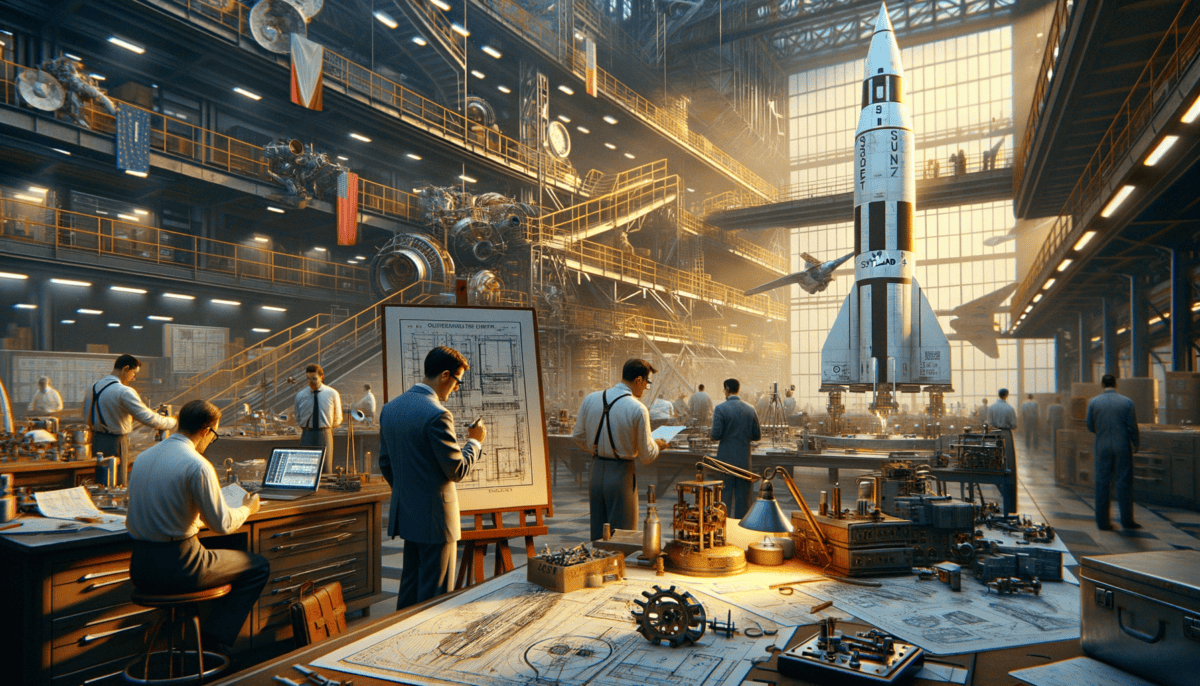
The NASA team had a big job ahead. They needed to turn parts of a Saturn V rocket into a cozy space house. It was like building the biggest LEGO set ever!
“We’re using the rocket’s fuel tank to make rooms,” explained Mike Collins, the lead builder. “It’s like turning a giant soup can into an apartment!”
Making Space for Living
The team had to fit everything astronauts needed into Skylab. They made special rooms:
• A bedroom with sleeping bags that zip to the wall
• A kitchen with food that doesn't float away
• A bathroom that works without gravity
• A gym to stay strong
• A science lab for experiments
“Everything must have a special place,” said Jenny Martinez, the space organizer. “We can’t have things floating around everywhere!”
Solving Big Problems
Building a space house wasn’t easy. The team faced many challenges:
“How do we keep the air clean?” asked Tom Baker, the air expert. They made special filters to clean the air over and over.
“What if something breaks?” worried Sarah Lee, the repair specialist. They packed lots of tools and spare parts.
Testing, Testing, 1-2-3
Before sending Skylab to space, they had to test everything. They built a copy on Earth where astronauts could practice.
“Try sleeping in the space bed,” they told Bob Wilson, a test astronaut. He floated and laughed. “It’s like sleeping while standing up!”
They tested the space shower too. Water formed bubbles instead of falling down! “Space is weird,” giggled Lisa Chen, another test astronaut.
Getting Ready for Launch
As launch day got closer, excitement grew. Teams checked every bolt, wire, and button.
“Think about it,” said Mike Collins. “We’re sending a house to space! Our grandparents would never believe this!”
The astronauts practiced their jobs again and again. They learned where everything was and how to fix problems.
Finally, Skylab was ready. It looked beautiful and strong, waiting for its big journey. The teams felt proud of their hard work.
“Tomorrow, we make dreams come true,” said Jenny Martinez, patting the rocket’s side. “Our space house is ready to fly!” ⭐
Launch Day Drama
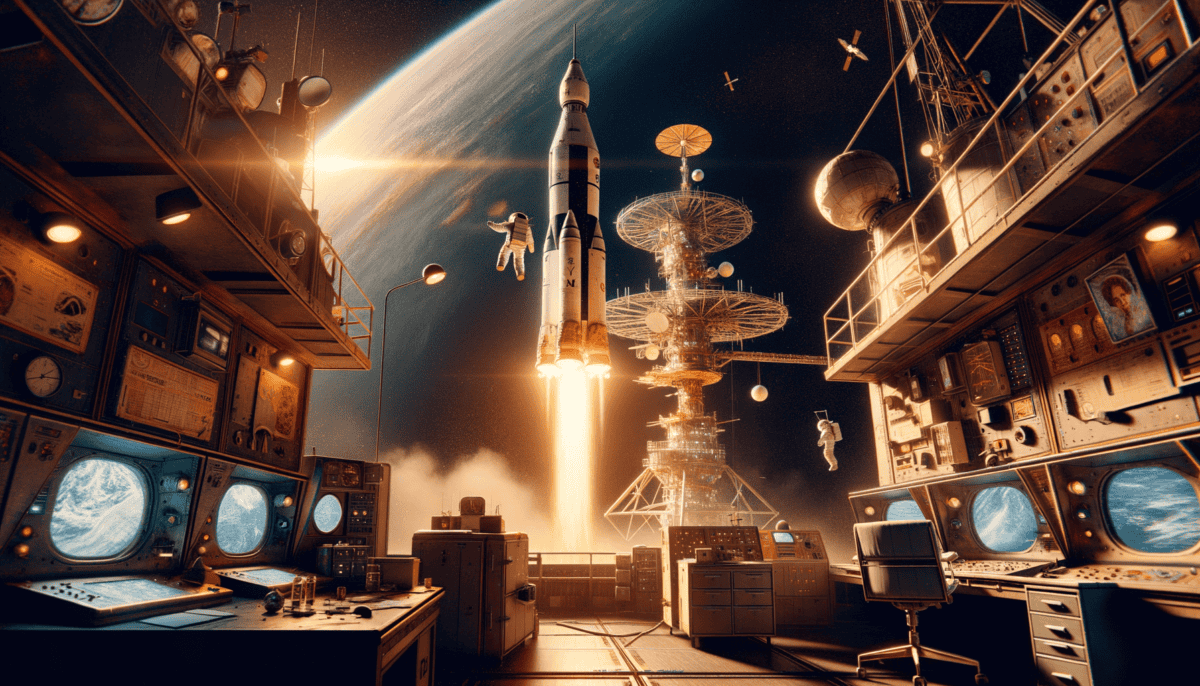
The big day arrived! Everyone at NASA was super excited. Skylab was ready to blast off into space. The sky was bright blue – perfect for a launch!
“T-minus 10 minutes!” announced Mary Johnson from Mission Control. Her voice was shaky with excitement. All the screens showed green lights.
The Big Blast Off
“3… 2… 1… LIFTOFF!” The rocket engines roared like a thousand lions. Fire and smoke burst out below. Skylab started to rise!
“Look at it go!” cheered Tom Baker. Everyone clapped and smiled. But their happy faces wouldn’t last long…
Trouble in the Sky
Just 63 seconds after launch, something went wrong. BOOM! A big piece of Skylab’s sun shield broke off!
“Oh no!” gasped Sarah Lee. “Without the shield, Skylab will get too hot inside!”
The team watched their screens with worried faces. More bad news came:
• The solar panels weren't working right
• The inside was getting very hot
• Important tools were damaged
• The astronauts couldn't go up yet
Quick Thinking Heroes
“We need to fix this fast,” said Mike Collins. Everyone started thinking of ideas. They worked day and night.
Jenny Martinez had an idea: “What if we make a new shield? Like a big space umbrella!”
“Yes!” others agreed. “We can teach the astronauts to put it up, like setting up a tent!”
Hope Returns
The whole NASA team worked super fast. They made new tools and practiced putting up the space umbrella on Earth.
“We can do this,” said Lisa Chen. “Skylab isn’t broken – it just needs our help!”
Ready for Heroes
After ten days of hard work, they had a plan. The astronauts would go up in a different rocket and fix Skylab.
“It’s like sending space doctors to make Skylab better,” explained Tom Baker to his young daughter.
The rescue mission was ready. Three brave astronauts would try to save America’s first space home. Everyone held their breath and hoped their plan would work.
“Tomorrow, our space heroes will fly,” said Mary Johnson. “And we’ll all be here to help them succeed!” ⭐
Life Above Earth
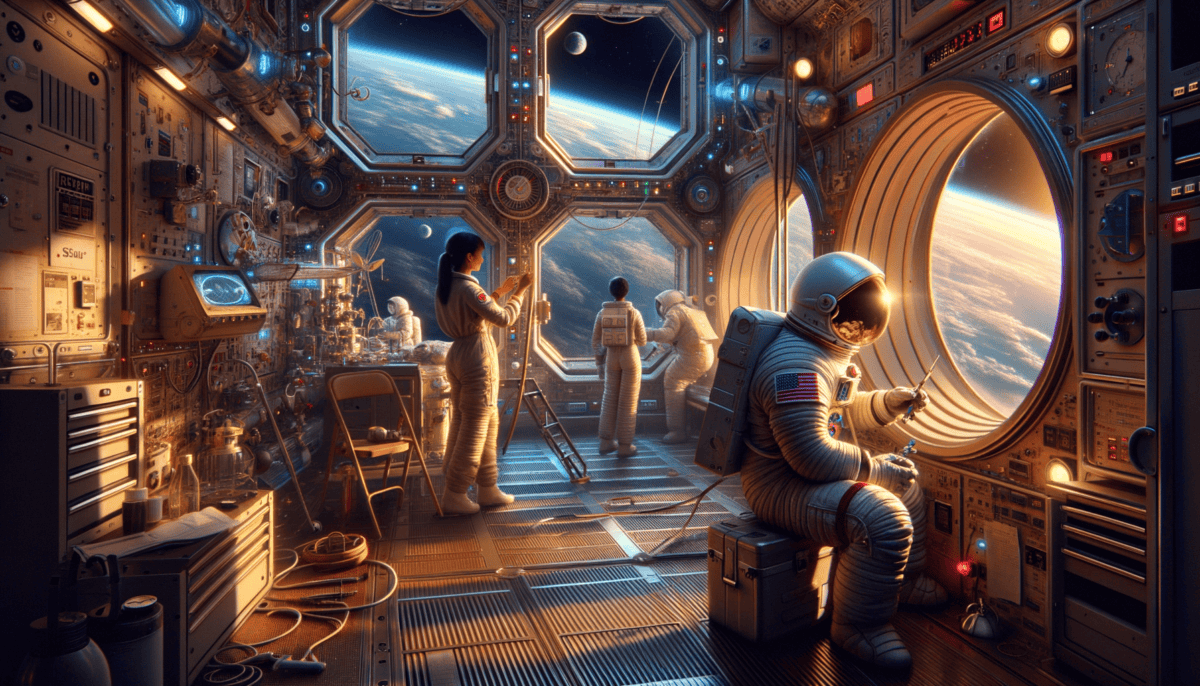
The rescue team zoomed up to Skylab in their small rocket. Captain Pete Conrad, Dr. Joe Kerwin, and Paul Weitz were ready to be space fixers!
The Big Fix
“Wow, it’s really hot in here!” said Captain Pete as they first entered Skylab. The temperature was like a very hot summer day! ️
The team worked together like superheroes. They pushed and pulled their special sun umbrella through a small window. It wasn’t easy – they were floating the whole time!
“Almost got it!” Paul shouted as they finally set up the shield. Like magic, Skylab started to cool down.
A New Home in Space
With Skylab fixed, the astronauts could start their real work. They turned the space station into their new home.
• Food floats while you eat it!
• You can sleep floating in the air
• You can do flips anytime
• Water forms floating bubbles
Space Science Fun
“Time for experiments!” Dr. Joe said with a big smile. Every day, they did cool science tests:
They watched how plants grew without gravity
They took pictures of the sun that they couldn’t get from Earth ☀️
They exercised to stay strong in space ♂️
They studied how their own bodies changed in space
Daily Space Life
“Look at that!” Paul would often say, pointing at Earth through the window. “Our planet looks like a big blue marble!”
The team worked hard but also had fun. They played with water bubbles and did space gymnastics. Sometimes they’d race each other from one end of Skylab to the other!
Breaking Records
“We’re making history!” Captain Pete told Mission Control. They stayed in space longer than anyone ever had before.
Every day brought new discoveries. They learned how to live, work, and even brush their teeth in space!
Space Family
The three astronauts became like brothers. They shared meals, told jokes, and helped each other with hard tasks.
“Houston, we’re not just a crew anymore,” radioed Captain Pete one night. “We’re a space family!”
As days turned into weeks, Skylab wasn’t just a space station anymore. It was a real home among the stars, filled with laughter, hard work, and amazing discoveries. The crew knew they were part of something very special – they were showing the world that humans could live and work in space! ⭐
Exploring the Unknown
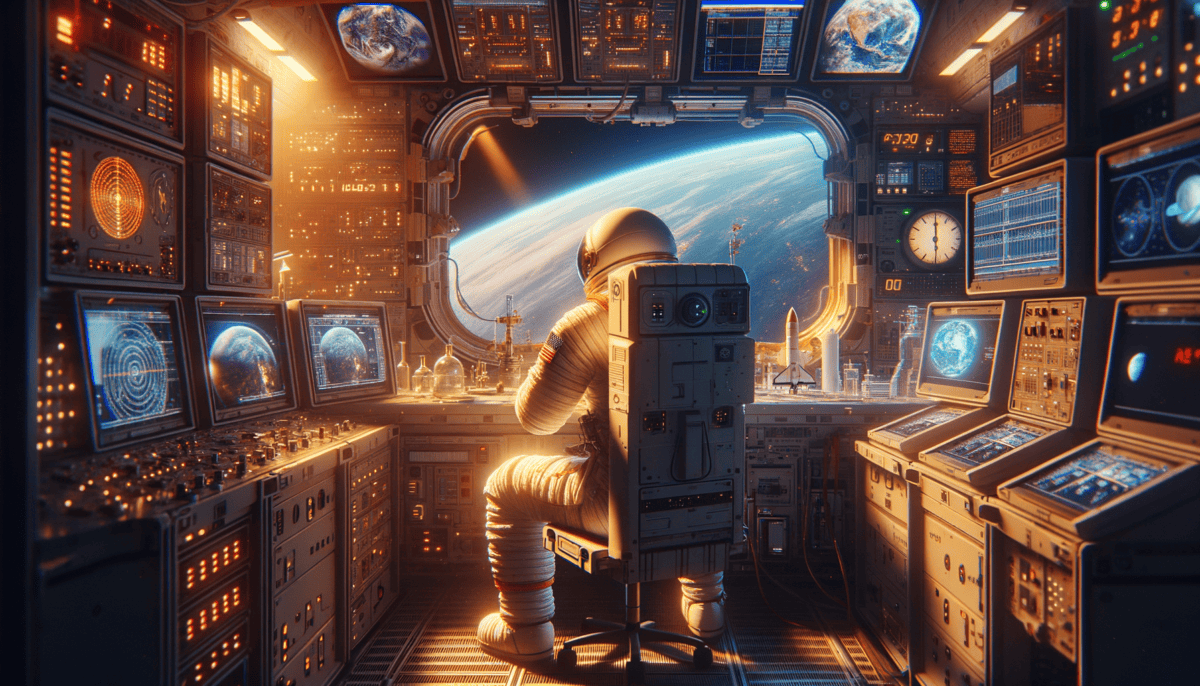
“Look at this amazing view of the sun!” Dr. Gibson called out excitedly. The Skylab astronauts were using their special solar telescope to study our bright star like never before.
Amazing Space Tests
Every day brought new and exciting experiments. The astronauts were like space scientists!
“Watch what happens when I let go of this water!” Commander Jerry Carr said with a smile. The water formed perfect floating balls in the air. They studied how liquids act differently in space.
• Growing crystals in zero gravity
• Taking pictures of Earth’s weather
• Studying how spiders make webs in space
• Testing how metals mix without gravity
Living in the Stars
“I miss Earth’s gravity,” said Dr. Bill Pogue one day. “But floating is still so much fun!”
Living in space for months was hard on their bodies. The astronauts had to exercise for two hours every day to keep their muscles strong. They rode space bikes and did space pushups!
Space Weather Watchers
“Hey everyone, come see this hurricane!” called Dr. Gibson. From high above, they could watch Earth’s weather patterns form and move.
Breaking Space Records
The third Skylab crew stayed in space for 84 days! That was longer than anyone had ever lived in space before.
“Each day we learn more about how people can live in space,” Commander Carr told Mission Control. “We’re getting ready for future space travelers!”
Space Feelings
Sometimes the astronauts felt homesick. They missed their families and Earth’s blue skies. But they also felt proud to be space pioneers.
Making History
The Skylab crews did more experiments than any space mission before. They showed that humans could live and work in space for long times.
“We’re writing the book on space living,” said Commander Carr. “Future astronauts will use what we learned here!”
Every experiment and discovery on Skylab helped us understand more about space. The brave astronauts who lived there showed us that the sky is not the limit – it’s just the beginning of our journey to the stars!
A Lasting Space Legacy
“Mission complete!” The last Skylab crew waved goodbye to their space home. After 171 amazing days in space, it was time to head back to Earth.
Space Lessons
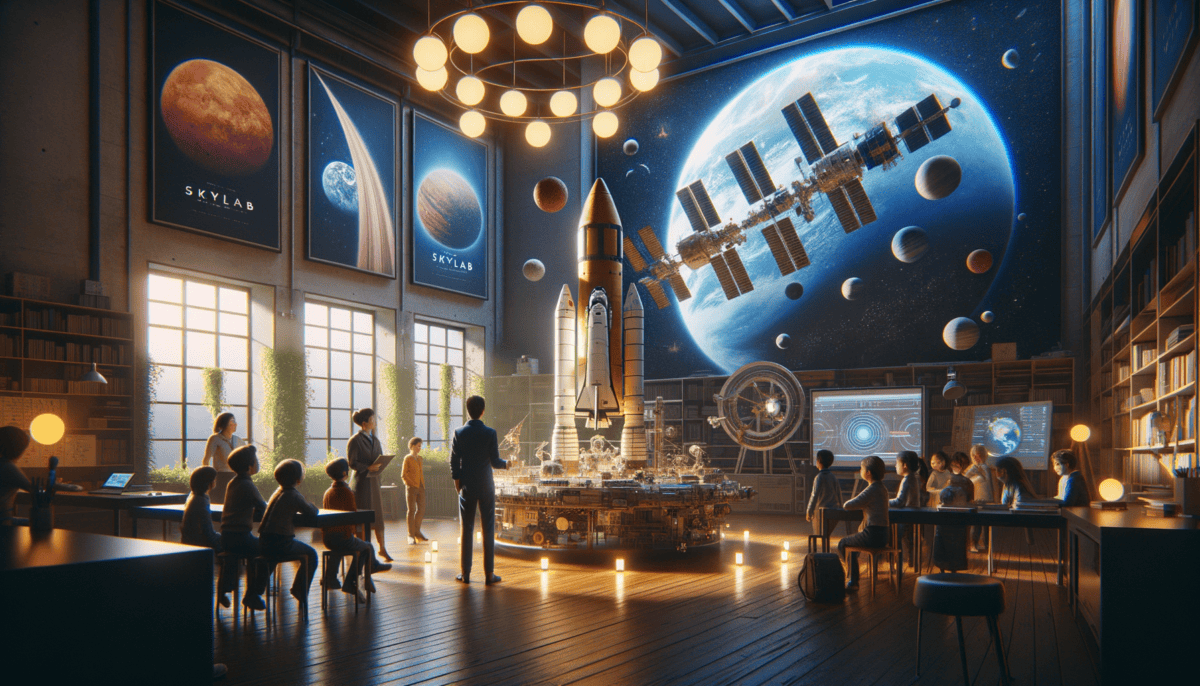
“What did we learn up there?” asked a young student during a special school visit. Commander Carr smiled and said, “We learned that humans can do amazing things in space!”
The Skylab teams did over 300 experiments! They studied the sun, Earth, and how our bodies work in space. That’s more science than any space mission before.
• People can live in space for months
• The sun has special patterns we never saw before
• Exercise helps astronauts stay healthy in space
• Earth looks different from above
Building Better Space Homes
“Skylab helped us know how to make better space stations,” said Dr. Gibson. “Now we know what astronauts need to live and work in space.”
Today’s astronauts use many things that started with Skylab. They exercise like Skylab crews did. They do experiments like Skylab showed us how.
Working Together in Space
Skylab showed that different countries could work together in space. “Space is for everyone,” said Dr. Pogue. “We all share the same sky!”
Dreams Come True
“You know what’s really cool?” Commander Carr told the students. “Many things we dreamed about on Skylab are real now. Space stations are like small cities in space!”
The children’s eyes got big. “Will we get to go to space someday?” they asked.
“You might!” said Carr. “And you’ll have Skylab to thank for showing us the way!”
Looking to the Future
Today, space stations are bigger and better than Skylab. But Skylab was first! It showed us that living in space was possible.
The Greatest Gift
Skylab’s biggest gift wasn’t just what it taught us about space. It showed us that when people work together and dream big, amazing things can happen!
“Remember,” said Commander Carr to the students, “whenever you look up at the stars, think about Skylab. It proved that with courage and teamwork, we can reach for the stars – and make it!”
The story of Skylab isn’t just history. It’s still helping us explore space today. And tomorrow? Well, that’s up to the next generation of space explorers – maybe even you!