

Starry-Eyed Beginnings
Little Neil looked up at the night sky from his apartment window in the Bronx. The year was 1964, and six-year-old Neil couldn’t take his eyes off the stars. They twinkled like tiny diamonds against the dark sky.
“Mama, why do the stars shine?” Neil asked, his eyes wide with wonder.
“Why don’t we find out?” his mother smiled, ruffling his curly hair.
One Saturday morning, Neil’s parents took him to a special place – the Hayden Planetarium. As they walked into the big round building, Neil felt his heart beat faster. He had never seen anything like it before.
“Welcome to the stars!” said a friendly guide. Neil sat down and looked up at the dome ceiling.
Suddenly, the lights went dark. The ceiling transformed into a magical sky filled with thousands of stars! Neil gasped. It was the most beautiful thing he had ever seen.
“That moment changed everything,” Neil would say years later. “I knew right then that I wanted to learn all about the stars.”
After that day, Neil couldn’t stop talking about space. He borrowed every book about stars from the library. His bedroom walls soon filled with pictures of planets and rockets.
A Young Scientist Grows
Neil wasn’t like other kids his age. While they played with toys, he built his own telescope! He put it on his building’s rooftop to watch the stars every clear night.
His neighbors started calling him “The Sidewalk Astronomer.” Neil would set up his telescope on the street and let people look at the moon and stars. He loved seeing their faces light up with amazement!
One day at school, Neil’s teacher asked the class what they wanted to be when they grew up.
“I want to be an astrophysicist!” Neil said proudly.
“A what?” his classmates asked.
“Someone who studies the stars and planets,” Neil explained with a big smile. “I want to learn about everything in space!”
His teacher smiled. She could see the sparkle in Neil’s eyes when he talked about the cosmos. It was the same sparkle that matched the stars he loved so much.
Dreams Take Flight
Every weekend, Neil visited the Hayden Planetarium. He took classes about space and met real scientists. They taught him about galaxies, black holes, and the big bang. Neil soaked up every bit of information like a sponge!
At night, he would tell his little brother about what he learned:
“Did you know that the light from some stars takes millions of years to reach Earth? When we look at them, we’re seeing how they looked a long time ago!”
His brother would listen, amazed at how much Neil knew. But Neil was just getting started. He had big dreams about sharing his love of space with the world.
As Neil grew older, his passion for space only got bigger. He started winning science awards at school. His teachers said he had a special way of making hard things easy to understand.
“Space isn’t just for scientists,” young Neil would say. “It’s for everyone who looks up and wonders!”
Those early days in the Bronx, staring at the stars from his window and visiting the planetarium, were just the beginning. Neil was about to start an amazing journey that would take him far beyond his wildest dreams. But first, he had to learn a lot more about the universe he loved so much.
The Cosmic Classroom
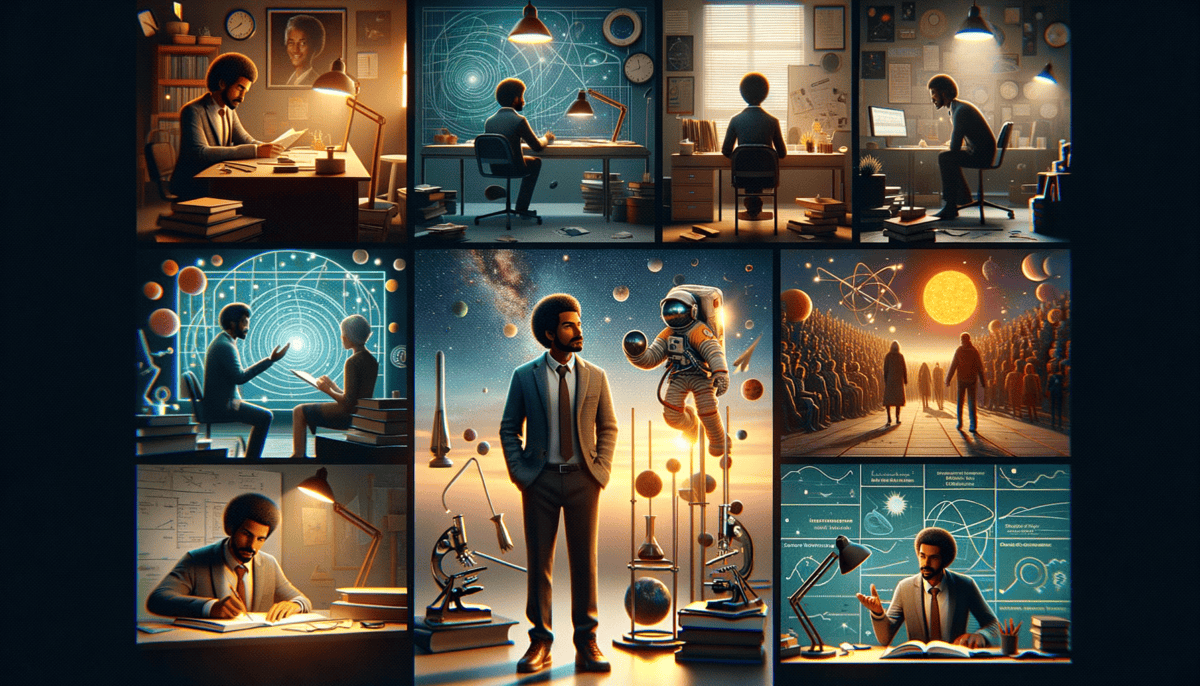
Young Neil sat in his high school classroom, drawing stars in his notebook. But these weren’t just any stars – they were detailed diagrams with labels and facts!
“Mr. Tyson,” his teacher called out. “Would you like to share what you’re working on?”
Neil jumped up eagerly. “I’m mapping out the constellations we can see this season!” The whole class turned to listen.
Learning and Growing
College life was different from the Bronx. At Harvard, Neil found himself in big science classes. Sometimes, he was the only Black student there. But that didn’t stop him!
“The universe doesn’t care what color you are,” Neil would say with a smile. “It shares its secrets with everyone who wants to learn.”
He joined the wrestling team and rowed crew. Between classes and sports, Neil still found time to stargaze. He even taught other students about space!
“Science is not just for scientists. It’s for anyone who wants to understand our world better.”
Special Teachers
Neil met many wonderful teachers who helped him grow. Dr. Thompson noticed how Neil could explain hard things in simple ways.
“You have a gift,” she told him. “You make science fun for everyone!”
After Harvard, Neil went to more schools to learn even more about space. He studied at the University of Texas and Columbia University. Each place taught him something new about the stars.
Finding His Voice
Neil discovered he loved teaching others about space. He could take big space ideas and make them easy to understand. People loved how he used funny jokes to explain science!
“Why did the sun go to school?” he would ask his students.
“To get brighter!” The whole class would laugh.
But Neil wasn’t just telling jokes. He was making science fun and friendly for everyone.
Breaking Down Walls
Sometimes, people didn’t think Neil could be a scientist because of how he looked. But he showed them that science is for everyone!
“Look up at the stars,” he would say. “They shine for all of us.”
Neil worked extra hard. He studied late into the night. He asked lots of questions. And he never gave up on his dreams.
Making Science Cool
In college, Neil started wearing colorful space ties and telling space jokes. He wanted to show that scientists could be fun and friendly!
“What kind of pictures do planets take?” he’d ask.
“Selfies!” Everyone would laugh.
His teachers noticed something special about Neil. He didn’t just learn about space – he made others excited about it too! ⭐
Every time Neil learned something new about space, he found a way to share it with others. He wrote for his school newspaper. He gave talks at science clubs. He even started a small space newsletter!
“Space is like a big storybook,” he would say. “And everyone should get to read it!”
As Neil finished his school years, he knew he was ready for something bigger. The little boy who once looked up at the stars from his Bronx window was growing into a scientist who would help others see the magic of space too.
A New Star at the Planetarium
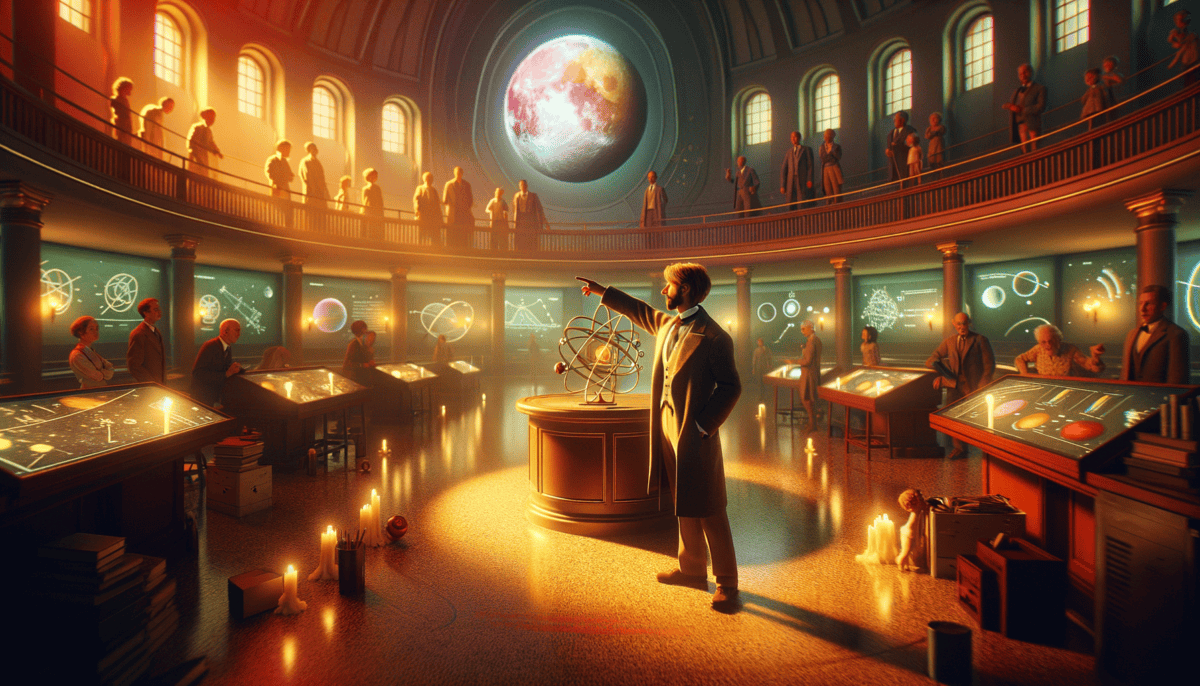
The big blue dome of the Hayden Planetarium sparkled in the morning sun. Neil walked through the doors, but this time was different. He wasn’t visiting – he was the new boss!
“Welcome, Director Tyson!” the staff greeted him warmly.
The Pluto Problem
One day, Neil looked at the planet models hanging from the ceiling. Something didn’t feel right about Pluto.
“Why do we call Pluto a planet?” he wondered out loud. “It’s so different from the others!”
Neil studied Pluto carefully. It was smaller than our moon. It had a weird orbit. And there were lots of other space rocks just like it!
“Sometimes we have to question what we think we know to learn something new.”
Making a Bold Choice
Neil made a big decision. In the planetarium’s new space show, Pluto wouldn’t be called a planet anymore!
“But everyone loves Pluto!” his friends said.
“Science isn’t about what we love,” Neil explained. “It’s about what’s true.”
The Space Storm
Some people got very upset about Pluto. They sent angry letters. Kids worried about their planet models being wrong.
“Dear Dr. Tyson,” one letter read, “why do you hate Pluto?”
Neil smiled and wrote back: “I don’t hate Pluto. I just want us to understand it better!”
Teaching the Truth
Neil went on TV shows to explain about Pluto. He wrote fun articles. He even made jokes!
“What did Pluto say when it found out it wasn’t a planet?”
“This really throws my world into orbit!”
A Better Way to See Space
Under Neil’s leadership, the planetarium became even more amazing. He added new shows about black holes and stars. He made sure kids could touch real space rocks!
“The universe is more exciting when we understand it better,” Neil would tell visitors.
Every day, more people came to learn about space. They discovered that the truth about Pluto was just as cool as the old story!
And Neil kept finding new ways to make space science fun and real for everyone who visited his beloved planetarium. The little boy who once gazed up at these same stars was now helping others see their magic too. ⭐
Sharing Space Stories with Everyone
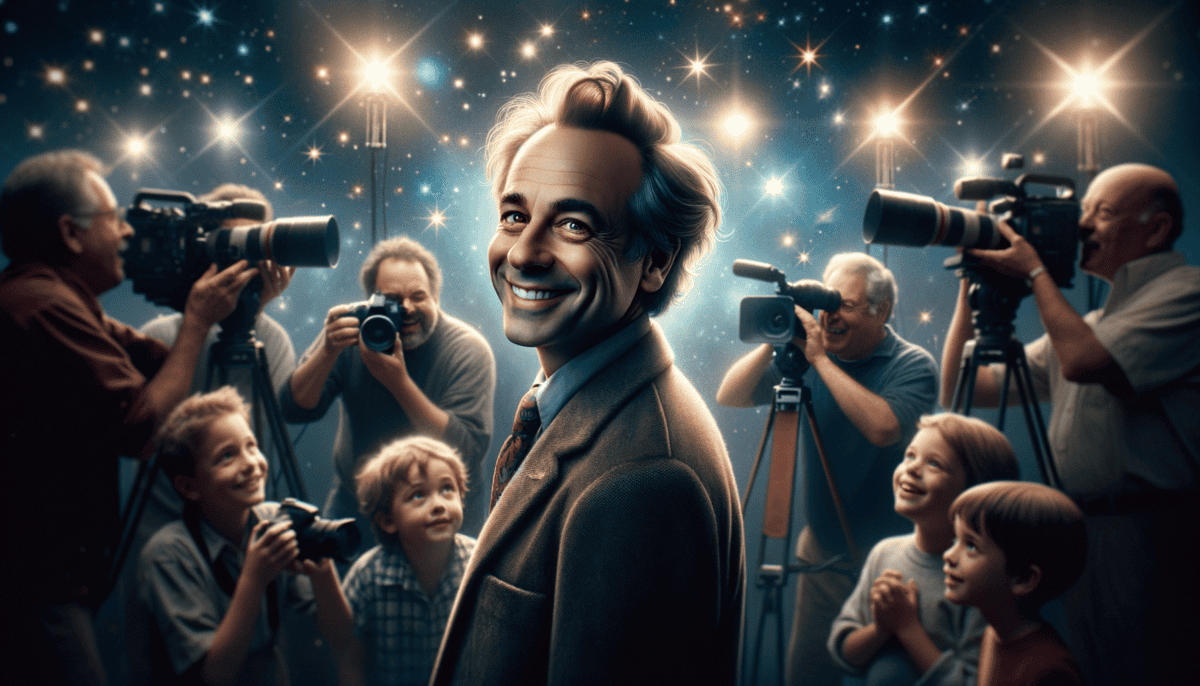
Neil sat in the bright TV studio lights. The cameras were ready to roll. It was time for his first episode of NOVA ScienceNOW!
“And… action!” called the director.
Neil smiled his biggest smile. “Have you ever wondered why stars twinkle? Let me show you something cool!”
Making Big Ideas Simple
“How do you explain black holes to kids?” a producer asked Neil.
Neil grabbed a rubber ball and a piece of paper. “Watch this!” He put the paper on the ball and spun it. “See how it moves? That’s like space bending around a black hole!” ⚫
“The best teachers make hard things easy to understand.”
Star Power
People started recognizing Neil everywhere he went. Kids would run up to him in the street.
“Dr. Tyson! Can you tell us about Mars?”
“Why is the sky blue?”
“Are there aliens?”
Neil always took time to answer. His eyes would light up with each question.
Talking About Space Everywhere
Neil went on lots of TV shows. He talked to funny people like Stephen Colbert. He made jokes on Twitter. He even appeared in Superman comics!
“Science isn’t just for scientists,” Neil would say. “It’s for everyone!”
Making Science Cool
One day, a little girl came up to Neil after a show.
“I used to think science was boring,” she said. “But you make it sound like magic!”
Neil knelt down beside her. “Science is better than magic – because it’s real!” ✨
Everybody’s Scientist
People started calling Neil “everybody’s scientist.” He was happy about that. He wanted everyone to feel excited about space.
On his shows, he talked about:
• Stars and planets
• Space rockets
• Time travel
• The Big Bang
• Life on other worlds
Neil became famous for his colorful space shirts and big laugh. But most importantly, he helped millions of people understand the wonders of space.
Every night, Neil would look up at the stars and smile. He was doing what he loved most – sharing the amazing stories of space with the whole world. And he was just getting started!
Space Stories That Make You Smile
Neil sat at his desk, typing away on his computer. He was writing his new book about stars.
“How can I make this part more fun?” he wondered. Then he had an idea!
Space Stories for Everyone
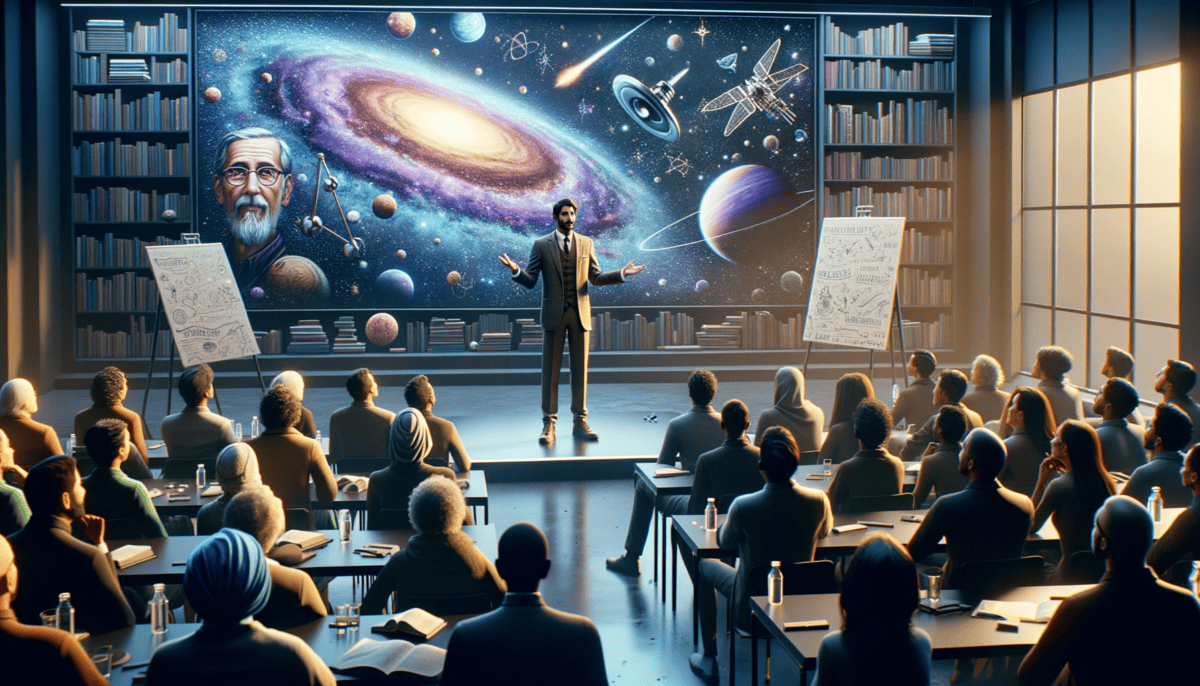
“Dr. Tyson, can you tell us about the stars?” asked a group of kids at a library.
Neil’s eyes lit up. “Did you know that you’re made of star stuff? The same things that make stars are in your body too!” ⭐
The kids’ mouths dropped open in amazement.
“Every time you learn something new about space, it’s like opening a present from the universe!”
Making Science Fun
Neil loved using jokes to teach about space. One time, he said:
“What did the asteroid say to Earth? I’m really going to make an impact!”
Sharing Space with the World
Neil traveled everywhere to talk about space. He made TV shows that millions watched. His favorite was “Cosmos,” where he took people on amazing space journeys.
“Space is like a giant storybook,” he would say. “And we’re all part of the story!”
Inspiring New Scientists
One day, a young girl showed Neil her science project about Mars.
“You helped me love science,” she said. “Now I want to be a scientist too!”
Making Space Cool
Neil became famous for making space cool. He showed that space science could be:
• Fun like a game
• Amazing like a movie
• Exciting like an adventure
• Interesting like a mystery
• Cool like a superhero story
He wore ties with planets on them and told space jokes on Twitter. People loved how he made learning feel like playing!
Stories That Touch Hearts
“Why do you tell so many stories?” someone once asked Neil.
He smiled. “Because stories help us understand big ideas. And space is full of the biggest ideas of all!”
Every time Neil shared a space story, more people fell in love with science. He was showing the world that learning about space could be the most fun adventure of all!
Reaching for New Stars
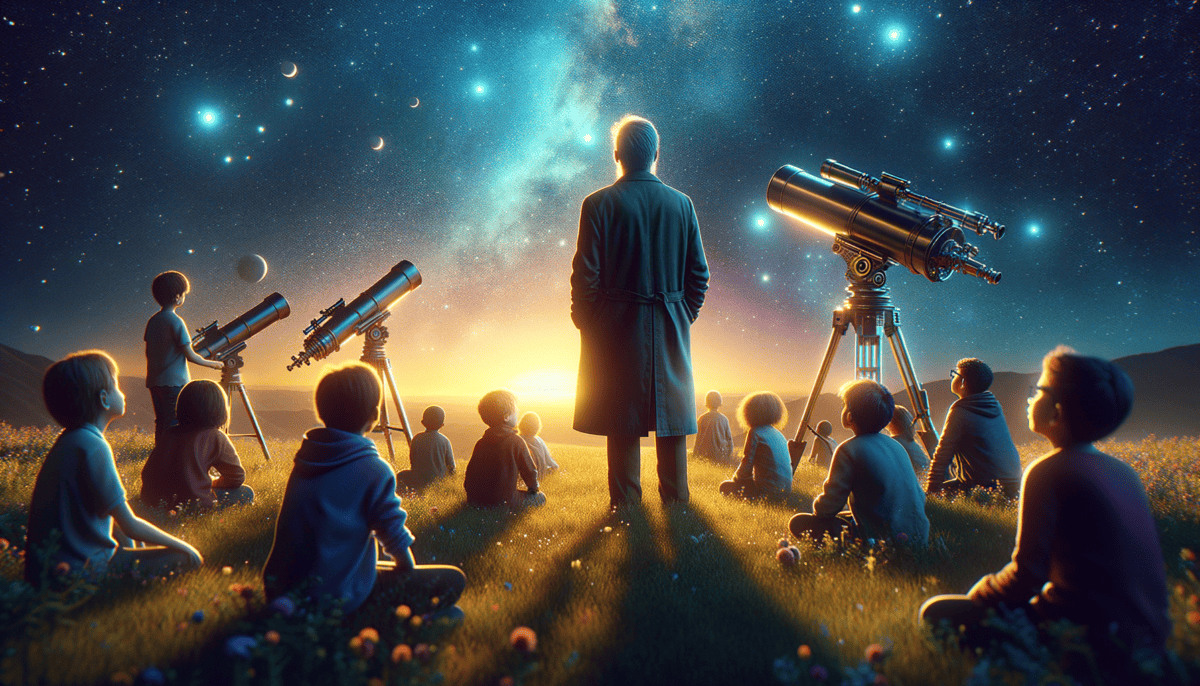
Today, Neil stands in his favorite spot at the Hayden Planetarium. The stars twinkle above him, just like they did when he was a little boy.
Still Teaching and Learning
“What’s next in space?” a student asks during a museum tour.
Neil’s eyes sparkle. “There’s so much more to discover! Maybe you’ll be the one to find something new!”
“Every day, space shows us something amazing. We just have to keep looking up and asking questions!”
Making Science for Everyone
Neil works hard to make sure everyone can learn about space. He believes:
• Science is for all people
• Questions help us learn
• Learning is an adventure
• Everyone can be a scientist
• Space belongs to everyone
Dreams Coming True
“Dr. Tyson!” calls out a young scientist. “I became a researcher because of your stories!”
Neil smiles big. This is why he loves his job so much!
More Adventures Ahead
Neil keeps busy with new projects. He:
✨ Makes fun TV shows about space
Writes exciting books
Talks to people all over the world
Helps other scientists share their stories
A Sky Full of Dreams
“The universe is full of mystery,” Neil tells a group of kids. “And you know what’s wonderful? There’s room for everyone to explore!”
As the sun sets outside the planetarium, Neil looks at the twinkling stars above. He thinks about all the kids who might become scientists one day. Maybe they’ll discover new planets or solve space mysteries!
The little boy who once dreamed about stars grew up to help others dream too. And that might be Neil’s biggest discovery of all – that sharing the wonder of space can change lives forever. ⭐
Just like the universe, Neil’s story keeps growing. He shows us that when we follow our curiosity, amazing things happen. The stars that amazed him as a child still shine bright, inviting new explorers to look up and wonder what’s out there.
And somewhere, right now, another young scientist is looking up at those same stars, ready to start their own space adventure. Because Neil showed them they could.