

The Witch’s Whispers
Sarah pressed her nose against the cold glass window, watching wispy fog roll through the narrow streets of Salem. The year was 1692, and her small Massachusetts town felt different lately. Strange whispers filled the air like autumn leaves dancing in the wind.
"Sarah, come away from that window," Mama called, stirring a pot of thick stew over the fireplace. "It's not proper for a young lady to be seen gawking."
But Sarah couldn't help it. At twelve years old, she noticed things that others seemed to miss. Like how Mrs. Gordon hurried past their house every morning, clutching her shawl tight even on warm days. Or how the baker's wife no longer stopped to chat with anyone after church.
"Something's wrong in Salem," Sarah said, her breath making little clouds on the glass.
Mama sighed. "These are difficult times, child. Best keep your thoughts to yourself."
Their small wooden house felt extra quiet that evening, like it was holding secrets too.
The next morning, Sarah walked to the village well to fetch water. She saw a group of girls huddled together, whispering. When they spotted her, they quickly scattered like startled birds.
"Wait!" Sarah called out to Mary, who used to be her friend. "What's happening?"
Mary glanced around nervously before stepping closer. Her voice dropped to barely a whisper. "They say Goody Bishop has been casting spells. Jenny Williams saw her talking to a black cat yesterday!"
Sarah's heart thumped hard in her chest. She knew Goody Bishop – the kind old woman who always gave her a warm smile and sometimes a piece of freshly baked bread.
“But that’s silly,” Sarah protested. “Goody Bishop is the gentlest person in town!”
Mary's eyes grew wide with fear. "Shhhh! Don't defend her. People might think you're a witch too!"
The word 'witch' seemed to hover in the air between them like a dark cloud.
That evening, Sarah couldn't eat her supper. She pushed the vegetables around her plate while Papa read from his Bible at the head of the table.
"Papa," she said carefully, "why is everyone so afraid lately?"
Her father lowered his book, his face serious in the candlelight. "Fear makes people see things that aren't there, Sarah. These are times when we must be extra careful with our words and actions."
Later that night, Sarah heard voices outside. Peeking through her bedroom window, she saw a group of men carrying torches, walking purposefully down the street. Their shadows danced on the walls of houses like giant, scary monsters.
The next morning, Sarah discovered that Goody Bishop had been taken away in the night. Her little house stood empty, its door swinging in the breeze. Sarah's stomach felt like it was tied in knots.
"It's not right," she whispered to herself, touching the rough wooden fence post outside Goody Bishop's home. "It's not right at all."
That's when Sarah made a decision. She would watch, and listen, and try to understand what was really happening in Salem. Maybe if she could understand why people were so afraid, she could help stop the fear from spreading.
As she walked home, the autumn wind whistled through the trees, carrying whispers of more changes to come. Sarah pulled her shawl tighter and quickened her steps. She didn't know it yet, but this was just the beginning of a journey that would change her life forever.

Secrets of the Leather Man
The dusty attic of Salem’s small library held more secrets than Sarah could imagine. As she helped Miss Bennett, the kind librarian, sort through old books, something caught her eye. A worn leather journal peeked out from behind a stack of papers.
“What’s this?” Sarah carefully pulled out the book. Its pages were yellow with age.
Miss Bennett adjusted her spectacles. “Ah, that’s old Thomas Miller’s journal. He wrote about a strange man who used to wander these parts.”
️ Sarah’s fingers trembled as she opened the journal to its first page.
“June 15, 1681 – Today I saw him again. The Leather Man. Head to toe in leather patches, walking the same path he always does. Never speaks, just walks…”
Sarah’s eyes grew wide. “Who was the Leather Man?”
“Some say he was a mysterious traveler who walked a 365-mile loop through the colonies,” Miss Bennett explained. “He wore only leather clothes he made himself. Very odd fellow.”
Sarah couldn’t put the journal down. She read about how the Leather Man would appear in towns like clockwork. He never asked for much – just some food and maybe a place to rest in a barn.
“Did anyone know his real name?” Sarah asked.
Miss Bennett shook her head. “That’s part of the mystery, dear. He barely spoke to anyone.”
The more Sarah read, the more questions she had.
After leaving the library, Sarah decided to ask around town about the Leather Man. Her first stop was Old Mrs. Parker, who lived in the oldest house in Salem.
“Oh yes,” Mrs. Parker nodded, rocking in her chair. “My grandmother told me stories about him. Said he was as gentle as a lamb, despite his strange appearance.”
“But why did he walk in circles?” Sarah wondered aloud.
“Some say he was looking for something he lost,” Mrs. Parker said softly. “Others think he was running from his past.”
Sarah spent the next few days talking to more elderly townspeople. Each had a different story about the Leather Man:
- He could predict the weather by looking at moss on trees
- He knew secret paths through the woods
- He helped lost travelers find their way
- He could speak to animals
- He never got sick, even in the worst weather
“Papa,” Sarah asked at dinner, “did you ever hear about the Leather Man?”
Her father put down his spoon. “Indeed. Once, when I was very young, I saw him passing through. Strangest sight I ever saw – but he helped our neighbor find his lost cow.”
That night, Sarah drew a map in her notebook, marking all the places the journal mentioned. The Leather Man’s route made a huge circle through Massachusetts and nearby colonies.
What if some of his caves are still there? she thought excitedly.
The next morning, Sarah returned to the library. Miss Bennett smiled when she saw her. “Back to solve more mysteries?”
“Yes! I want to learn everything about the Leather Man. Maybe I can find one of his caves!”
“Just be careful with your exploring,” Miss Bennett warned. “Some stories are better left in books.”
But Sarah knew this was just the beginning of her investigation. The Leather Man might be gone, but his mystery lived on in the woods and caves around Salem. And she was determined to uncover more of his secrets.
As she walked home, the autumn leaves crunched under her feet. Somewhere in these forests, the Leather Man had walked his endless path. What other stories were hiding in Salem’s shadows, waiting to be discovered?
Pirate’s Hidden Treasure
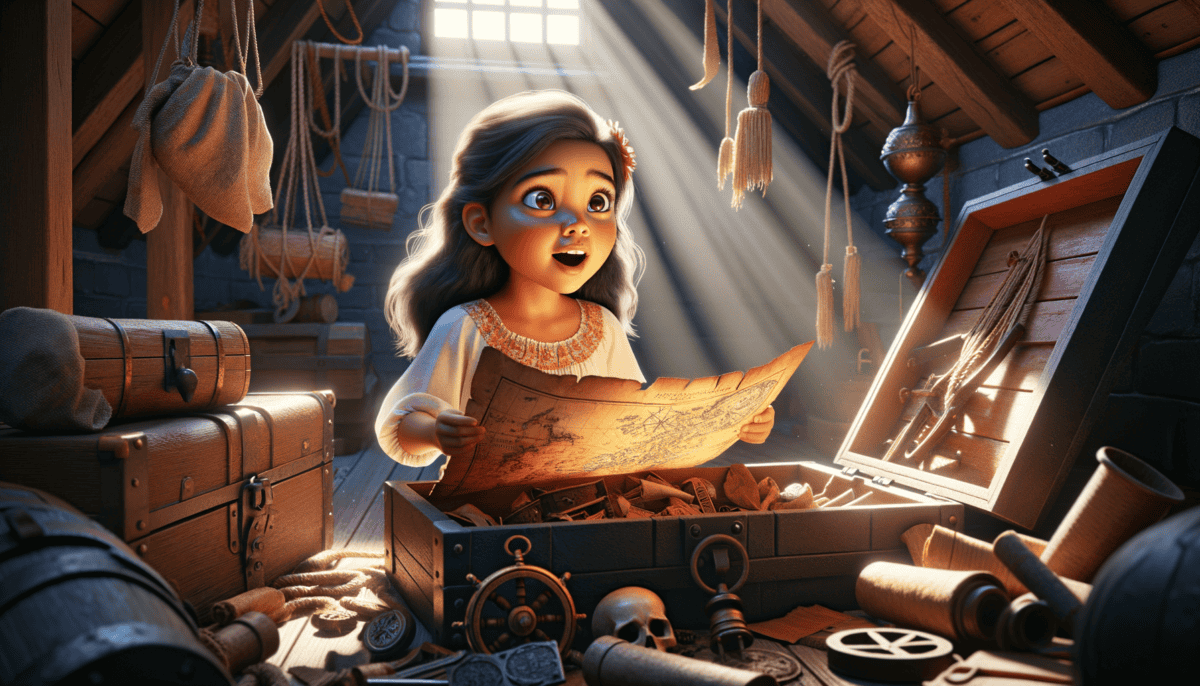
Sarah’s hands were covered in dust as she helped Grandpa clean his attic. The afternoon sun peeked through a small window, making dust sparkle in the air. Then something shiny caught her eye.
“Grandpa, what’s this?” Sarah pulled an old metal box from behind a trunk.
️ The lock was rusty, but the key still turned with a soft click.
Inside, Sarah found yellowed papers. One looked different from the rest – thick and brown, with burned edges. Her heart jumped when she saw what was drawn on it.
“X marks the spot… Could this be a real pirate map?” Sarah whispered.
Grandpa adjusted his glasses and looked closer. “Well, I’ll be! That’s Captain Samuel Bellamy’s mark at the bottom. He sailed these waters in the early 1700s.”
“Tell me more about him, Grandpa!” Sarah bounced with excitement.
Grandpa sat in his old rocking chair. “Well, Captain Bellamy wasn’t like other pirates. He shared his treasure with poor people. Some called him the ‘Robin Hood of the Sea.'”
The map showed the Massachusetts coast. Sarah could see familiar names:
- Salem Harbor
- Cape Cod Bay
- Provincetown
- Plymouth Rock
- Boston Port
️ Sarah traced the dotted line with her finger. It led from Salem to a tiny island.
“Can we go look for treasure?” Sarah asked.
Grandpa chuckled. “First, let’s learn more about these waters. The sea holds many stories.”
They went to the docks the next day. Old Captain Jones was fixing his fishing nets.
“Pirates?” he said. “Oh yes, they loved these waters. Lots of merchant ships to catch. But the storms caught many pirates too.”
Sarah pulled out the map. “Did you ever hear about treasure on this island?”
Captain Jones squinted at the map. “That’s Weather Island. Bad storms there. Ships had to be careful.”
Sarah had an idea. “Maybe that’s why pirates hid treasure there! No one would look on such a dangerous island!”
At home, Sarah spread the map on her desk. She wrote down what she knew:
Clues About the Treasure:
✓ Hidden on Weather Island
✓ Near dangerous rocks
✓ Close to a tall pine tree
✓ By three big rocks shaped like turtle shells
That night, Sarah couldn’t sleep. She imagined pirate ships with black flags, sailing through storms to hide their gold.
The next morning, she ran to the library. Miss Bennett helped her find books about colonial ships and pirates.
“Look!” Sarah pointed to a picture. “This shows Captain Bellamy’s ship, the Whydah!”
“Indeed,” Miss Bennett nodded. “The Whydah carried lots of treasure. But a terrible storm sank it near Cape Cod.”
Sarah’s eyes got big. “Weather Island is near Cape Cod! Maybe some treasure made it to shore!”
Back home, Sarah drew her own map of the coast. She marked all the places where ships had sunk. Weather Island sat in the middle of them all, like a tiny dot in a sea of secrets.
“Papa,” she asked at dinner, “could we sail to Weather Island someday?”
Her father smiled. “Maybe in summer, when the sea is calmer. For now, keep searching for clues in your books.”
That night, Sarah stood at her window. The moon made silver paths on the ocean. Somewhere out there, Weather Island was waiting. And maybe, just maybe, it still held pirate gold beneath its rocky shore.
The Underground Railroad’s Secret
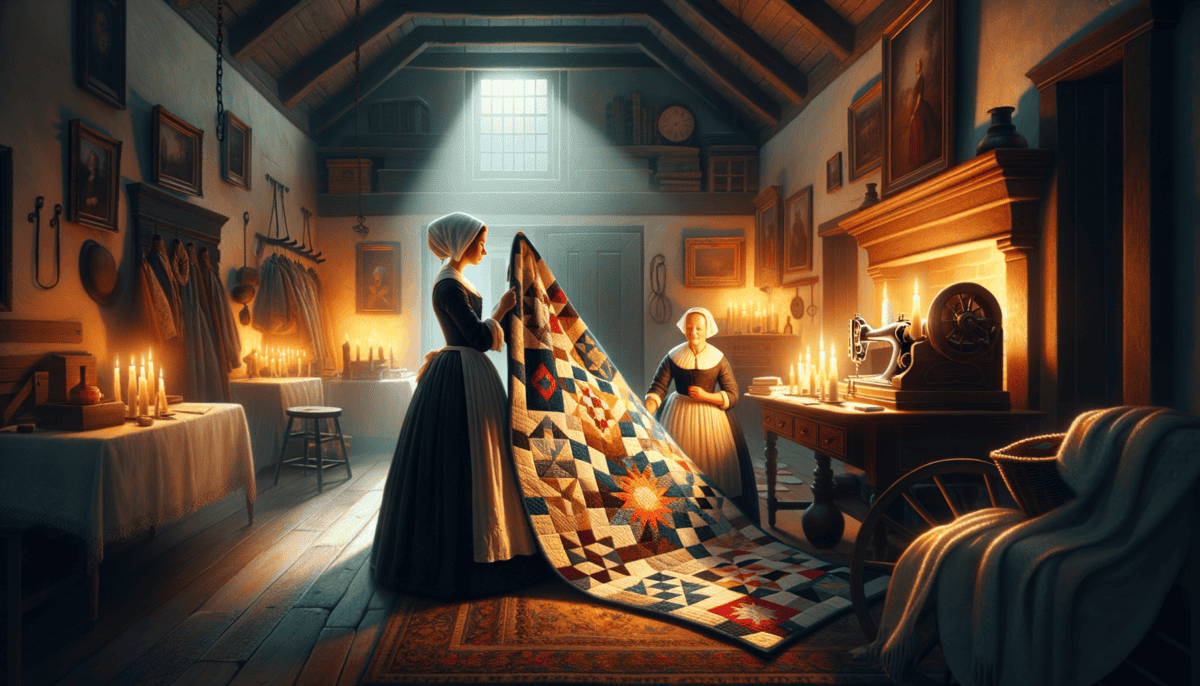
Sarah sat cross-legged in her grandmother’s sewing room, watching skilled hands piece together a quilt. The autumn sun warmed the colorful fabric squares spread across the wooden floor.
“Grandma, why are there so many different patterns?” Sarah picked up a square with a star design.
Grandma’s eyes twinkled. “Some quilts tell stories, dear. Long ago, they were more than just blankets.”
“This star pattern was called the North Star,” Grandma explained, touching the fabric gently. “It helped people find their way to freedom.”
Sarah leaned closer. “Really? How?”
“Well, imagine you’re walking at night, following the real North Star. These quilts would show you were on the right path to safety.”
Different patterns meant different things:
- Flying Geese → Direction to travel
- Log Cabin → Safe house ahead
- Wagon Wheel → Time to pack supplies
- Bear’s Paw → Follow mountain trails
- Drunkard’s Path → Take a zigzag route
Sarah grabbed her notebook and started drawing the patterns. “Did our house help people escape?”
Grandma nodded slowly. “Your great-great-grandmother Martha helped many folks. She was very brave.”
“One night,” Grandma whispered, “Martha hid a whole family in our root cellar. They stayed quiet as mice while bad men searched the house.”
Sarah’s heart beat faster. “Were they caught?”
“No, sweetheart. Martha’s quilts helped them find the next safe house. They made it all the way to Canada.”
♀️ Sarah imagined people running through dark woods, looking for quilt signs in windows.
Ways People Helped:
✓ Hiding food in hollow tree trunks
✓ Leaving lanterns in special places
✓ Singing songs with secret messages
✓ Making special knock patterns
✓ Using quilt codes
“Can we make a freedom quilt, Grandma?” Sarah asked.
“Of course! Let’s start with the North Star pattern.”
As they worked, Grandma taught Sarah old songs people used to sing:
“Follow the drinking gourd,
For the old man is waiting to carry you to freedom…”
“The drinking gourd meant the Big Dipper,” Grandma explained. “It points to the North Star.”
Sarah helped pick fabrics for their quilt. Blue for night skies. Green for forest paths. Brown for safe earth.
That evening, Papa found a loose floorboard in the old root cellar. Hidden underneath was a small tin box.
Inside were:
– An old map
– A broken compass
– A letter signed “M.B.”
– A piece of quilt fabric
“M.B. must be Martha Brown!” Sarah exclaimed. “Can we read the letter?”
The paper was fragile, but the words were clear: “Thank you for the warm quilt. We followed its stars to freedom.”
That night, Sarah added Martha’s story to her history notebook. Under it, she drew the North Star pattern and wrote: “Some heroes fought with needles and thread.”
As snow began to fall outside, Sarah worked on her quilt square. Each stitch connected her to brave people who helped others find freedom, one quilt pattern at a time.
Strange Rules of Long Ago
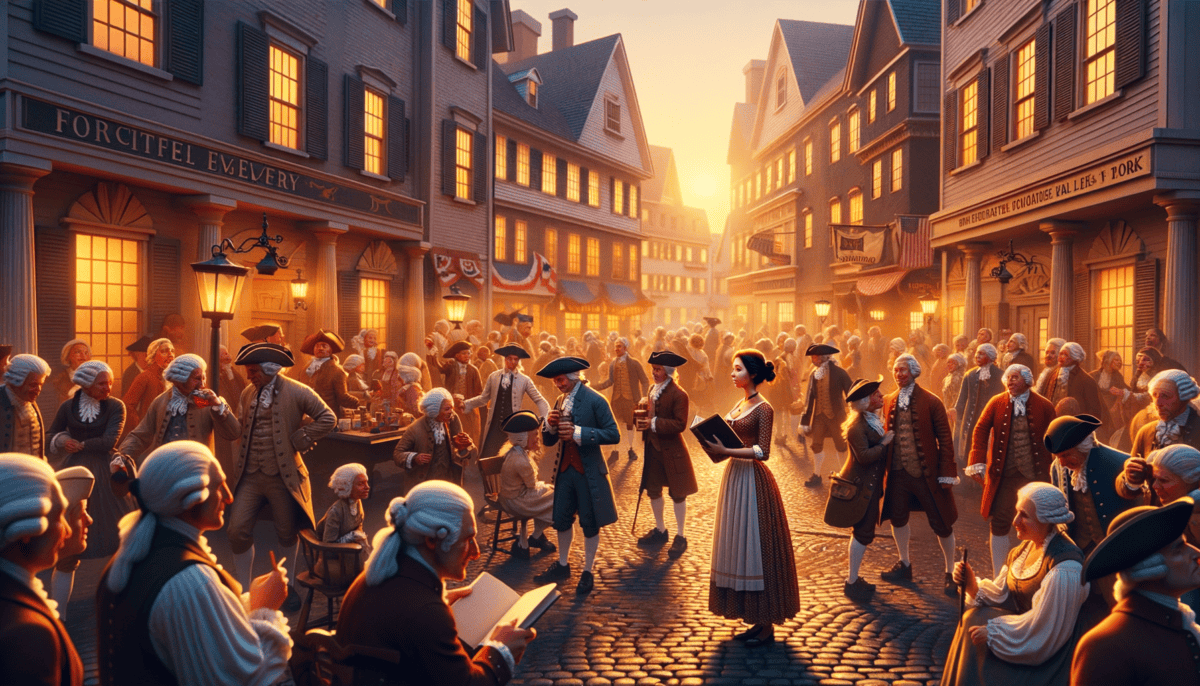
Sarah sat at her desk, flipping through her history notebook. Her recent quilt discoveries made her wonder what other odd things happened in colonial times.
“Miss Thompson,” Sarah raised her hand in class. “Is it true people couldn’t wear fancy clothes back then?”
Her teacher smiled. “Actually, yes! They had some very strange rules about clothes.”
The whole class giggled when Miss Thompson shared more funny old rules:
- No whistling on Sundays
- Must grow corn or pay a fine
- Can’t take a bath in winter ❄️
- Must kill 8 blackbirds each year
- No Christmas celebrations allowed
“But why were there so many silly rules?” Tommy asked from the back row.
Miss Thompson explained, “People thought these rules would make everyone behave better.”
“One boy got in trouble for sliding down a snowy hill on Sunday,” she said. “They thought having fun on Sunday was wrong!”
Sarah wrote in her notebook: “Colonial kids couldn’t even play with toys on Sundays!”
Things Kids Weren’t Allowed to Do:
✗ No running in town
✗ No swimming without permission
✗ No loud laughing in public
✗ No playing games on Sunday
✗ No staying up after sunset
“I’m glad those rules are gone now,” Sarah whispered to her friend Emma.
After school, Sarah visited the town library. Mrs. Baker, the librarian, showed her an old book of town rules.
“Look at this one,” Mrs. Baker pointed. “Men had to get their hair cut short. If it was too long, they had to pay money!”
Sarah read more strange laws:
– Women couldn’t wear makeup
– Everyone had to go to church
– No dancing or card games
“Even cats had rules!” Mrs. Baker laughed. “In some towns, cats had to wear bells so they wouldn’t catch birds on Sunday!”
That evening, Sarah told her family about the old rules during dinner.
“Imagine not being allowed to eat mince pies at Christmas,” she said, taking a big bite of her pizza.
“Or getting in trouble for wearing your favorite colorful dress,” Mom added.
Dad chuckled. “We’re lucky times have changed.”
Sarah pulled out her notebook and wrote:
I learned about all the strict rules you had to follow. It must have been hard to be brave and help people when there were so many silly laws. You didn’t just break rules about quilts – you broke them to help people be free. That makes you even more amazing!”
Before bed, Sarah looked at her bright pink pajamas and colorful bedroom walls. She thought about colonial kids who couldn’t choose their own clothes or play when they wanted.
“Sometimes,” she told her cat Whiskers, “rules that seem normal now might look silly to people in the future.”
Whiskers purred, glad he didn’t have to wear a bell.
Connecting the Past and Present
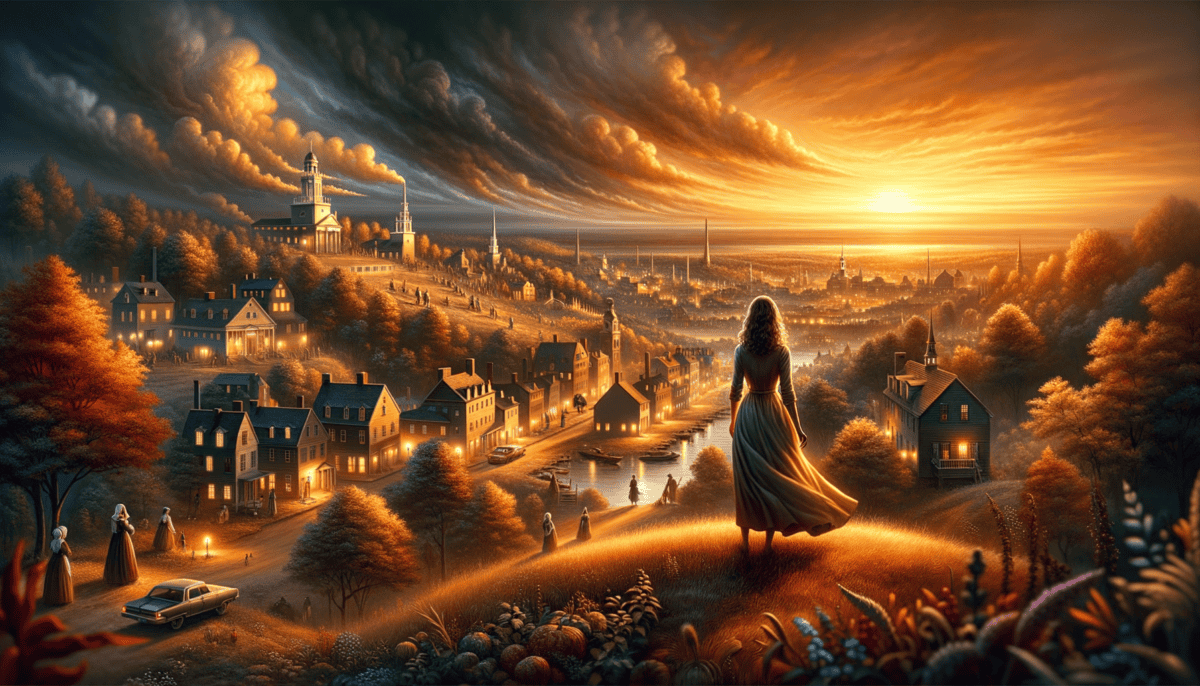
Sarah sat in her favorite reading spot by the window, surrounded by her research notes. Her cat Whiskers curled up beside her, purring softly.
“I’ve learned so much about colonial times,” she said, scratching Whiskers behind the ears. “It’s like putting together a big puzzle!”
She opened her special notebook and began to write:
Colonial life was full of surprises! People weren’t just living in old houses – they were making history every day. Some things were scary, like the witch stories. Some things were brave, like helping people escape on the Underground Railroad. And some things were just silly, like not being allowed to whistle on Sundays!”
Sarah’s mom knocked on her door. “What are you working on, sweetie?”
“I’m writing about everything I learned,” Sarah smiled. “Did you know Martha’s quilt helped people find freedom? And pirates might have hidden treasure right here in our town!” ☠️
Mom sat down next to her. “History is pretty exciting when you really look into it, isn’t it?”
“It’s like a mystery book, but it all really happened!” Sarah exclaimed. ✨
“The past isn’t just dates in textbooks – it’s real people’s stories!”
Sarah pulled out her collection of research:
- The old journal about the Leather Man
- Pictures of Martha’s freedom quilt patterns
- Notes about colonial rules
- Stories from Salem’s history
- The mysterious pirate map piece ️
“You know what’s really cool?” Sarah told her mom. “People back then were just like us. They wanted to help others, have fun, and make things better.”
What Sarah Learned:
Being brave means helping others
Rules should be fair for everyone
History is full of amazing stories
Small actions can make big changes
Later that evening, Sarah visited Miss Thompson after school.
“I want to keep learning about history,” Sarah announced. “Maybe I’ll be a historian when I grow up!”
Miss Thompson beamed. “You’re already a wonderful young historian, Sarah. You’ve shown how exciting the past can be!”
That night, Sarah made one last entry in her notebook:
As she closed her notebook, Whiskers jumped into her lap. Sarah hugged him close.
“You know what, Whiskers? History isn’t just about remembering the past. It’s about learning how to make tomorrow better!”
And as the stars twinkled outside her window, Sarah dreamed about all the new historical mysteries waiting to be discovered. She couldn’t wait to start her next adventure! ⭐