

A Young Boy’s Dream
Little Robert stood in the garden of Stratford Hall, his eyes wide with wonder. The big house behind him was where he lived with his family in Virginia. It was the year 1813, and Robert was just six years old.
"Father was a hero," his mother Ann told him, her voice soft and proud. "He fought with George Washington in the American Revolution."
Robert loved hearing stories about his father, Henry "Light-Horse Harry" Lee. Even though his father wasn't around anymore, these stories made him feel close to him.
“Remember, Robert,” his mother would say, “being brave isn’t just about fighting. It’s about doing what’s right, even when it’s hard.”
Young Robert nodded, taking these words to heart. He spent his days exploring the big house and its grounds, pretending to be a soldier like his father. His older brothers would sometimes join in, but Robert was different. He was quiet and thoughtful, always trying to help others.
The Path to West Point
As Robert grew older, he knew exactly what he wanted to be – a soldier! When he was 18, he got his chance. He went to West Point, a special school where young men learned to be army officers.
West Point wasn't easy. Students had to:
- Wake up very early
- Study hard subjects like math
- Learn to march and follow orders
- Keep their rooms super clean
- Exercise every day
But Robert loved it! He worked harder than anyone else. He never got in trouble and always followed the rules. His teachers and fellow students admired him.
After school, Robert became an officer in the United States Army. He was very good at building forts and bridges. People started to notice how smart and brave he was. He married a pretty girl named Mary Custis, who lived in a beautiful house called Arlington.
Growing Leadership
"Lieutenant Lee," his commander called one day, "we need someone to lead this project."
Robert stepped forward, ready to help. He was becoming known as someone who could solve tough problems. He worked hard and was kind to everyone, even when things got difficult.
Little did young Robert know that these early years were preparing him for bigger challenges ahead. His strong sense of duty and honor would one day make him one of the most important military leaders in American history.
His mother's words about doing what's right would stay with him forever, guiding him through the hardest choices of his life. The quiet boy from Virginia was growing into a leader who would change history.
Robert worked extra hard to make his family proud. He wanted to be just as brave as his father, but in his own way. Every day, he tried to live up to his mother's teachings about honor and doing what's right.
“A true soldier,” Robert would say to himself, “must be brave in heart and mind.”
The young officer had no idea that his biggest tests were still to come. But the lessons he learned as a boy at Stratford Hall and as a student at West Point would help him face whatever challenges lay ahead.
The Weight of Choice
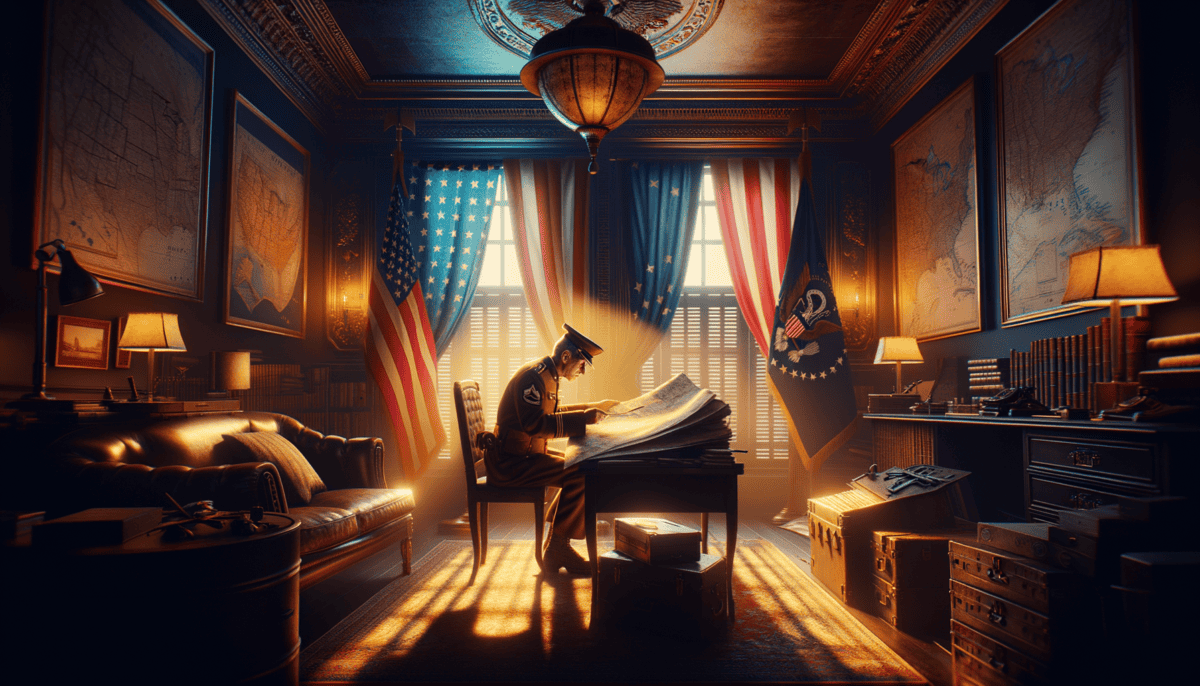
Dark clouds gathered over Arlington House in April 1861. Robert E. Lee sat in his study, his face worried. The United States was splitting apart. States in the South were leaving the Union to form their own country.
“My dear Mary,” Lee said to his wife, “I have never seen our country in such trouble.”
President Abraham Lincoln had just asked Lee to lead the Union army. It was a big honor! But Lee’s home state of Virginia was thinking about leaving the Union. He had to make the hardest choice of his life.
A Hard Decision
Lee walked through the gardens of Arlington House. The pretty spring flowers couldn’t make him feel better. He loved the United States – he had served in its army for 32 years! But he also loved Virginia, where his family had lived for many years.
For three days, Lee didn’t sleep well. He wrote lots of letters and prayed for help making his choice. His wife Mary watched him with worried eyes.
“I cannot fight against my home,” Lee finally said. “I must protect Virginia.”
Saying Goodbye
With tears in his eyes, Lee wrote his letter saying goodbye to the U.S. Army. It was like saying goodbye to an old friend.
His son Custis asked, “Father, are you sure about this?”
Lee looked at his son with sad but determined eyes. “Sometimes doing what you think is right means making hard choices.”
- Lee gave up his beautiful Arlington home
- He left his job in the U.S. Army
- He said goodbye to old friends
- He moved his family to Richmond, Virginia
- He became a general in the Confederate army
A New Path
In Richmond, people cheered when Lee arrived. But he didn’t feel like celebrating. He knew there would be fighting ahead, and it made him sad.
“War is so terrible,” Lee told his friends, “you cannot know unless you have been there.”
Lee put on his new gray Confederate uniform. It felt strange after wearing blue for so many years. But he stood tall, ready to lead Virginia’s army.
As spring turned to summer, Lee worked hard to get ready for war. He trained soldiers and made plans to protect Virginia. He hoped the fighting wouldn’t last long, but deep inside, he knew hard times were coming.
Every night, Lee wrote letters to Mary. He missed his peaceful garden at Arlington. But he knew he had to do what he thought was right, even though it was the hardest choice he had ever made.
The warm Virginia nights were filled with talk of war. As Lee looked at the stars, he wondered what the future would bring. The quiet soldier from Virginia was about to face the biggest challenge of his life.
Rising to Command
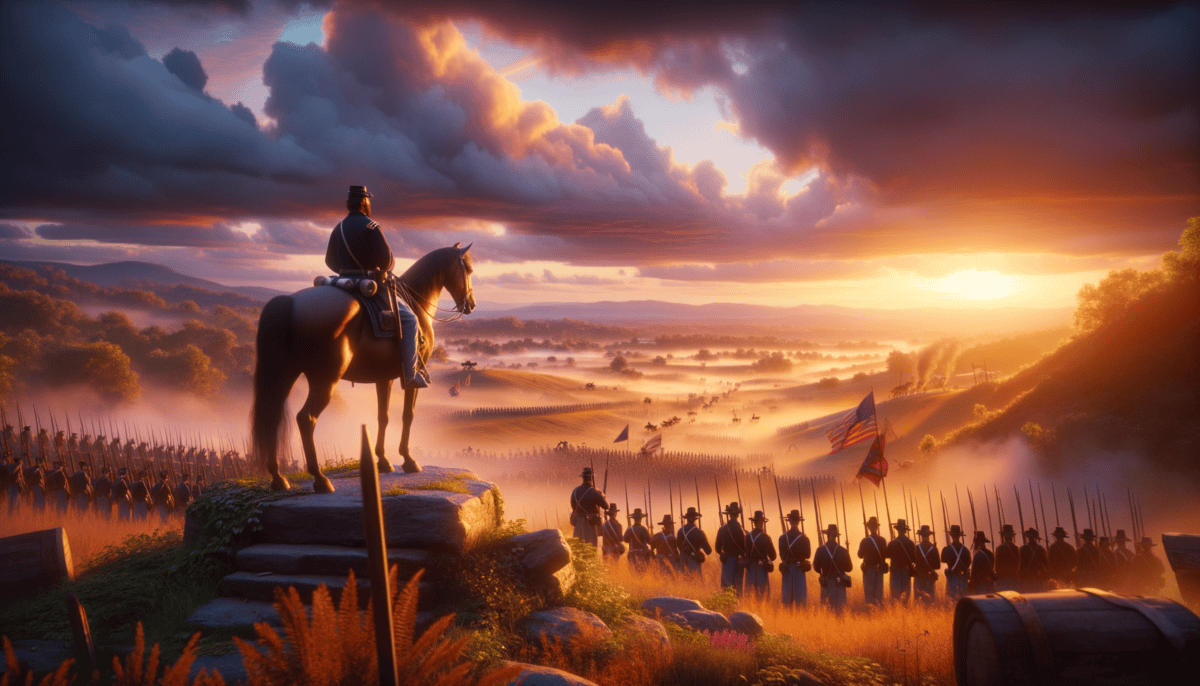
The summer sun beat down on Richmond as Robert E. Lee rode his favorite horse, Traveller. People lined the streets, waving and cheering. But Lee wasn’t smiling. He knew the big job ahead would be very hard.
“General Lee! General Lee!” the crowds called out. “Save Virginia!”
First Big Test
Lee’s first big battle was near Richmond. The Union army was very close to the city! Everyone was scared. But Lee had a clever plan.
“We must be brave and quick,” Lee told his soldiers. “Fight hard, but be kind to others.”
The battle lasted seven days. Lee’s army won! The people of Richmond were very happy. They started calling Lee “Marse Robert” – a friendly nickname that meant they trusted him. ✈️
A Kind Leader
Even though Lee was winning battles, he didn’t like fighting. He always tried to take care of his soldiers. When food was short, he ate the same simple meals they did.
“We are all God’s children,” Lee would say. “We must help each other.”
One day, Lee saw a young soldier crying. The boy was hungry and missed his mother. Lee shared his own bread with the soldier and told him stories about his own sons.
Big Victories
Lee won more battles that summer. He was very good at guessing what the Union army would do. His soldiers trusted him more and more. ⭐
- Won the Battle of Second Manassas
- Protected Richmond from attacks
- Saved many Confederate soldiers
- Earned respect from both sides
- Showed kindness to prisoners
Hard Choices
Even when winning, Lee felt sad about the war. He wrote to his wife Mary every night.
“I pray for peace,” he wrote. “War hurts too many people.”
Lee rode Traveller along the battle lines each day. He talked to his soldiers and learned their names. He wanted them to know he cared about them.
Looking Forward
As fall came, Lee knew bigger battles were coming. He sat in his tent late at night, planning how to protect Virginia. His generals trusted him to make good choices.
“We must be strong,” Lee told them. “But we must also be good and kind.”
The war was far from over. Lee’s biggest challenges were still ahead. But he stayed brave and kept trying to do what was right. His soldiers knew they could count on “Marse Robert” to lead them well.
The Weight of War
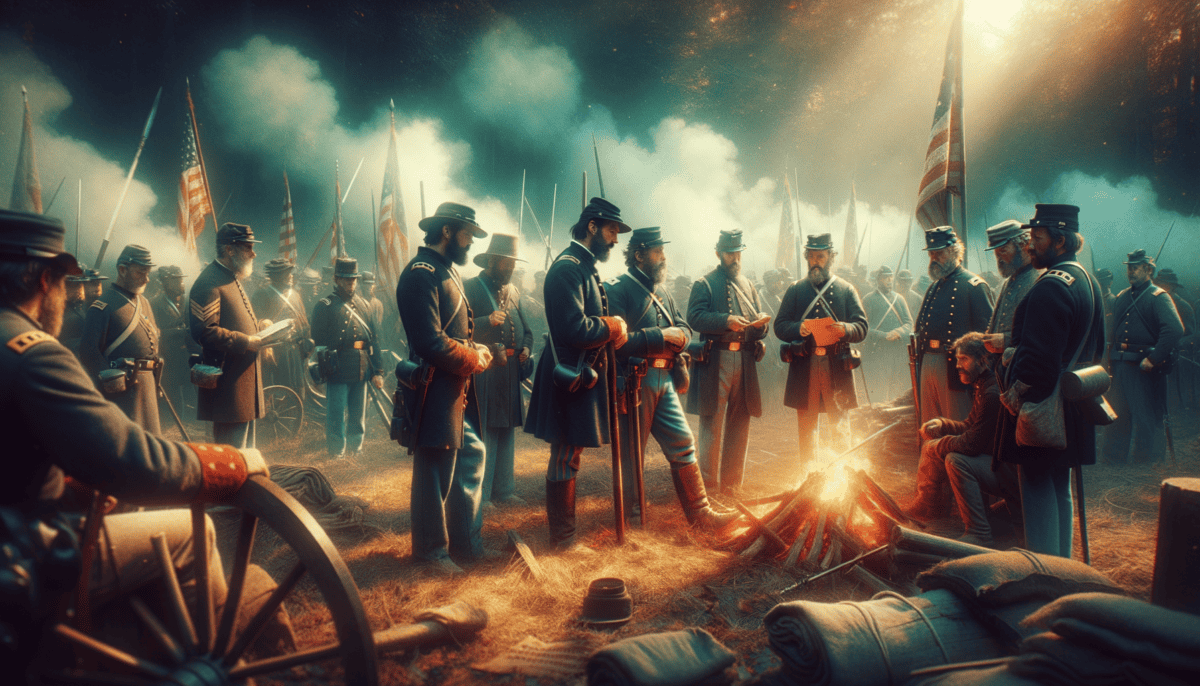
The Battle of Chancellorsville began on a cool spring morning in 1863. Robert E. Lee sat on Traveller, looking at the huge Union army. His own army was much smaller, but Lee had a plan.
A Brave Plan
Lee met with his friend General Jackson, who everyone called “Stonewall.” They made a clever plan together.
“We must split our army,” Lee said. “It’s risky, but it might work.”
Jackson would take his soldiers on a secret path through the woods. They would surprise the Union army from behind! It was a very tricky plan.
A Big Victory and a Sad Loss
The plan worked! Jackson’s soldiers surprised the Union army. The Union soldiers ran away in fear. Lee’s smaller army had won!
But that night, something terrible happened. In the dark, some Confederate soldiers accidentally shot Stonewall Jackson. Lee was very sad when he heard the news.
“Jackson was my right arm,” Lee said sadly. “I have lost so much.”
Hard Times
After Jackson died, things got harder for Lee’s army. Food was running low. Many soldiers didn’t have good shoes. But Lee shared everything he had with them.
- Soldiers were hungry
- Clothes were wearing out
- Medicine was scarce
- Winter was coming
- Many missed their families
Keeping Hope Alive
Lee rode among his soldiers every day. He talked to them and listened to their problems. When they were sad, he told them funny stories to make them smile.
One cold night, Lee found a young soldier crying. The boy had no blanket. Lee gave him his own warm coat.
“Sir, you’ll be cold!” the soldier said.
“You need it more than I do,” Lee answered kindly.
More Battles Ahead
Lee knew bigger fights were coming. He wrote to his wife Mary about his worries.
“I hope this war ends soon,” he wrote. “Too many good people are getting hurt.”
The army was moving north. Everyone talked about a little town called Gettysburg. Lee didn’t know it yet, but the biggest battle of his life was coming soon.
Even with all the hard times, Lee stayed brave. He kept trying to do what was right. His soldiers loved him more than ever. They knew “Marse Robert” would always take care of them.

The Long Goodbye
The sun rose over Gettysburg on a hot July morning in 1863. Robert E. Lee stood on a hill, watching his tired soldiers. A big battle was about to begin.
A Brave Choice
Lee looked at the Union army on the high ground. They had good places to hide. His officers wanted to go around them, but Lee made a different choice.
“We will attack right here,” Lee said. “Our brave men can do it.”
For three days, the armies fought hard. The noise was very loud. Smoke filled the air. Lee rode Traveller back and forth, checking on his soldiers.
The Big Attack
On the last day, Lee ordered a big attack. General Pickett would lead it. Fifteen thousand Confederate soldiers would march across an open field.
“It’s too far!” some officers said. But Lee thought it would work.
The soldiers marched bravely. But many got hurt. The attack failed. Lee felt very sad. He rode out to meet the soldiers coming back.
Hard Times Get Harder
After Gettysburg, things got worse for Lee’s army. They had less food and supplies than ever.
- Many good soldiers were gone
- Food was very scarce
- Winter was very cold
- Soldiers had holes in their shoes
- The Union army was getting stronger
Never Giving Up
Lee kept fighting. He made clever plans. He helped his soldiers stay brave. But he knew things were getting harder.
“We must keep trying,” Lee told his men. “We must do our duty.”
The Long Winter
That winter was very hard. Lee shared a tent with his officers. He ate the same small meals as his soldiers. When food came, he made sure the sick soldiers got it first.
One cold night, a soldier offered Lee his blanket. Lee smiled and said, “Keep it, son. I’m not cold.”
Lee wrote letters to his wife Mary. He told her about his worries. But he never stopped being kind to everyone around him.
Spring Brings Change
When spring came in 1864, Lee knew bigger battles were coming. The Union army was getting stronger every day. His own army was getting smaller.
Lee sat on Traveller, watching his army march. He knew hard choices were coming. But he would face them with courage, just like always.
A Noble Peace
Spring was ending in 1865. Lee sat on his faithful horse Traveller near Appomattox Court House. His army was very tired. They had almost no food left.
The Last Meeting
Lee called his officers to meet. They gathered in a small room. Everyone looked tired and sad.
“My friends,” Lee said softly, “we must think of our brave soldiers now.”
Some officers wanted to keep fighting. But Lee shook his head. He knew that would only hurt more people.
Meeting General Grant
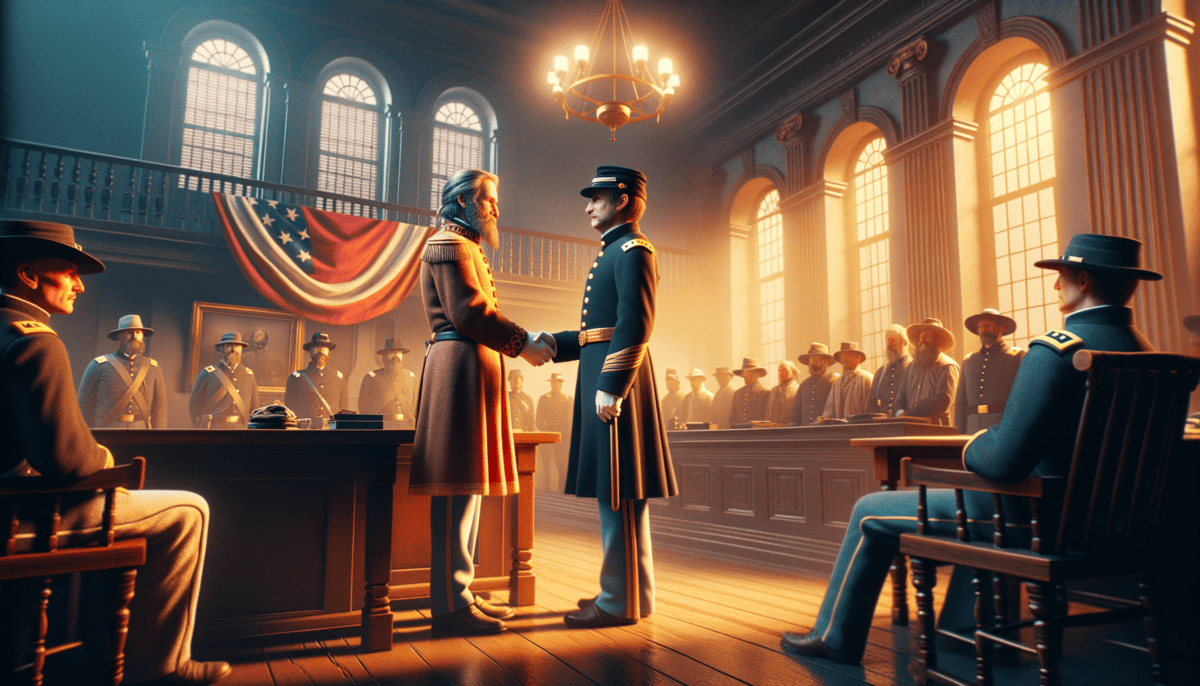
Lee put on his best uniform. He rode to meet General Grant of the Union army. Grant was wearing a dirty soldier’s coat.
“I’ve come to stop the fighting,” Lee said bravely.
Grant was very kind. He let Lee’s soldiers keep their horses. They would need them to plant crops at home.
A Peaceful Goodbye
Lee rode back to his army. The soldiers crowded around him. Many were crying.
Building a New Future
After the war, Lee worked hard to bring people together. He became president of a college. He taught young people about peace and learning.
- Helped rebuild schools
- Wrote letters to old soldiers
- Taught students to be kind
- Worked for peace between North and South
- Set a good example for everyone
A Lasting Memory
Lee lived five more years after the war. He was always gentle and kind. People from both sides respected him.
One student said, “General Lee taught us that being good is more important than being powerful.”
Forever Remembered
Today, we remember Robert E. Lee as someone who was brave in war and peace. He showed that it’s important to be kind, even when things are hard.
People still tell stories about Lee’s kindness and courage. His life shows us that how we treat others matters most of all. ❤️