

A City Divided
The streets of Sarajevo buzzed with life on a crisp spring morning in 1992. Twelve-year-old Amira skipped along the cobblestone streets, her dark braids bouncing with each step. The sweet smell of fresh bread drifted from the local bakery, mixing with the morning air.
"Good morning, Mr. Petrović!" she called out to her elderly Serbian neighbor, who was watering the bright red geraniums on his balcony.
"Dobro jutro, little one!" he smiled back, his weathered face crinkling around the eyes. Mr. Petrović had lived next door to Amira's family for as long as she could remember. He often shared his garden-grown tomatoes with them and taught her Serbian words.
The First Changes
But lately, things felt different in their neighborhood. Amira noticed how adults spoke in whispers. Her parents kept the radio on all day, listening to news about something called "political tensions."
"Why aren't Mira and Ana coming to school anymore?" Amira asked her mother one evening. Her two best friends, both Serbian, hadn't been in class for a week.
Mama stirred the pot of soup slowly, her face worried. "Some families are… choosing different schools now, sweetheart."
Signs of Trouble
The changes came faster after that. Soldiers appeared on street corners. Some shops closed. Graffiti appeared on walls overnight – angry words Amira didn't understand. The happy sounds of children playing in the streets grew quieter.
One day, Papa came home early from his job at the university. His face was pale. "Pack some clothes," he told Mama. "Just essentials. We might need to leave quickly."
That night, Amira heard her parents talking in low voices:
"The barricades are going up…"
"They're checking ID cards…"
"Did you hear about the family in Grbavica?"
The Last Normal Day
The morning everything changed started like any other. Amira ate breakfast – the last of their fresh bread with jam. She put on her favorite blue dress and packed her school bag.
But when she stepped outside, the street felt wrong. The usual morning bustle was gone. No cars moved on the road. No children walked to school. Even the birds seemed quiet.
CRACK!
The sound split the air like thunder. Amira jumped.
"Inside, now!" Papa grabbed her arm, pulling her back through the door. More loud sounds followed – pop-pop-pop! – and someone screamed in the distance.
A World Turned Upside Down
That was the day Amira learned what gunfire sounded like. The day her childhood neighborhood became a battleground. The day Mr. Petrović's geraniums were left to wither on his empty balcony.
Their city – once famous for its beautiful mix of mosques, churches, and synagogues – was being torn apart. People who had been neighbors for decades now looked at each other with suspicion and fear.
That night, huddled in their basement with other families, Amira clutched her favorite book and listened to the adults whisper about snipers and shells. Through a tiny window, she could see orange flashes lighting up the sky.
"Will things ever be normal again?" she asked Papa.
He pulled her close. "They will be different, but we will survive this together. We have to believe that love is stronger than hate."
Above them, the sound of explosions echoed through their beloved city, marking the beginning of what would become one of Europe's darkest chapters since World War II. The Bosnian War had begun, and nothing would ever be the same.
When Friends Become Strangers
The morning gunfire turned into days of chaos. Amira and her family huddled in their basement, listening to the radio crackle with frightening news. The date was April 6, 1992 – the day that changed everything.
Life Underground
“Why are they shooting at us?” Amira whispered to her mother as another explosion shook their building. The basement was dark and cold, lit only by candlelight.
Other families from their apartment block had joined them. Mrs. Kovač, who always gave Amira candy, sat in the corner crying softly. Her son had joined the army last week.
The New Reality
After three days, the shooting quieted enough for Papa to venture upstairs. Their apartment was mostly okay, but the windows were shattered. Glass crunched under his feet as he gathered more supplies.
“Look what I found,” Papa said, holding up Amira’s stuffed bear that she’d left behind. She hugged it tight, breathing in its familiar smell of home.
Through the broken windows, they could hear:
“All civilians must evacuate!”
“This is now a military zone!”
“Show your identification papers!”
Broken Friendships
One morning, Amira saw Mr. Petrović walking down the street. He wore a military uniform now. He didn’t wave or smile like before.
“That’s not our Mr. Petrović anymore,” Mama said softly, pulling Amira away from the window. “War changes people.”
| Before the War | After War Began |
| Friendly neighbors | Suspicious strangers |
| Shared meals | Empty tables |
| Playing together | Hiding apart |
Escape Plans
More families started leaving the neighborhood. Some went to relatives in the countryside. Others tried to reach other countries where it was safe.
“We should leave too,” Mama told Papa late one night when they thought Amira was sleeping. “The children aren’t safe here.”
Papa shook his head. “The roads are blocked. Snipers are everywhere. We have to wait.”
Small Acts of Kindness
Not everyone changed for the worse. Mrs. Hadžić from the fourth floor shared her last potatoes with everyone in the basement. Old Mr. Simić helped carry water when the pipes stopped working.
One day, a note slipped under their door:
The bakery on Koševo street still has bread at sunrise.
Be careful. Stay safe.
-A friend”
A Child’s View
Amira started keeping a diary, writing by candlelight:
Dear Diary,
Today I saw tanks in the street where we used to play hopscotch. Mama says we can’t go to school anymore. I miss my friends. I don’t understand why grown-ups are fighting. Papa says it’s about politics, but I think it’s about forgetting how to be friends.
The World Changes
As spring turned to summer, their city transformed. Barricades appeared on every major street. Buildings were pocked with bullet holes. Gardens withered. The sound of gunfire became as common as birdsong once was.
At night, Amira would look at her old class photo. Smiling faces of children who were now separated by invisible lines of hate. She wondered if they were safe, if they remembered playing together, if they missed her too.
The radio brought news of fighting spreading across Bosnia. Words like “ethnic cleansing” and “siege” became part of daily conversation. The adults tried to shield the children from the worst of it, but fear has a way of seeping through walls.
Their neighborhood, once a patchwork of different cultures living in harmony, had become a battlefield. But in the darkness of their basement shelter, Amira held onto hope that someday, somehow, people would remember how to be neighbors again.
Life Under Siege
The summer sun beat down on Sarajevo, but nobody played in the streets anymore. Amira watched from her window as people hurried between buildings, trying to avoid the snipers. It was day 45 of the siege.
Finding Food
“Look what I found!” Papa whispered excitedly, pulling canned beans from his coat. He had waited in line for six hours at the UN distribution center. These days, food was worth more than gold.
Mama had become an expert at making meals from almost nothing. She called it “siege cooking.” Tonight’s dinner was a soup made from dried herbs and the last potato.
The New Normal
Life had a new rhythm now:
Dawn: Quick trips for water
Morning: Hide from snipers
Afternoon: Search for food
Night: Huddle in the dark
“Remember when we used to complain about homework?” Amira’s friend Selma laughed during one of their basement meetings. Now, they would give anything to go back to school.
Underground Heroes
Not everyone lost hope. Mr. Mahmić, their neighbor, started a secret library in his basement. “Books keep our minds free,” he said, sharing stories with the children.
Mrs. Begić taught math classes using coal to write on the walls. The children sat on cardboard boxes, eager to learn despite the war.
| Problems | Solutions |
| No electricity | Candles and battery radios |
| No water | Collecting rain and snow |
| Little food | Community sharing and gardens |
Secret Messages
The children developed their own code language:
“Rainbow” meant food delivery was coming
“Dancing shoes” meant it was safe to go outside
Small Joys
Even in the darkest times, people found reasons to smile. When baby Mirza was born in the basement shelter, everyone celebrated. They saved their last pieces of chocolate for weeks to make it special.
“See?” Mama said, watching the baby sleep. “Life goes on. Even in war, hope grows.”
The Tunnel of Hope
“There’s a secret tunnel,” Papa whispered one night. “People are digging it to bring supplies into the city.”
The tunnel became their lifeline. Through it came food, medicine, and letters from the outside world. Amira imagined it as a magic pathway to freedom.
Community Spirit
The siege brought out the best in some people. Old rivalries were forgotten as neighbors helped neighbors:
Dr. Hadžić treated patients in his kitchen after the hospital was bombed.
The local imam and priest worked together to protect families of all faiths.
Children shared their toys, knowing that play was precious medicine for scared hearts.
Dreams of Peace
At night, Amira wrote in her diary:
Dear Diary,
Today we had real bread! Papa says more help is coming. I dream of peace every night. In my dreams, the streets are full of children playing again. No more bombs. No more fear. Just life, the way it should be.
Signs of Hope
Despite the hardships, people refused to give up. The Sarajevo Orchestra played concerts in bombed-out buildings. Artists painted murals on bullet-scarred walls. Children created a playground in a sheltered alley.
“This is how we fight back,” Mama said. “By living. By keeping our hearts open. By remembering who we really are.”
As another explosion lit up the night sky, Amira squeezed her mother’s hand. They had learned that survival wasn’t just about food and water – it was about keeping hope alive, one day at a time.
International Aid Arrives
The morning sky filled with the rumble of planes, but this time they brought hope instead of fear. UN peacekeepers in their blue helmets rolled into Sarajevo’s streets. Amira pressed her face against the window, watching in wonder.
Help from Above
“Look!” Papa pointed to white parachutes floating down. “Food packages!” Children who hadn’t smiled in months now jumped with excitement. The aid drops brought more than just supplies – they brought hope.
“We’re not alone anymore,” Mama whispered, tears in her eyes as she watched the peacekeepers set up their posts.
New Friends in Blue Helmets
Lieutenant Maria from Spain gave chocolate to the children. “My daughter at home is your age,” she told Amira, showing her a photo. “She would want you to have this.”
| What UN Soldiers Brought | How It Helped |
| Food packages | Fed hungry families |
| Medicine | Healed the sick |
| Safe zones | Protected people |
Brave Heroes
One day, a young peacekeeper named James risked his life to save a little boy caught in sniper fire. The whole neighborhood cheered as he carried the child to safety.
“Sometimes the biggest heroes come from far away,” Papa said, watching James return to his post.
A Special Delivery
Through the tunnel came something precious – letters from the outside world. Amira’s hands shook as she opened one from her cousin in Germany:
We think of you every day. The whole world is working to help bring peace. Stay strong. We will be together again soon.
Love, Sara
Peace Talks Begin
“They’re talking about peace,” Papa announced one evening, listening to his battery-powered radio. The news spread through the basement shelter like wildfire.
Mrs. Begić started teaching the children a new word: “diplomacy.” She explained how people from different countries were meeting to help stop the war.
Signs of Change
Slowly, things began to change:
• More food arrived in markets
• Schools reopened in safe buildings
• Doctors got new medicines
• Electricity came back for a few hours each day
Small Victories
The community celebrated every improvement. When the water pipes worked for the first time in months, people danced in the streets, forgetting about snipers for a moment.
Brave Reporters
Journalists came from all over the world to tell Sarajevo’s story. Sarah, a reporter from England, interviewed Amira about life during the siege.
“The world needs to hear your voice,” Sarah said. “Your story helps people understand why peace is so important.”
A Special Concert
The biggest surprise came when famous musicians visited to perform. They played in the old library, its broken windows covered with plastic sheets.
“Music speaks every language,” the conductor said. “It reminds us we’re all human.”
Looking Forward
That night, Amira wrote in her diary:
Dear Diary,
Today felt different. The soldiers in blue helmets protect us. Planes bring food instead of bombs. People talk about peace. Maybe soon we can live without fear again.
As she closed her diary, distant explosions still echoed, but they seemed less scary now. The world had not forgotten them. Help had come at last, and with it, the first real chance for peace.
Healing Hearts and Building Bridges
The streets of Sarajevo slowly came back to life. People emerged from their shelters, blinking in the sunlight of a different kind of morning. The guns had fallen silent, but healing the invisible wounds would take more time.
A Courtroom Far Away
Amira watched the small TV in their living room. People in black robes sat in a big room in a place called The Hague. Papa explained they were judges trying to make things right.
Finding Friends Again
One morning, Amira saw her old friend Mila across the street. They hadn’t spoken since the war started because their families were different. Both girls stood frozen, unsure what to do.
“Go on,” Mama whispered gently. “Friendship is stronger than fear.”
The girls ran to each other and hugged, tears streaming down their faces.
“I missed you every day,” Mila said softly.
“Me too,” Amira replied. “Want to play jump rope?”
The Healing Garden
Mrs. Begić had an idea. “Let’s turn the empty lot into a garden,” she suggested. Everyone helped:
| Who Helped | What They Did |
| Children | Planted flowers |
| Parents | Built benches |
| Grandparents | Told stories |
The Doctor Who Listens
A kind lady named Dr. Ana came to help people talk about their feelings. She had special toys and drawing supplies for children.
Stories of Hope
Every Friday, people gathered in the community center to share their stories:
• How neighbors helped each other
• Times when strangers became friends
• Moments of kindness during the dark days
• Dreams for the future
The Memory Wall
The children painted a huge wall with handprints in rainbow colors. Under each print, they wrote wishes for peace.
“Each handprint is a promise,” their teacher said. “A promise to be kind and remember what we learned.”
New Beginnings
Slowly, things changed. Old friends who hadn’t spoken began to nod hello. Children from different backgrounds played together in the park. The healing garden bloomed with colorful flowers.
A Special Ceremony
One evening, everyone gathered in the garden. They lit candles and released paper lanterns into the sky. Each lantern carried a message of hope.
“Look how the lights shine together,” Papa said. “Just like us – different but beautiful together.”
Letters of Understanding
Amira’s class started writing to children in other countries who had lived through wars. They shared their stories and dreams:
We are learning that peace starts with us. Even when things are hard, we can choose to be kind. Would you like to be my pen pal?
Love, Amira
Growing Stronger
Mrs. Begić started a “peace club” where people learned about each other’s traditions. They shared food, music, and stories. “Understanding grows like seeds,” she said. “We just need to plant them.”
The Future Brightens
That spring, Amira wrote in her diary:
Dear Diary,
Today I saw something amazing. My friend Mila and her mama came for coffee with us. Mama and Mila’s mama cried and hugged. They said they were sorry for the past. I think their hearts are healing too.
As she looked out her window, Amira saw children playing in the healing garden. The flowers were starting to bloom, just like hope in their hearts.
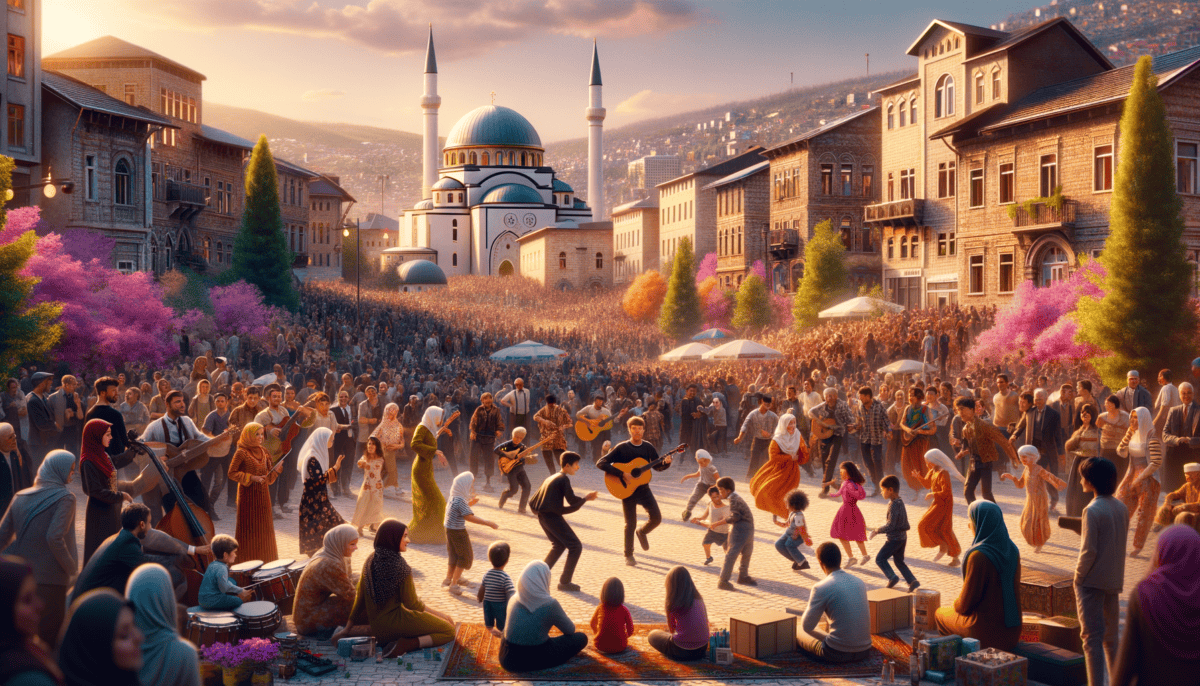
A New Dawn for Bosnia
Ten years had passed since the war ended. The healing garden Mrs. Begić started was now a beautiful park filled with roses, lilies, and children’s laughter. Amira, now a young teacher, watched her students play there every morning.
The Garden’s Promise
The garden had grown beyond anyone’s dreams. Tall trees provided shade where once there was only rubble. Benches held grandparents who shared stories with curious children. Every flower represented a promise kept.
Building Together
Sarajevo was changing. New buildings rose where destroyed ones once stood. But more importantly, people were building bridges between their hearts.
“Remember when we couldn’t even look at each other?” Mila said to Amira as they watched their students play together.
“Now look at our kids,” Amira smiled. “They don’t see differences, only friends.”
The Peace Museum
The old community center became a special museum. Inside, visitors could see:
| Room | Display |
| Memory Hall | Photos and stories from the war |
| Hope Gallery | Children’s artwork for peace |
| Future Room | Community projects and dreams |
Teaching Peace
In Amira’s classroom, students learned important lessons about kindness and understanding. They wrote their own promises for peace:
The Anniversary Celebration
Every year, people gathered in the healing garden to celebrate peace. They shared traditional foods, music, and dances from all their cultures. Children performed plays about friendship and understanding.
Messages of Hope
The handprint wall had grown. Now it covered three walls, with prints from thousands of visitors who added their own promises for peace. Below the wall, a simple message read:
Looking Forward
Papa, now with gray hair, sat on his favorite bench in the garden. “See how far we’ve come?” he said to Amira. “But our work isn’t finished. Each generation must learn these lessons anew.”
Mrs. Begić’s peace club had grown into a network of friendship clubs across Bosnia. They organized youth exchanges, cultural festivals, and community projects.
The Future’s Promise
On a warm spring evening, Amira watched the sunset from the garden. Her students had planted new flowers that day, each one representing their hopes for tomorrow.
A small girl tugged at her sleeve. “Teacher,” she asked, “will you tell us the story of the garden again?”
Amira smiled, remembering her own childhood and how far they’d all come. “Of course,” she said. “It’s a story about how love can grow even in the hardest places, and how peace begins in our own hearts.”
As stars appeared above Sarajevo, the garden glowed with tiny solar lights. They twinkled like the hopes and dreams of a new generation, promising a future where peace would continue to bloom.