
The Crumbling Colossus
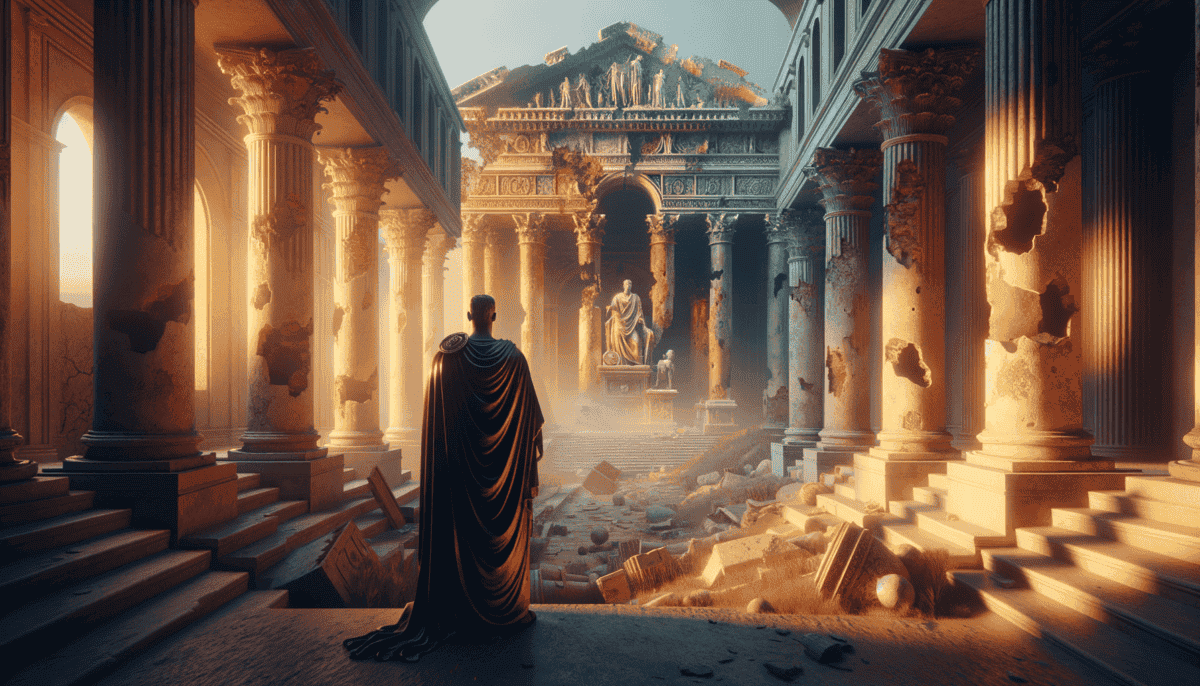
Marcus stood at the edge of Rome's mighty walls, watching the sunset paint the sky in shades of orange and purple. He was just ten years old, but he could feel that something wasn't right in the great city.
"Father, why are people leaving Rome?" Marcus asked, tugging at his father's toga.
Senator Flavius sighed, placing a gentle hand on his son's shoulder. "Rome is changing, my boy. The city isn't as strong as it once was."
The year was 285 CE, and Rome was facing tough times. The mighty Roman Empire that had ruled for hundreds of years was starting to shake like a wooden tower in a strong wind. ️
People were worried. Soldiers who used to protect the city were fighting each other instead. Bad men called "barbarians" kept trying to attack Rome's borders. Even buying food at the market was getting harder because coins weren't worth as much anymore.
"But what about the emperor?" Marcus asked. "Can't he fix everything?"
His father shook his head. "It's not that simple. We've had too many emperors lately. Some only ruled for a few months before someone else took their place."
Just then, a group of merchants walked by, their carts loaded with goods. They were heading east, away from Rome.
"Where are they going?" Marcus wondered aloud.
"To Constantinople," his father replied. "Emperor Constantine is building a new city there. He thinks it will be safer and better for trade."
Marcus watched as more people joined the merchants' caravan. They carried everything they owned, looking for a fresh start in the new city. The old Rome was crumbling, but something new was rising in the east.
That night, as Marcus lay in bed, he could hear his parents talking about moving too. The words "Constantinople" and "new beginning" floated through the air like autumn leaves.
A New Hope in the East
The next morning, Marcus saw Emperor Constantine himself riding through the streets. The emperor wore a purple robe with gold trim, and a golden crown sat on his head.
"Citizens of Rome," Constantine announced, his voice strong and clear. "Our empire needs a new heart, a new center. In the east, where the sun rises, we shall build the greatest city the world has ever seen!"
Some people cheered, while others looked worried. Change is scary, even when it's needed.
Marcus turned to his father. "Will we go too?"
Flavius nodded slowly. "Yes, my son. We will help build this new Rome. It will be different, but perhaps that's exactly what we need."
As the sun set on old Rome that evening, Marcus felt both sad and excited. The mighty Roman Empire was changing, becoming something new. Nobody knew exactly what would happen next, but one thing was clear – the story of Rome wasn't ending. It was just taking a new path, leading east toward the rising sun. ✨
The great buildings of Rome stood silent in the growing darkness, their shadows long and deep. But in the distance, the road to Constantinople beckoned, promising new adventures and a chance to be part of something amazing. Something that would one day be called the Byzantine Empire.
The New Capital Rises
The journey to Constantinople took many weeks. Marcus and his family traveled with a large group of people, all heading to the new capital. The road was long, but excitement filled the air. ️
“Look!” Marcus shouted one morning. “I can see it!”
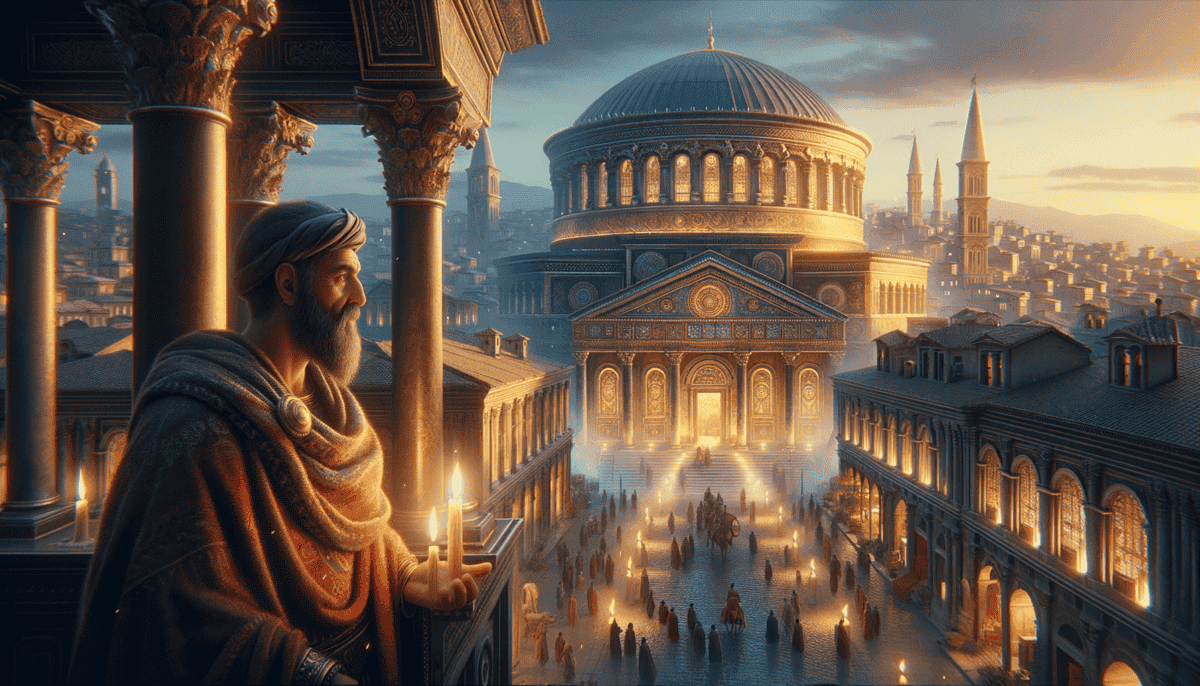
There, rising from the meeting point of two seas, stood Constantinople. The city sparkled in the morning sun like a jewel. Tall walls protected it on all sides, and ships filled its harbors.
As they entered the city, Marcus’s eyes grew wide. Workers were everywhere, building new houses, temples, and parks. The streets were wide and clean, nothing like the cramped roads of old Rome.
“Father, everything looks so… new!” Marcus said.
“That’s because it is, my boy. Emperor Constantine wants this to be the grandest city ever built.”
A City of Wonders
Their new home was bigger than their old one in Rome. From their window, they could see the great church being built – the Hagia Sophia. It would be the biggest church in the world! ⛪
Marcus made new friends quickly. One was Helena, whose father helped design the city’s buildings.
“Did you know,” Helena told Marcus, “that the emperor brought special stones from all over the empire to build this city? Some are from Egypt, some from Greece!”
The city was different from Rome in many ways. Instead of the old Roman gods, most people now prayed to Jesus. The emperor himself had become Christian, and new churches were being built everywhere.
A Growing Empire
As months passed, more people arrived every day. Merchants brought silk from far-away China, spices from India, and gold from Africa. The markets were full of wonderful things Marcus had never seen before.
The emperor created new jobs called “civil servants” to help run the city. Marcus’s father became one of them. They helped make sure everyone followed the laws and paid their taxes.
“Will you be a civil servant too when you grow up?” Helena asked Marcus one day as they watched boats in the harbor.
Marcus smiled. “Maybe. Or maybe I’ll help build more beautiful buildings like your father.”
The sun was setting, turning the water golden. Ships from all over the world filled the harbor, their sails catching the last light of day. More people were arriving, ready to make Constantinople their new home.
“You know what?” Marcus said to Helena. “I think Emperor Constantine was right. This really is becoming the greatest city in the world.” ⭐
As stars began appearing in the sky, the lights of thousands of homes twinkled across Constantinople. The new capital of the empire wasn’t just a city – it was the beginning of something amazing. Something that would last for over a thousand years.
And Marcus knew he was lucky to be part of it all.
Dreams of Glory
Many years had passed since Constantinople became the new capital. Marcus was now grown up, and worked as an important helper to Emperor Justinian. The city had grown even bigger and more beautiful. ️
“Look at our great city now,” Justinian said one morning, standing at his palace window. “But we can make the empire even greater!”
Marcus watched as Justinian spread out a big map. “We will take back the lands that were once part of Rome,” the emperor declared. His eyes sparkled with excitement.
Building a Better World
But Justinian didn’t just want to make the empire bigger. He wanted to make it better too. He asked smart people to write down all the laws in a clear way, so everyone could understand them.
“Why are the laws so important?” asked Julia, Marcus’s daughter.
Marcus smiled at her. “Laws help people know what’s right and wrong. They help us live together peacefully.”
The Great Church
One day, something terrible happened. The beautiful Hagia Sophia church caught fire!
“We will build it again,” Justinian said. “And it will be even more amazing!”
The emperor hired the best builders in the world. They worked day and night. When it was done, the new church was so beautiful it made people cry when they saw it. Its dome seemed to float in the air like magic! ✨
Fighting for the Empire
Justinian sent his best general, Belisarius, to win back the old Roman lands. They won many battles and took back Italy, North Africa, and parts of Spain.
But keeping such a big empire together was hard work. There were problems:
• People spoke different languages
• Some places were very far away
• It cost lots of money to protect all the lands
• Some people didn't want to be part of the empire
Julia often asked her father about the fighting. “Why do we need such a big empire?”
“The emperor believes we can bring peace and good laws to all these lands,” Marcus explained. “But sometimes it’s harder than we thought it would be.”
A Time of Change
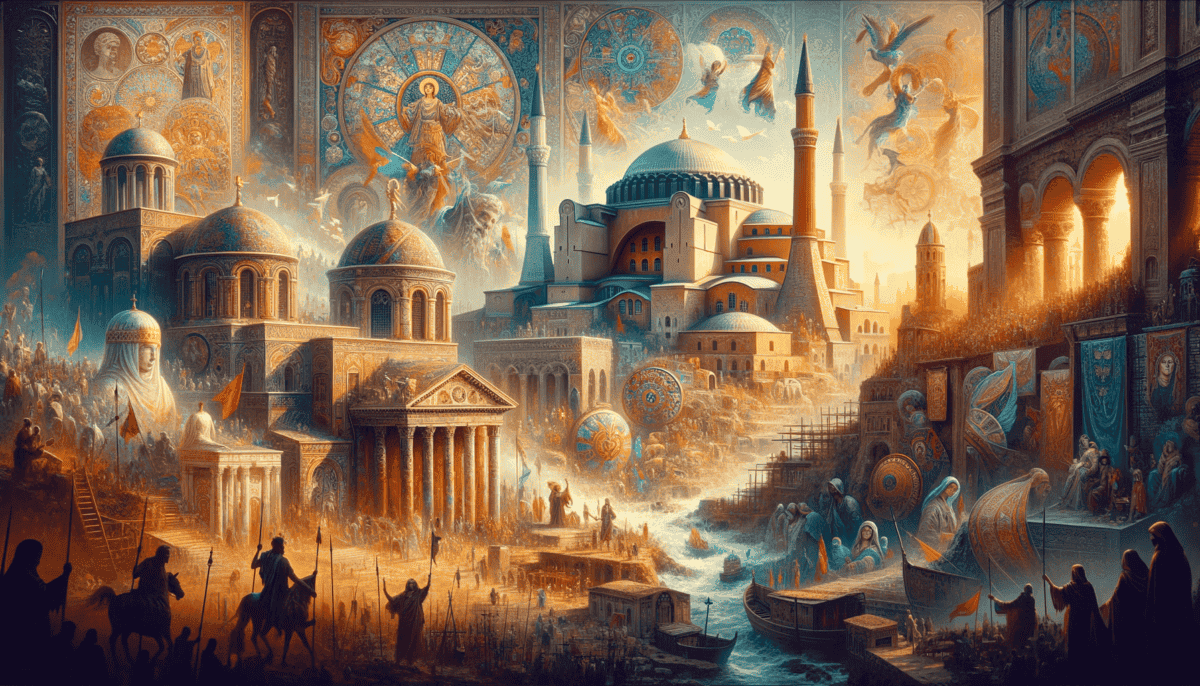
Life in Constantinople was exciting during Justinian’s time. Artists made beautiful pictures with tiny colored tiles called mosaics. Traders brought silk from far away China. Scientists studied the stars and medicine.
But there were hard times too. A terrible sickness called the plague made many people ill. There were big fires and earthquakes. Some people got angry about high taxes.
Through it all, Justinian kept working to make his dreams come true. He built hospitals, fixed roads, and made sure children could go to school.
One evening, Julia and Marcus stood on their roof, looking at the sunset over the city. The golden dome of the new Hagia Sophia glowed in the dying light.
“Father,” Julia asked, “will people remember this time?”
“Yes, my dear,” Marcus answered. “They will remember Justinian’s time as one of the most important times in our empire’s story.”
The stars began to appear over Constantinople, just as they had when Marcus was a boy. But now the city was even grander, reaching for glory like the old Rome of long ago.
Faith and Fire
The sun rose over Constantinople as church bells rang out across the city. Julia, now a young woman, hurried through the busy streets. People from many different lands filled the marketplace. Some wore colorful silk robes, while others dressed in simple wool clothes.
The Great Debate
“Father, why are there so many people at the church today?” Julia asked Marcus as they walked together.
“There’s a big meeting about our faith,” Marcus explained. “Important church leaders have come from far away to talk about God.”
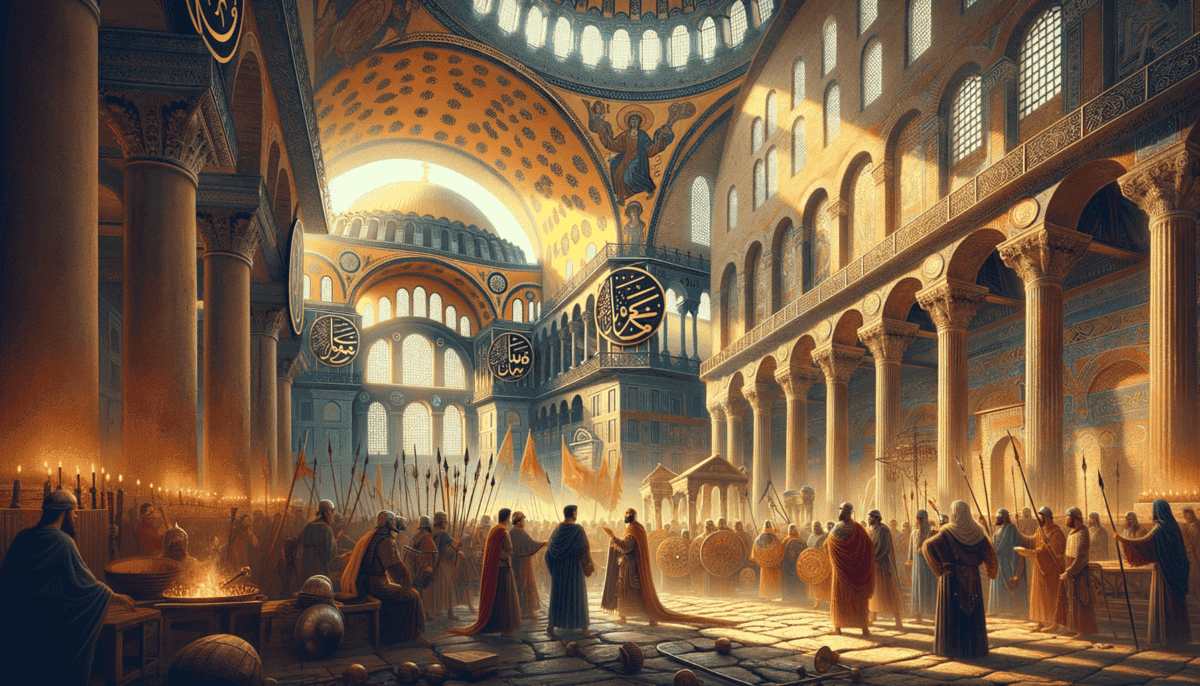
Inside the Hagia Sophia, Julia saw bishops in fancy robes sitting in a circle. Some spoke Greek, others spoke different languages. They were having a very serious talk about how to pray and what to believe.
New Neighbors
One day, traders brought news from far away lands. A new group of people called Muslims had built their own empire. They believed in one God too, but in a different way.
Julia loved hearing stories from the traders. They told tales about:
• Houses with beautiful gardens in faraway Damascus
• Smart doctors who could cure sick people
• New ways to count numbers
• Stories written in flowing letters called Arabic
Keeping the Peace
Sometimes there were fights between different groups who believed different things. The Emperor had to be very wise to keep everyone happy.
“It’s like having lots of brothers and sisters,” Julia told her friend Sofia. “Even when we disagree, we’re still family.”
Marcus worked hard to help keep peace in the city. He wrote letters in Greek and Arabic, helping people understand each other better.
Books and Learning
The Byzantines loved books! They copied old stories from Rome and Greece so they wouldn’t be lost. They also wrote new books about medicine, science, and history. ✍️
Art and Beauty
Artists made the churches even more beautiful. They covered the walls with pictures made of tiny colored stones. The pictures showed Jesus, angels, and saints looking down from heaven. ⭐
“Why are the pictures so shiny?” a little boy asked Julia.
“The gold pieces catch the light,” she explained. “It makes us think about heaven and God’s love.”
Guardians of Faith
As Julia grew older, she understood why her city was so special. The Byzantines weren’t just keeping old Roman ways alive – they were protecting something even more important: their faith.
Every morning, she watched the sun rise over the Hagia Sophia. Its giant dome seemed to float between heaven and earth, just like Constantinople itself – a city that brought together people from all over the world.
The evening prayers echoed across the city, mixing with the sounds of many languages in the streets below. Marcus put his arm around his daughter’s shoulders.
“Our city is like a bridge,” he said softly. “A bridge between east and west, old and new, earth and heaven.”
As the stars came out, Julia thought about all the different people in Constantinople, each with their own stories and beliefs, all living together in their great city by the sea.
Shadows of Change
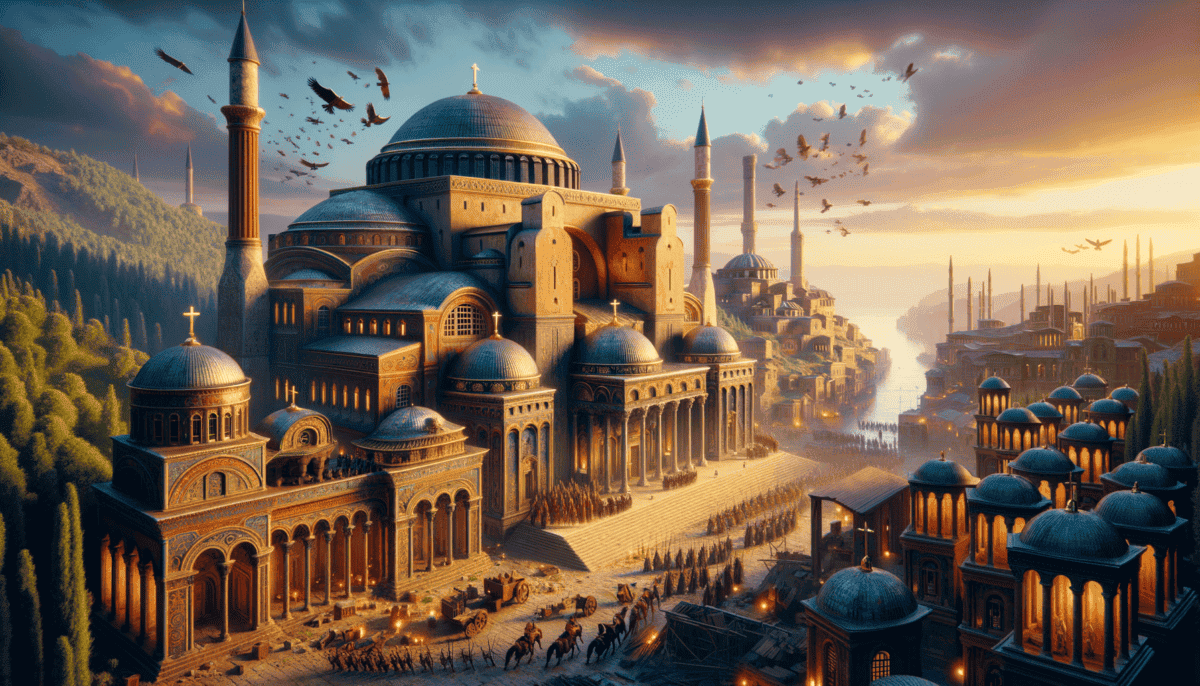
The once-bright markets of Constantinople weren’t as busy anymore. Julia, now grown with gray in her hair, watched as fewer ships came to port. The golden coins that traders used weren’t worth as much as before.
Hard Times
“Why are the shops closing, Mother?” asked Julia’s daughter, Helena.
“Times are getting harder, little one,” Julia sighed. “Our empire isn’t as strong as it used to be.”
Brave Defenders
Soldiers in shining armor still guarded the city walls. But there were fewer of them now. Captain Alexios, Julia’s husband, worked hard to protect their home.
“Look at our walls,” Alexios told Helena. “They’re the strongest in the world. As long as we stand together, we’ll be safe.” ️
The Emperor’s Worry
In the great palace, the Emperor paced back and forth. His golden crown felt heavy.
The biggest worries were:
• Not enough money in the treasury
• Fewer soldiers to protect the lands
• New enemies getting stronger
• Old friends becoming distant
Hope in the Libraries
Even in hard times, Julia made sure Helena visited the libraries. “Our books hold the wisdom of ages,” she said. “This is our real treasure.”
The City Changes
Some parts of Constantinople started to look old and tired. But the Hagia Sophia still shone. Its dome reached up to heaven like always. ⛪
“Why don’t they fix the broken buildings?” Helena asked one day.
“We use our money to protect the city now,” Julia explained. “But look – the important things remain beautiful.”
Keeping Hope Alive
Every evening, Julia and Helena walked along the city walls. They could see the sun setting over two seas. The sight was still magical. ✨
“Tell me about the old days, Mother,” Helena would say.
Julia smiled. “Our city has faced hard times before. We are strong because we remember who we are. We keep learning, we keep praying, and we keep hoping.”
As darkness fell, the church bells rang out as they always had. In homes across the city, families lit their lamps and said their prayers. The stars above Constantinople twinkled just as brightly as they had in better days.
Helena squeezed her mother’s hand. “We’ll be okay, won’t we?”
“Yes, my dear,” Julia answered. “As long as we have our faith, our knowledge, and each other, we’ll find a way forward.”
The night wind carried the smell of the sea, reminding them that while times were changing, some things would always remain the same. The spirit of their people was as steady as the waves that had lapped at their shores for a thousand years.
The Final Dawn
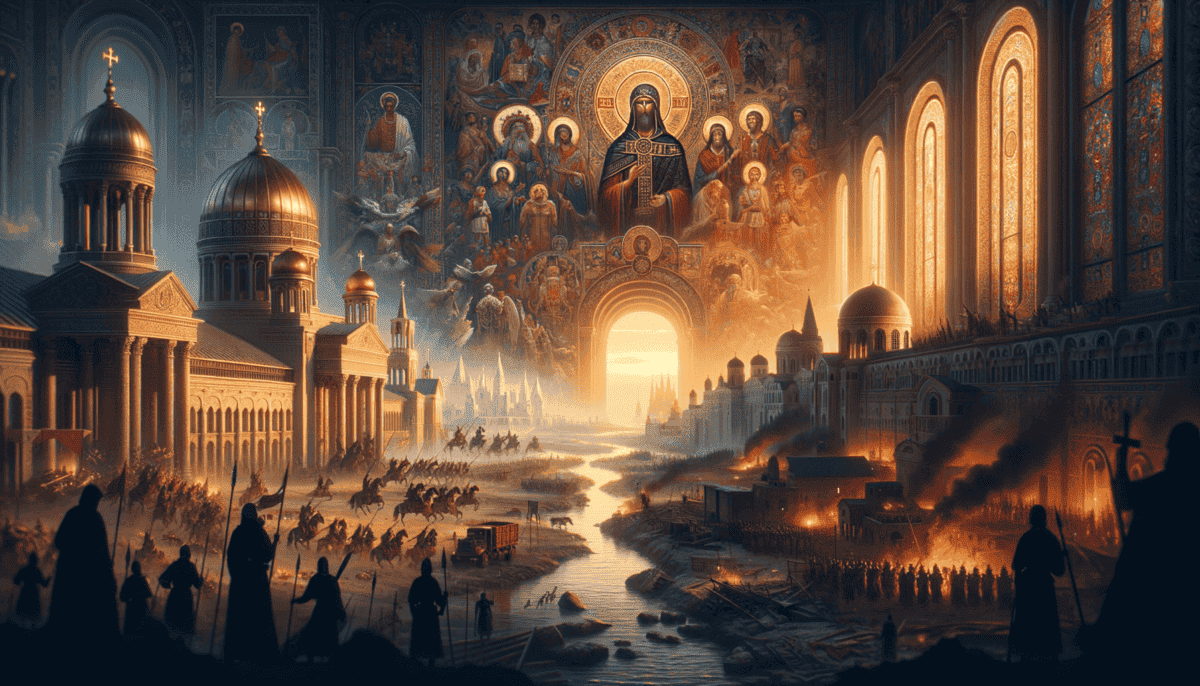
The morning sun rose over Constantinople one last time. Helena, now a young woman, stood beside her mother Julia on the ancient walls. They watched as thousands of enemy soldiers gathered outside.
The Last Stand
“Look at all their flags,” Helena whispered. Captain Alexios hugged his family close.
“The Ottoman army is very big,” he said. “But our walls are strong.”
Saving Treasures
Inside the city, people rushed to save important things. Monks copied books as fast as they could. Artists packed up precious icons.
“We must protect our learning,” Julia said. “It’s more valuable than gold.”
The Last Emperor
Emperor Constantine walked among his people. He took off his purple boots and golden crown.
“I will fight beside you,” he told everyone. “We are all equal today.”
A New Chapter
When the city finally fell, many things changed. The Hagia Sophia became a mosque. New rulers brought new ways. But something amazing happened:
- Byzantine knowledge spread across Europe
- Artists taught others their special skills
- Stories and books helped start new learning
- Laws and ideas lived on in new places
The Living Legacy
Years later, Helena told her children about Constantinople. “Our empire may be gone,” she said, “but its gifts live on.” ⭐
– Beautiful art and buildings
– Important laws and ideas
– Stories of brave people
– Ways to run big cities
Forever Remembered
Today, we still see Byzantine gifts everywhere:
In the laws that keep us safe
In the art that makes life beautiful
In the stories we tell our children ✨
In the ways cities work together ️
The Roman Empire changed into the Byzantine Empire. Then the Byzantine Empire changed too. But its ideas and beauty never died. They just found new homes and new ways to shine.
Like Julia always said, “As long as people remember and learn, nothing truly ends. It just becomes part of a bigger story.”
And so, the tale of two great empires – Roman and Byzantine – lives on. Their story teaches us that even when big things change, the most important parts can last forever. The end of one story can be the beginning of many new ones.