

The Dark Tunnels
Tommy wiped the sweat from his forehead as he looked up at the coal-covered walls. The year was 1819, and like many other twelve-year-old boys in Yorkshire, England, he worked deep underground in the coal mines.
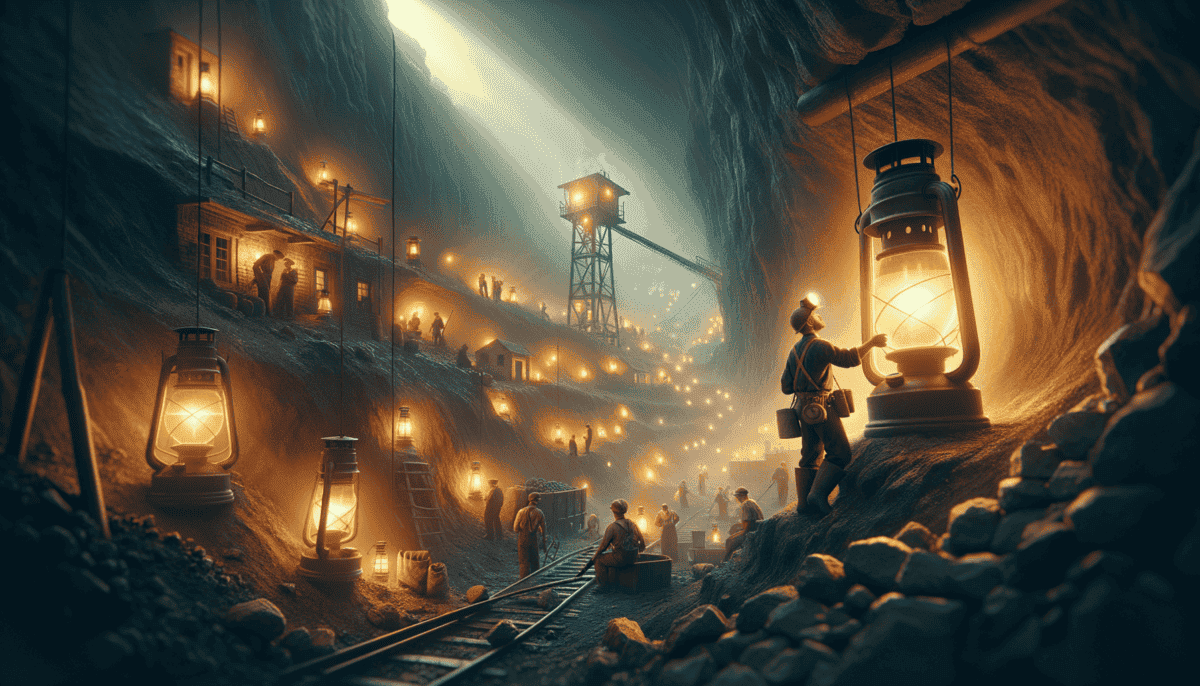
"Watch your head, lad!" called out his father, James, as a few loose rocks tumbled nearby. The mine was dark and dusty, lit only by small oil lamps that hung from wooden posts.
Tommy's job was to push heavy coal carts through narrow tunnels. His small size made him perfect for squeezing through tight spaces. But the work was hard, and his muscles ached every day.
"Papa," Tommy asked during their short lunch break, "why do we need so much coal?"
James smiled and pulled out a piece of bread from his lunch pail. "You see, son, coal is like magic black rocks. It powers the big steam engines in factories. It helps make iron for buildings and bridges. It even keeps our homes warm in winter!"
A Day in the Mine
Every morning, Tommy and his father would:
• Wake up before sunrise
• Walk two miles to the mine
• Work for 12 long hours
• Come home covered in coal dust
"Remember when Mama used to say I was born with coal dust in my hair?" Tommy laughed, remembering his mother who had passed away last winter.
James nodded, his eyes twinkling in the lamp light. "Aye, she did. And she was proud of her coal mining family, she was."
Suddenly, the ground rumbled. Tommy's heart jumped into his throat.
"Everyone out!" shouted Mr. Wilson, the mine boss. "The tunnel's not stable!"
James grabbed Tommy's hand, and they ran through the dark passages. Other miners followed, their feet pounding against the ground. Coal dust swirled around them like angry black clouds.
A Close Call
When they finally reached the surface, Tommy took deep breaths of fresh air. The sun felt warm on his face after hours underground.
"That was a close one," James said, hugging his son tight. "But that's why we always look out for each other down there. We're all family in the mines."
Tommy looked at the other miners emerging from the tunnel. Their faces were black with coal dust, but their teeth shone white as they smiled, grateful to be safe.
“The mine might be dark,” his father always said, “but it brings light to the world. Without coal, the factories wouldn’t run, and people wouldn’t have jobs or warm homes.”
That night, as Tommy lay in his small bed, he thought about the day's excitement. The mine was scary sometimes, but it was also where he felt strongest. He was proud to be a coal miner, just like his father.
Outside their small cottage, the stars twinkled above the mining village. The tall wooden mine shaft stood like a silent guardian, waiting for tomorrow's workers. In the distance, factory chimneys puffed smoke into the night sky, powered by the coal that Tommy and his fellow miners had dug from deep within the earth.
Sleep came easy to the young miner, his dreams filled with the echoes of pickaxes and the warm glow of oil lamps in the darkness.
Fires Underground
The year was 1820, and Tommy watched in amazement as workers installed the new steam-powered pump at the mine entrance. ️ It was a huge machine that would help keep the tunnels dry and safe.
“It’s like magic!” Tommy exclaimed to his father James, who stood beside him with a proud smile.
“This pump will make our work easier, lad,” James explained. “No more spending hours bailing water by hand!”
New Ways to Stay Safe
Mr. Wilson, the mine boss, gathered all the workers around. “Listen up, everyone! We’re getting new safety lamps too. They’re called Davy lamps, and they’re much safer than our old oil lamps.”
Tommy held up one of the new lamps, studying its metal mesh covering. “How does it work, Papa?”
“The mesh keeps the flame from touching any dangerous gases in the mine,” James explained. “If there’s bad air, the flame changes color to warn us!”
Sarah, a new character in the mine office, stepped forward. She was the first woman to work above ground at the mine, keeping track of all the new safety rules.
“These changes are making mining safer for everyone,” Sarah said. “We’re writing down all accidents now, so we can learn how to prevent them.”
Working Together
The miners began forming groups to help each other. They called them “safety circles.” Each morning, they would:
• Check their equipment together
• Share information about dangerous areas
• Look after new workers
• Practice emergency exits
“Look there!” Tommy pointed to a new wooden support beam. “The timber crew put those up yesterday. They’re twice as strong as the old ones!”
James nodded. “And see those marks on them? They tell us if the roof is starting to sag. No more surprises like last month!”
A Growing Community
After work, the miners gathered at the new meeting hall. They shared stories and taught each other about the new safety tools. Even Tommy got to help teach the younger children about the Davy lamp.
“Remember when we used to work alone?” Old Joe asked, his voice carrying across the room. “Now look at us – we’re like one big family!”
Sarah stood up to speak. “Next week, we’re starting first aid classes. Everyone should know how to help if someone gets hurt.”
Tommy felt proud to be part of these changes. The dark tunnels didn’t seem as scary anymore. With better lamps, stronger supports, and friends watching out for each other, mining was becoming safer every day.
As the sun set, Tommy and James walked home together. The steam pump’s steady thrum echoed through the valley, a new sound of progress and safety in their changing world.
That night, Tommy drew pictures of the new safety lamps and steam pump in his notebook. He couldn’t wait to see what other new inventions would make their work better and safer.
The mining village was changing, growing stronger together. And Tommy knew he was part of something important – not just digging coal, but building a safer future for all miners.
Industrial Heartbeats
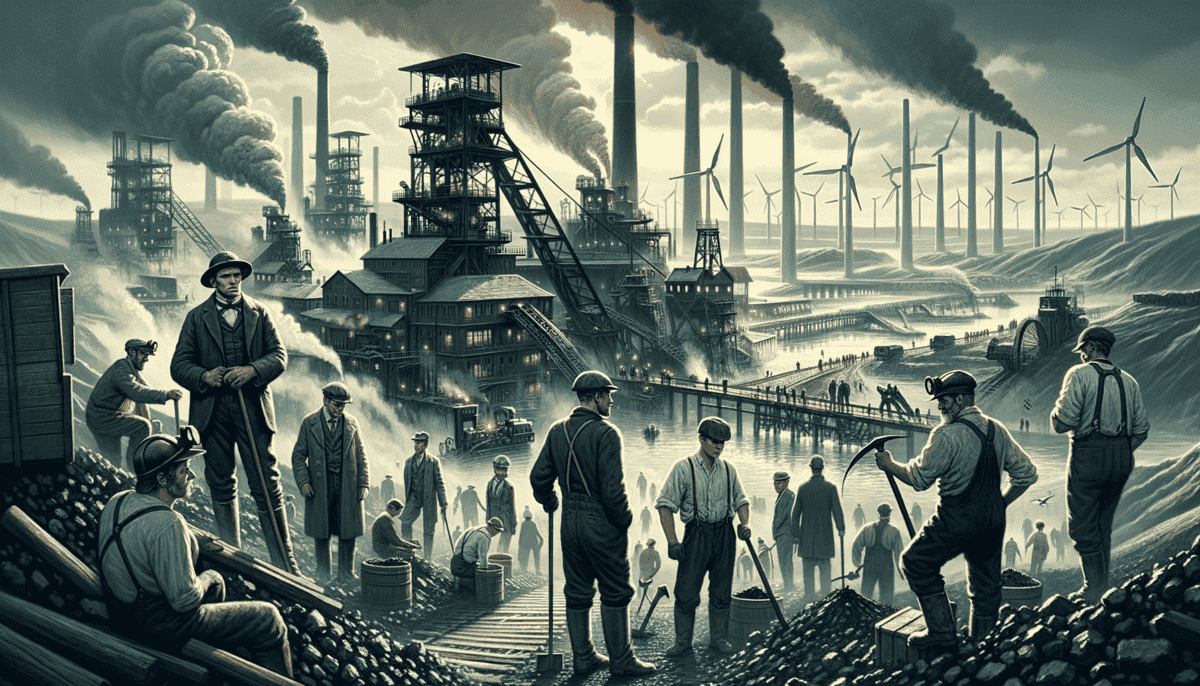
The year was 1850, and trains filled with coal thundered across the countryside. Little Tommy, now grown into Thomas, watched from his new position as station master.
“Look at those steam engines go!” he called to his daughter Mary. “When I was your age, we moved coal with horses and carts!”
A World Running on Coal
The small mining village had grown into a busy town. Factories with tall smokestacks lined the valley, and ships in the harbor waited to carry coal to far-away places.
“Papa, where does all our coal go?” Mary asked, watching workers load another train.
“Everywhere, sweetheart! It powers factories in London, ships crossing oceans, and trains like these.” Thomas smiled. “Our coal helps make things for people all over the world.”
New Ways to Mine
At the mine entrance, Thomas’s old friend Sarah was showing off the newest machine – a steam-powered drill.
“This drill can do the work of twenty men,” Sarah explained. “And it’s much safer than the old pick and shovel method.”
Workers gathered around, amazed by the drill’s power. Among them was Chen, who had come all the way from China to learn about British mining methods.
“In my country, we are building railways too,” Chen said. “Soon we will need as much coal as you do here.”
Changes in the Air
But not everything about the coal boom was good. Thomas noticed things that worried him:
• The sky wasn’t as blue as he remembered
• Trees near the factories had trouble growing
• The river water looked darker
• Some people were getting sick from the smoke
“We need to be careful,” Thomas told Mary. “Coal gives us power, but we must think about keeping our town clean and healthy too.”
Moving Forward
New ideas were coming to help fix these problems. Engineers designed better chimneys to catch the smoke. Gardens were planted to make the air cleaner.
“Look, Papa!” Mary pointed to workers installing gas lamps along the street. “Now we can see at night!”
Thomas nodded proudly. “That’s coal gas lighting up our town. We’re using coal in clever new ways every day.”
At the train station, Thomas kept a special notebook. In it, he wrote down all the places their coal traveled:
Liverpool – for ships
Manchester – for textile mills
Even as far as America!”
A Growing World
Every evening, Thomas and Mary walked home past the busy factories. The air was thick with steam and smoke, but there was excitement too. New houses were being built, shops were opening, and more people arrived each day looking for work.
“The world is changing fast,” Thomas told his daughter. “And our little town is helping make it happen.”
That night, as gas lamps glowed in the streets, Thomas remembered the old days of working underground with his father. Now he watched his town grow, powered by the same coal he once dug with his hands.
“We’re part of something big,” he whispered to Mary as she fell asleep. “Something that’s changing the whole world.”
Dark Clouds Rising
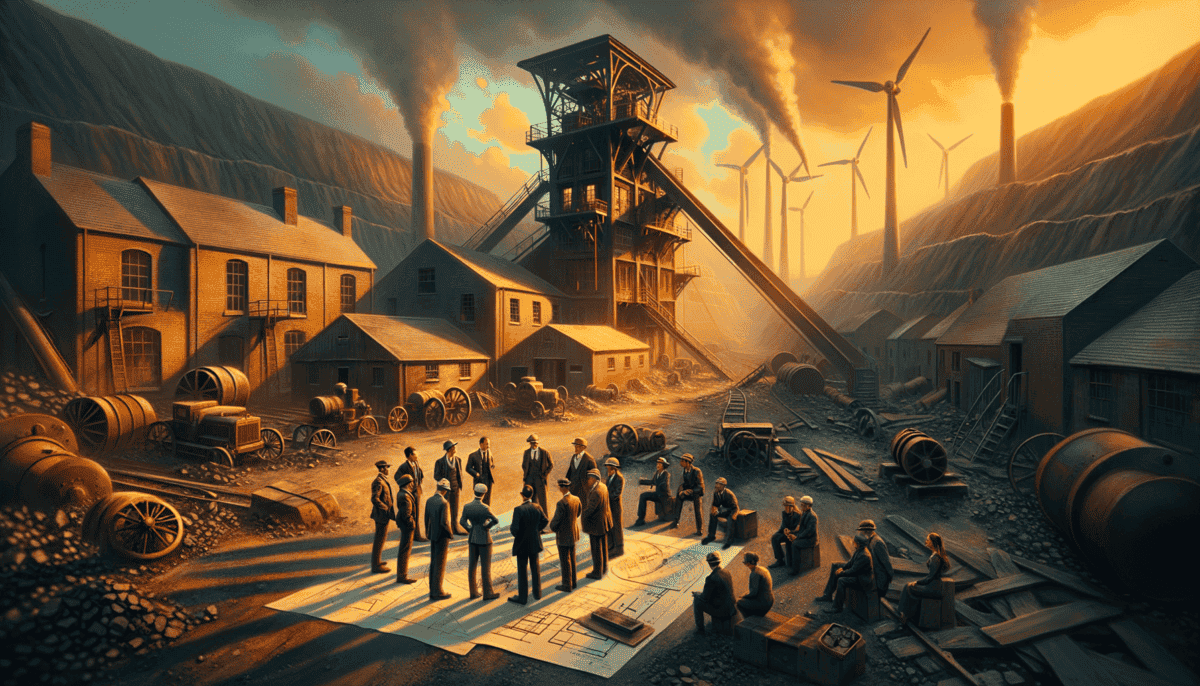
Mary stood at her father’s old station post, watching smoke billow from factory chimneys. The year was 1890, and the world had changed.
“The air feels different now,” she said to her son James, who was drawing pictures of the smoky sky. “When I was little, you could see the stars at night.”
A Town in Trouble
The mining town wasn’t the happy place it used to be. Doctor Wilson walked through the streets, visiting more sick people every day.
“The smoke is making it hard for some folks to breathe,” he told Mary. “We need to find better ways to use coal.”
“But what about the workers?” asked Sam, a miner’s son. “My family needs these jobs to live.”
New Ideas Growing
Not everyone wanted to keep things the same. Sarah’s granddaughter Emma worked in the new science laboratory at the university.
“We’re learning about different ways to make power,” Emma explained to James. “Did you know we can use the sun and wind?”
James’s eyes grew wide. “But how can wind push a train?”
Changes Begin
Around town, people started making small changes to help clean the air:
• Planting more trees
• Using special filters in factory chimneys
• Making rules about when factories could burn coal
• Looking for cleaner ways to heat homes
Two Sides of the Story
In the town hall, people gathered to talk about the future. Some wanted to keep using coal, while others wanted change.
“My father and his father worked in these mines,” said Bob, a coal worker. “What else can we do?”
Emma stood up bravely. “We can learn new jobs. We can build machines that use sun and wind power. We can make our town healthy again.”
Hope for Tomorrow
James spent his afternoons in Emma’s laboratory, learning about new kinds of energy.
“Look, Mama!” he called one day. “We made this light bulb work with the sun!”
Mary smiled, thinking how proud her father would be to see his grandson finding new ways to power their world.
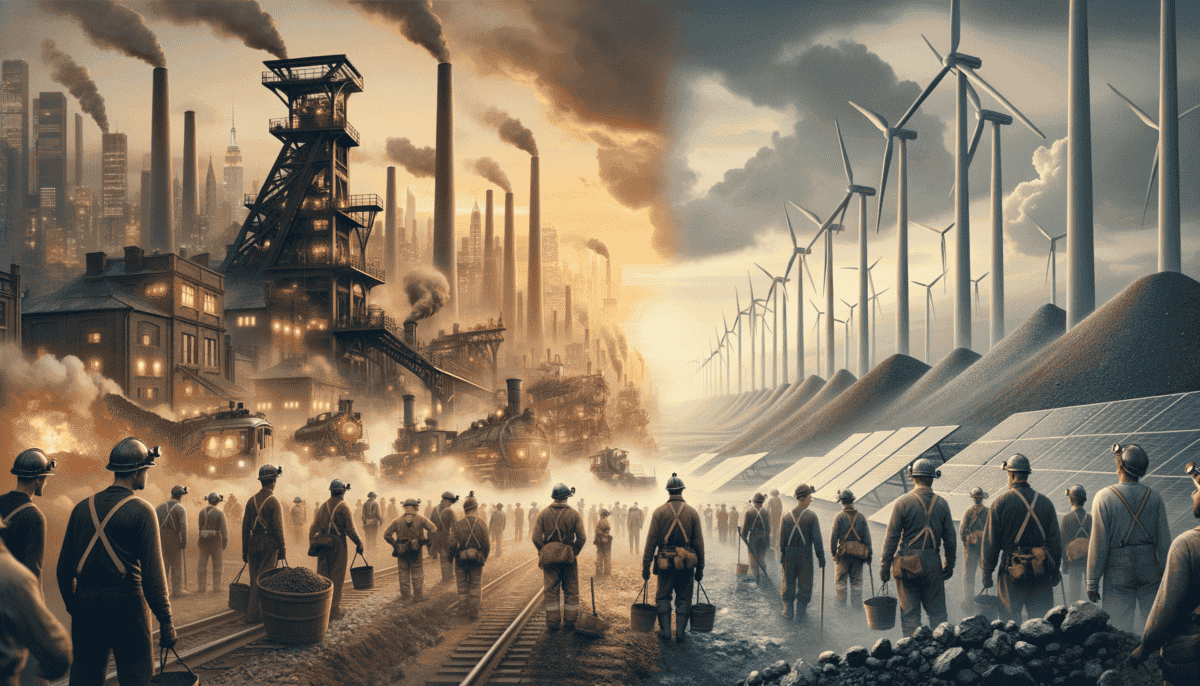
Outside, the sun was setting behind the factory smoke. But through the haze, Mary could see something new: windmills on the distant hills, their blades turning slowly in the evening breeze.
Change was coming, and their town would need to be brave and smart to face it. But Mary knew that just like the miners who had dug deep underground, they would find a way forward.
Bright New Horizons
The morning sun sparkled on the first solar panel in Millbrook, the old mining town. Sarah watched as workers carefully placed it on top of the old mining office.
A Fresh Start
“What do you think, Dad?” Sarah asked her father Bob, who had worked in the mines for thirty years. He squinted up at the shiny panel.
“It’s different, that’s for sure,” Bob said with a small smile. “But different isn’t always bad.”
New Jobs, New Skills
At the town’s new training center, former miners were learning exciting new jobs:
• Installing solar panels
• Building wind turbines
• Fixing electric cars
• Working with computers
“I never thought I’d be climbing towers instead of going underground,” laughed Mike, an ex-miner now training to work on wind turbines. ️
Growing Hope
In the town square, Emma’s science center had a special display. Children pressed their faces against the glass, watching tiny windmills spin.
“Look what happens when we shine light on this toy car!” Emma showed the excited kids. The solar-powered car zoomed across the table.
“My daddy says I can be a solar engineer when I grow up,” said little Jenny proudly.
Healing the Earth
Where black coal dust once covered everything, green gardens now grew. The air was cleaner, and birds returned to nest in the trees.
Working Together
Not everything was easy. Some people worried about change. But the town worked as a team, just like they had in the mining days.
Bob started a program helping older miners learn new skills. “We’re still strong, still proud,” he said. “We’re just using different tools now.”
Dreams Taking Flight
On weekends, families visited the new energy park. Kids flew kites near the wind turbines, their laughter carried on the breeze.
“Tell me again about the old mines, Grandpa,” Jenny would ask Bob.
“Those were important days,” Bob would say. “But these are important days too. We’re building something new, something clean and bright.”
As the sun set behind the wind turbines, Sarah thought about how far they’d come. The town that coal built was changing, growing, and finding new ways to power dreams. The future looked as bright as the solar panels glinting in the evening light.
Tomorrow would bring more changes, more challenges, and more chances to make their world better. And Millbrook would face it all together, just as they always had.
Seeds of Tomorrow
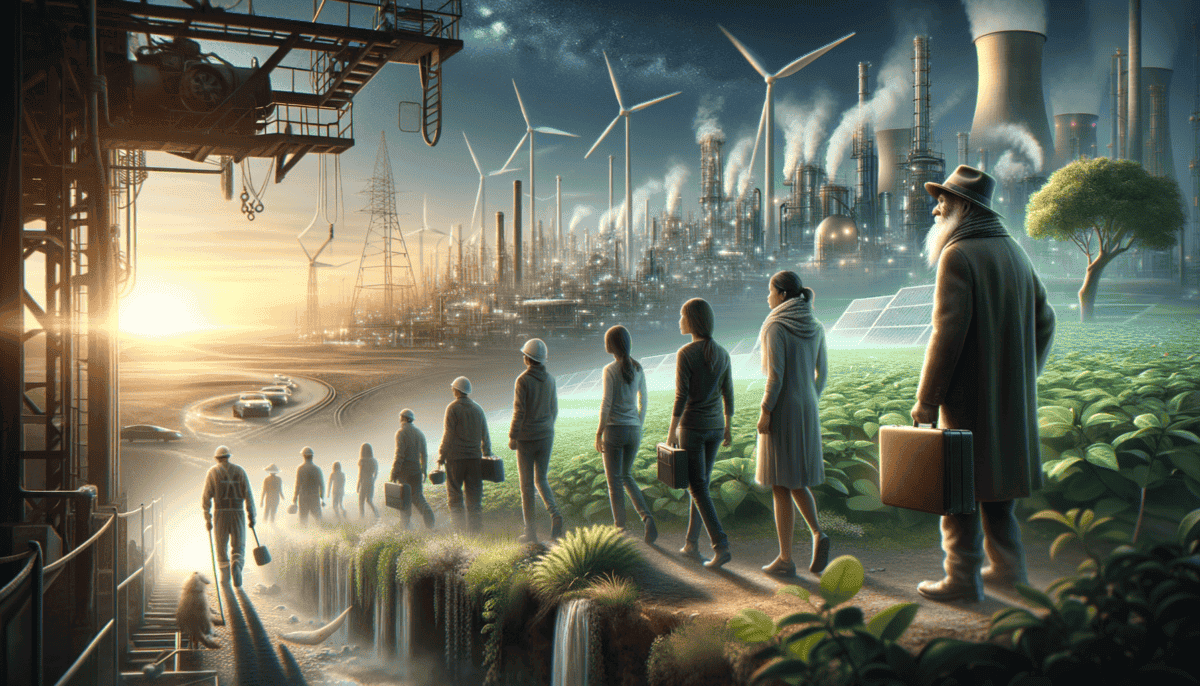
The old mining tower stood tall against the sunset, now wrapped in colorful flowers and climbing vines. A sign read “Millbrook Energy Innovation Center.”
A Special Day
Sarah smiled as she watched students file into the center. Ten years had passed since the first solar panel went up. Now, their little town was famous!
“Welcome to Energy Day!” she announced to the excited crowd. “Today we celebrate how far we’ve come!”
Stories of Change
Bob, now with gray hair but bright eyes, stood up to speak. “When I was young, I went deep underground for coal. Now my granddaughter Jenny builds robots that fix solar panels!”
Jenny, all grown up, waved from the back. Her small company helped towns around the world switch to clean energy.
“Grandpa taught me that change is scary, but it can lead to wonderful things,” Jenny shared with the crowd.
Green Dreams Growing
Where mining waste once lay, a beautiful park spread out. Children played near a pond where ducks swam. The air was clean and fresh.
Emma’s science center had grown into a big museum. Today’s special exhibit showed all the ways people make clean energy:
• Solar farms that float on lakes
• Wind turbines that look like art
• Buildings that make their own power
• Cars that run on sunshine
Helping Others
Mike, the former miner who learned to work on wind turbines, now traveled the world. He helped other mining towns make the same changes Millbrook did.
Looking Forward
As evening fell, families gathered for a special light show. Solar-powered lamps lit up the park in rainbow colors.
Sarah watched Jenny’s little girl play with a toy wind turbine. “What do you want to be when you grow up?” she asked.
“I want to build cities on the moon!” the child declared. “With clean energy, just like here!”
The Light Ahead
As stars twinkled above Millbrook, Sarah thought about their story. From dark mines to bright solar panels, from coal dust to clean air, they had changed more than just their town – they had changed hearts and minds.
The wind whistled through the turbines, singing a song of hope. Tomorrow would bring new challenges, but Millbrook knew how to face them – together, with courage and care for our Earth. The future was as limitless as the clean energy powering their dreams. ✨