

A Boy Named Alexander
In a small farmhouse in Scotland, a young boy named Alexander Fleming loved to explore the world around him. The year was 1888, and little Alex spent his days watching tiny creatures move through puddles and wondering about the smallest things that most people never noticed.
"Look, Mother!" Alex would call out excitedly. "The water is dancing with tiny swimmers!"
His mother smiled at his curiosity. Unlike other children who played with toys, Alex preferred to collect samples from nature and study them carefully. He was different, and that made him special.
As Alex grew older, he noticed how many people got sick and couldn't get better. In those days, there weren't many medicines that could help people fight infections. Even small cuts could become very dangerous. This made Alex sad, but it also made him want to learn more about medicine.
"One day," he told his family, "I want to help sick people get better."
His brothers laughed. "But you're just a farm boy!" they teased.
But Alex didn't let their words stop him. He studied hard in school and eventually moved to London to become a doctor. The city was very different from his quiet farm life!
“The most important thing in science is not to find something new, but to keep your eyes open to see what others might miss.” – Alexander Fleming
At St. Mary's Hospital in London, Dr. Fleming (as he was now called) spent hours looking through microscopes. He was especially interested in tiny living things called bacteria that could make people sick.
The Detective Doctor
Dr. Fleming became like a detective, but instead of looking for clues about crimes, he searched for ways to fight germs. He worked in a laboratory filled with glass bottles and special dishes called Petri dishes.
His co-workers sometimes thought he was messy because his desk was always covered with experiments. But Dr. Fleming knew that sometimes the most important discoveries come from unexpected places.
Every day, he would carefully study his experiments, taking notes and drawing pictures of what he saw. He was patient and never gave up, even when things didn't work out as planned.
"Nature has many secrets," he would say to his students. "We just have to learn how to listen and watch carefully."
Little did Dr. Fleming know that his careful attention to detail would soon lead to one of the biggest discoveries in medical history. His messy desk and curious mind would help him find something that would save millions of lives – but that's a story for another day!
The young farm boy who loved looking at puddles had grown into a respected scientist. But his greatest discovery was still waiting to happen, hiding in plain sight, ready to change the world forever.
A Lucky Mistake
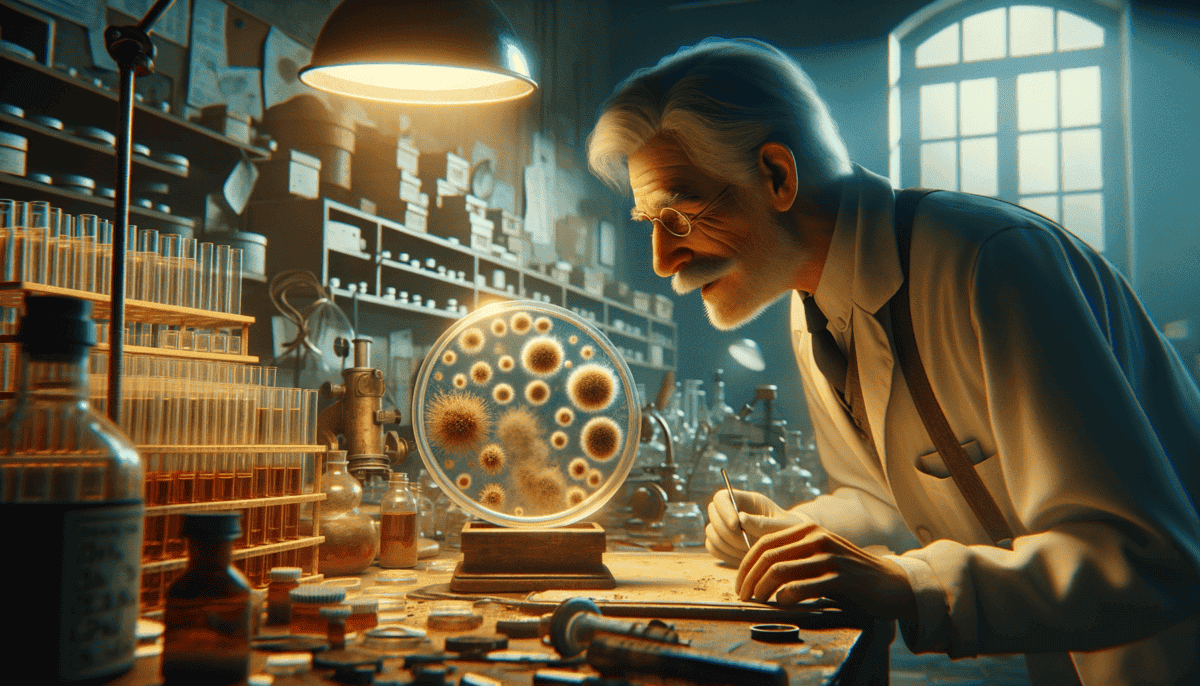
It was a warm September morning in 1928 when Dr. Fleming returned to his laboratory after a fun summer vacation. The lab was just as messy as he had left it, with stacks of glass dishes everywhere.
“Oh dear,” he said, looking at all the work he needed to clean up. “I should have tidied before I left!”
As Dr. Fleming started cleaning his Petri dishes, something strange caught his eye. One dish had spots of green fuzzy mold growing in it. But that wasn’t what made him excited. Around the mold, all the bacteria he had been growing were gone!
“How curious!” he exclaimed, picking up the dish for a closer look. “The mold seems to be killing the bacteria!”
The Magic Mold
Instead of throwing away the “ruined” dish like most people would, Dr. Fleming studied it carefully. He noticed something amazing: wherever the green mold grew, the harmful bacteria couldn’t survive.
“Sometimes when you think you’ve made a mistake, you’ve actually made a discovery!” – Dr. Fleming’s famous words to his students
Dr. Fleming was so excited that he called his assistant.
“Come quickly!” he said. “Look at what this mold is doing to the bacteria!”
His assistant peered through the microscope. “But sir, isn’t this dish ruined?”
“No, no!” Dr. Fleming smiled. “This might be something very special!”
The First Tests
Dr. Fleming worked quickly to learn more about his discovery. He carefully took tiny bits of the mold and grew them in new dishes. He wanted to see if the mold would always kill harmful bacteria.
Day after day, he tested the mold on different types of bacteria. Each time, he wrote down what happened in his notebook:
• The mold kills many harmful bacteria
• It doesn't hurt healthy cells
• It works even when mixed with water
Dr. Fleming named the bacteria-fighting substance “penicillin” after the mold that made it. He knew this could be important, but he had no idea just how many lives it would save!
“This could help sick people,” he told his colleagues. But growing enough of the mold to make medicine would be very hard.
Some of his fellow scientists didn’t believe the discovery was important. But Dr. Fleming kept working. He knew that sometimes the best ideas take time to grow, just like his special mold.
The messy laboratory that gave the world penicillin became a place of wonder. What started as a mistake would become one of the most important discoveries in medicine. But there were still many challenges ahead before this accidental discovery could help sick people.
The Uphill Battle
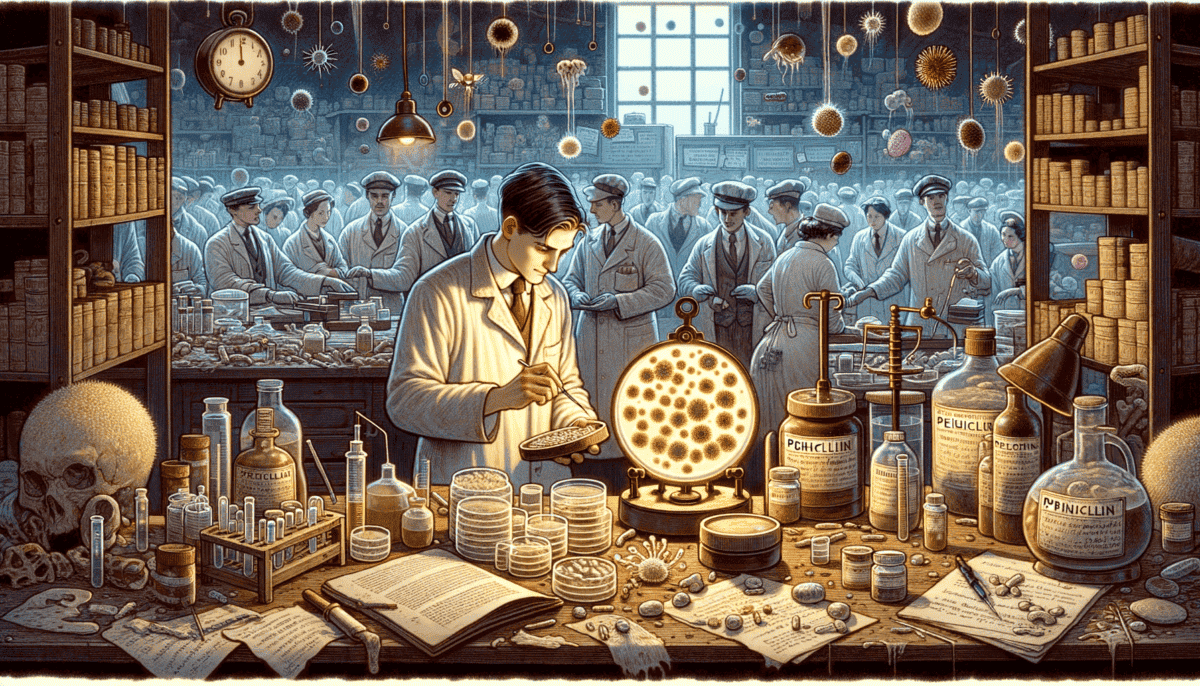
Dr. Fleming sat at his desk, frowning at the tiny samples of mold in front of him. Making penicillin work as medicine was harder than he thought. The special mold was very picky about how it grew.
“Why won’t you grow faster?” he asked the green fuzzy patches. But the mold just grew slowly, as mold always does.
Nobody Believes
Dr. Fleming told other scientists about his discovery. But many just shook their heads.
“Mold as medicine?” one doctor laughed. “That’s silly!”
“But look!” Dr. Fleming would say, showing them his tests. “It really works!”
“Sometimes the most important ideas seem strange at first. We must keep trying!” – Dr. Fleming
The Daily Struggle
Every morning, Dr. Fleming checked his mold samples. Some days were good:
- Monday: New mold growing well
- Tuesday: Killed lots of bad bacteria
- Wednesday: Made more samples
- Thursday: Mold stopped growing
- Friday: Had to start over again
The mold was tricky. Some days it grew well, other days it didn’t grow at all. Sometimes it got too hot in the lab, and the mold died. Other times, different kinds of mold grew instead of the special penicillin mold.
A Helping Hand
One day, a young scientist named Stuart came to help. He was excited about the penicillin discovery.
“Dr. Fleming,” Stuart said, “maybe we can try growing the mold in different ways?”
They tried new things:
• Using different foods for the mold
• Keeping the lab cooler
• Growing mold in special bottles
Some ideas worked better than others. But it still wasn’t enough to make medicine for sick people.
Hope Stays Alive
Even when things were hard, Dr. Fleming kept working. He knew his discovery was special. He wrote about penicillin in science magazines, hoping other scientists would help.
“One day,” he told Stuart, “someone will figure out how to make this work. We just have to keep trying!”
And Dr. Fleming was right! Soon, other scientists would become very interested in his moldy discovery. Big changes were coming, but first, they needed the right team to solve the penicillin puzzle.
The Team That Changed Everything
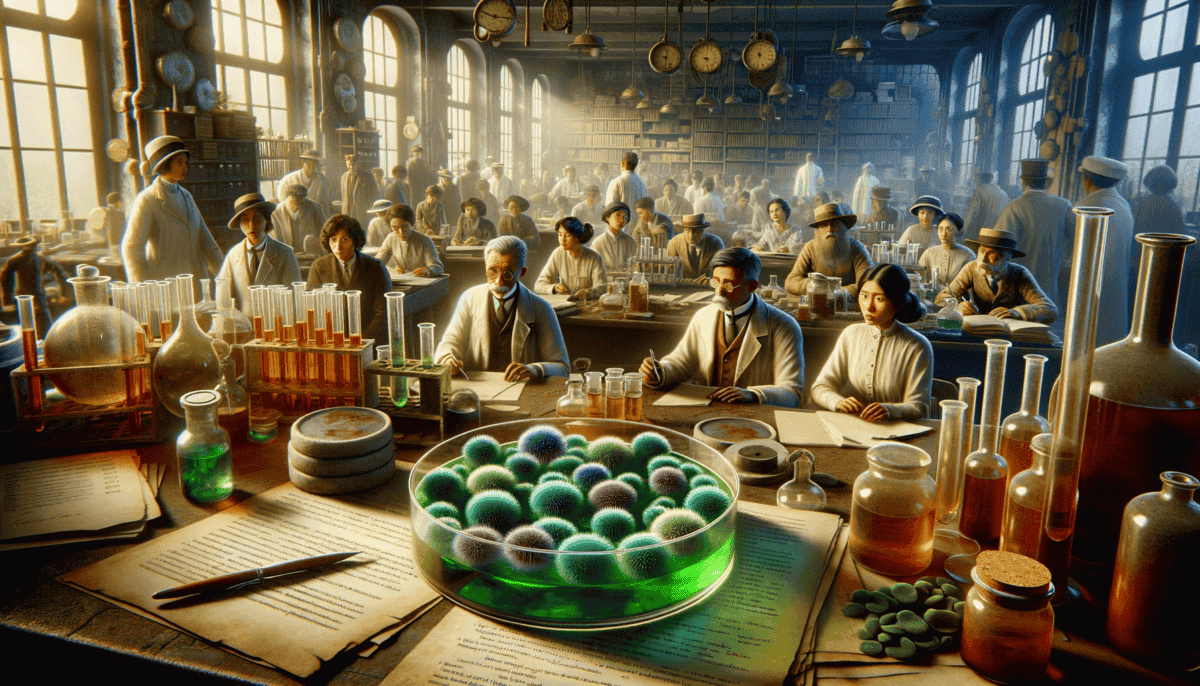
In a busy lab at Oxford University, two scientists were about to change the story of penicillin forever. Dr. Howard Florey and Dr. Ernst Chain had read about Dr. Fleming’s moldy discovery.
New Friends Join the Fight
“This could be amazing!” said Dr. Florey, looking at Dr. Fleming’s old papers. “If we can make it work.”
Dr. Chain nodded excitedly. “Let’s try something new!”
A Special Machine
The team built a cool machine to make pure penicillin. It was like a super-strong juice maker, but for medicine! They called it “the purifier.”
“Look!” Dr. Chain shouted one day. “The machine works! We got clean penicillin!”
“This is just the beginning. Now we can make enough to help people!” – Dr. Florey
Time to Test
The team needed to see if their pure penicillin could help sick people. But first, they tried it on mice.
The War Changes Everything
World War II was happening, and many soldiers were getting sick from injuries. The team knew they had to work faster.
“Our soldiers need this medicine,” said Dr. Florey. “We must hurry!”
The First Human Test
A police officer named Albert was very sick. The doctors had tried everything to help him.
“Would you like to try our new medicine?” Dr. Florey asked Albert.
“Yes, please,” Albert whispered. He was so sick he could barely talk.
The team gave Albert the penicillin. Everyone watched and waited. Then…
- Day 1: Albert felt a little better
- Day 2: His fever went down
- Day 3: He could sit up and eat
- Day 4: He smiled and talked
- Day 5: He was getting well!
Racing to Help More
The news spread fast! Other sick people wanted the new medicine too. But making enough was hard. The team worked day and night.
“We need bigger labs!” said Dr. Florey.
“And more scientists to help!” added Dr. Chain.
They wrote letters to America, asking for help to make more penicillin. Soon, big changes would come that would help save many lives. The medicine that started with Dr. Fleming’s moldy plate was about to become something much bigger!
A Medicine for the World
The little lab at Oxford was buzzing with excitement! Dr. Florey and Dr. Chain’s success with penicillin was big news. Now, they needed to make lots more of it.
Making More Medicine
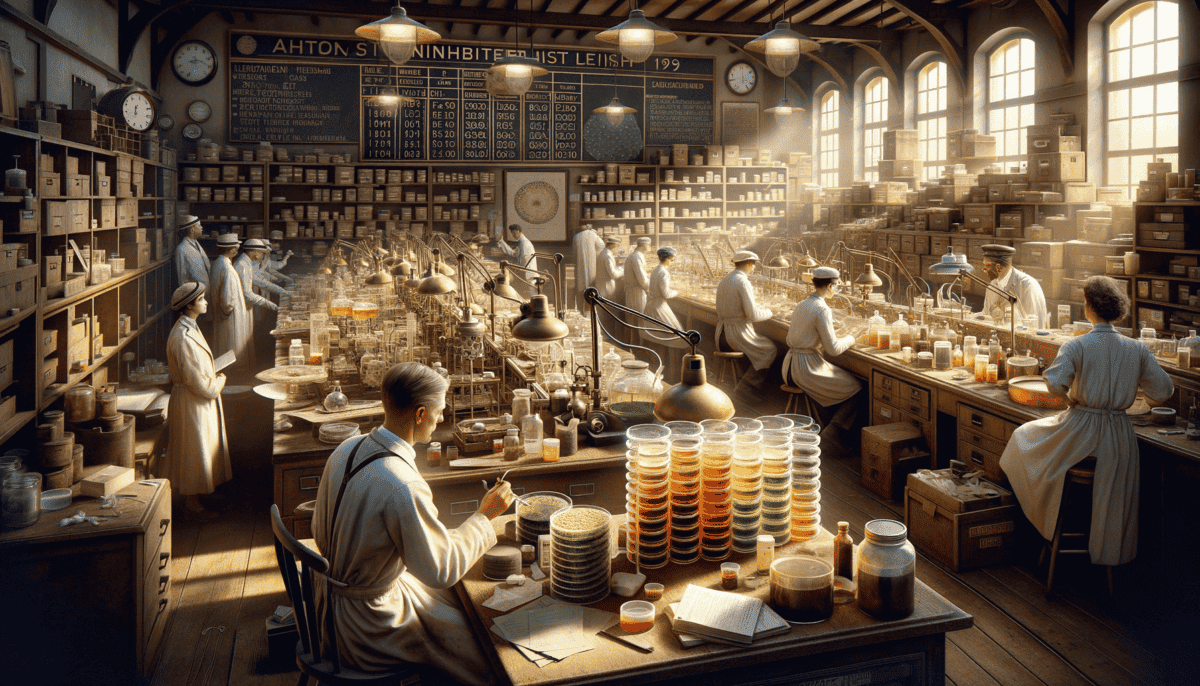
“We need bigger places to make penicillin,” Dr. Florey said. His team used everything they could find – even bedpans and milk bottles!
American scientists got the happy message. “We’ll help!” they said. Soon, big factories started making penicillin.
Helping Brave Soldiers
The war was still going on. Many soldiers got hurt and needed medicine.
“Every soldier who needs penicillin should get it,” said the doctors. “It will save their lives!”
And they were right! Before penicillin, even small cuts could make soldiers very sick. Now, they had a magic medicine that made them better.
Around the World
Soon, doctors everywhere wanted penicillin. But getting it to different places wasn’t easy.
“The medicine needs to stay cold,” explained Dr. Chain. “Like ice cream!”
Scientists made special boxes to keep penicillin cold while it traveled. They put it on planes, ships, and trucks.
Happy Doctors, Happy Patients
Doctors were amazed at how well penicillin worked. Things that used to make people very sick weren’t so scary anymore.
- Cuts got better faster
- Fevers went away
- People felt stronger
- Hospitals saved more lives
- Doctors could help more patients
Making It Better
Scientists kept working to make penicillin even better. They found ways to:
“Let’s make it easier to take,” said one scientist. Soon, they had pills instead of just shots!
“We can make it work faster,” said another. And they did!
A Special Thank You
People everywhere were grateful for penicillin. They wrote letters to thank the scientists:
“Dear Doctors, Your medicine saved my little girl. Thank you!” – A Happy Mom
“You helped our soldiers come home healthy. We can’t thank you enough!” – Army Doctor
The tiny mold that Dr. Fleming found by accident had become a mighty medicine. But this wasn’t the end of the story. Penicillin would keep helping people in new and amazing ways!
A Gift to The World
The tiny mold that Alexander Fleming found by accident changed everything! Now it was time to show the world just how special this discovery was.
A Big Prize
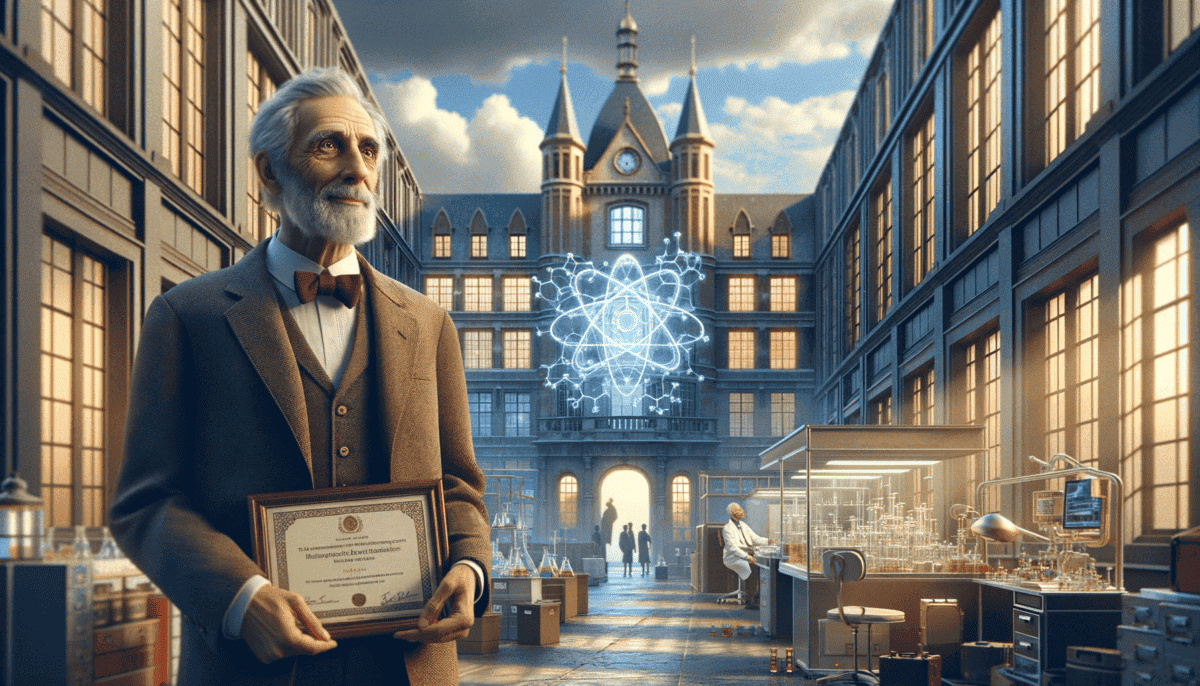
One day in 1945, Fleming got a special letter. “You’ve won the Nobel Prize!” it said. He would share it with Dr. Florey and Dr. Chain.
“I didn’t work alone,” Fleming said at the ceremony. “Many people helped make penicillin work. This prize belongs to all of us!”
Making More Medicines
Scientists got excited about finding new medicines like penicillin. They started looking everywhere – in dirt, plants, and even in the ocean!
“If one mold can help people, maybe there are more helpful things in nature,” the scientists said.
They were right! Soon they found many new medicines called antibiotics. Each one could fight different kinds of germs.
Helping More People
Doctors learned new ways to use penicillin. They could now:
- Help sick children get better faster
- Make sure moms stayed healthy when having babies
- Fix broken bones without worry
- Stop small cuts from getting bad
- Keep people healthy during operations
Today’s World
Now, doctors use penicillin and other antibiotics every day. When you get strep throat or an ear infection, these medicines help you feel better!
Learning from Fleming
Fleming taught us important lessons:
Always keep your eyes open – you might see something amazing!
Work together with others – big discoveries need many helpers.
Don’t give up – even when things seem hard.
The Story Lives On
Fleming died in 1955, but his discovery keeps helping people today. Every time someone takes antibiotics and gets better, they can thank Fleming and his lucky accident.
The story of penicillin shows us that wonderful things can happen when we stay curious and work together. Who knows what amazing discoveries are waiting to be found next? Maybe you’ll be the one to find something special that helps people!
Fleming’s tiny mold became a mighty medicine that changed the world. It reminds us that even small things can make a big difference. And that’s the most wonderful discovery of all! ⭐