

A Time of Giants
The sun rose over the desert, painting the sky in beautiful shades of orange and pink. Young Amenemhat stood at the base of the Great Pyramid, his neck craning up to see the top. The massive stone blocks stretched so high they seemed to touch the clouds!
"One day, I will help build something just as amazing," he whispered to himself, clutching his father's copper chisel tightly.
At just 12 years old, Amenemhat was learning to be a stonemason like his father. All around him, thousands of workers buzzed like busy bees, building the greatest wonder anyone had ever seen.
"Amenemhat!" called his father, Nakht. "Come help me with this limestone block!"
Amenemhat ran to his father's side. Together, they worked on smoothing the huge stone that would soon be part of Pharaoh Khufu's magnificent pyramid. The limestone was white and sparkly in the sunlight. ✨
"Father, why do we build such big pyramids?" Amenemhat asked, wiping sweat from his forehead.
Nakht smiled and sat down with his son for their morning meal of bread and figs. "The pyramid is a special home for our great Pharaoh Khufu when he travels to the afterlife. It must be perfect and strong enough to last forever!"
Building Dreams in Stone
Later that day, Amenemhat watched in awe as hundreds of workers pulled massive stone blocks up a long ramp. They used ropes and wooden sleds to move the heavy stones. Everyone worked together like a big team.
"Look there!" his father pointed to a group of important-looking men carrying scrolls. "Those are the royal architects. They plan every single block of the pyramid."
The architects wore clean white clothes and golden jewelry. One of them, Master Imhotep, stopped to watch Amenemhat and his father work.
"You have a skilled hand, young one," Master Imhotep said kindly. "Keep practicing, and one day you might help design pyramids yourself!"
Amenemhat beamed with pride. His heart felt as big as the pyramid itself!
The air was filled with the sounds of work songs as teams of builders pulled together. The smell of fresh-baked bread wafted from the nearby workers' village, where families lived while helping build the pyramid.
"Our time is special," Nakht told his son as they watched the sun set behind the growing pyramid. "Egypt has never been stronger or richer. We have good food, happy people, and the greatest builders in the world!"
But neither Amenemhat nor his father knew that changes were coming. Big changes that would affect everyone in Egypt, from the mighty Pharaoh to the youngest stone carrier.
The pyramid stood silent against the darkening sky, its smooth sides glowing in the last light of day. It would stand as a reminder of this golden time in Egypt's story – a time when people believed anything was possible, even building mountains of stone that reached up to touch the gods.
A Land in Change
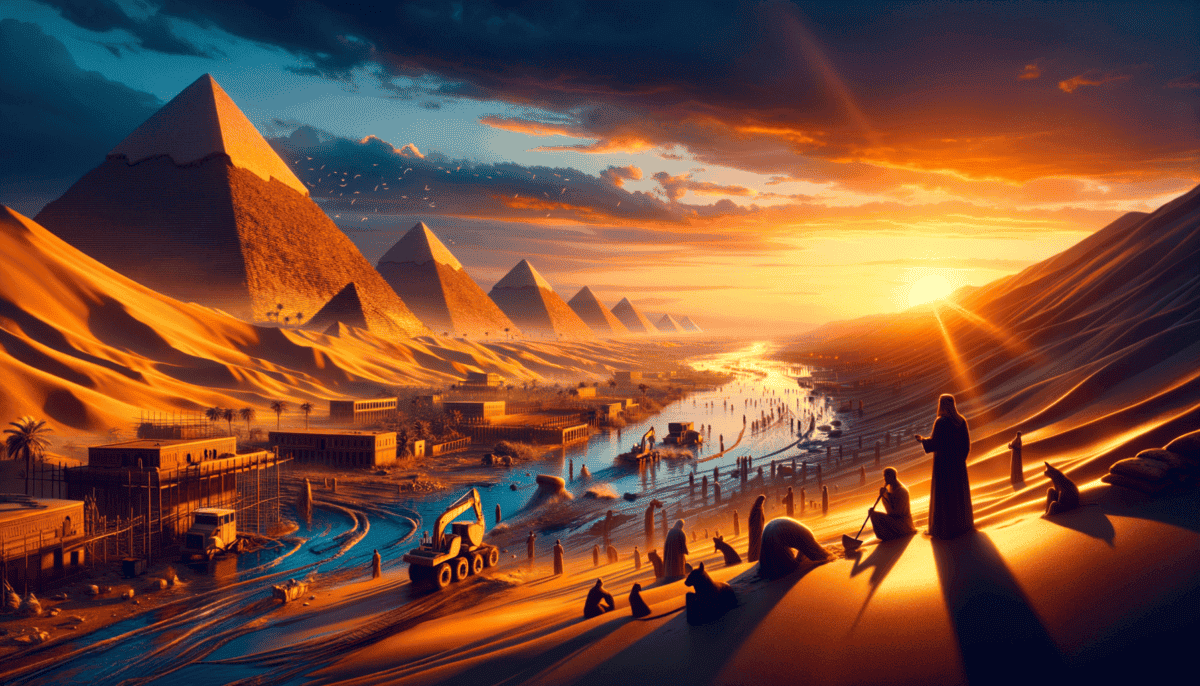
The morning sun felt different now. Amenemhat, a few months older and wiser, noticed the air was drier than usual. The mighty Nile, once predictable as the rising sun, was acting strange.
“Father, why is the water so low this year?” Amenemhat asked, looking at the river’s edge, which seemed farther away than before.
Nakht wiped his brow, concern creasing his face. “The floods aren’t coming like they used to, my son. Without enough water, the farms can’t grow as much food.”
• Less water for crops
• Fewer fish to catch
• Dry fields that once grew food
• Harder to move building stones by boat
At the construction site, things were different too. Fewer workers showed up each day. The once-busy ramps looked empty. Master Imhotep spent more time frowning at his scrolls than watching the builders work.
Trouble in the Treasury
“We must use smaller stones,” announced Master Imhotep one hot morning. “The royal treasury cannot pay for as many workers as before.”
Amenemhat watched as his father and the other workers looked at each other with worry. “But Master,” someone called out, “smaller stones mean weaker pyramids!”
“We have no choice,” Master Imhotep replied sadly. “Times are changing.”
In the workers’ village, people whispered about problems in the royal court. Some noble families were fighting with each other. Others refused to send workers or food to help build the pyramids.
Nature’s Warning
One evening, a huge dust storm rolled across the desert. The sky turned orange, then brown. ️ Everyone ran for shelter.
“The gods are angry,” whispered some workers.
“No,” said Nakht, holding Amenemhat close. “The desert is growing. It’s taking more land each year.”
When the storm cleared, they found some of their tools buried in sand. The ramps they used to move stones were partially covered too.
“How can we build pyramids if we must fight the sand itself?” asked a tired worker.
Master Imhotep gathered everyone together. “We must work smarter, not harder. Perhaps it’s time to think of new ways to build.”
That night, Amenemhat couldn’t sleep. He thought about the changes he’d seen – the low river, the hungry people, the endless sand. Even at his young age, he knew something big was happening to his beloved Egypt.
“Will we still build pyramids when I grow up?” he asked his father.
Nakht pulled his son close. “The future is like the desert, always shifting. But Egypt is strong. We will find new ways to show our greatness.”
Outside their window, the Great Pyramid stood tall against the starry sky. But now its shadow seemed shorter, as if even this mighty monument knew that change was coming to the land of the pharaohs. ⭐
Money Troubles and Empty Pockets
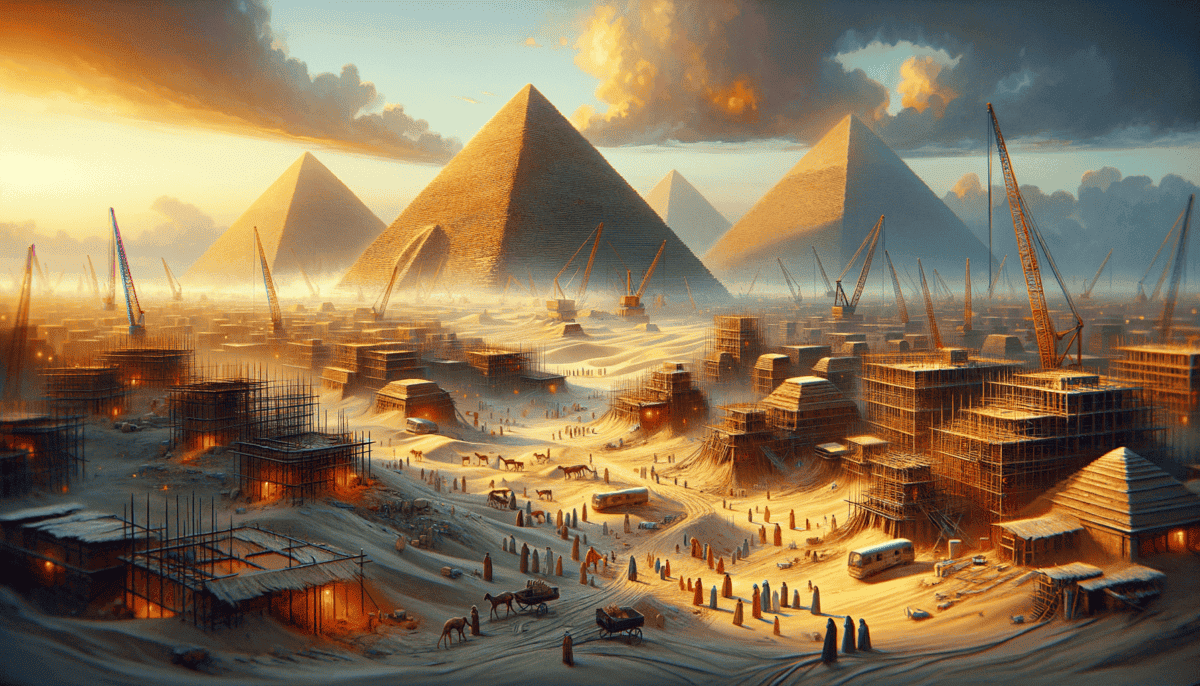
The market square was quieter than usual. Amenemhat noticed fewer vendors selling their goods. Where colorful stalls once bustled with trade, empty spaces now gathered dust.
“Why are there so few sellers today?” Amenemhat asked his friend Kebi, a pottery maker’s son.
“Nobody has enough copper pieces to buy things anymore,” Kebi replied, kicking a small stone. “My father says the royal treasury is running out of gold too.”
• Not enough food from farms
• Less gold from mines
• Fewer traders visiting Egypt
• Too many expensive building projects
The Workers’ Struggle
At the construction site, Master Imhotep called an important meeting. His face looked tired and worried.
“Friends,” he announced, “we must send half of our workers home. There isn’t enough food to feed everyone.”
Angry voices filled the air. “How will we feed our families?” someone shouted.
“What about the pyramid?” asked another.
Nakht stood quietly, holding his son’s hand. Amenemhat had never seen his father look so worried.
Fighting for Power
News arrived from the city that local governors were keeping more gold and food for themselves. They didn’t want to share with the pharaoh anymore.
“The governors say they need to take care of their own people first,” explained Nakht to his son. “But without everyone working together, Egypt grows weaker.”
Hard Times for Craftsmen
Kebi’s father sat in his empty workshop, looking at unsold pots. “Nobody wants beautiful things anymore,” he sighed. “They only buy what they need to survive.”
Even the stone carvers who made special marks on the pyramids were leaving. “We’ll find work in other cities,” they said. “Maybe things are better there.”
Amenemhat watched as his friend Kebi’s family packed their belongings. “Where will you go?” he asked sadly.
“South, where my uncle lives,” Kebi answered. “He says there’s still work there.”
Finding New Ways
Master Imhotep gathered the remaining workers. “We must build differently now,” he explained. “Instead of big stones, we’ll use smaller ones. Instead of solid pyramids, we’ll use more wood and clay inside.”
“But that’s not how we built the great pyramids!” protested an old worker.
“Times have changed,” Master Imhotep replied gently. “We must change too.”
That evening, Amenemhat helped his father count their copper pieces. There weren’t many left.
“What will happen to us?” Amenemhat asked.
Nakht smiled bravely. “We are Egyptians. We are strong. When the river changes its path, we don’t give up – we learn to sail new waters.”
As the sun set, casting long shadows through their small home, Amenemhat thought about his friend Kebi, the empty market, and the half-finished pyramid. The world he knew was changing, but perhaps his father was right – maybe they could find new ways to live in this changing Egypt.

New Ways to Remember Kings
The sun rose over a different Egypt. Amenemhat walked with his father to the temple, where people gathered to hear important news. The air felt heavy with change.
A New Kind of Tomb
“The pharaoh has spoken,” announced the priest. “Our great king will not build a pyramid. He will have a hidden tomb in the rocky hills instead.”
Whispers spread through the crowd. Amenemhat tugged at his father’s sleeve. “Why doesn’t the pharaoh want a pyramid?”
Nakht bent down to explain. “Pyramids are like big arrows pointing to treasure. Bad people keep trying to steal from them.”
• Hidden tombs in hills
• Smaller buildings
• Secret entrances
• Better protection from thieves
Different Beliefs
At the marketplace, Amenemhat heard older people talking about the old ways. “When I was young, everyone believed the pharaoh needed a pyramid to reach the sky,” said an old carpenter.
“Now we know the gods can find our kings anywhere,” replied a priestess kindly. “Even in a simple tomb.”
The Temple Grows
Master Imhotep now worked at the great temple. “Instead of building up,” he told Amenemhat, “we are building out. The temple will be bigger than ever!”
Amenemhat watched workers carve beautiful pictures on the temple walls. They showed the pharaoh helping people and making Egypt strong.
“These stories will last forever,” said a temple artist proudly. “Just like the pyramids, but in a different way.”
Keeping Secrets Safe
“Look at this,” Nakht showed his son a map. “The new royal tomb will be hidden where no one can find it.”
“But how will people remember the pharaoh?” Amenemhat asked.
“Through stories, songs, and temples,” smiled Nakht. “Sometimes the strongest memories are the ones we carry in our hearts.”
A City Changes
The pyramid builders’ village was changing too. Many houses were empty now. But new buildings appeared – workshops for artists, homes for priests, and places to make special objects for tombs.
“We’re not just pyramid builders anymore,” said Master Imhotep. “We’re becoming something new.” ⚒️
Learning New Skills
Amenemhat started learning to paint tomb walls. His small hands were good at drawing tiny pictures that told stories.
“You’re painting the pharaoh’s journey to the afterlife,” his teacher explained. “This is just as important as building pyramids.”
At home that night, Amenemhat drew pictures in the sand. “I’m going to be a tomb painter,” he told his father proudly.
Nakht smiled. “The gods give us many ways to honor them. The pyramids taught us to reach for the sky. Now we’re learning new lessons about what matters most.” ⭐
Night Thoughts
As darkness fell, Amenemhat looked at the great pyramid silhouetted against the stars. It would always stand there, reminding everyone of the old days. But maybe change wasn’t so bad. Egypt was finding new ways to be great.
He thought about the hidden tomb he would help decorate. It wouldn’t touch the sky like a pyramid, but it would tell beautiful stories that would last forever. Perhaps that was a different kind of magic.
The Last Great Stone
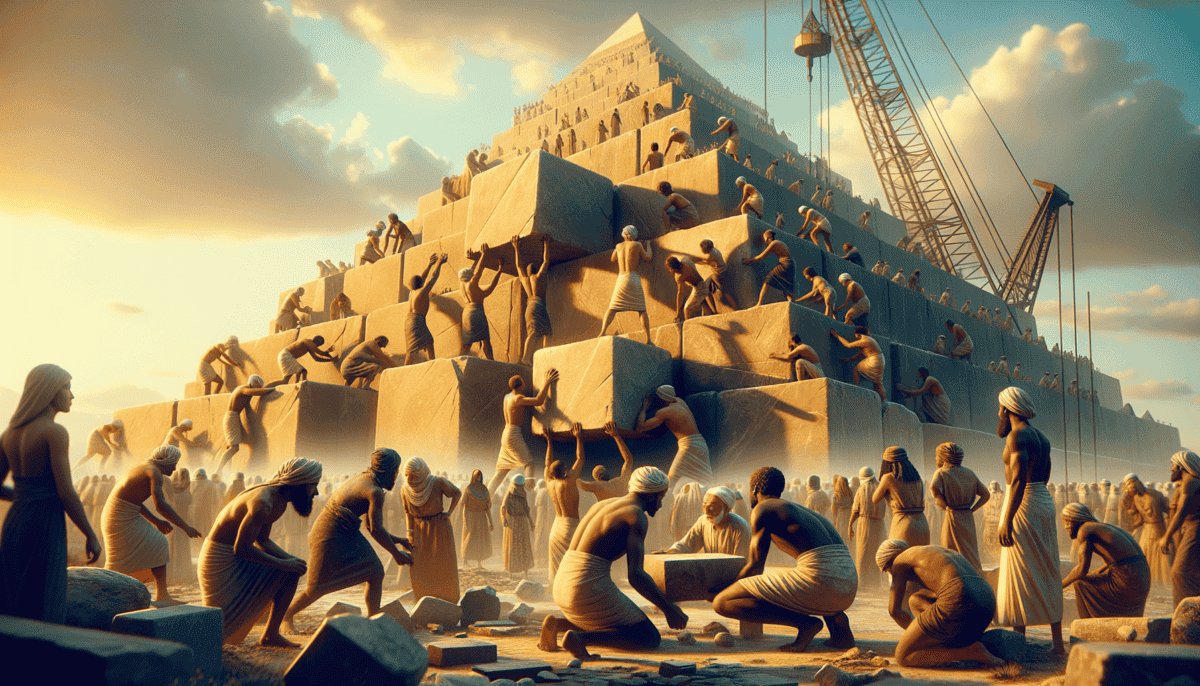
The morning sun cast long shadows across the construction site where Master Builder Kagemni stood watching his workers struggle. The limestone block, meant for Pharaoh Khendjer’s pyramid, wouldn’t budge.
A Difficult Start
“Pull harder!” shouted Kagemni. But even with fifty men pulling the ropes, the stone barely moved.
“The ground is too soft,” said Ipuy, his young assistant. “The wheels keep sinking.”
Kagemni wiped sweat from his brow. Building pyramids wasn’t as easy as it used to be. The good limestone quarries were empty now. They had to use smaller, weaker stones from far away. ️
• Stones were smaller
• Workers were fewer
• Materials cost more
• Ground was less stable
Missing Workers
“Where is everyone?” asked Pharaoh Khendjer, visiting the site. The construction area seemed empty compared to stories of old pyramid buildings.
“Many workers left to farm their lands, Great One,” Kagemni explained. “They can’t afford to work here full time anymore.”
The pharaoh frowned. His pyramid would be much smaller than the old ones. But even this was hard to build.
A Crack Appears
Later that day, a scary sound echoed across the site. CRACK! A stone in the pyramid’s base had split.
“The foundation is shifting!” Ipuy called out. “The ground is too wet from the floods!”
Kagemni’s heart sank. They would have to start that section again. More delays, more costs, more problems. ⚠️
The Treasury’s Warning
The royal treasurer arrived with bad news. “My king,” he bowed to Pharaoh Khendjer, “we cannot keep spending so much on the pyramid.”
“But every pharaoh needs a pyramid!” Khendjer protested.
“Perhaps,” said the treasurer gently, “it’s time for a different way.”
A Hard Choice
That evening, Kagemni found Ipuy staring at the Great Pyramid in the distance. It looked golden in the sunset light.
“Will we ever build one that big again?” Ipuy asked.
Kagemni shook his head. “Those days are ending, young one. But maybe that’s okay. Egypt is changing.”
The Final Decision
The next morning, Pharaoh Khendjer made an announcement. “We will finish what we have built,” he said, “but make it smaller. This will be the last royal pyramid.”
The workers were quiet. They knew it was the end of something big.
“You are all still great builders,” Kagemni told his team. “Egypt will need you for other things – temples, tombs, palaces. Our skills will not be lost.” ️
Looking Forward
As the sun set on the last day of pyramid building, Ipuy watched the workers pack up their tools.
“What will you do now, Master Kagemni?” he asked.
“I will teach others to build beautiful things,” smiled Kagemni. “Different things. The pyramids taught us we can touch the sky. Now we’ll learn new ways to reach the gods.” ⭐
Together they walked home as stars appeared above the pyramid’s peak. Though this was the end of pyramid building, it wasn’t the end of Egyptian greatness. New wonders waited to be built.
The Dawn of Change
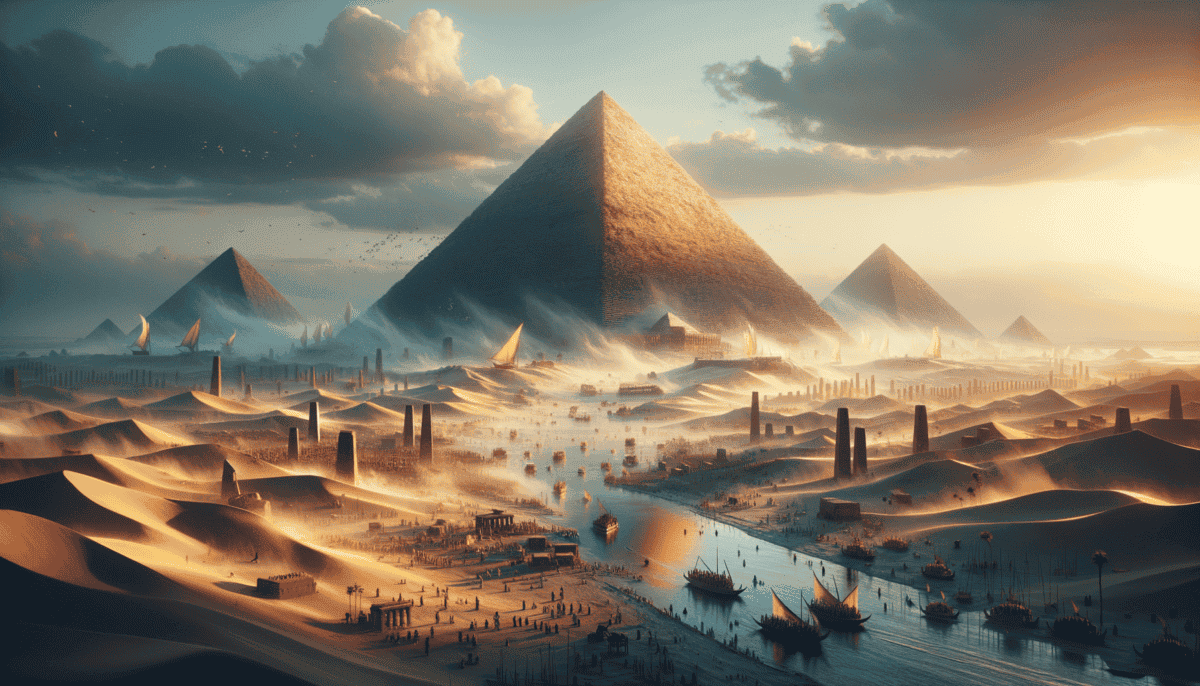
The sun rose over a different Egypt. Ten years had passed since the last pyramid stones were laid. Ipuy, now a master builder himself, walked through the busy streets of Thebes.
A New Way to Build
“Look, Master Ipuy!” called his young apprentice, Mahu. “The new royal tomb is hidden so well in the cliffs!”
Ipuy smiled. The Valley of the Kings was their new project. Instead of building up into the sky, they now carved deep into the mountains. The tombs were secret and safe. ️
• Hidden in mountains
• Decorated inside
• Safer from robbers
• Used less stone
Meeting an Old Friend
At the building site, Ipuy found his old teacher Kagemni. Though older now, his eyes still sparkled with wisdom.
“The workers seem happy,” Kagemni noted, watching teams carve beautiful pictures on the tomb walls.
“Yes,” Ipuy agreed. “They can go home to their farms each night. And the pharaoh can pay them better now.”
A Better Way
Inside the new tomb, artists painted colorful scenes. The walls glowed with stories of Egyptian life.
“These tombs tell more about our people than pyramids ever did,” said Mahu.
“That’s right,” Ipuy nodded. “And they use the gifts of nature – the mountains themselves – instead of fighting to build against them.”
Remembering the Past
Later, they climbed a hill to watch the sunset. The old pyramids stood far in the distance, their tips catching the last golden light.
“Do you miss building them?” Mahu asked.
“Sometimes,” said Ipuy. “But Egypt is like the Nile – always flowing, always changing. We found a smarter way to honor our kings.”
The Future Beckons
Walking back to the city, they passed temples and palaces under construction. Egypt was building more than ever, just differently.
“The pyramids taught us we could do amazing things,” Kagemni told them. “Now we’re doing amazing things in new ways.”
Ipuy watched young workers learning to carve and paint. “The old ways led us here,” he said. “But the new ways will lead us forward.”
Legacy of Wonder
That night, Ipuy wrote in his journal: “The pyramids were not our end. They were our beginning. They taught us to dream big, work together, and reach for the stars. Now we build with wisdom instead of just size. Egypt grows stronger by changing.”
Looking out his window at the starlit sky, he smiled. The great pyramids still watched over Egypt, not as symbols of ending, but as reminders that every end brings a new beginning. Their spirit lived on in every stone carved, every wall painted, and every Egyptian heart that dreamed of building something wonderful. ⭐
The age of pyramids had ended, but Egypt’s story continued. In their own way, the hidden tombs, beautiful temples, and mighty palaces reached just as high as the pyramids – not in stone, but in spirit. And that was a wonder that would last forever.