

The Birth of a Guardian
On a chilly morning in 1908, President Theodore Roosevelt sat at his desk in the White House. He was worried. Bad guys were causing trouble all across America, but there wasn't anyone to stop them. Local police could only work in their own towns. The country needed something bigger – much bigger! ️
"We need special agents who can chase criminals anywhere in the country," Roosevelt said, pounding his fist on the desk. His famous mustache twitched as he spoke.
And so, the Bureau of Investigation was born. It was tiny at first – just 34 agents! They worked from a small office in Washington, D.C., sharing desks and typewriters. These first agents weren't allowed to carry guns or make arrests. They could only write reports about crimes.
Young Stanley Morrison was one of these early agents. "We didn't even have badges," he wrote in his diary. "People would laugh when we said we were federal agents. They thought we were just fancy paper-pushers!"
But everything changed when a young man named J. Edgar Hoover joined the Bureau. He was short and spoke quickly, but his brain was sharp as a tack.
"This Bureau needs rules!" Hoover declared. "Our agents should be the best of the best!"
Here's what Hoover wanted in his agents:
- Must be smart and go to college
- Must be honest and brave
- Must be in good shape
- Must dress nicely in suits
- Must follow all the rules exactly
Soon, the Bureau started to grow. They got new tools like fingerprint machines and better cameras. Agents finally got badges and could make arrests. They even got cool black cars to drive around in!
Little Tommy, a newspaper boy in Washington, watched the agents walking to work each morning. "They look like movie stars in their nice suits," he told his friend Jimmy. "But they're real heroes fighting bad guys!"
By 1935, the Bureau had a new name: The Federal Bureau of Investigation – the FBI! They had offices in big cities across America. Their fancy laboratory could solve mysteries using science. The days of being "fancy paper-pushers" were long gone.
“We are building something special here,” Hoover told his agents. “We will be the shield that protects America.”
People started noticing how good the FBI was at catching criminals. Bank robbers couldn't just run to another state anymore – the FBI would follow them! Bad guys started getting nervous when they heard three special words:
"FBI! Open up!"
Detective James Wilson, who worked with the FBI in Chicago, remembered those early days: "We went from being a joke to being the most respected law agency in America. Even the local police started asking us for help!"
The little agency that started with just 34 agents had grown into something amazing. They had nice offices, fast cars, modern tools, and brave agents ready to protect people everywhere in America.
But this was just the beginning. The FBI would soon face bigger challenges – dangerous gangsters, clever spies, and mysteries that seemed impossible to solve. They would need every bit of their training, all their new tools, and lots of courage for what was coming next…
Night fell over Washington, D.C. In the FBI building, lights still burned as agents worked late. They had no idea that soon, they would face their biggest test yet – a wave of dangerous criminals unlike anything America had ever seen before…
Gangsters and G-Men
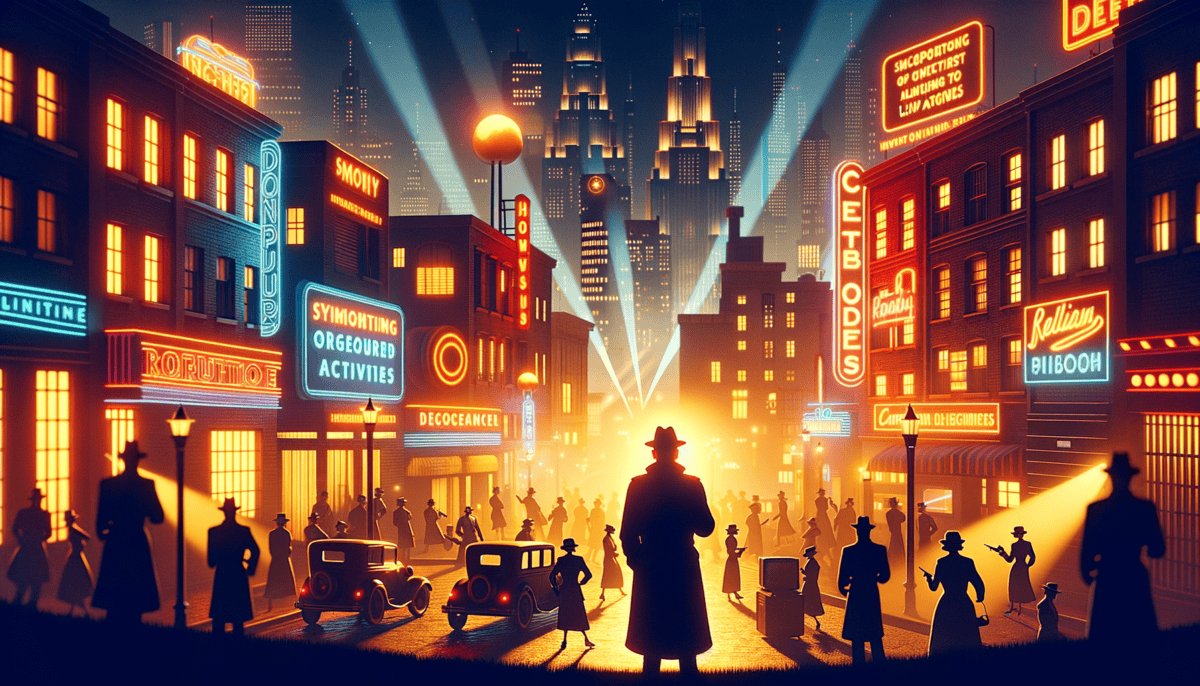
The streets of Chicago buzzed with excitement one morning in 1933. People crowded around newspaper stands, pointing at the bold headlines: “BANK ROBBERS STRIKE AGAIN!”
America was changing fast. Bad guys called gangsters were causing trouble everywhere. The scariest was John Dillinger, who robbed banks and always seemed to escape!
“These criminals think they’re smarter than us,” said FBI Director Hoover, adjusting his bow tie. “It’s time to show them they’re wrong!”
• Fast cars faster than gangsters’ cars
• Better guns to protect agents
• Radio systems to talk to each other
• Special cameras to take secret pictures
• Fingerprint files to catch bad guys
Agent Melvin Purvis sat at his desk, looking at pictures of Dillinger. “We need to be clever,” he told his team. “These gangsters are tricky, but we’re trickier!” ️
The FBI started doing things nobody had tried before. They made wanted posters with criminals’ pictures and put them everywhere. They even showed them in movie theaters!
“For the first time, ordinary people could help catch bad guys,” wrote Agent Sarah Thompson in her notebook. “Everyone became our eyes and ears!”
The newspapers loved writing about the FBI. They called the agents “G-Men” – Government Men. Kids started playing “G-Men versus Gangsters” in the streets. Everyone wanted to be a G-Man!
One day, a lady named Anna saw Dillinger at a movie theater. She knew his face from the posters! She told the FBI right away. That night, agents waited outside.
“Stop right there, Dillinger!” they shouted when he came out. It was their biggest catch ever!
The FBI was getting better and better at catching criminals. They learned to:
✨ Work together as teams
✨ Use science to solve crimes
✨ Talk to people everywhere
✨ Move quickly when needed
✨ Never give up!
“Remember when people laughed at us?” Agent Tom Baker asked his partner. “Now they cheer when we show up!”
Little Bobby watched from his window as FBI cars zoomed past. “When I grow up,” he told his mom, “I want to be a G-Man and catch bad guys too!”
The FBI was changing how America fought crime. They showed that nobody was above the law – not even the most famous gangsters. But while they were busy catching bank robbers, something else was happening…
Far away, in other countries, people were planning bad things. They weren’t just robbers – they were spies! The FBI would need all their smarts and bravery for what was coming next. A big war was about to start, and America would need its G-Men more than ever before…
As the sun set over FBI headquarters, agents were already preparing for their next big challenge. Strange reports were coming in from across the ocean, and Director Hoover knew that catching gangsters was just the beginning…
Spies in the Shadows
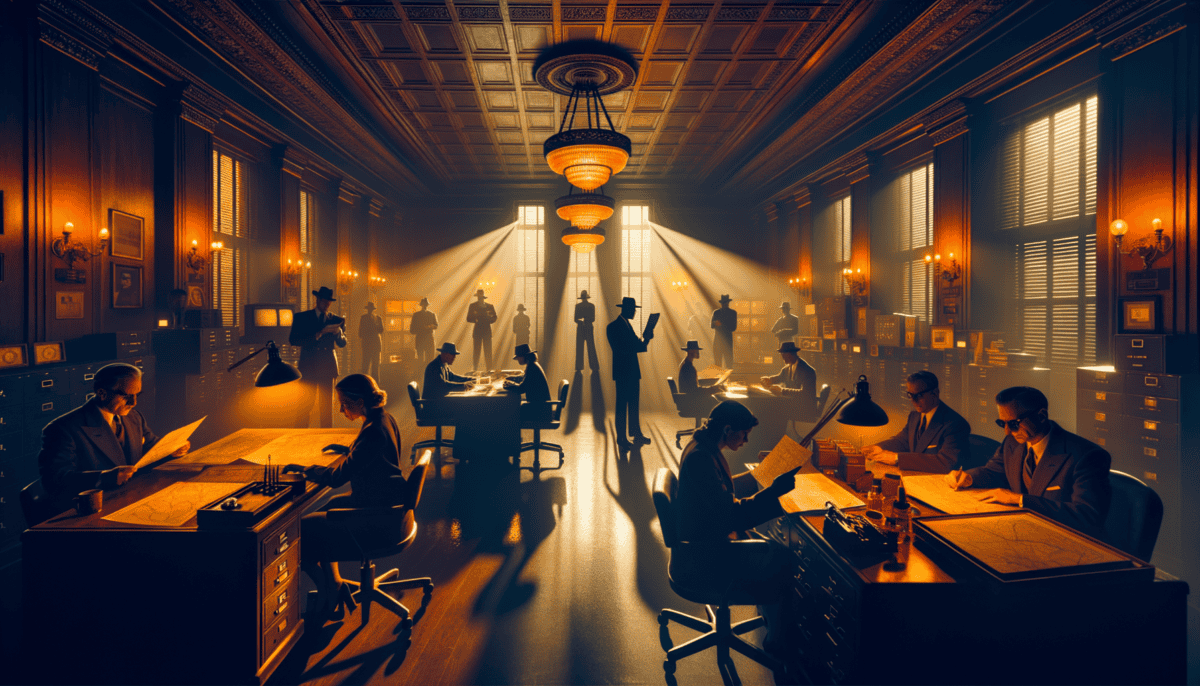
The year was 1939, and dark clouds were gathering over Europe. FBI Agent Mary Wilson stood at her office window, watching rain fall on Washington DC’s busy streets. ️
“Something big is happening,” Director Hoover announced during their morning meeting. “We’re not just chasing bank robbers anymore. There are spies in America!” ️
“But how do we catch someone who doesn’t want to be seen?” Agent Wilson wondered aloud.
The FBI had to learn new tricks fast. Spies were different from gangsters – they didn’t rob banks or make a lot of noise. They worked in secret, trying to steal important information about America.
Taking pictures of factories
Writing messages in secret code
Meeting people in strange places
Using fake names
Sending radio signals at night
“Look at this!” Agent Wilson called to her partner. She held up a strange letter full of dots and dashes. “It’s a secret message!”
The FBI created special teams to break these codes. They worked day and night in hidden rooms, turning mysterious dots and dashes into real words.
“ENEMY SHIPS LEAVING PORT” read one decoded message. The FBI quickly told the Navy, who stopped the ships!
Agent Tom Parker discovered something interesting at a local camera shop:
“Sir, these photographs show our military bases,” he reported to Hoover. “But they were taken from strange angles – like someone was hiding.”
The FBI taught regular Americans to help spot spies. They made radio shows and movies about being careful with secret information. Even kids helped by collecting scrap metal for the war effort! ♂️
“Remember,” Agent Wilson told a group of factory workers, “the enemy is listening. Be careful what you say!”
One day, a young FBI agent named James noticed something odd at a beach house. Every night at midnight, strange lights blinked from the window. Was someone sending signals to enemy submarines?
The FBI watched the house carefully. Sure enough, they caught a group of spies with a secret radio! It was their biggest spy case yet.
“This is different from chasing Dillinger,” Agent Wilson wrote in her diary. “The enemy isn’t just on our streets anymore – they’re hiding in plain sight.”
The FBI got better at finding spies. They learned to:
Watch without being seen
Listen to secret radio signals
Work with other countries’ police
Take pictures from far away
Solve complicated puzzles
As World War II raged on, the FBI protected America’s secrets. They caught hundreds of spies and stopped many secret plans. They weren’t just police anymore – they were America’s secret defenders! ️
Late one night, Agent Wilson looked at a map covered in pins showing where they’d caught spies. “We’re winning this hidden war,” she smiled. “But I wonder what new challenges tomorrow will bring…”
Outside her window, city lights twinkled like stars. America was changing again. New battles for justice were coming – battles that would test the FBI in ways they never imagined…
Watching and Wondering
The summer of 1963 was hot in Washington D.C. Agent Sarah Miller wiped her forehead as she looked at the pile of papers on her desk.
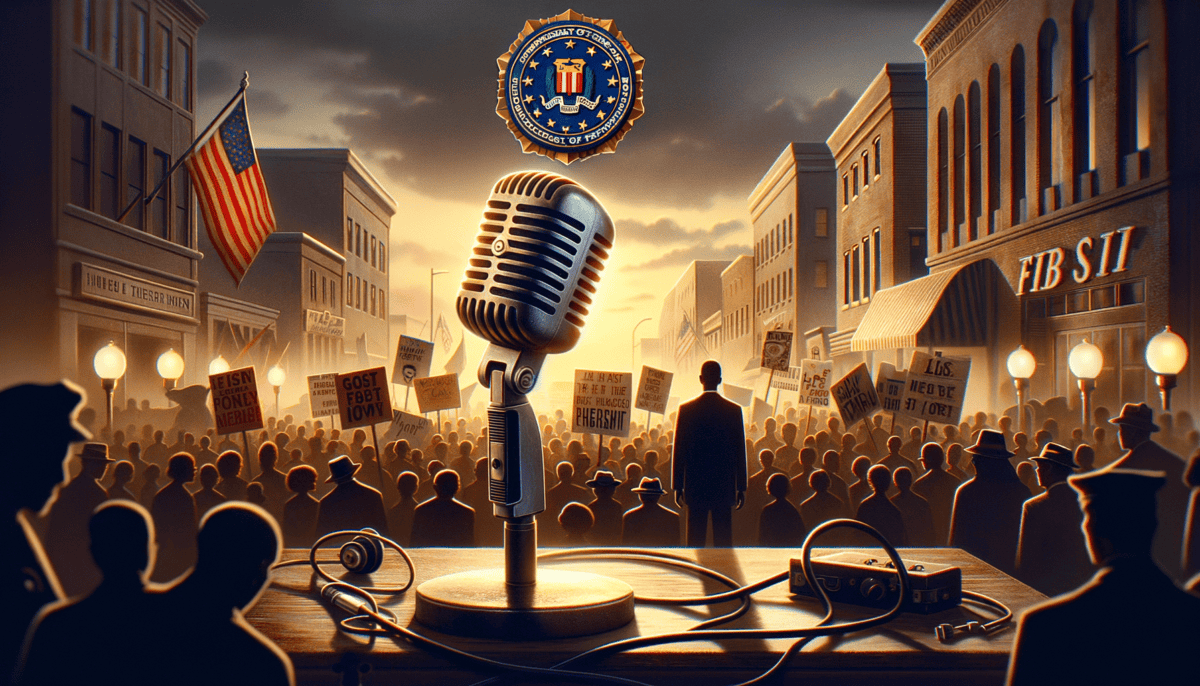
“We need to watch these people,” Director Hoover’s memo read. “They might be dangerous.” But Sarah wasn’t so sure. The people in the photos were just asking for equal rights.
“Sometimes being right and following orders are two different things,” her partner Tom whispered.
The FBI was changing again. They weren’t just catching spies anymore. Now they were watching American people who wanted change. It made many agents feel uncomfortable.
• Hidden microphones
• Special cameras
• Recording devices
• Telephone taps
• Secret listening posts
“But these are Americans,” Sarah said during a meeting. “Don’t they have rights too?”
Director Hoover frowned. “We must protect America from anyone who might cause trouble,” he replied. But Sarah remembered what her father, an old FBI agent, used to say:
“The hardest part of protecting freedom is knowing when to step back.”
One day, Sarah met Dr. King’s wife, Coretta, at a coffee shop. She wasn’t supposed to talk to her, just watch. But Coretta smiled and offered her a seat.
“We’re all just trying to make things better,” Coretta said kindly. “Even those who don’t understand us yet.”
Sarah went home that night and wrote in her diary:
“Today I learned that sometimes the people we’re told to fear are the ones trying hardest to help.”
The FBI kept getting new technology. They could hear conversations through walls and take pictures from far away. But with each new tool came a big question: When should they use it?
“Look at this!” Tom showed Sarah a tiny microphone. “We can hide it anywhere.” But Sarah remembered Coretta’s smile and wondered if they should.
More agents started asking questions:
“Are we protecting America or just scaring people?”
“When does watching become wrong?”
“Who watches the watchers?”
One young agent, James Cooper, found proof that some groups were really planning bad things. “See?” Hoover said. “This is why we need to watch everyone.”
But Sarah knew better. “If we watch everyone,” she said quietly, “we might miss the real dangers while looking at innocent people.”
The FBI learned important lessons during this time:
Rights matter most when they’re hardest to protect
⚖️ Power needs limits to stay good
❤️ Understanding is better than fear
Change can be good, even when it’s scary
Late one night, Sarah looked at old case files. She saw pictures of gangsters, spies, and now – Americans asking for their rights. The FBI was in the middle of it all, trying to figure out what was right.
As she drove home, protest songs played softly on her car radio. The world was changing fast. The FBI would need to change too, but how? New challenges were coming – challenges that would shake the Bureau to its core…
A New Mission Emerges
The morning of September 11, 2001, changed everything for the FBI. Agent James Cooper stared at the TV screen in shock, coffee cup frozen halfway to his mouth.
“Everyone to the command center, NOW!” Director Mueller’s voice echoed through the halls of the J. Edgar Hoover Building. Agents rushed from their desks, leaving half-eaten breakfasts behind. ♀️
“This is no longer just about catching bad guys,” Mueller told the packed room. “We need to stop attacks before they happen.”
Sarah Miller, now a senior agent, remembered her early days watching civil rights leaders. This felt different. Much different.
• Finding hidden terrorists
• Stopping attacks early
• Working with other countries
• Using better technology
• Protecting important places
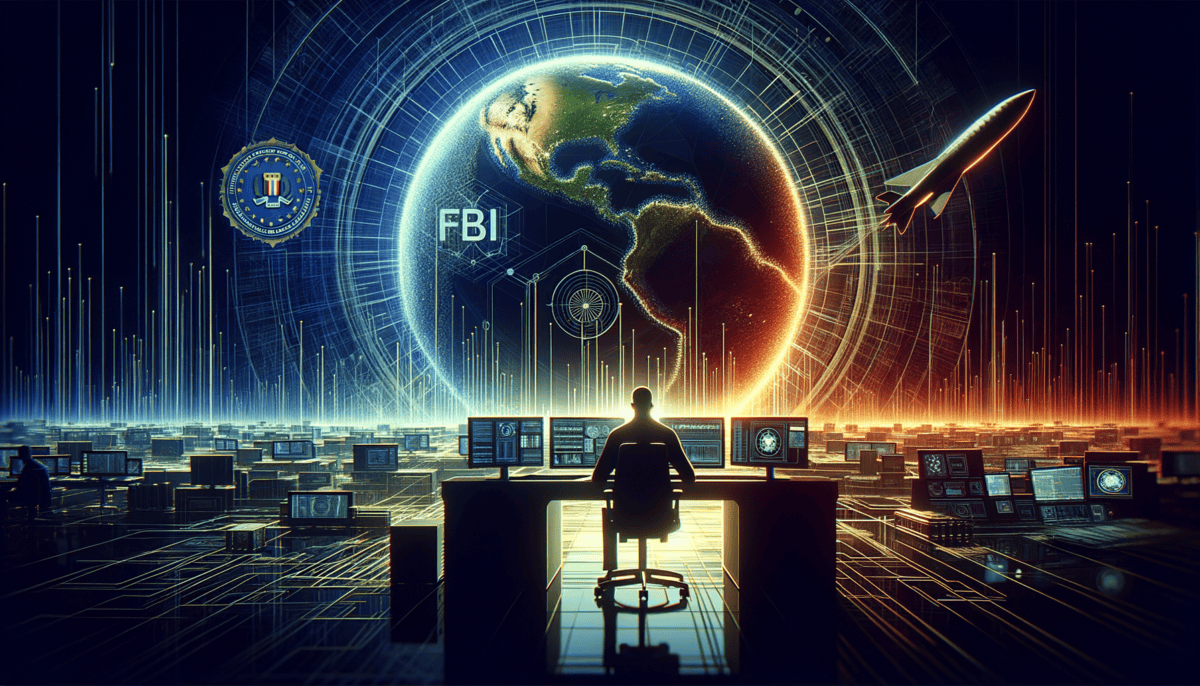
“We’re going to have to learn new ways to work,” Sarah told her team. Young Agent Maria Rodriguez nodded eagerly, already pulling up satellite maps on her computer. ️
“Look at this,” Maria pointed to her screen. “We can track bad guys anywhere in the world now!”
The FBI started working more with friends from other countries. Agent Cooper flew to London to meet British helpers:
“The bad guys don’t care about borders,” said British Agent Smith. “So neither can we.”
Back home, the FBI got cool new tools:
Smart computers that could spot danger patterns
Special phones that couldn’t be traced
Tiny cameras that could see in the dark
“Remember when we thought a hidden microphone was high-tech?” Sarah laughed with Maria. But her smile faded as she added, “With great tools comes great responsibility.”
“We’re stronger when we work together,” Director Mueller often said. “But we must never forget to protect people’s rights while we protect their safety.”
One day, Maria’s computer program found something strange:
“Someone’s buying weird stuff in Detroit,” she said. “Just like that manual said to watch for!”
The team moved fast. Working with local police and friendly countries, they stopped a bad thing from happening. No one ever knew how close it came. That’s how the FBI liked it. ♀️
Agent Cooper looked at his old badge from the 1990s. “We’re not the same FBI anymore,” he thought. “We’re better.”
Sarah watched new agents training. They learned about computers and satellites, but also about being fair and protecting rights. She smiled, remembering Coretta’s words from long ago about making things better.
The FBI learned new lessons:
• Bad guys use new tricks
• Friends make us stronger
• Technology helps but people matter most
• Being quick is good, being right is better
As the sun set over Washington, agents in the cyber division watched their screens. Others packed for flights to far places. In labs, scientists tested new tools. The FBI was changing again, racing to stay ahead of new dangers in a faster, more connected world…
Guardians of Tomorrow
The sun rises over the gleaming FBI Academy in Quantico. New agent Tommy Chen adjusts his tie, excited for his first day.
“Welcome to the modern FBI,” announces Training Director Lisa Wong. “You’re joining at an amazing time.” ⭐
“Today’s FBI fights crime in ways we never imagined before,” she explains with a smile.
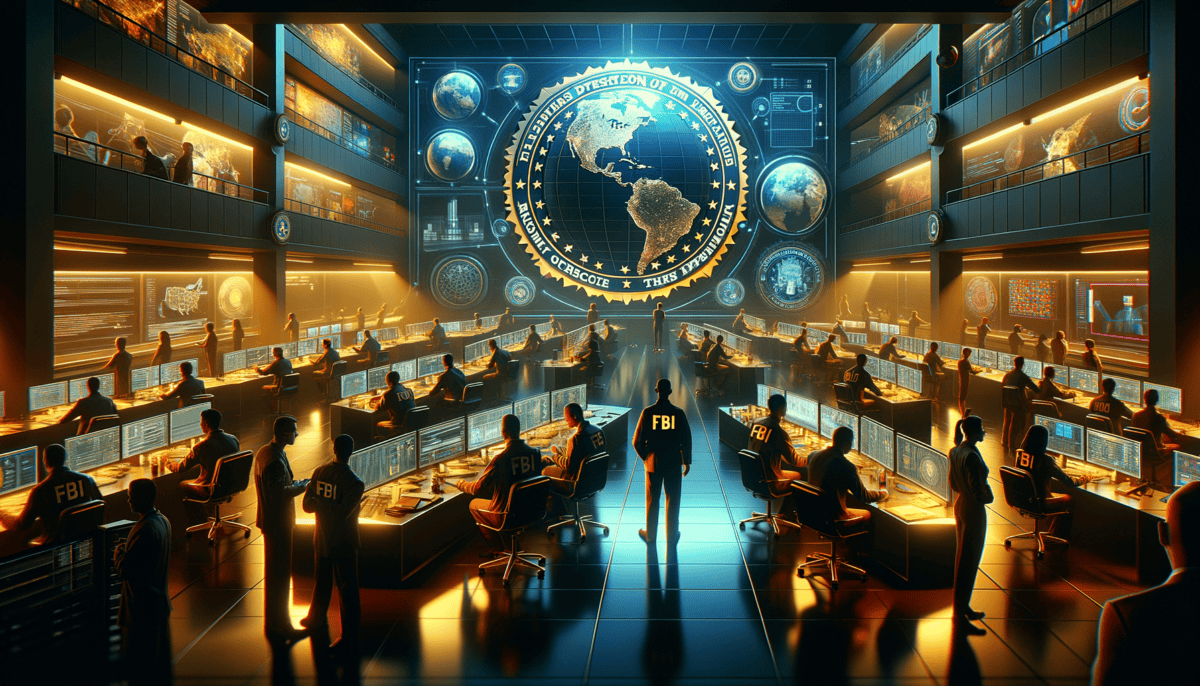
In the cyber lab, Agent Maria Rodriguez (now the head of Digital Defense) shows Tommy rows of glowing screens:
• Super-smart computers
• Special robots that help solve crimes
• Digital money trackers
• Space satellites
• Virtual reality training rooms
“See that map?” Maria points to a big screen. “It shows bad guys trying to steal from computers all over the world. We stop them!”
“Wow!” Tommy watches little red dots blink across the screen. “It’s like a video game, but real!”
Retired Agent Sarah Miller visits sometimes to talk to new agents. Today she’s telling stories to Tommy’s class:
“When I started, we wrote reports on paper. Now you have smart glasses that write them for you!”
Tommy learns about new kinds of FBI jobs:
Computer crime fighters
Science helpers with special labs
People who catch internet bullies ️
Money tracking experts
“Being an FBI agent means being ready for anything,” Director Carter tells the new agents. “Bad guys keep finding new tricks, so we keep learning new ways to catch them.”
“But remember,” she adds seriously, “our most important job is still protecting people and their rights.”
One morning, Tommy’s computer shows something weird:
“Someone’s trying to make all the traffic lights turn green at once!” he says. The team jumps into action, working together to stop a big traffic mess.
Maria smiles proudly. “Great catch, Tommy! That’s how we work now – spotting trouble before it happens.”
The FBI keeps changing to protect people better:
• Learning about new technology
• Working with helpers around the world
• Training agents in new ways
• Keeping up with tricky bad guys
As Tommy walks through the FBI museum, he sees old badges, computers, and pictures. Each tells a story about how the FBI grew and changed.
The FBI started as a small team of helpers many years ago. Now it’s a big family of brave people using amazing tools to keep America safe. But the most important things haven’t changed – being fair, protecting rights, and working hard to help people.
As the sun sets over the FBI Academy, Tommy looks at his shiny new badge. He knows he’s part of something special – a story that started long ago and keeps getting better every day. The FBI will keep changing, learning, and growing, ready to face whatever tomorrow brings.