

A Dream of Gold
Emma Thompson pressed her nose against the glass window of Kaufmann's Department Store. Inside, fancy dresses sparkled like stars. She was only ten, but she knew these beautiful things weren't meant for girls like her.
"Come along, Emma," her mother called, adjusting her worn shawl against Pittsburgh's chilly autumn air. "We need to get home before dark."
The streets of 1875 Pittsburgh were a mix of wonder and worry. Tall buildings reached toward the sky, while factory smoke made dark clouds above. Rich ladies in silk dresses stepped carefully around muddy puddles, holding their skirts high.
"Mama, why can't we shop at Kaufmann's?" Emma asked, hurrying to keep up with her mother's quick steps.
Her mother sighed. "Those stores are for the Carnegie and Frick families, dear. We make do with what we have."
A shiny automobile – one of the first in the city – rumbled past them. The driver wore a top hat and fine leather gloves. Emma had never seen anything like it!
“One day,” Emma whispered to herself, “I’ll ride in a car like that.”
At home, their small apartment felt warm and cozy, even if the furniture was old. The smell of potato soup filled the air. Emma's little brother Tommy played with wooden blocks on the floor.
A Tale of Two Cities
Through their window, Emma could see two different Pittsburghs. On one hill stood the mansions of the steel barons, with their fancy gardens and iron gates. On the other side lay the workers' homes, simple and square, with laundry strung between buildings like party streamers.
"Papa's late tonight," Tommy said, looking up from his blocks.
CLANG! CLANG! CLANG!
The factory whistle pierced the evening air. Soon, tired workers would stream home, including Papa. Emma watched as men in dirty work clothes walked past their window. Some limped. Others coughed from the factory smoke.
Finally, Papa came through the door. His face was tired, but he smiled when he saw his family.
"What stories do you have for us today?" Emma asked, running to hug him. Papa always had the best stories about the amazing machines at the mill.
That night, Emma dreamed of machines that could do anything, of automobiles that flew, and of a future where everyone – not just the rich folks – could have beautiful things.
But as she drifted off to sleep, she heard her parents talking in low voices about wage cuts at the mill. Even at ten years old, Emma understood that progress wasn't always fair to everyone.
"The rich get richer," her father muttered, "while we work harder for less."
Emma pulled her blanket tighter and made a wish on the evening star. She wished for a future where both sides of Pittsburgh could shine golden – not just for the Carnegies and the Fricks, but for families like hers too.
Little did she know, her wish would lead her on an adventure bigger than any she could imagine. The wheels of change were already turning in the smoky city of Pittsburgh, and Emma Thompson would soon find herself right in the middle of it all.
Through the night, the factories kept glowing, the machines kept turning, and somewhere in between the mansions on the hill and the workers' homes below, a new story was about to begin.
Machines and Magic
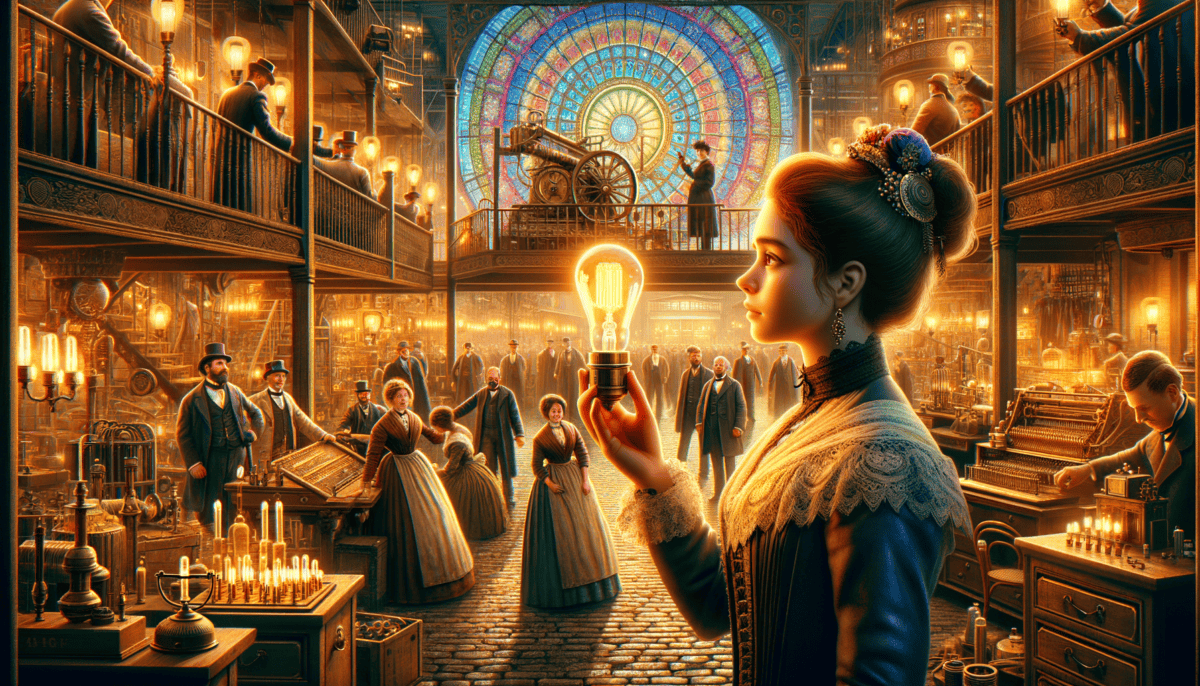
Emma’s eyes widened as she watched Mr. Edison demonstrate his newest invention at the city square. The strange glass bulb in his hand glowed like captured sunshine! ✨
“Ladies and gentlemen,” the famous inventor announced, “behold the future – electric light!”
“How does it work, Papa?” she whispered, tugging at her father’s sleeve.
“It’s electricity, dear one. The same power that makes lightning in the sky, but tamed for our use.”
Tommy bounced on his toes. “Will we get one at home?”
Mama squeezed his shoulder. “Maybe someday, little man. For now, our oil lamps work just fine.”
Dreams and Steam
At the steel mill where Papa worked, new machines arrived almost every week. Emma loved hearing about them during their evening meals.
“The new steam hammer can flatten steel like it’s pie dough,” Papa explained, making Tommy giggle. “But it’s dangerous work. Three men got hurt today trying to operate it.”
Emma’s mother frowned. “They push too hard, these factory owners. Always faster, always more.”
That night, Emma couldn’t sleep. She crept to their small desk and started drawing. Her pencil flew across the paper as she sketched machines she imagined – ones that could help workers stay safe.
A Special Visit
The next day brought excitement to Emma’s school. Thomas Edison himself was visiting classrooms!
“Young minds are the future,” he told them, showing more of his inventions. “Who knows? The next great inventor might be sitting in this very room.”
Emma’s heart beat faster. She clutched her notebook of drawings tight.
After class, she gathered all her courage and approached Mr. Edison. “Sir? Would you… would you look at my ideas?”
The famous inventor knelt down and carefully studied her drawings. His eyes twinkled.
“Well, well,” he said kindly. “These are quite clever. Especially this safety glove – very practical!”
Emma beamed with pride. “Papa works in the mill. I want to make things safer for workers like him.”
Changes at Home
That evening, Emma noticed Papa’s hands shaking as he ate dinner. The new machines at work were faster but harder to control. More workers were getting hurt.
“Mr. Edison liked my drawings,” she announced. “He said I could be an inventor!”
Mama looked worried. “That’s nice, dear, but…
“But what?” Emma asked.
“Girls don’t usually become inventors,” Mama said gently. “Maybe you could be a teacher instead?”
Emma set her jaw stubbornly. “Mr. Edison said the world needs minds like mine. He didn’t say only boy minds.”
Papa laughed and ruffled her hair. “She’s got you there, Mary! Our Emma’s got fire in her spirit, just like these new machines.”
That night, as factory whistles echoed across Pittsburgh, Emma added more drawings to her notebook. Outside her window, the city glowed with new electric lights. The world was changing fast, and she was determined to be part of that change.
On her desk, next to her drawings, sat a small glass bulb – a gift from Mr. Edison himself. As moonlight caught its surface, it seemed to wink at her, like it knew a secret about the future that was just waiting to be discovered.
Sparks of Change
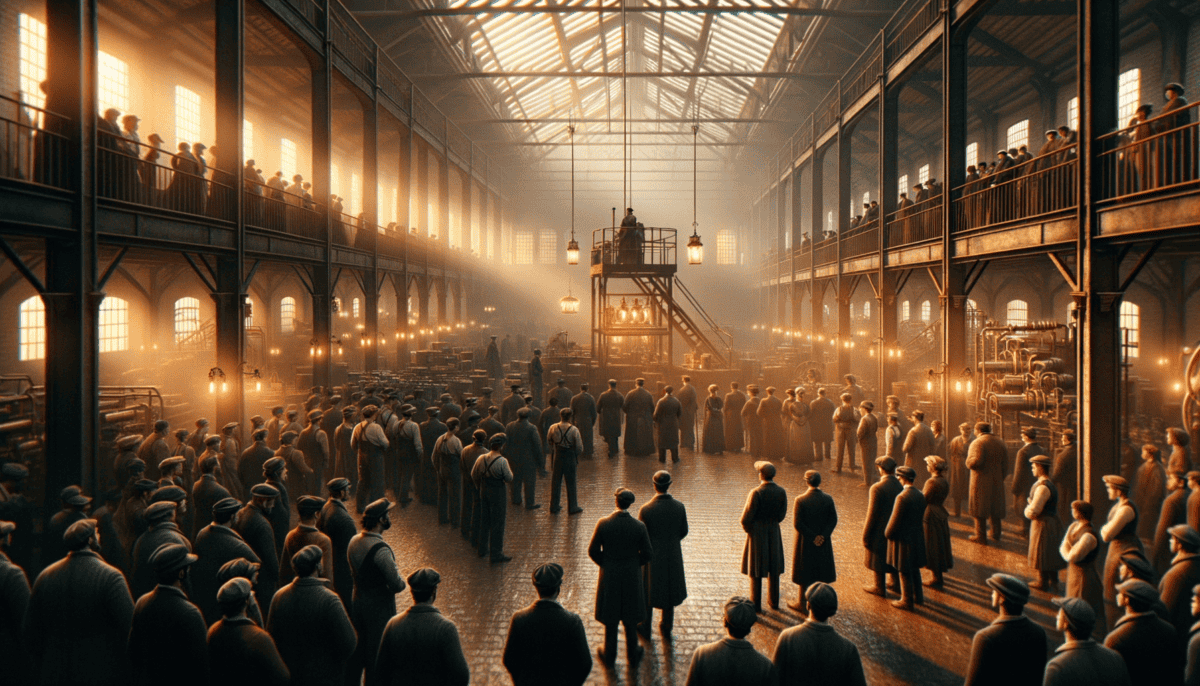
Dark clouds gathered over Pittsburgh as Emma watched workers stream into the steel mill. Papa’s face was grim this morning. Something felt different. ️
“Why are so many people here today, Papa?” Emma asked, clutching her notebook.
“We’re having a meeting, sweetheart. The workers need to talk about making things better.”
Standing Together
Inside the mill yard, hundreds of workers gathered. Emma had never seen so many people looking so serious. She recognized Mr. O’Brien with his burned hands, and Mrs. Kelly’s son who walked with a limp now.
“We demand safer working conditions!” a loud voice called out. It was Mr. Roberts, who worked with Papa. “Fair pay for fair work!”
The crowd cheered. Emma watched as Papa stepped forward to speak.
“Our families deserve better,” Papa’s voice rang clear. “We built this city with our sweat and blood. We deserve to be treated like people, not machines!”
The Strike Begins
Nobody went into the mill that day. Instead, workers stood together, holding signs and singing songs. Emma helped Mama bring water to the tired protesters.
“What’s a strike?” Tommy asked, helping carry cups.
“It’s when workers stop working,” Emma explained, “to show the bosses that things need to change.”
Hard Times
Days passed. No work meant no pay. Mama started making soup that could feed more people with less food. Neighbors shared what they had.
“Look what I drew,” Emma showed Papa one evening. It was a picture of workers standing together, holding hands. “We’re stronger together, right?”
Papa smiled through his tiredness. “That’s right, my clever girl. Just like your machines – every part working together makes the whole thing stronger.”
A Voice for Change
Emma started writing down workers’ stories in her notebook. Mr. O’Brien told her about the accident that burned his hands. Mrs. Kelly shared how her son got hurt because the machines had no safety guards.
One day, a newspaper reporter visited the strike line. Emma gathered her courage and approached him.
“Sir? Would you like to hear real stories about why we’re striking?”
The reporter looked surprised but listened as Emma shared what she’d written. His pencil moved quickly across his notepad.
Hope Rises
Two weeks into the strike, something amazing happened. Other mills in the city joined in! The streets filled with workers standing together.
“Your stories helped people understand,” Papa told Emma proudly. “Sometimes the smallest voice can make the biggest difference.”
Emma looked at the growing crowd, at the determined faces of people fighting for better lives. She thought about Mr. Edison’s words about solving problems. Maybe there were different ways to be an inventor – like inventing new ways for people to work together.
As the sun set behind the quiet mills, Emma opened her notebook to a fresh page. She had more stories to write, more changes to help create. The spark of hope was growing stronger every day. ✨

Dreams Take Flight
Emma sat at her desk in the small classroom, sunlight streaming through dusty windows. Her heart raced as Miss Anderson handed back their writing assignments.
A New Path Opens
“Your story about the mill workers touched many hearts,” Miss Anderson said, smiling warmly. “The school board wants to publish it in the newsletter.”
Emma clutched the paper with its bright red “A+” at the top. Her classmates whispered and stared. Some smiled, others frowned.
“Girls from the mill district don’t win contests,” Sarah Miller sneered. Her father owned one of the steel mills.
“They do now,” Emma replied quietly, holding her head high.
Breaking Barriers
That evening, Emma showed the essay to Mama and Papa over dinner. Their small kitchen felt warm with pride.
“Look what came with it,” Emma said, pulling out a special letter. “The Women’s Education Society wants to help me attend the high school!”
Papa’s eyes widened. “High school? But that costs money…”
“They’re offering a scholarship,” Emma explained. “Miss Anderson helped me apply.”
Making Choices
Emma visited the high school with Miss Anderson. The building looked like a castle, with tall windows and wide staircases. In the science room, she saw girls doing experiments!
“Women can be scientists?” Emma whispered, amazed.
“Women can be anything they work hard to become,” Miss Anderson replied. “Things are changing, Emma. You can help change them more.”
Facing Challenges
Not everyone liked these changes. Some boys laughed when Emma talked about going to high school. Even Tommy looked confused.
“Why do you need more school?” he asked. “Girls just get married anyway.”
“Because I want to learn everything,” Emma said. “Like how Mr. Edison keeps learning and inventing.”
A Mother’s Wisdom
Late that night, Emma found Mama sewing by lamplight.
“What if I fail?” Emma whispered. “What if they’re right and I don’t belong there?”
Mama put down her sewing. “You remember how scared people were to strike? But they stood together and made things better. Being brave doesn’t mean you’re not scared. It means you try anyway.”
Taking Flight
The first day of high school arrived bright and clear. Emma wore her best dress, patched but clean. Her notebook was ready for new stories.
As she walked through the grand doors, Emma thought about all the girls in the mill district watching her. Maybe she could show them what was possible.
In her first class, Emma sat up straight and opened her book. The teacher smiled at her – another woman! – and began to speak about science and discovery.
That afternoon, Emma started writing in a new notebook. This time, she wasn’t just recording other people’s stories. She was writing her own.
The Storm Breaks
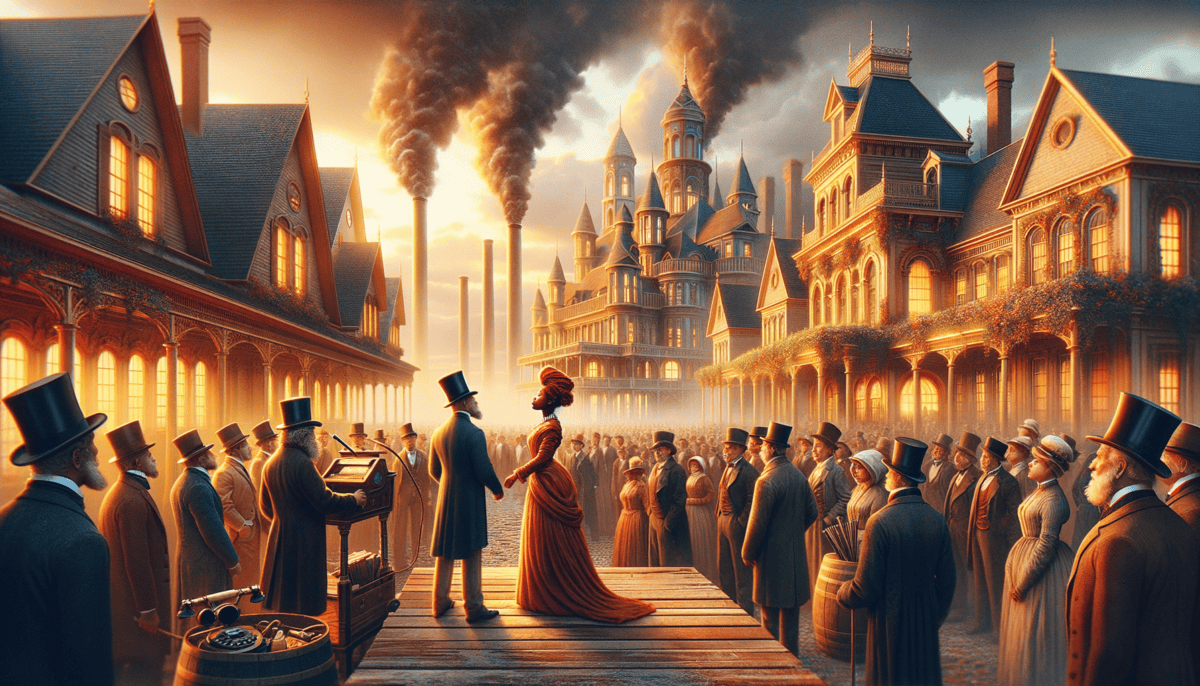
Dark clouds gathered over Pittsburgh as Emma hurried through the mill district. The streets buzzed with tension like electricity before a storm. ⚡
Trouble Rising
“They’re cutting wages again,” Papa said at breakfast. “And making us work longer hours.”
Emma’s stomach tightened. She had seen this before. The mill owners wanted more money, and the workers would suffer.
Finding Her Voice
“We need someone to write about what’s happening,” Tommy said during lunch at school. “Someone who knows both sides.”
Emma looked up from her science book. “I could write something for the school paper.”
“Would they let you?” Tommy asked.
“They will when they see what I can do,” Emma replied, thinking of her contest-winning essay.
Taking Action
Emma started visiting worker families after school. She wrote down their stories:
- Children working 12-hour days
- Dangerous machines with no safety guards
- Families sharing tiny rooms
- Workers getting sick from bad air
- No money for medicine or doctors
The Big Meeting
One evening, Papa came home excited. “The union’s holding a big meeting tomorrow. All the mill workers will be there.”
“Can I come?” Emma asked. “I want to write about it.”
Mama looked worried. “It could be dangerous.”
“Sometimes doing the right thing is dangerous,” Emma said, remembering what they’d learned about the American Revolution in school.
Standing Together
The meeting hall was packed. Emma sat in the back with her notebook, writing everything down. Workers shared their stories – stories she knew were true because she’d heard them herself.
“We’re not asking for riches,” one worker said. “Just enough to feed our families and keep our children safe.”
Then someone shouted, “The police are coming!”
Courage Under Fire
People started running. Emma heard shouts and breaking glass. But instead of running, she kept writing. Someone had to tell the truth about what happened.
Words Have Power
The next day, Emma’s article appeared in the school paper. She told about the workers’ stories, the peaceful meeting, and how the police broke it up.
Students passed the paper around. Teachers read it. Even some mill owners’ children looked thoughtful.
“You shouldn’t write such things,” Sarah Miller said, but her voice wasn’t mean anymore. She sounded unsure.
Changes Coming
Emma’s story spread beyond the school. A big newspaper in Pittsburgh printed it. More people started talking about the workers’ problems.
That night, Emma wrote in her diary: “Maybe this is why I love learning so much. Knowledge isn’t just for getting ahead. It’s for helping others get ahead too.”
Outside her window, she could see lights in the mill district. Tomorrow would bring more challenges. But tonight, hope burned brighter than fear.
Seeds of Change
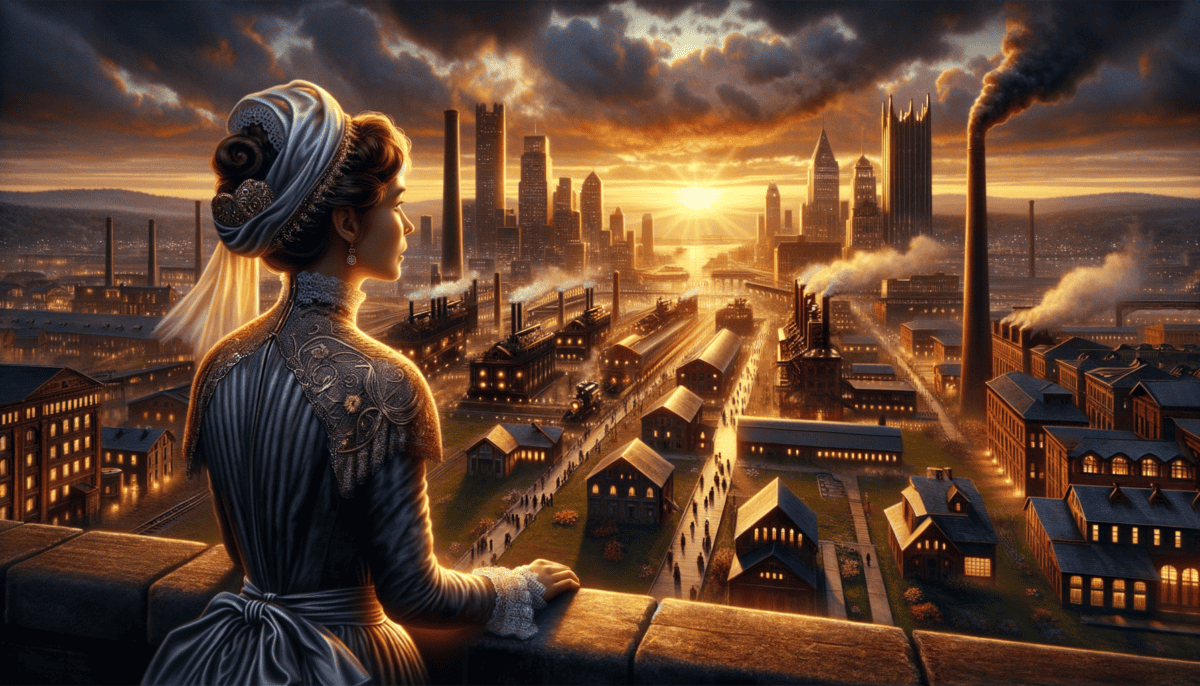
The morning sun painted Pittsburgh’s smokestacks in golden light. Emma stood at her window, watching workers stream toward the mills. But today felt different. Something was changing.
A New Day Dawns
“Have you seen this?” Papa waved the newspaper at breakfast. Emma’s story was on the front page of the Pittsburgh Daily.
“My goodness,” Mama whispered, pride shining in her eyes. “Our Emma’s words, right there in black and white.”
Unexpected Allies
At school, Sarah Miller rushed up to Emma. “Father read your article last night. He… he wants to talk to you.”
“To me?” Emma’s heart jumped.
“He says you see things others miss. Will you come to dinner tonight?”
Breaking Bread
The Miller mansion was huge, with gleaming windows and marble steps. Emma wore her best dress, trying not to feel small.
“Young lady,” Mr. Miller said, “you’ve opened my eyes to things I should have seen long ago.”
Over dinner, Emma told him more about the workers’ families. About children who wanted to learn but had to work. About fathers getting hurt because machines weren’t safe.
Real Changes
The next week, amazing things started happening:
- Mr. Miller’s mill added safety guards to machines
- Workers got better pay
- Children under 12 couldn’t work anymore
- A doctor visited the mill twice a week
- Workers could send their kids to school
Dreams Growing
“You should be a newspaper writer,” Tommy said during lunch. “You’re good at telling the truth in ways that make people listen.”
Emma smiled. “Maybe I will. And maybe I’ll write about other things that need to change.”
Looking Forward
That spring, Mr. Miller started a scholarship program. Any worker’s child who wanted to study could get help.
“Miss Thompson,” he announced at the mill picnic, “you’ll be our first scholar.”
The Future Brightens
Years later, Emma became a famous writer. She wrote about workers, women’s rights, and making America better for everyone. But she never forgot where she came from.
Every time she passed a factory or saw children playing instead of working, she remembered that small changes could grow into big ones. That one person’s words could light the way for others.
And in Pittsburgh, people still tell stories about the girl who helped bring light to the Gilded Age – not just golden light for a few, but bright hope for all. ⭐
Emma’s diary from that time sits in a museum now. On its last page, she wrote: “Sometimes the best gold isn’t in fancy mansions or big machines. It’s in the hearts of people who care enough to make things better for everyone.”