

Dreams Take Flight
Sarah bounced excitedly in her seat as her teacher, Ms. Rodriguez, dimmed the classroom lights. "Today, we're going to learn about something amazing that floats high above our heads!"
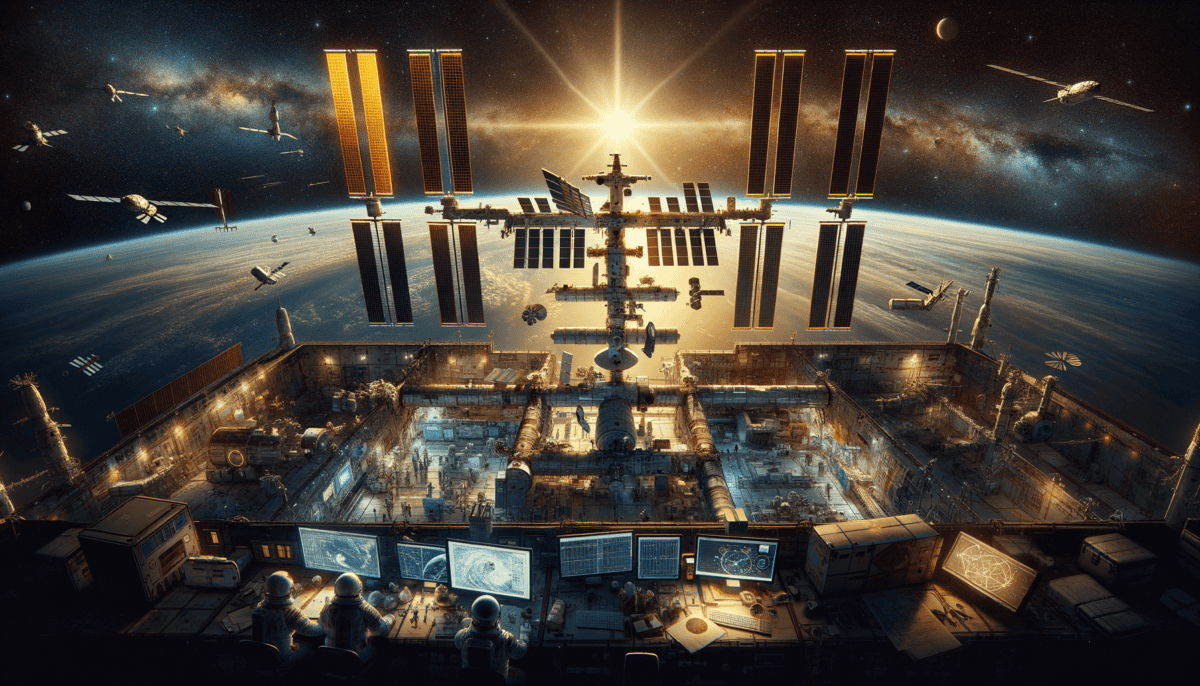
The classroom screen lit up with a bright image of what looked like a giant flying house with wings made of gold.
"What's that?" Tommy asked, his eyes wide with wonder.
"That's the International Space Station," Ms. Rodriguez smiled. "It's like a giant science lab that flies around Earth. But it wasn't always there. Let me tell you how it all started."
A Tale of Two Space Teams
Long ago, two big countries – the United States and Russia (then called the Soviet Union) – were in a race. But this wasn't any ordinary race. It was a race to space!
"Think of it like having two kids who both want to build the biggest block tower," Ms. Rodriguez explained. "At first, they didn't want to share their blocks or help each other."
“Why didn’t they work together?” asked Maria.
“Sometimes grown-ups forget that sharing makes everything better,” Ms. Rodriguez replied with a wink.
The First Steps Together
But then something wonderful happened. In 1975, something called the Apollo-Soyuz mission changed everything. For the first time, American and Russian spacecraft met in space!
"It was like a handshake in the stars," Ms. Rodriguez said, joining her hands together. "Two spacecraft connected way up in space, and the astronauts shared meals and gave each other gifts."
Making New Friends
After that first meeting in space, more countries wanted to join the space adventure. Canada brought its robot arm (called Canadarm). Europe and Japan shared their smart ideas and cool space tools.
"Just like how we all bring different snacks to share at lunch," Ms. Rodriguez explained, "each country brought something special to help build the space station."
The Big Dream
Scientists and engineers from all these countries started dreaming big. They imagined building something that had never been built before – a house in space where people could live and work together.
"But Ms. Rodriguez," Peter raised his hand, "how did they talk to each other if they spoke different languages?"
"Ah, that's a great question! They learned each other's languages. Now, most astronauts speak both English and Russian. It's like learning a new language to make a new friend!"
• Astronaut: A person who travels to space
• Spacecraft: A vehicle that flies in space
• International: When many countries work together
• Space Station: A home and laboratory in space
Sarah looked up at the ceiling, imagining the space station zooming overhead. "Can we see it from here?" she asked.
"Yes, we can!" Ms. Rodriguez beamed. "Sometimes it looks like a bright star moving across the night sky. Tonight might be a perfect night to look up and wave to the astronauts!"
The whole class rushed to the windows, their eyes searching the blue sky, knowing that somewhere up there, a remarkable story of friendship and teamwork was still unfolding among the stars.
The bell rang, but the children's excitement couldn't be contained. They left the classroom chattering about spacewalks and astronaut ice cream, their minds full of dreams about floating in space.
That night, thousands of families around the world would look up at the same sky, watching the same space station pass overhead – a shining example of what humans can achieve when they work together.
Building Dreams in Space
The morning sun streamed through the classroom windows as Ms. Rodriguez pulled out a big box filled with building blocks.
“Today, we’re going to be space engineers!” she announced. “We’ll learn how they built the amazing International Space Station!”
The Big Space Puzzle
“Building the space station was like putting together the biggest puzzle ever,” Ms. Rodriguez explained, dumping the blocks onto the floor. “But imagine trying to build it while floating!”
“How big is it?” asked Tommy.
“It’s as big as a football field!” Ms. Rodriguez spread her arms wide. “That’s bigger than our whole school!”
The First Pieces
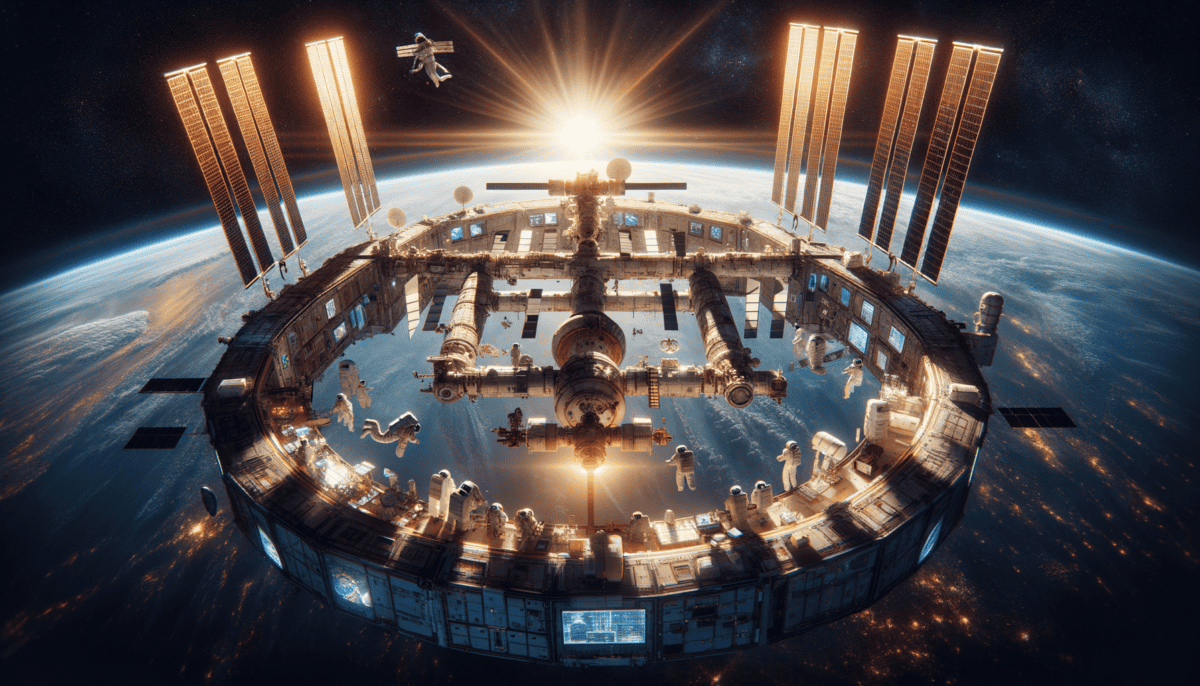
The class sat in a circle as Ms. Rodriguez placed a large block in the middle. “This is Zarya – the first piece of the space station. It launched in 1998, just like sending a really big rocket to the sky!”
• Built piece by piece like LEGO blocks
• Took over 10 years to build
• Weighs as much as 320 elephants
• Flies higher than 100 airplanes stacked up
Team Space Builders
“Each country helped build special parts,” Ms. Rodriguez continued, handing out different colored blocks to the students. “The blue blocks are from Russia, the red ones from America, the yellow from Japan, and the green from Europe.”
Sarah held up her block. “But how did they put it all together in space?”
“With a very special robot arm from Canada!” Ms. Rodriguez grabbed a long ruler. “This is like the Canadarm. It catches space ships and helps build things in space!”
Space Construction Problems
“Sometimes things didn’t go as planned,” Ms. Rodriguez said, purposely dropping a block. “But the astronauts always found clever ways to fix problems.”
Space Builder Challenges:
• Working in bulky space suits
• Tools floating away
• Everything moving in zero gravity
• Extreme hot and cold temperatures
Working Together in Space
The class worked together, connecting their blocks just like the real space station pieces. Some blocks were tricky to fit, but they helped each other.
“That’s exactly how the real astronauts work!” Ms. Rodriguez beamed. “They solve problems together, no matter what country they’re from.”
“Is it finished now?” Maria asked.
“The space station is never really finished,” Ms. Rodriguez smiled. “They’re always adding new parts and doing experiments!”
A Home Among the Stars
By the end of class, their block space station stood proudly on the floor. It wasn’t perfect, but it was beautiful – just like the real one.
“Remember,” Ms. Rodriguez said, “the space station shows us that when people work together, we can build amazing things – even in space!”
The students looked at their creation with pride. Peter raised his hand. “Can we build another one tomorrow?”
Everyone laughed, but they all knew that somewhere up above, real astronauts were floating in their home among the stars, working together to make more space dreams come true.
Living Among the Stars
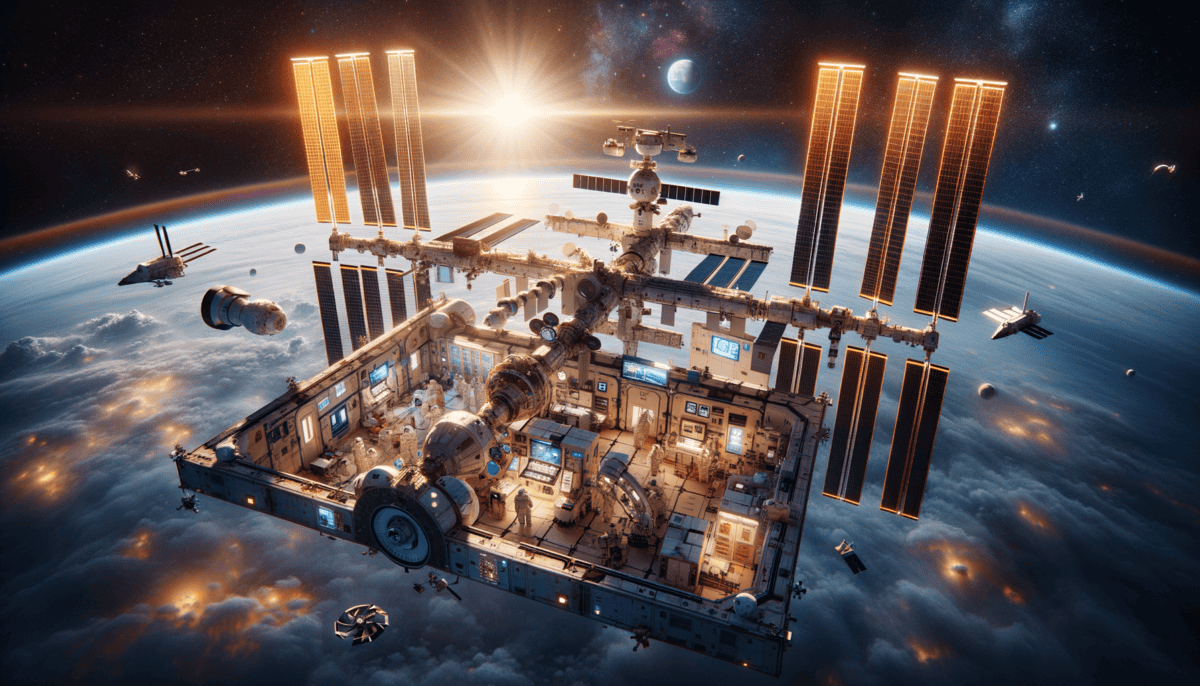
Tommy bounced excitedly in his seat. Today’s space lesson was extra special – they were going to learn about what astronauts do every day on the Space Station!
A Floating Morning
“Imagine waking up and floating out of bed!” Ms. Rodriguez demonstrated by pretending to drift across the classroom. The kids giggled as she floated by.
“But how do they brush their teeth?” Sarah asked.
“With special toothpaste they can swallow,” Ms. Rodriguez explained. “And they have to be careful not to let the water drops float away!”
Space Food Fun
Ms. Rodriguez pulled out some packages that looked like camping food. “Astronauts can’t have regular plates in space. Everything would float away! They eat from special packages and use tortillas instead of bread – no crumbs!”
• Wake up at 6:00 AM space time
• Exercise for 2 hours every day
• Do lots of science experiments
• Take pictures of Earth
• Talk to family on video chat
Super Space Science
“The astronauts are like floating scientists,” Ms. Rodriguez said, pulling out some toy test tubes. “They do experiments we can’t do on Earth because there’s no gravity!”
Maria raised her hand. “What kind of experiments?”
“They grow plants in space, study how fire burns, and even make crystals!” Ms. Rodriguez showed pictures on the big screen. “Sometimes they study their own bodies to see how space changes them.”
Exercise in Space
“Look at this!” Ms. Rodriguez showed a video of astronauts exercising. They were strapped to a treadmill with special bungee cords.
Why Astronauts Exercise:
Without gravity, their muscles and bones get weak. They need special exercise machines to stay strong!
Space Friends Forever
“The best part,” Ms. Rodriguez smiled, “is that astronauts from different countries become like a space family. They work together, eat together, and help each other.”
“Even if they speak different languages?”
“Yes! They learn each other’s languages and create their own special space words!”
Looking Down at Earth
“Every day, astronauts see our beautiful Earth from space,” Ms. Rodriguez showed pictures taken from the Space Station’s windows. “They can see cities light up at night, forests, oceans, and even sandstorms in deserts!”
The class gathered around a big map. Ms. Rodriguez traced the Space Station’s path. “It goes around Earth 16 times every day! That’s 16 sunrises and sunsets!”
Space Bedtime
“At the end of their busy day,” Ms. Rodriguez lowered her voice, “astronauts zip into sleeping bags attached to the wall. Otherwise, they’d float around while sleeping!”
Peter yawned. “I wish I could float to sleep.”
“Being in space isn’t always easy,” Ms. Rodriguez said, “but astronauts love their floating home. They work hard, make discoveries, and show us how people from all over the world can live and work together – even in space!”
Discoveries Beyond Earth
The class rushed to their seats as Ms. Rodriguez wheeled in a cart full of mystery boxes. “Today,” she smiled, “we’re going to learn about the amazing discoveries made on the Space Station!”
Growing Space Gardens
“Look what I have!” Ms. Rodriguez opened the first box and pulled out a small plant. “Just like this plant needs soil and water to grow, astronauts are learning to grow food in space!”
“They grew lettuce in space,” she explained. “And guess what? The astronauts got to eat it!”
“Real space lettuce?” Tommy’s eyes grew wide.
“Yes! They even grew peppers and had a space taco party!”
Crystal Magic
From another box, Ms. Rodriguez pulled out some sparkly crystals. “In space, crystals grow differently than on Earth. They’re bigger and more perfect!”
• Special medicines that help sick people
• New ways to clean water
• Better batteries
• Stronger materials for buildings
• Super tiny computers
Fire in Space
“Did you know fire looks like a ball in space?” Ms. Rodriguez showed a video of a floating flame. The class watched in amazement as the orange ball danced in the air.
“It’s like magic!” Sarah whispered.
Helping Earth from Space
“The Space Station is like a giant camera looking at Earth,” Ms. Rodriguez explained, showing pictures on the screen. “It helps us see forests, oceans, and even spots where animals live!”
Space Station Helpers:
The station helps us know when storms are coming, where forests are burning, and how to keep our Earth healthy!
Body Science
“Your body acts funny in space,” Ms. Rodriguez said. “Astronauts get a little taller because their spine stretches out!”
The kids stood up straight, trying to stretch taller.
“Does it hurt?” Maria asked.
“No, but when they come back to Earth, they shrink back to normal!”
Super Materials
Ms. Rodriguez held up a piece of shiny fabric. “This special cloth was made thanks to space research. It helps keep astronauts warm – and now we use it in winter coats too!”
“I have a space blanket!” Peter shouted excitedly. “It’s all shiny like that!”
Medicine from Space
“Some of our best medicines came from space research,” Ms. Rodriguez said softly. She showed pictures of tiny crystals growing in space tubes.
“These special crystals help doctors make medicine to help sick people feel better. Space research helps people on Earth every day!”
The Space Station is like a floating laboratory where scientists make discoveries that help everyone on Earth!
The bell rang, but nobody wanted to leave. They were too excited about all the space discoveries. Ms. Rodriguez smiled, “Tomorrow, we’ll learn about how astronauts fix problems in space – like super space heroes!” ♂️
Space Heroes to the Rescue
Tommy bounced in his seat as Ms. Rodriguez walked into class wearing a toy space helmet. “Today we’re going to learn about brave astronauts who fixed big problems on the Space Station!”
The Leaky Space Station
“Once, astronauts found a tiny hole in the Space Station!” Ms. Rodriguez made a small circle with her fingers. The kids gasped.
“Was all the air going to leak out?” Maria asked nervously.
“The astronauts stayed calm,” Ms. Rodriguez smiled. “They used special tape and glue to fix it, just like patching a bicycle tire!”
The Broken Solar Wings
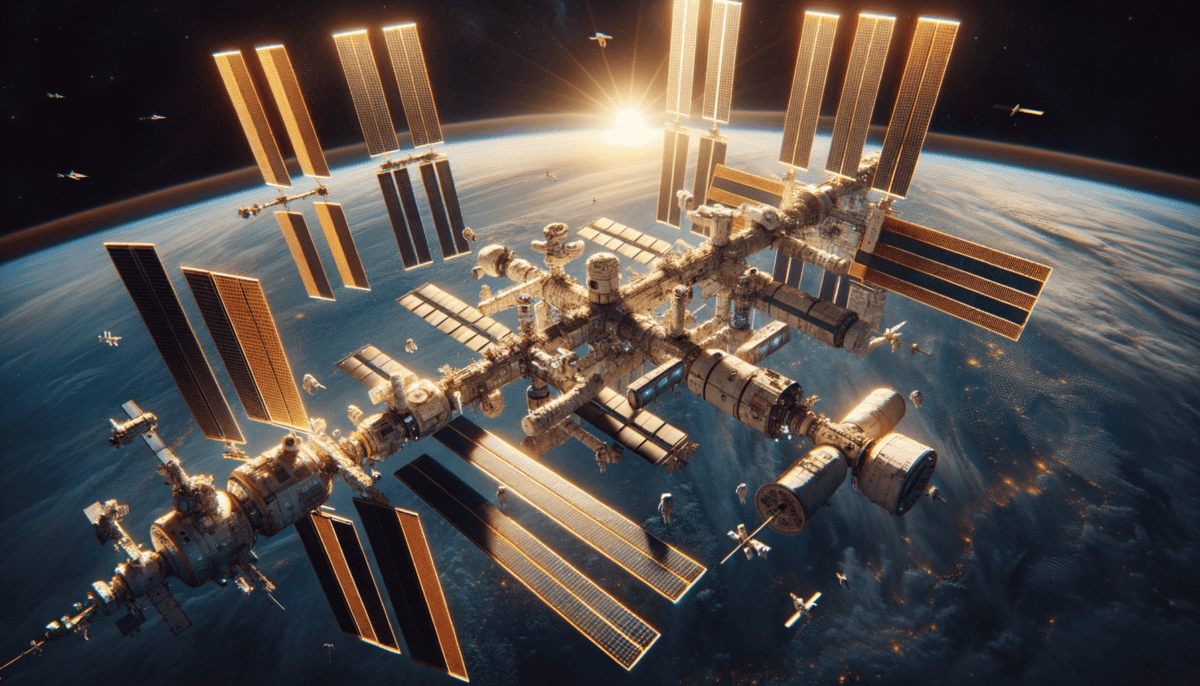
“The Space Station needs big solar panels – like giant wings – to catch the sun’s power,” Ms. Rodriguez explained, spreading her arms wide. “One day, these wings got stuck!”
Two brave astronauts had to go outside the station. They wore special suits and worked together like a team to unstick the solar wings. It took them seven hours!
The Water Problem
“Even astronauts need clean water,” Ms. Rodriguez said, holding up a water bottle. “When their water machine broke, they had to be creative!”
She showed pictures of astronauts fixing pipes and machines with tools that floated around them. “They turn their pee into clean drinking water!” she added, making the kids giggle.
Working Together
“Sometimes things get tricky when different countries work together,” Ms. Rodriguez explained. She picked up two puzzle pieces.
“It’s like trying to build something when your friends speak different languages. But the astronauts always find a way to help each other!”
The Computer Crisis
“One time, ALL the computers stopped working!” Ms. Rodriguez made a dramatic face. “But guess what? The astronauts from Russia and America worked together to fix them.”
Space Station Rule #1: No matter what goes wrong, we solve problems together!
The Space Traffic Jam
“Space can get busy!” Ms. Rodriguez drew spaceships on the board. “Sometimes supply ships bringing food and supplies have to wait their turn, just like cars at a traffic light.”
“What if they run out of food?” Peter worried.
“They always plan ahead,” she reassured him. “They keep extra food, just like we keep extra snacks in our cupboards!”
Earth’s Weather Warriors
“Sometimes big storms on Earth make it hard to talk to the Space Station,” Ms. Rodriguez said, making thunder sounds. “But special teams on Earth work day and night to keep in touch with our astronauts.”
Even when things go wrong, space heroes never give up! They show us how working together can solve any problem.
As the kids packed up their bags, Tommy raised his hand. “Ms. Rodriguez, what’s next for the Space Station?”
She smiled mysteriously. “Tomorrow, we’ll talk about the amazing future of space exploration!”
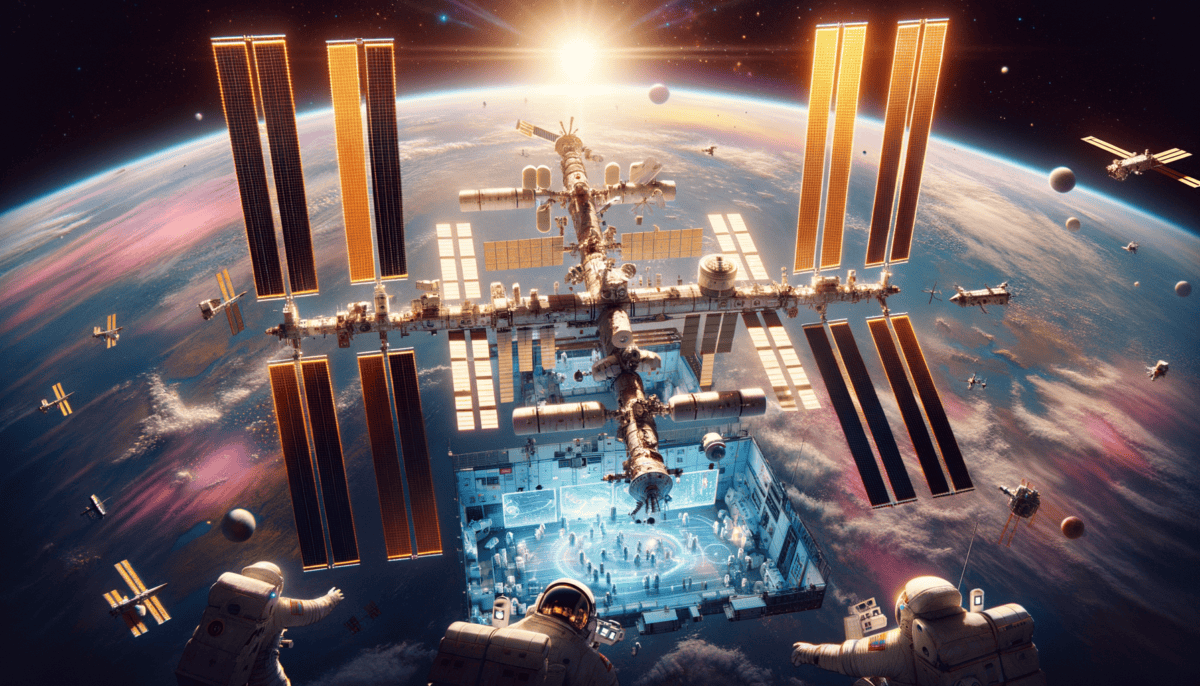
Dreams of Tomorrow
The class buzzed with excitement as Ms. Rodriguez pulled down a big, sparkly poster of the stars. “Today, we’re going to talk about what’s next for our Space Station friends!”
New Space Adventurers
“More countries want to join the space family!” Ms. Rodriguez drew a big circle on the board. “China is building their own space house in the sky, and India wants to send astronauts up too!”
“Will they all be friends?” Maria asked.
“That’s the magic of space,” Ms. Rodriguez winked. “Up there, everyone works together like one big team!”
The Moon Camp
“Next, we want to build a home on the moon!” Ms. Rodriguez held up a model of the moon. The whole class leaned forward in their seats.
Astronauts will use what they learned on the Space Station to live on the moon. They’ll build special houses and grow food in moon dirt!
Mars Adventures
“After the moon, we’re going to Mars!” Ms. Rodriguez rolled a red ball across her desk. “The Space Station taught us how to live in space for a long time.”
Tommy jumped up. “Can I go to Mars?”
“Maybe when you grow up!” Ms. Rodriguez smiled. “The kids in this class could be the first people to walk on Mars!”
Space Hotels
“Some companies want to build hotels in space,” Ms. Rodriguez explained, drawing stars on the board. “Regular people might get to float around and see Earth from above!”
Fun Space Fact: In space hotels, you could:
• Play floating tag
• Watch 16 sunrises every day
• Eat floating ice cream balls
• Take pictures of Earth from your window
The Space Station’s Next Chapter
“Our Space Station is getting older,” Ms. Rodriguez said gently. “Like an old car, sometimes it needs more fixes. But it taught us something very special.”
“What did it teach us?” Peter asked.
“That when people from all over Earth work together, we can do amazing things!”
A Message to Space Dreamers
Ms. Rodriguez put on her toy space helmet one last time. “The Space Station shows us that dreams can come true. It started as a drawing on paper, and now it’s flying above our heads!”
Remember: Every astronaut was once a kid who looked up at the stars and said, “I want to go there!” ⭐
Our Space Family
“The best part about space?” Ms. Rodriguez asked. “It belongs to everyone. It doesn’t matter what language you speak or where you’re from. In space, we’re all one family.”
As the final bell rang, the kids gathered their things. But before they left, they all looked out the window at the blue sky above.
Somewhere up there, astronauts from different countries were working together, showing us how to make our dreams fly. And maybe, just maybe, one of these kids would join them someday.