Dreams of Calculation
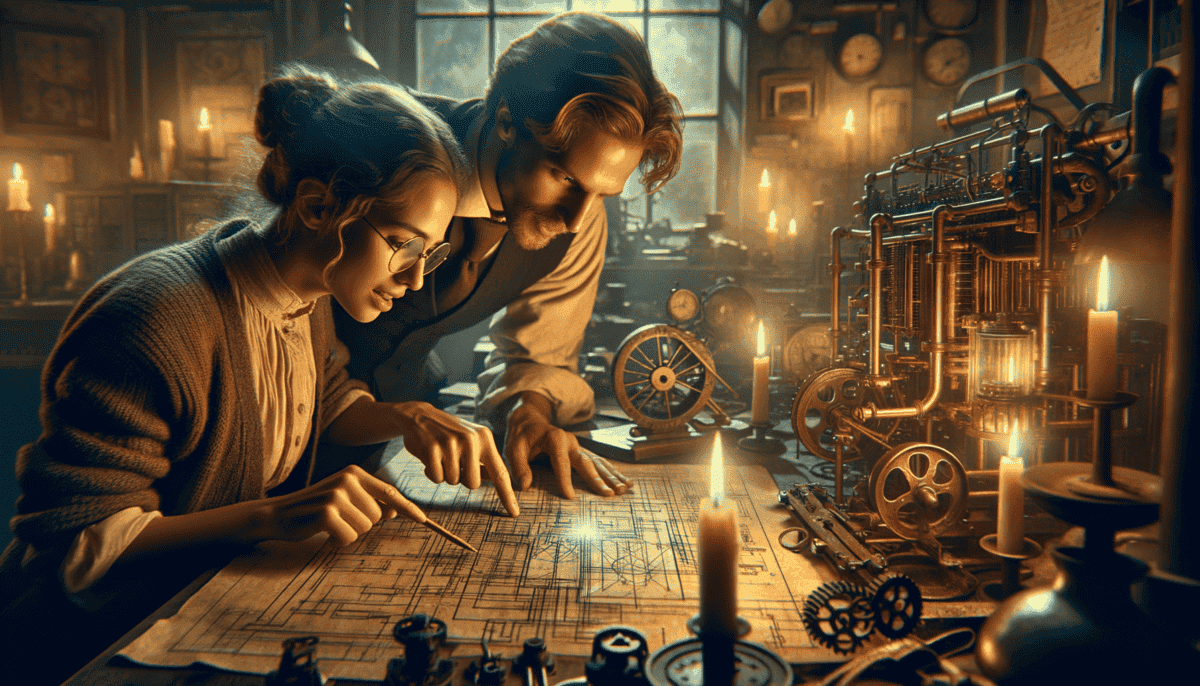
Little Tommy sat on his grandfather's lap, eyes wide with wonder as he stared at the strange drawing on the old book's yellowed pages. "What is that, Grandpa?" he asked, pointing at the intricate mechanical device filled with gears and wheels.
"That, my curious friend, is where our amazing computers began. It's called the Difference Engine, and it was the dream of a very special man named Charles Babbage." Grandpa smiled, adjusting his glasses.
A Special Beginning
Back in 1822, Charles Babbage had a big problem to solve. People made lots of mistakes when doing math by hand. These mistakes could cause big problems, especially for ships trying to find their way across the ocean.
"Think of it like this," Grandpa explained to Tommy, "imagine if you had to add up all the toys in your room by counting them one by one. You might get tired and lose count, right?"
Tommy nodded eagerly. "That happened to me yesterday with my blocks!"
The Lady Who Saw the Future
While Charles worked on his counting machine, he met a very smart young woman named Ada Lovelace. Ada was different from others – she could see that these machines could do more than just math.
"Ada was like a wizard," Grandpa continued, making Tommy giggle. "She saw that these machines could work with anything that had patterns – like music, pictures, or words!"
Ada wrote: "The machine might compose elaborate pieces of music of any degree of complexity or extent."
Tommy's eyes grew even wider. "You mean she knew computers could make music before there were computers?"
"Exactly!" Grandpa beamed. "She was the first person to write a computer program, even though there wasn't a computer to run it yet!"
Building the Dream
Charles worked very hard to build his machine. He used:
• Brass gears that spun like bicycle wheels
• Metal rods that moved up and down
• Thousands of tiny parts that had to fit perfectly together
But building such a big machine wasn't easy. "It's like trying to build the biggest LEGO set in the world," Grandpa explained, "but without instructions, and every piece has to be made by hand!"
Tommy thought for a moment, then declared, "I want to make a machine that does my homework!"
Grandpa laughed heartily. "Well, that's not so different from what Charles and Ada dreamed about. They wanted to make work easier for everyone."
A Dream Takes Flight
Even though Charles couldn't finish building his big machine, his ideas didn't go away. They flew like seeds in the wind, growing in the minds of other clever people who would come later.
"The best part is," Grandpa said, pulling out his smartphone, "that little computer in your video games? It's much more powerful than anything Charles or Ada could have imagined. But it all started with their big dreams."
Tommy looked at his own game console with new eyes. "So every time I play games, I'm using their ideas?"
"That's right! And who knows? Maybe someday you'll have big dreams that change the world too."
As the sun set outside their window, casting long shadows across the room, Tommy snuggled closer to his grandfather, wondering what other amazing stories about computers he would hear next.
The Secret Code Breakers
Tommy rushed into Grandpa’s study the next morning, clutching a decoder ring from his cereal box. “Grandpa, look! I can send secret messages!”
Grandpa’s eyes twinkled. “That reminds me of a very important story about computers and secret codes during a big war.”
The Puzzle Master
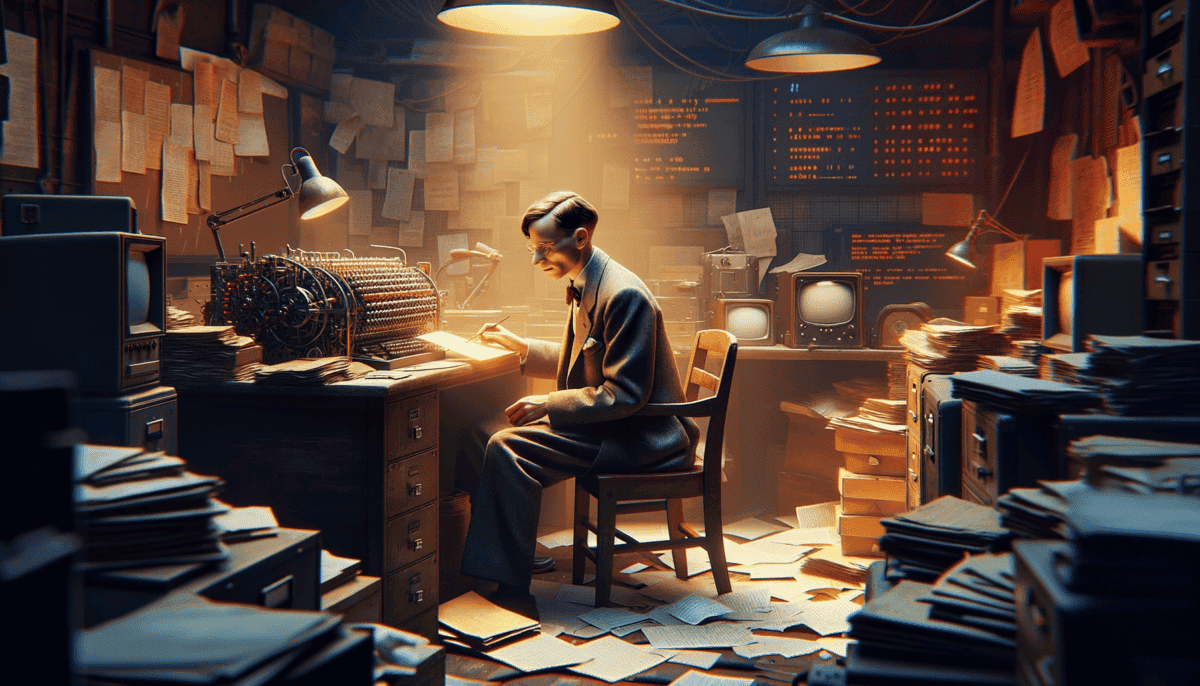
“There was a brilliant young man named Alan Turing,” Grandpa began. “He loved solving puzzles, just like you. But the puzzle he had to solve was very important – it could help save many lives.”
“What kind of puzzle was it?” Tommy asked, playing with his decoder ring.
“The bad guys were sending secret messages using a special machine called Enigma. It was like your decoder ring, but much more complicated! “
The Race Against Time
Grandpa pulled out an old photograph showing a large machine. “This is what they built to crack the code. It was called the Bombe.”
“Wow, it’s huge!” Tommy exclaimed.
“Yes, and it worked very fast for its time. Think of it like having hundreds of people trying to solve a puzzle at once, but this machine could do it all by itself!”
The machine had:
• Spinning wheels like bicycle gears
• Electrical wires connecting everything
• Special devices to test different codes
• Lights that would flash when it found the right answer
The Secret Heroes
Tommy leaned forward in his chair. “Did they work all alone?”
“No, they had a whole team of clever people working at a place called Bletchley Park. Many were young women who were excellent at math and puzzles. They worked day and night to help win the war.”
Building Better Machines
“The code-breaking machines got better and better,” Grandpa continued. “They learned that computers could do more than just break codes – they could solve all sorts of problems!”
Tommy looked thoughtful. “Like what?”
“Well, they could:
✨ Help scientists do big calculations
✨ Keep track of important information
✨ Make planning easier for important projects
✨ Solve complex problems quickly
A New Beginning
“The work these brave people did helped create the computers we use today,” Grandpa explained, pointing to his laptop. “Every time you use a password on your tablet or send a secret message to your friends, you’re using ideas that started with Alan Turing and his team.”
“So they were like superheroes?” Tommy asked excitedly.
“They sure were! ♂️ But instead of capes, they used their brains and machines to help save the day.”
Tommy held up his decoder ring proudly. “I want to learn more about computers and codes too!”
“That’s wonderful!” Grandpa smiled. “And just think – the machines they built were just the beginning. There were even bigger changes coming…”
As Tommy played with his decoder ring, imagining himself solving important puzzles like Alan Turing, Grandpa began gathering materials to tell him about the next exciting chapter in the story of computers.
The First Electric Brains
Tommy was building with his blocks when Grandpa walked in. “What are you making?” Grandpa asked.
“I’m trying to build the biggest tower ever!” Tommy said. “But it keeps falling down.”
Grandpa sat down beside him. “You know, that reminds me of how people built the first real computers. They had to try many times before they got it right!”
The College Professor’s Dream
“There was a teacher named John Atanasoff who had a big idea,” Grandpa began. “He wanted to help his students solve math problems faster.”
“Like my homework?” Tommy asked.
“Much bigger problems! He worked with a smart young man named Clifford Berry. Together, they built something amazing called the ABC computer.”
The Giant Calculator
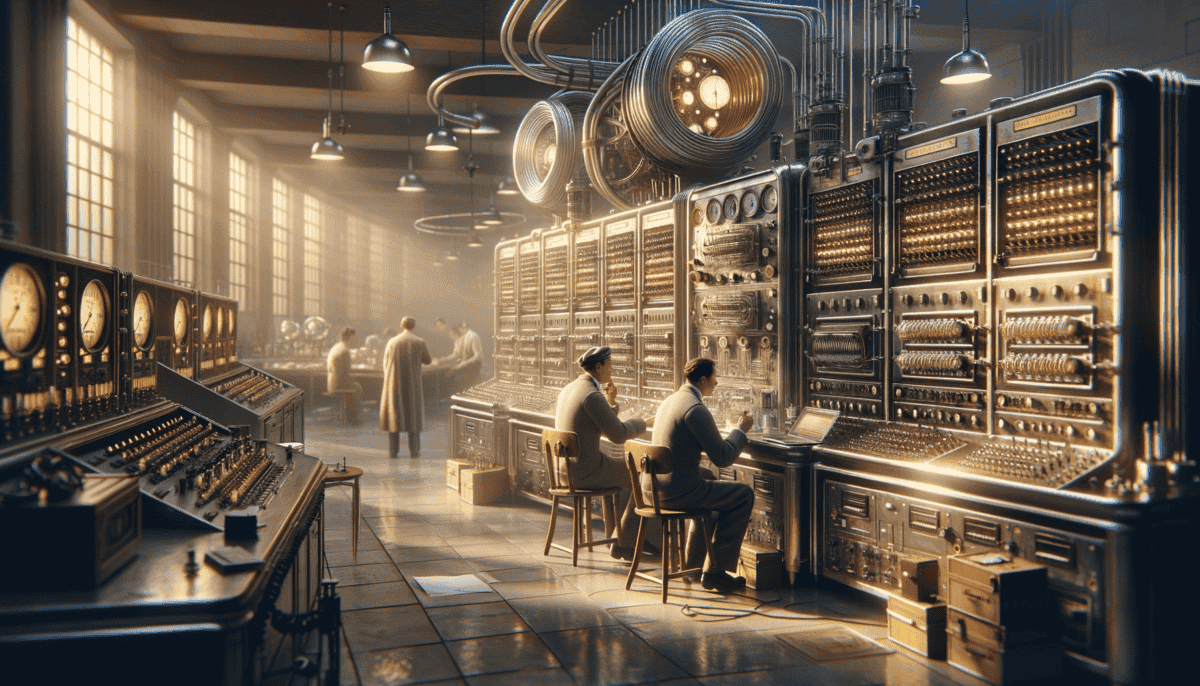
“But the most exciting computer was called ENIAC,” Grandpa continued, showing Tommy a picture on his tablet. “It was as big as our whole house!”
Tommy’s eyes grew wide. “That’s huge! Why was it so big?”
“It needed lots of parts to work:
⚡ 18,000 vacuum tubes (like light bulbs)
⚡ 70,000 resistors
⚡ 10,000 capacitors
⚡ 6,000 switches
The Computer Heroes
“Who got to use this giant computer?” Tommy asked.
“Six amazing women were the first programmers! They had to connect wires and flip switches to make it work. “
Problems and Solutions
“Did it work perfectly?” Tommy asked, still trying to balance his tower.
Grandpa chuckled. “Not always! Sometimes the tubes would burn out, just like light bulbs. They had to check thousands of tubes to find the broken one!”
“That sounds hard,” Tommy said, frowning.
“It was! But every problem they solved helped make better computers. Just like how each time your tower falls, you learn to build it stronger.”
A New Way to Think
“These first computers changed everything,” Grandpa explained. “They showed that machines could think in a new way – using electricity and numbers instead of gears and wheels.”
Tommy looked at his blocks. “Like how I can build different things with the same blocks?”
“Exactly! And just like your blocks, these big ideas would become the building blocks for something even more amazing…”
Tommy smiled and started rebuilding his tower. “I’ll keep trying too, Grandpa!”
Grandpa watched proudly as Tommy carefully placed each block. “That’s the spirit! And wait until you hear what happened next with computers – they were about to get much, much smaller…”
The Silicon Revolution
“Grandpa, how did computers get smaller?” Tommy asked, picking up his tablet. “This is tiny compared to ENIAC!”
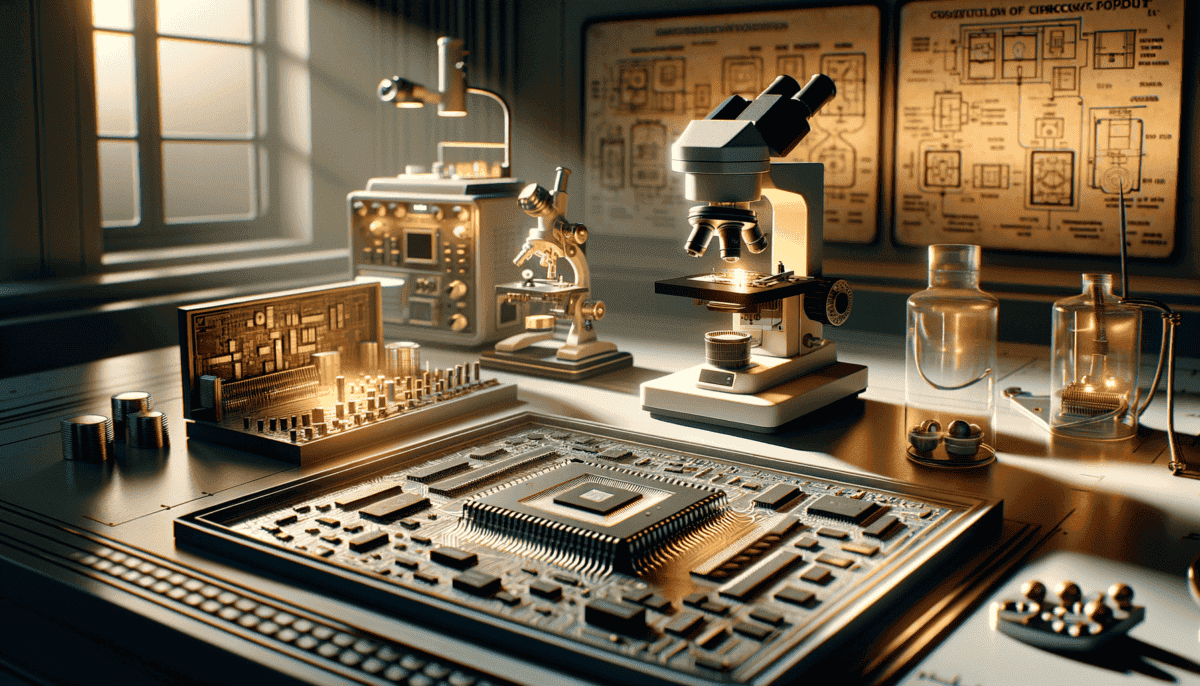
Grandpa smiled. “It’s all thanks to something very special called the integrated circuit. But let me tell you about Jack Kilby first.”
The Tiny Champion
“Jack worked at a company in Texas. One summer, while everyone else was on vacation, he had a brilliant idea,” Grandpa explained.
“What was it?” Tommy leaned forward eagerly.
“He found a way to put lots of computer parts on one tiny chip – smaller than your fingernail!”
The Magic of Microprocessors
“But wait,” Grandpa continued, “it gets even better! A team at Intel made something called a microprocessor. It was like a tiny brain on a chip!”
Tommy looked confused. “How small was it?”
“Imagine squeezing all the thinking power of ENIAC – remember that room-sized computer? – onto something the size of a postage stamp!”
Getting Smaller and Smarter
Grandpa pulled out some old photographs. “Look how computers changed:
| Year | Size | Power |
| 1946 | As big as a house | Basic math |
| 1971 | Like a stamp | Much more powerful |
| Today | Tiny chip | Super powerful! |
The Desktop Dream
“Soon, people started dreaming of having computers in their homes,” Grandpa said. “Not giant machines, but small ones that could fit on a desk.”
“Like my mom’s computer?” Tommy asked.
“Exactly! But the first ones weren’t as nice. They were like puzzles you had to put together yourself.”
Everyone’s Computer
“The best part,” Grandpa continued, “was that these smaller computers meant more people could use them. Not just scientists or big companies.”
“Kids too?” Tommy’s eyes lit up.
“Yes! Students could learn, artists could create, and families could play games together.”
“These tiny chips were like magic,” Grandpa said. “They kept getting smaller and more powerful. And they’re in everything now – your tablet, phone, even your video game console!”
Tommy looked around his room with new eyes. “Wow, they’re everywhere!”
“And just wait until you hear what happened when people figured out how to connect all these computers together…”
Connecting the World
Tommy sat cross-legged on the floor, surrounded by his devices. “Grandpa, how do all these computers talk to each other?”
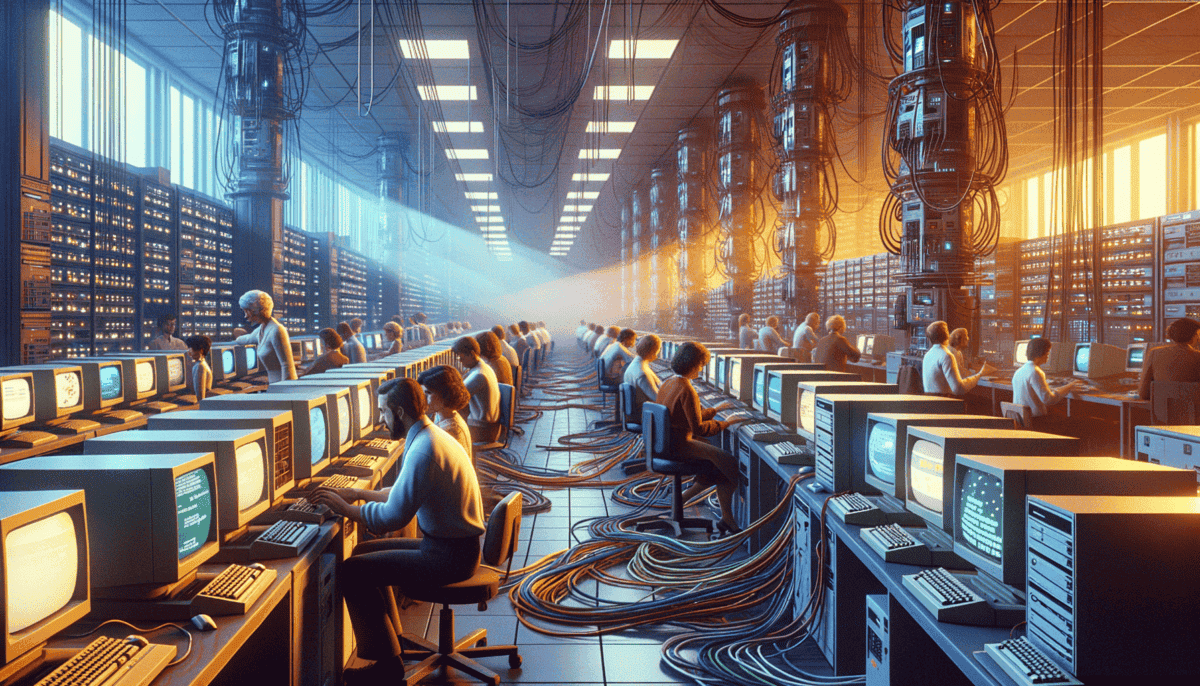
Grandpa’s eyes twinkled. “It started with something called ARPANET. Imagine trying to send a letter, but instead of using the post office, you’re using computers!”
The First Network
“Back in 1969, some clever scientists connected just four computers together. They were far apart – in different cities!” Grandpa explained.
“Only four?” Tommy giggled. “That’s nothing!”
“But it was huge back then! It was like building the first telephone line, but for computers.” ️
The Personal Computer Revolution
“Then something amazing happened,” Grandpa continued. “Companies started making computers that were perfect for homes. They were friendly and easy to use.”
“Was that when Apple started?” Tommy asked excitedly.
“Yes! Steve Jobs and Steve Wozniak built computers in a garage. They wanted everyone to have their own computer.”
| Year | Big Change |
| 1969 | ARPANET connects first computers |
| 1976 | First Apple computer |
| 1981 | IBM PC arrives |
The World Wide Web
“But the really big change came when Tim Berners-Lee had an idea,” Grandpa said. “He thought: what if we could share information easily between all computers?”
“Like websites?” Tommy asked.
“Exactly! He created the World Wide Web. It’s like a giant library that everyone can visit from their computer.”
Connecting Everyone
“Soon, people all over the world could talk to each other instantly,” Grandpa said. “They could share pictures, send messages, and learn new things.”
“Like when I video chat with Cousin Sarah in Australia?” Tommy’s face lit up.
“Yes! Distance doesn’t matter anymore. The internet made the world feel smaller.”
A New Way to Live
“The internet changed how we do everything,” Grandpa explained. “Shopping, learning, working, playing – it’s all different now.”
“I can’t imagine life without it,” Tommy said, hugging his tablet.
“And to think,” Grandpa smiled, “this is just the beginning. The future will bring even more amazing things…”
Tommy’s eyes grew wide. “What kind of things, Grandpa? Tell me more!”
The Digital Future Awakens
Tommy bounced excitedly on his chair. “So what happens next, Grandpa? What’s the future going to be like?”
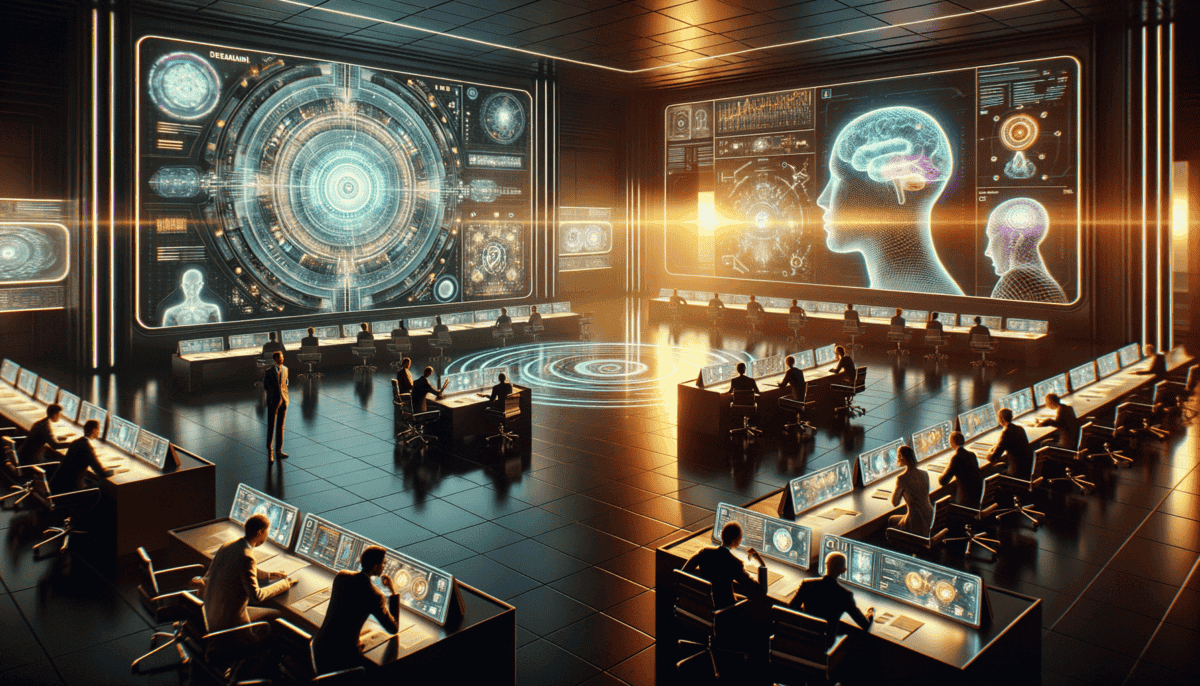
Grandpa smiled warmly. “The computers we have today are just the start. They’re getting smarter and doing things we once thought impossible!”
Smart Helpers
“Remember how we talked about Ada Lovelace dreaming of machines that could think?” Grandpa asked. “Well, now we have computers that can learn!”
“Like my robot vacuum that remembers our house layout?” Tommy asked.
“Exactly! And that’s just the beginning. Computers are learning to drive cars, help doctors, and even make art!”
Tiny but Mighty
“Computers are getting smaller and smaller,” Grandpa explained, pulling out his smartwatch. “Look at this – it’s more powerful than the huge ENIAC machine we talked about!”
Tommy’s eyes widened. “That’s crazy! Will they keep getting smaller?”
“They sure will! Soon computers might be as tiny as a grain of rice.”
Helping People
“The best part is how computers help people,” Grandpa continued. “They help kids learn, they help sick people get better, and they help scientists solve big problems.”
• Teaching in schools
• Finding new medicines
• Protecting our planet
• Connecting families
• Making life easier
A Connected World
“Remember all those inventors we talked about?” Grandpa asked. “Charles Babbage, Ada Lovelace, Alan Turing, and all the others?”
Tommy nodded eagerly.
“They would be amazed to see how their dreams came true. Now we can talk to anyone, learn anything, and create wonderful things – all because of computers!”
Your Turn to Dream
“But you know what’s really exciting?” Grandpa leaned forward. “It’s kids like you who will create the next big ideas!”
Tommy sat up straighter. “Really? Me?”
“Of course! Every invention started with someone asking ‘What if?’ Just like you do!”
Looking Forward
Tommy hugged his grandfather. “Thanks for telling me all these stories, Grandpa. I want to invent something amazing too!”
Grandpa ruffled Tommy’s hair. “You will, kiddo. The story of computers isn’t over – it’s still being written. And now you’re part of it!”
As the sun set outside, Tommy’s mind raced with possibilities. Maybe he would create the next big invention. Maybe his ideas would change the world. After all, every great journey starts with a single dream – just like the wonderful journey of computers that began so long ago.
“Grandpa,” Tommy whispered, “can you tell me these stories again tomorrow?”
Grandpa laughed. “Any time, Tommy. Any time.” ❤️