

Seeds of Innovation
A long time ago, in the 1960s, our world was very different. People couldn’t send messages instantly like we do today. They couldn’t video chat with friends or watch funny cat videos online. But some very smart people had a big dream – they wanted to create something amazing that would change how we talk to each other forever!
It all started during a time called the Cold War. The United States was worried about keeping their important messages safe. What if they needed to tell their soldiers something really important, but the regular phone lines weren’t working? They needed a better way to share information.
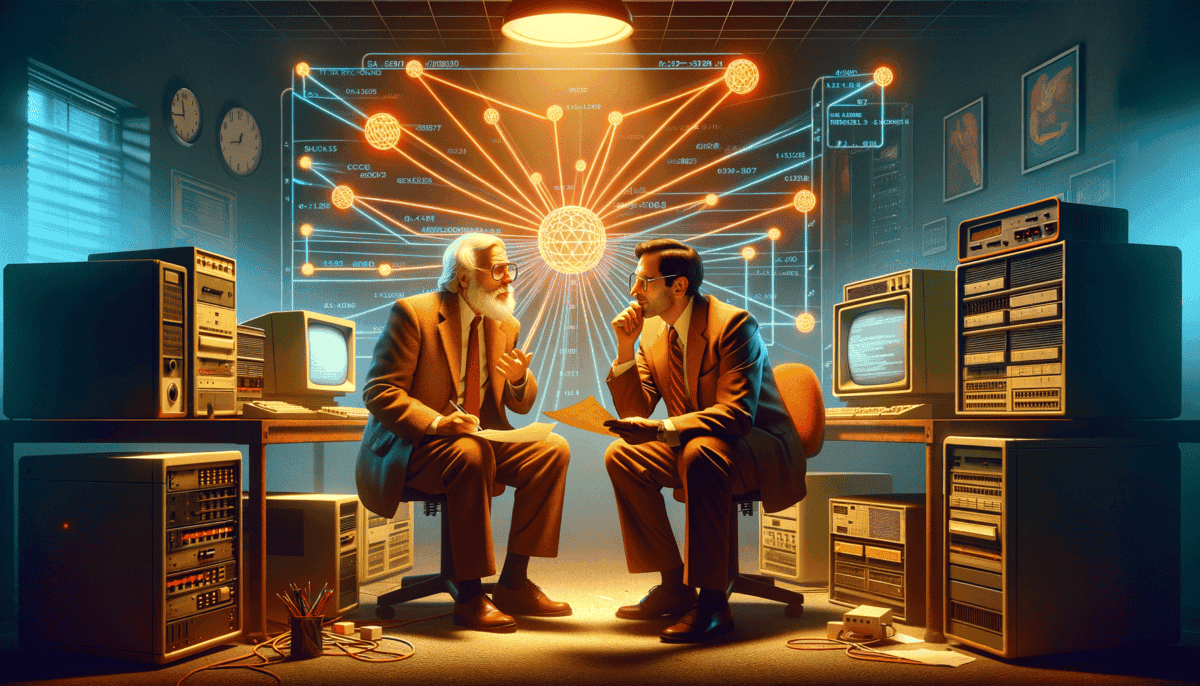
Two smart scientists named Paul Baran and Donald Davies had a clever idea. They thought, “What if we could send messages in lots of different ways, like how birds can fly many paths to reach the same place?”
Paul would sit at his desk, drawing pictures of connected dots. Each dot was like a computer, and the lines between them were different ways messages could travel. He called it a “network,” kind of like a spider’s web! ️
“We need to make sure messages can get through even if some paths are blocked,” Paul told his team. “Just like water finds a way around rocks in a stream!”
Donald Davies worked all the way across the ocean in England. He had the same kind of ideas as Paul! He thought of breaking big messages into tiny pieces, like cutting a puzzle into pieces. Each piece would travel on its own and come back together at the end – just like magic! ✨
The Big Problem They Solved
The old way of sending messages was like having only one road between two cities. If that road was blocked, no one could get through! But Paul and Donald’s idea was different. It was like having lots and lots of small roads. If one road was blocked, the message could just take another way!
Together, these pioneers started working on something called ARPANET. It was like a baby version of today’s internet. They didn’t know it then, but their idea would grow into something used by billions of people around the world!
The scientists worked hard every day. They drew plans, wrote special codes, and tested their ideas again and again. Sometimes things didn’t work, but they never gave up. They knew they were building something that could change the world.
Other scientists started getting excited about Paul and Donald’s ideas. They began working together, sharing their thoughts, and making the network even better. It was like a giant puzzle, and everyone was helping to put the pieces together!
Making Dreams Real
By the end of the 1960s, their hard work was starting to pay off. They had created the first tiny version of their network. It could only connect a few computers, but it was just the beginning of something much bigger.
The most amazing part? These scientists were like explorers discovering a new world. They were creating something that had never existed before. Their dream of helping people share information would grow into the incredible internet we use today!
Connecting the Impossible
In the early 1970s, two brilliant scientists named Vint Cerf and Bob Kahn had an exciting challenge. They wanted to make different computers talk to each other, even if they spoke different computer languages!
They came up with something super clever called “packet switching.” It was like sending a long letter to a friend, but instead of sending the whole letter at once, you’d cut it into tiny pieces and put each piece in its own envelope.
“We need to make computers speak the same language,” Vint told Bob one day. “Like teaching everyone to say ‘hello’ the same way!”
Together, they created special rules for computers to follow. These rules were called TCP/IP – think of it as a special handshake that all computers could use to become friends!
The First Big Test
One exciting day in 1973, Vint and Bob set up their first big test. They had three different computers in three different places. Each computer was different – like three kids who spoke different languages trying to play together.
Everyone held their breath. Would the computers be able to talk to each other? They pressed the buttons and… it worked! The computers shared their first message, kind of like saying “Hi” to each other across a long distance.
Making Friends with Computers
But Vint and Bob weren’t done yet! They wanted to make sure lots of different computers could join their special network. It was like building a huge playground where all kinds of computers could play together!
Sometimes things went wrong. Messages would get lost or mixed up. But Vint and Bob kept trying new ideas. They were like doctors, fixing problems and making their network stronger every day.
They taught the computers to do something really smart: if a message got lost, the computer would ask for it to be sent again. It’s like if you didn’t hear what your friend said, you’d ask them to repeat it!
Growing Bigger and Better
More and more people wanted to connect their computers to this amazing network. Scientists from different universities started using it to share their work. It was like having a big chat room for smart people!
The network got bigger and bigger. Soon, computers from all over could join in. Each new computer that connected was like making a new friend and growing the internet family!
“Every time a new computer joins our network,” Vint said with a smile, “we’re one step closer to connecting the whole world!”
Vint and Bob’s invention was changing everything. Their special computer language helped create the internet we know today. Thanks to them, we can now send messages, pictures, and videos to friends anywhere in the world! ✨
The best part? They made something that seemed impossible become possible. They showed that with clever ideas and hard work, you can solve even the biggest problems!
From Military Secret to Scientific Network
Something amazing was happening in the mid-1970s. The special computer network that started as a military project was about to change forever. Universities and science labs wanted to join in on the fun!
Scientists and students were super excited. They could now share their homework and big ideas with friends at other schools! It was like having a magical telephone that could send not just voices, but also pictures and words.
“This is better than writing letters!” said Dr. Jones, a happy scientist. “Now I can share my work with my friends across the country in just seconds!”
The First Email Fun
In 1971, something super cool happened. A computer whiz named Ray Tomlinson invented email! He picked the @ symbol to show where messages should go, like “[email protected]”. It’s like writing someone’s address on an envelope, but for computers!
The first email was just a test with random letters. But soon, scientists were sending real messages to each other. They could ask questions, share ideas, and even make jokes – all through their computers!
Growing and Learning Together
More and more schools wanted to join the network. It was like a snowball getting bigger and bigger as it rolled down a hill! ⚡ By 1977, more than 100 computers were connected.
Scientists started using the network in new ways. They made special chat rooms where they could talk about their work. They shared pictures of their experiments and helped each other solve hard problems.
“It’s like having all the world’s smartest people in one big room,” said Sarah, a young student. “We can learn from each other no matter where we are!”
New Tools for Sharing
The network wasn’t just for sending messages anymore. Scientists made new tools that could do amazing things! They could:
- Share big files with lots of numbers and data
- Work together on the same document from different places
- Have group chats about their research
- Send pictures of their experiments
- Find other scientists who were studying the same things
It was like having a huge library, post office, and meeting room all in one place!
Making New Discoveries
The network helped scientists make new discoveries faster than ever before. If someone in California found something cool, they could tell their friends in New York right away!
Students loved it too. They could learn from teachers at other schools and make friends with kids who liked the same subjects. It was like having a pen pal, but much faster and more fun! ✏️
Every day, more people found new ways to use the network. What started as a way to send simple messages was turning into something much bigger and more exciting. The internet was growing up, and it was about to change the whole world!
The World Wide Web Emerges
In 1989, a smart scientist named Tim Berners-Lee had a big idea. He worked at a place called CERN, where lots of scientists studied tiny things called atoms. Tim saw that scientists needed a better way to share their work.
Tim thought, “What if we could make web pages that anyone could read?” He wanted to make the internet as easy to use as reading a book.
Making the Web Easy and Fun
Tim made something called HTML. It’s like a special language that tells computers how to show words and pictures on web pages. He also created the first web browser – it was like magic glasses that let you see these special pages!
“I want everyone to be able to use this,” Tim said. “Not just scientists, but kids, teachers, and everyone else too!”
The best part? Tim decided to share his invention with everyone for free! He didn’t want to keep it secret or make money from it. He wanted everyone to have fun exploring the web.
Click and Learn!
The coolest thing about web pages was something called links. When you clicked on special blue words, they took you to new pages! ️ It was like having secret doors that led to more and more information.
The First Websites
The first website ever made was about how to make more websites! It showed people how to create their own pages and share them with others. Soon, lots of people started making websites about:
- Their favorite animals
- Fun games to play
- School subjects
- News stories
- Pictures of space
Everyone Can Join In
The web made the internet friendly for everyone. You didn’t need to be a computer genius anymore! Kids could look up homework help, parents could read news, and teachers could find fun lessons to share.
“It’s like having the biggest library in the world right in your home,” said Maya, a happy student. “And it’s so much fun to explore!”
Sharing with the World
The web started growing super fast! More and more people made websites, and soon there were millions of pages to visit. It was like building a huge digital city where everyone could share ideas.
Scientists were happy because they could share their work better than ever. Students were excited because they could learn about anything they wanted. Parents were amazed at how much information their kids could find.
The web was changing how people learned, worked, and played. And this was just the beginning of something even bigger! New ideas and cool websites were popping up every day, making the internet more exciting than ever.
Digital Revolution Unleashed
The internet was growing bigger and better! More people wanted to be part of this exciting new world. Companies started making cool new things to help people use the internet.
Search Engines: Finding Treasure Online
With so many websites, people needed help finding things. That’s when search engines like Google came along! It was like having a super-smart friend who could find anything you wanted to know about.
“I can find pictures of dinosaurs in just seconds!” said Tommy, an excited young internet user. “It’s like magic!”
Shopping Gets Fun
A company called Amazon started selling books online. Soon, you could buy almost anything without leaving your house! It was like having the biggest store in the world right in your computer.
New Ways to Talk
Email became super popular! ✉️ Instead of waiting days for a letter, messages could zoom across the world in seconds. Friends and families could stay close even when they lived far apart.
People also started using chat rooms and instant messages. It was like having a playground where you could meet friends from all over the world!
Big Companies Grow
Some internet companies became huge! Here are some of the biggest ones that changed how we use the internet:
- Google – Helps find anything online
- Amazon – The biggest store ever
- Yahoo – News and email
- eBay – Buy and sell cool stuff
- AOL – Helped people get online
Making Life Easier
The internet started changing how people did everything! Kids could do homework online. Grown-ups could work from home. Doctors could learn about new medicines faster.
Connecting Everyone
More and more homes got internet connections. First, they used phone lines that made funny beeping sounds. Then, faster connections came along that could send pictures and videos super quick!
“The internet helps me learn about different cultures and make friends from other countries,” said Lisa, a student. “It’s like having the whole world in my room!”
Changing How We Live
The internet changed how people:
✏️ Learn new things
Do their jobs
Have fun
Make friends
️ Go shopping
But this was still just the beginning! New ideas were coming that would make the internet even more amazing. People started dreaming about what else they could do with this wonderful tool.
The digital revolution was making the world more connected and exciting than ever before. And there were still more surprises coming in the future!
The Connected Future
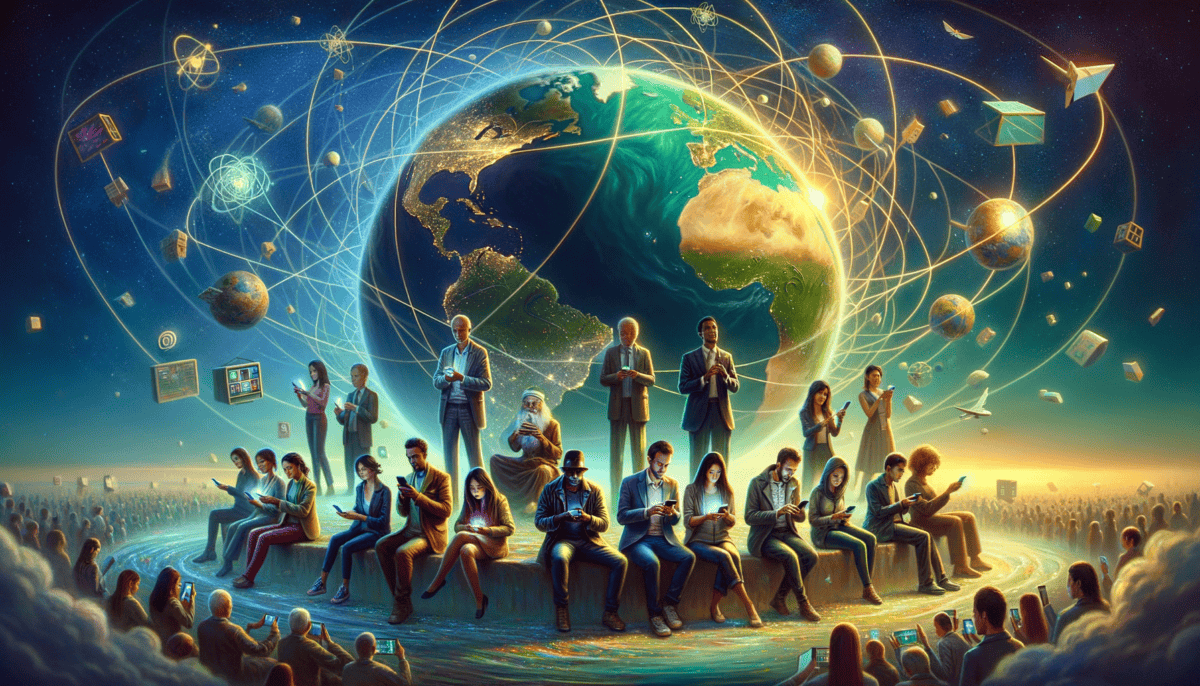
Something amazing happened – the internet jumped from computers into our pockets! Small phones became super-smart and could do almost anything. Let’s explore how the internet keeps changing our world!
Phones Get Smart
Remember when phones were just for calling? Now they’re like tiny computers! We can:
- Watch videos anywhere
- Play games with friends
- Take pictures and share them right away
- Talk to family far away while seeing their faces
- Learn new things while riding in the car
“My grandma lives far away, but I can see her smile every day on video chat!” says Maria, age 8.
Friends All Over
Something called “social media” changed how we make friends. Apps like Facebook, Instagram, and TikTok let us share:
Fun dance videos
Pretty pictures
Kind messages
Cool art
Learning Gets Better
School changed too! Now kids can:
Read books on tablets
Take classes from home
Talk to students in other countries
Watch science experiments online
Making The World Better
The internet helps solve big problems! Doctors use it to find new medicines. Scientists use it to study the weather. Helpers use it to send food where it’s needed.
What’s Next?
The future is super exciting! Smart people are working on:
Robots that help at home
Glasses that show magic pictures in the air
Cars that drive themselves
⚡ Faster internet that goes everywhere
“The internet is like magic that keeps getting better!” says James, a young inventor.
Looking Back, Moving Forward
What started as a way for soldiers to send messages became something that changed the whole world! The internet connects billions of people, helps us learn, and makes life more fun.
The story of the internet shows us that big dreams can come true. When people work together and share ideas, amazing things happen! Who knows what exciting new things we’ll do with the internet next?
Maybe YOU will be the next person to think of something wonderful to do with the internet! The future is bright, and it’s just beginning!