

A Time of Big Dreams
James McKenna stood at his office window in Philadelphia, watching workers lay fresh railroad tracks in the distance. The year was 1869, and America was growing fast. The smell of coal smoke and progress filled the air.
"Look at that, Sarah," he said to his secretary. "Those tracks will connect Philadelphia to Chicago. Soon we'll be able to travel across the whole country by train!"
Sarah Thompson looked up from her desk. She had come to America from Ireland just two years ago. "It's amazing, Mr. McKenna. But are you sure all these new railroads are a good idea?"
James laughed. "Of course! The railroads are making America rich. Everyone wants to invest in them."
The Railroad King
Later that week, James attended a fancy dinner party. The guest of honor was William Vanderbilt, one of the richest men in America. Vanderbilt owned many railroads and wanted to build more.
"Gentlemen," Vanderbilt announced, raising his glass. "The future of America rides on steel rails. Invest in railroads now, and you'll never regret it!"
The other businessmen cheered. James felt excited. He had already invested much of his money in railroad companies. Maybe he would become as wealthy as Vanderbilt someday!
Growing Dreams
Back at the office, Sarah watched more workers arrive each day. They came from Ireland, Germany, and Italy, looking for jobs building railroads. The city was getting crowded.
"My cousin just arrived from Ireland," Sarah told James. "He got a job laying tracks right away. The pay is good, but the work is hard."
James nodded. "That's progress, Sarah. America is growing bigger and better every day. Nothing can stop us now!"
But Sarah wasn't so sure. She had seen how quickly things could change back in Ireland. Sometimes big dreams could lead to big problems.
Signs of Trouble
One morning, James read some worrying news in the newspaper. A big bank called Jay Cooke & Company was spending huge amounts of money building railroads. Some people said they were being too risky.
"What do you think about this, Sarah?" James asked, showing her the paper.
Sarah frowned. "It reminds me of stories my father told about banks in Ireland. Sometimes they borrowed too much money and couldn't pay it back."
James waved away her concerns. "This is America! Our economy is strong. Nothing bad can happen here."
But as summer turned to fall in 1869, small cracks began to appear in America's golden dream. Railroad companies were spending more money than they were making. Banks were making risky loans. And soon, those cracks would grow into something much bigger.
• Railroad companies spending too much money
• Banks making risky loans
• Too many new railroad tracks being built
• Stock prices getting too high
The sun set over Philadelphia's growing skyline. James stood at his window again, watching the workers head home. He didn't know it yet, but America was heading toward its first big economic crisis. The Panic of 1873 was coming, and it would change everything.
James's dream of becoming as rich as Vanderbilt would soon face its biggest test. Sarah's worries about too much risk would prove wiser than anyone knew. And America would learn some hard lessons about the dangers of dreaming too big, too fast.
Cracks in the Foundation
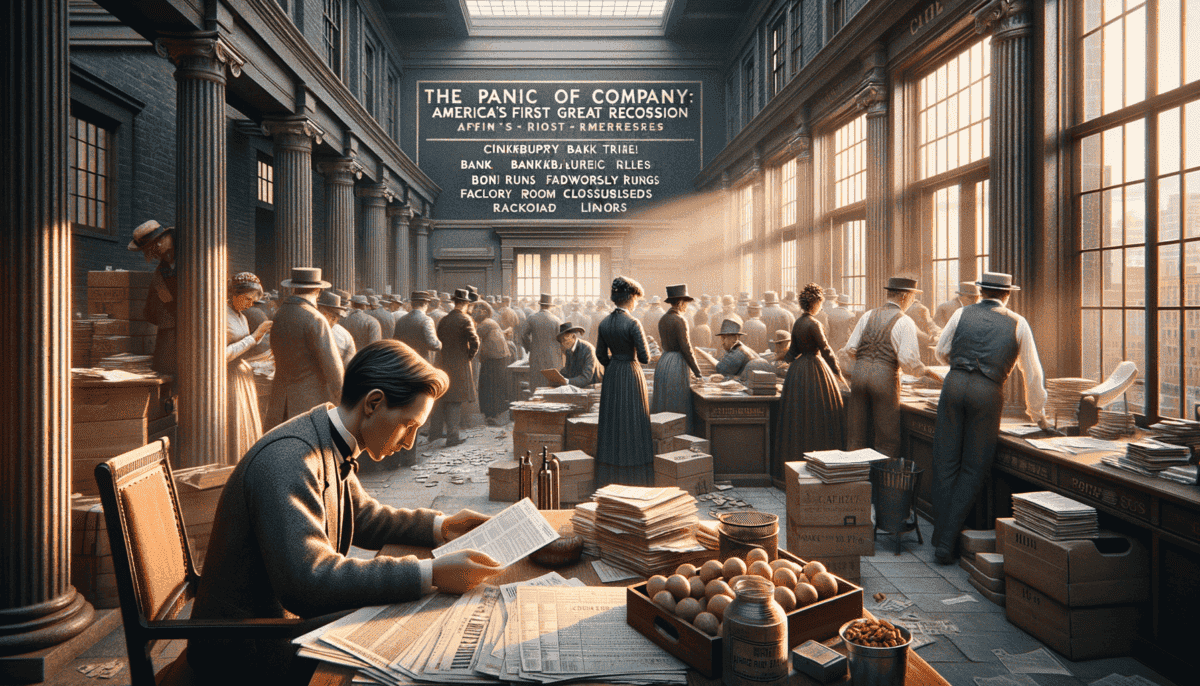
The summer of 1872 brought a sticky heat to Philadelphia. James McKenna wiped his forehead as he studied the growing pile of worrying letters on his desk.
Trouble on the Tracks
“Mr. McKenna,” Sarah called from the doorway. “Jay Cooke is here to see you.”
Jay Cooke was one of the biggest bankers in America. His face looked tired and worried as he sat down in James’s office.
“The Northern Pacific Railroad is eating up money faster than we can find it,” Cooke said. “We’ve already spent millions building tracks, but we need more.”
Warning Signs
Sarah listened from her desk outside. She noticed more worried visitors coming to the office lately. Railroad company owners, bank workers, and investors all shared the same scared look.
“Something’s not right,” she wrote in her diary that night. “It reminds me of the bad times back home.”
The Big Gamble
James felt stuck. He had put most of his money into railroad stocks. Now the railroad companies needed even more money to keep building.
“Maybe we should sell some of our railroad shares,” Sarah suggested carefully.
James shook his head. “Everyone says the railroads are too big to fail. We just need to hold on a little longer.”
• 7,439 miles of new tracks built
• 364 railroad companies in America
• Many companies losing money
• Banks giving risky loans
A City on Edge
The streets of Philadelphia felt different now. Workers worried about their jobs. Store owners complained about slow business. Banks started being more careful with their money.
“My cousin lost his railroad job,” Sarah told James one morning. “They said they couldn’t afford to pay the workers anymore.”
Even William Vanderbilt seemed worried when James saw him at the club. “The weak railroad companies will fail,” Vanderbilt warned. “Only the strong will survive.”
The Storm Builds
By fall, more bad news came every day. Small banks started closing. Railroad companies couldn’t pay their bills. Stock prices began to drop.
James stared out his office window at the railroad tracks. They didn’t look like paths to riches anymore. They looked like iron chains wrapped around everyone’s money.
“Sarah,” he said quietly, “I think you were right to be worried.”
Dark clouds gathered over Philadelphia that September evening. James and Sarah didn’t know it yet, but in just a few days, Jay Cooke’s bank would close forever. When it did, it would start the biggest financial panic America had ever seen.
As James locked his office door that night, the gas lamps cast long shadows on the empty streets. The golden age of railroads was about to end. The real question was: who would survive when it did?

The Day Everything Crashed
September 19, 1873 started like any other day in Philadelphia. But by sunset, America would never be the same.
The Bad News Spreads
Sarah arrived at work early that morning. She found James already at his desk, his face pale as he read the newspaper.
“Jay Cooke’s bank is closed,” he whispered. “They’ve failed.”
People started running to their banks. They wanted to get their money out before it was gone. The streets filled with scared crowds.
The Money disappears
“My savings!” cried Mrs. Peterson, the baker’s wife. “The bank says they don’t have enough money to give it back!”
James watched from his office window as more banks closed their doors. Rich people, poor people – everyone was losing money.
• 37 banks closed
• Stock market shut down for 10 days
• Thousands of people lost their savings
• Railroad companies went bankrupt
Hard Times Begin
“I’m sorry,” James told his workers that afternoon. “We have to close the office. I can’t pay you anymore.”
Sarah packed her desk with tears in her eyes. “What will we all do now?”
Outside, factory whistles fell silent. Store owners put up “CLOSED” signs. Workers walked home wondering how they would feed their families.
Rich and Poor Together
Even William Vanderbilt wasn’t safe. He lost millions of dollars when railroad stocks crashed. But he still had plenty of money left.
Poor families weren’t so lucky. With no jobs and no savings, many couldn’t buy food or pay rent.
“Yesterday I was rich,” James said softly. “Today I’m not sure what I am.”
Hope in Hard Times
That evening, Sarah walked through her neighborhood. She saw something special happening.
Families were sharing food. Neighbors were helping neighbors. People who still had jobs were helping those who didn’t.
“Maybe we’re not rich anymore,” Sarah wrote in her diary. “But we still have each other.” ❤️
As night fell over Philadelphia, candles glowed in windows. Nobody knew how long the hard times would last. But in the darkness, people found strength in helping each other.
Tomorrow would bring more challenges. But tonight, in homes across America, families held each other close and promised to face whatever came next together.
When Banks Close Their Doors
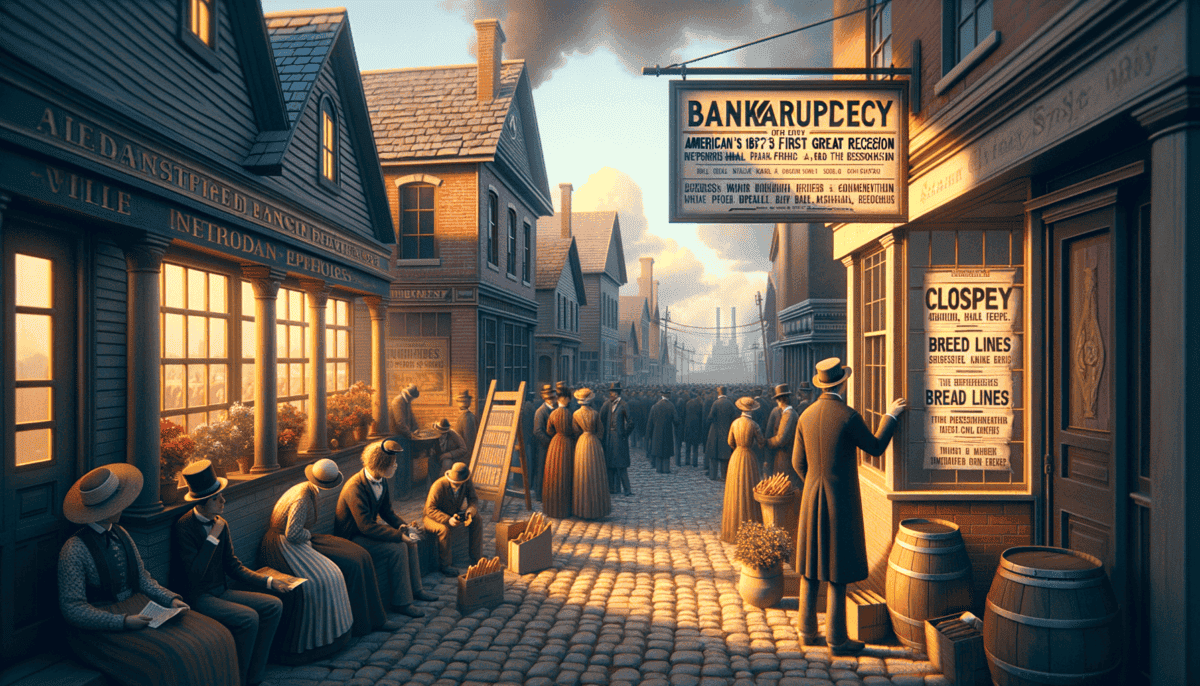
The streets of Philadelphia were quiet now. Too quiet. Most stores had “CLOSED” signs in their windows. The busy sounds of horses and wagons had faded away.
Empty Pockets, Empty Streets
Sarah walked past the closed bank where her savings were locked away. A sign on the door read: “Bank Temporarily Closed.” But she knew better – her money was gone.
• No jobs
• Empty stores
• Closed banks
• Hungry families
Finding New Ways
James sat in his empty office, looking at old railroad papers. “We have to think of something new,” he said to himself. He started writing ideas in his notebook.
“When times get hard, smart people get creative,” James wrote at the top of his page.
Helping Hands
Sarah found ways to help her neighbors. She started a small garden in her backyard.
“We can all share the vegetables,” she told Mrs. Peterson, who had lost her bakery. “And maybe you can teach us to make bread?”
The Big Changes
William Vanderbilt watched as smaller railroad companies disappeared. He bought their tracks for very little money. His railroad empire grew bigger, even as others failed.
“The strong survive,” he told his business partners. “But at what cost to everyone else?”
Life Without Money
People found clever ways to live without much money. They traded things they had for things they needed.
“I’ll fix your roof if you give me some of your potatoes,” became a common way to do business.
A Different Kind of Rich
One evening, Sarah visited James in his small new apartment. The fancy furniture was gone, replaced by simple wooden chairs.
“I used to think being rich meant having lots of money,” James said, sharing a simple soup with Sarah. “Now I know being rich means having good friends and neighbors who care about each other.”
Outside, the city was changing. Some factories stayed closed forever. But new, smaller businesses started to open. People learned to live with less and help more.
As autumn turned to winter, Americans learned to face hard times together. They didn’t know it yet, but these hard lessons would help them build a stronger country.
Finding New Ways Forward
The cold winter of 1874 brought new challenges, but also sparked creative ideas. People learned to think differently about money and business.
Sarah’s Smart Solution
Sarah’s vegetable garden had grown bigger. Now she taught others how to grow food too.
“One small seed can feed many people,” Sarah told her neighbors as they planted together. “Just like one good idea can help many families.”
James Makes a Fresh Start
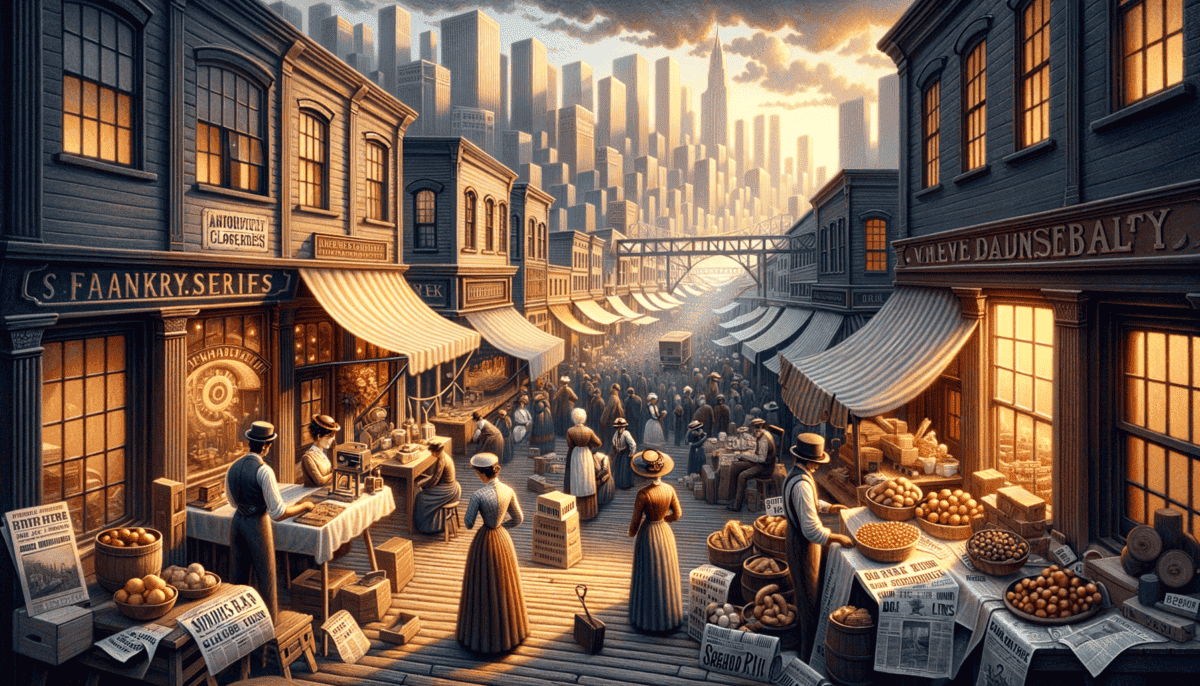
James walked through the city streets, looking at closed stores. But instead of seeing failure, he now saw opportunity.
“What if we helped small business owners work together?” he asked Sarah one day. “They could share costs and help each other grow.”
He started organizing meetings between shop owners. They formed groups to buy supplies together and save money.
New Rules for Banks
The government made new rules to make banks safer. They wanted to make sure another panic wouldn’t hurt so many people.
• Banks had to keep more money safe
• They couldn’t make such risky loans
• They had to be more careful with people’s savings
William’s Big Decision
Even William Vanderbilt started changing how he did business. He realized that having all the power wasn’t always good.
“We need to work with smaller companies,” he told his partners. “If they succeed, we all succeed.”
Smart Money Ideas
People invented new ways to use and save money. Some towns even made their own money to help local businesses!
Learning Together
Sarah and James started free classes to teach people about money and business. They shared what they learned from the hard times.
“Knowledge is like a candle,” Sarah said. “When you share it with others, everyone’s light grows brighter.” ✨
“The best way to help yourself is to help others,” James would tell their students. “That’s the most important lesson from these hard times.”
Growing Stronger
By working together, people found they could solve big problems. Cities started looking different. Where there were empty buildings, now there were gardens and new kinds of shops.
As spring approached, the nation was changing. People weren’t just surviving anymore – they were finding new ways to grow and succeed together.
Rebuilding a Stronger America
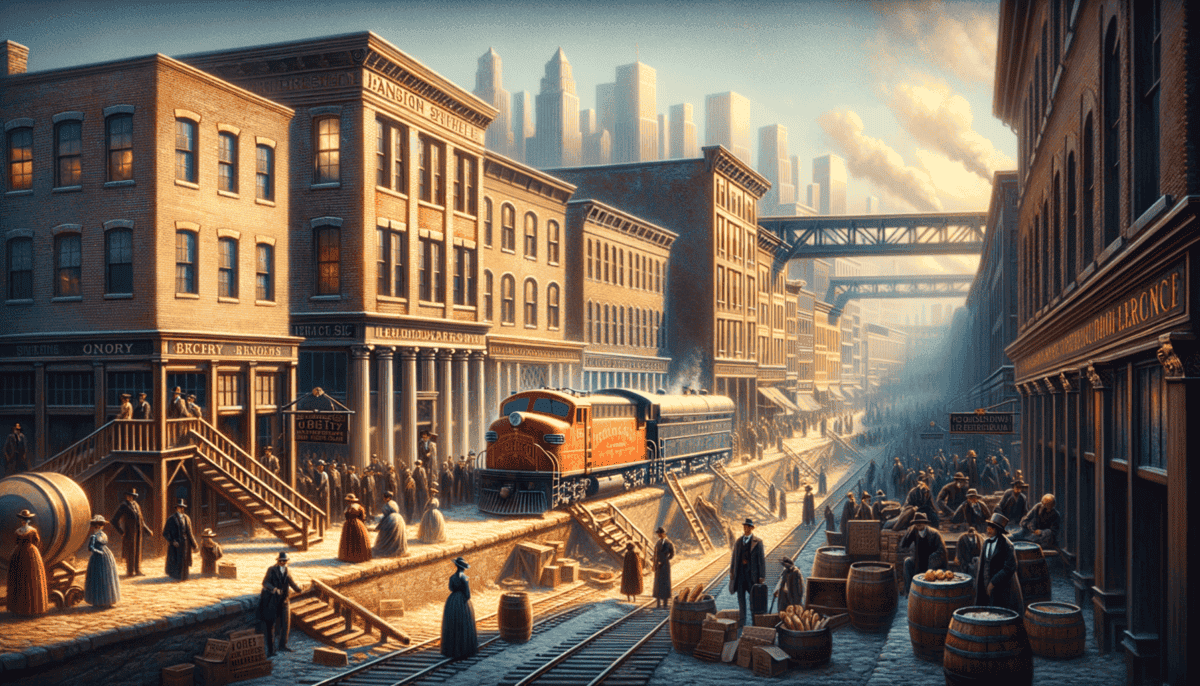
By 1876, three years after the big panic, America was starting to feel different. The hard times had taught everyone important lessons.
A Special Celebration
Sarah stood proudly in her biggest community garden. Children played between rows of tall corn and bright tomatoes.
“Look how far we’ve come,” she said to James. “Remember when this was just an empty lot?”
James’s New Business Way
James walked through his new business center. Small shop owners shared space and helped each other. It was different from the old days when everyone worked alone.
“Working together makes us all stronger,” he told a group of new shop owners. “That’s what the panic taught us.”
Changes in the Big City
The cities looked different now. Where there used to be just big companies, there were now many small businesses working together.
• Small shops sharing buildings
• Community banks helping local businesses
• People trading skills and services
• Groups buying supplies together
William’s Better Railroad
Even William Vanderbilt had changed. His railroads now worked with smaller companies and helped local communities.
“The railroad isn’t just about making money anymore,” he said. “It’s about connecting people and helping towns grow.”
A Stronger Nation
The panic had been scary, but it made America stronger. People learned to:
Looking to the Future
Sarah and James stood on a hill overlooking the city. New buildings were going up, and gardens dotted the spaces between them.
“We didn’t just rebuild the city,” Sarah said. “We rebuilt how we live together.”
James nodded. “And that’s worth more than all the gold in the world.” ⭐
As the sun set on that day in 1876, America was different from the country it had been before the panic. It wasn’t just about getting rich anymore. It was about building something that would last – a nation where people helped each other succeed.
The Story Lives On
Years later, people still told stories about the Panic of 1873. They remembered how hard times made them stronger, wiser, and kinder to each other. The lesson wasn’t just about money – it was about building a better way of life together.