

Dreamtime Beginnings
Long, long ago, in a land of red earth and endless skies, the First Peoples of Australia lived in harmony with the land. Their story begins in the time known as the Dreamtime, when giant spirit beings shaped the mountains, rivers, and valleys we see today.
Little Warru, a young Aboriginal boy, sat by the campfire with his grandmother, Aunty Maya. The stars twinkled above like tiny diamonds scattered across the dark sky.
"Tell me about the Rainbow Serpent again," Warru asked, his eyes wide with wonder.
Aunty Maya smiled and began to share the ancient story: "The Rainbow Serpent slithered across the flat, empty land. As it moved, its body carved out rivers and valleys. When it was tired, it coiled up, and its body became the hills we see today."
The land was more than just dirt and rocks to the First Peoples. It was their mother, their teacher, and their home. They knew:
• Which plants could heal
• Where to find water in the desert
• How to read the stars like a map
• When animals would gather
• What the weather would bring
Living with the Land
The First Peoples were clever. They learned to live in all kinds of places – from hot deserts to rainy forests. They made tools from stones and wood. They painted beautiful stories on cave walls that we can still see today!
"Our people are like the grass trees," Aunty Maya told Warru. "Our roots go deep into this land. We bend with the wind but never break."
Every night, the community would gather around the fire. The elders would share stories about the land and their ancestors. These stories taught important lessons about:
Taking care of the land
Respecting others
Being brave
Living together peacefully
Understanding the seasons
"Why do we need to know all these stories?" Warru asked one evening.
"Because," Aunty Maya replied, touching her heart, "these stories are like a map. They show us who we are and how to live. They connect us to our ancestors and to the land."
The Sacred Connection
The First Peoples didn't just live on the land – they were part of it. They believed everything was connected: the animals , the plants , the rocks, the rivers, and the people.
They created beautiful art that told their stories. Rock paintings showed kangaroos jumping, emus running, and spirit beings creating the world. They used dots and lines to make patterns that looked like the land from above.
As the fire died down and the night grew quiet, Warru looked up at the stars. He felt proud to be part of such an ancient and wise culture. He knew that these stories, passed down through countless generations, would live on through him.
The cool night breeze carried the smell of eucalyptus trees, and somewhere in the distance, a dingo howled at the moon. This was Australia – not just a place, but a living story that had been unfolding for thousands and thousands of years.
Ships on the Horizon
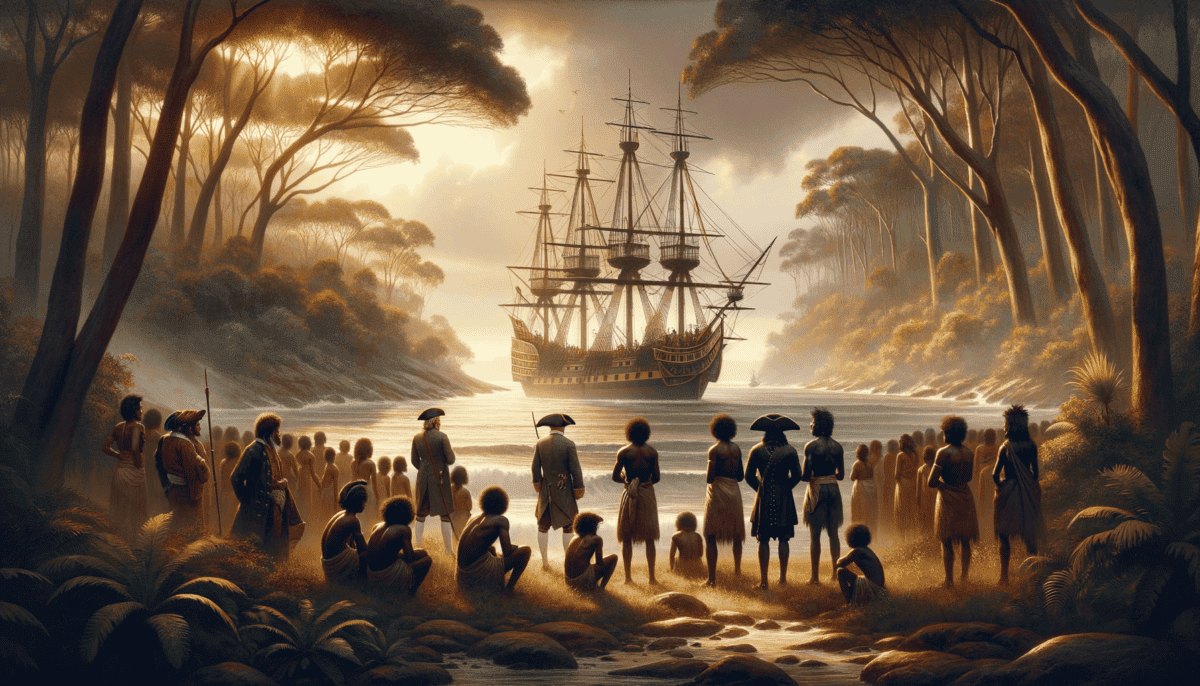
The warm sun sparkled on the ocean as Birra, a young Aboriginal girl, walked along the beach with her father. They were gathering shells when something strange appeared on the horizon.
“Father, look!” Birra pointed at the unusual sight. “What are those giant birds on the water?”
Her father squinted at the distant shapes. These weren’t birds – they were ships, unlike anything they had ever seen before. The year was 1770, and Captain James Cook’s ship, the Endeavour, was approaching the eastern coast of Australia.
New Visitors
Captain Cook stood on the deck of his ship, looking through his telescope at the beautiful coastline. The land looked very different from his home in England. He saw:
• Strange trees with grey-green leaves
• Long beaches with white sand
• Smoke from Aboriginal campfires
• Rocky cliffs rising from the sea
• Colorful birds flying overhead
“Land ho!” the sailors shouted with excitement. After months at sea, they were eager to step on solid ground.
First Meetings
Birra and her family watched the newcomers from a safe distance. The visitors looked different, spoke in strange ways, and carried unusual tools. Some Aboriginal people were curious, while others were worried.
“Why have they come here?” Birra asked her father.
“I don’t know, little one,” he replied. “But this day will change many things.”
Two Different Worlds
The Europeans and Aboriginal people tried to talk to each other, but they spoke different languages. Sometimes they used hand signals to communicate. Sometimes there were misunderstandings.
The Europeans were amazed by:
• How well the Aboriginal people could hunt
• Their knowledge of plants and animals
• Their clever tools and weapons
• Their connection to the land
• Their different way of life
But the visitors didn’t understand many things about Aboriginal culture. They didn’t know about:
– The special meaning of sacred places
– The importance of Dreamtime stories
– The Aboriginal way of caring for the land
– The complex family connections
– The rules of Aboriginal society
Changes Begin
After exploring the coast, Captain Cook planted a flag and claimed the land for Britain. He didn’t know that this land already belonged to the Aboriginal people who had lived there for thousands of years.
As the ships sailed away, Birra asked, “Will they come back?”
Her father looked out at the ocean and said, “Yes, little one. I think they will. And when they do, our world will never be the same.”
The sun set over the ocean, painting the sky in beautiful colors. The waves kept rolling onto the shore, just as they had done for thousands of years. But now, a new story was beginning in the great land of Australia.
A New Life in a Strange Land
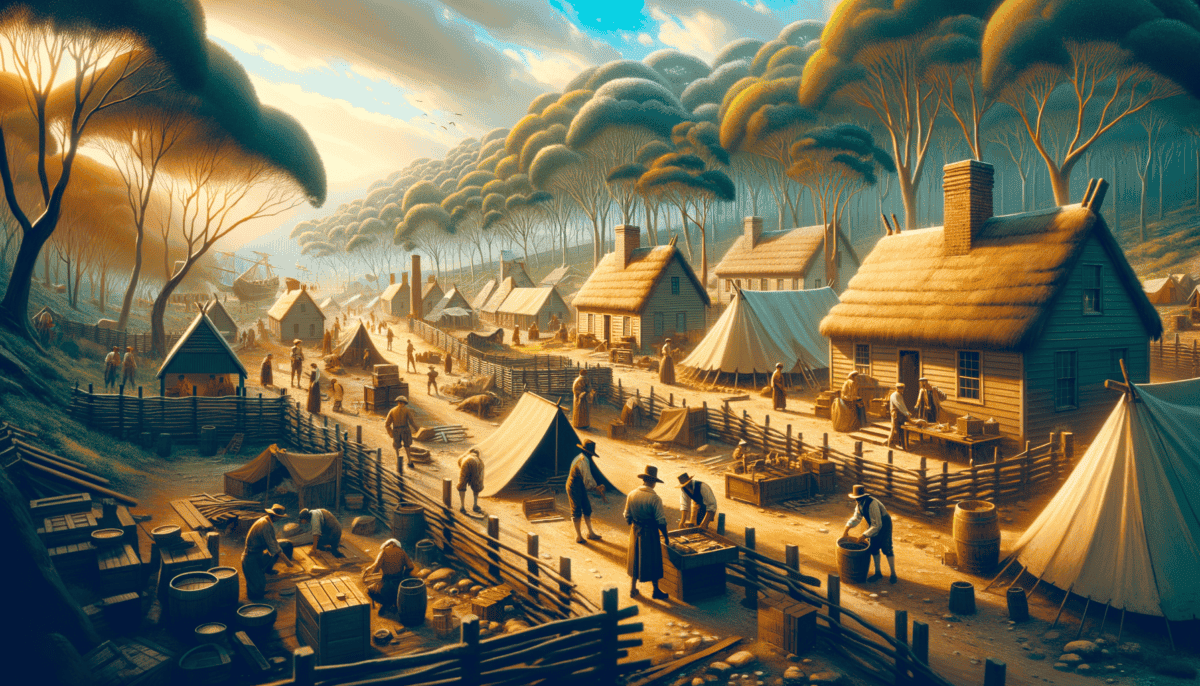
The year was 1788. The waves crashed against eleven big ships as they sailed into a beautiful harbor. These ships weren’t carrying explorers this time – they were bringing convicts from England.
The First Fleet
Sarah, a young convict girl, stood on the deck of one of the ships. She had been on the ocean for many months. The journey had been long and hard.
“Look at all the trees!” she whispered. “It’s so different from London.”
Captain Arthur Phillip led these ships. He would become the first governor of the new colony. He chose a place called Sydney Cove to build the settlement.
Building a New Home
Life wasn’t easy for the new settlers. They had to:
• Clear the land for houses
• Plant food to eat
• Build shelters from the rain
• Learn about the strange new animals
• Find fresh water to drink
Learning to Survive
The first years were very hard. Many people were hungry because the crops wouldn’t grow well in the sandy soil. The weather was different from England – sometimes very hot and dry.
“Look at these berries,” an Aboriginal elder named Bennelong showed Sarah. “These ones are good to eat, but those ones will make you sick.”
Growing Settlement
Slowly, the settlement began to grow. The convicts built:
• Small wooden houses
• A hospital
• A store for food
• Roads through the bush
• Gardens for growing food
More ships brought more convicts and free settlers. Some of them were farmers who knew how to grow food. Others were builders who could make better houses.
Changes to the Land
As the settlement grew bigger, the land began to change. Trees were cut down to make room for houses and farms. New animals like sheep and cows were brought from England.
“The land looks different now,” Sarah noticed after a few years. “It’s starting to look a bit like home.”
But these changes were hard for the Aboriginal people. The settlers were using more and more of their hunting grounds. Some of their sacred places were destroyed.
A New Beginning
By 1800, the colony was growing stronger. More free settlers were arriving from England. They started new farms and businesses. Sydney was becoming a real town.
Sarah, now free, looked at the busy harbor. Ships came and went, bringing more people and supplies. The sound of hammers and saws filled the air as new buildings went up.
“This strange land is our home now,” she thought. “We’re making something new here.”
Dreams of Gold
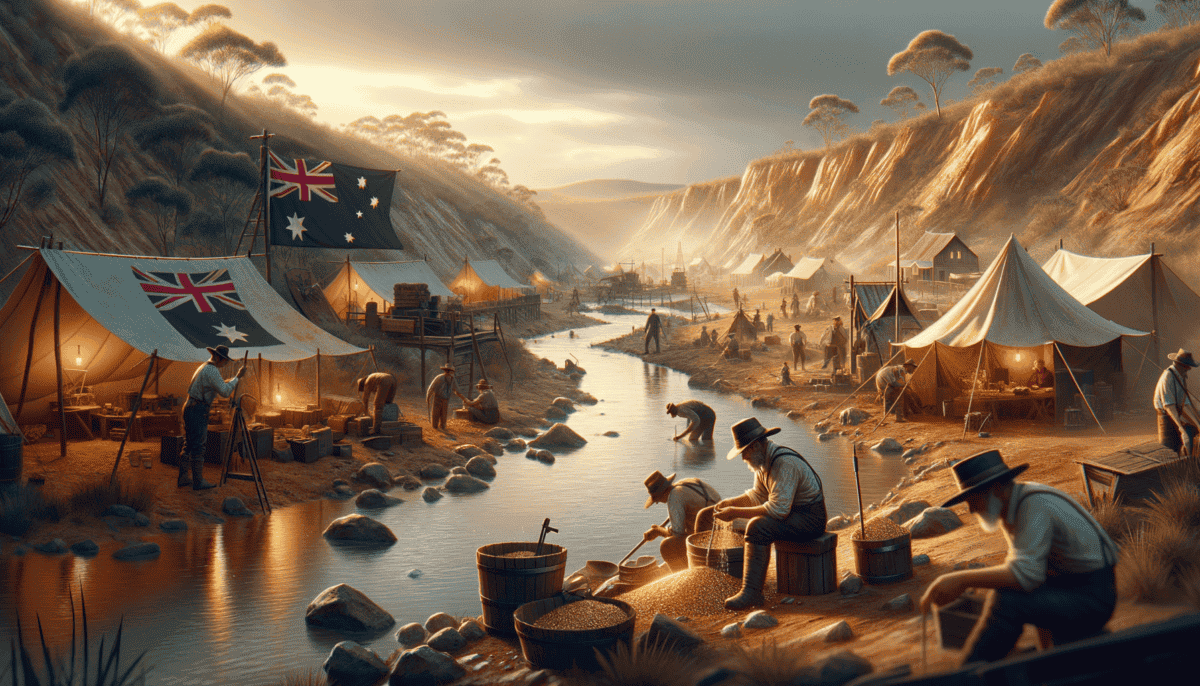
The hot sun beat down on Edward’s face as he wiped sweat from his forehead. The year was 1851, and he had just heard exciting news – gold had been found in Australia!
The Big Discovery
“Gold! Gold! Gold!” shouted people in the streets of Sydney. Edward Hargraves had found shiny yellow bits in a creek near Bathurst. This news spread faster than a kangaroo could hop!
“I’m going to try my luck,” said Chen, who had come all the way from China. He carried his pick and pan, ready to search for gold.
Life on the Goldfields
The goldfields were busy and exciting places. People lived in tents and simple huts. Every morning, they would wake up early to look for gold. Some got lucky and found big nuggets, while others found tiny bits called “dust.”
A Growing Country
The gold rush changed Australia in many ways:
• New towns grew up near the goldfields
• Railways were built to carry people and supplies
• Shops opened to sell food and tools
• Banks were created to keep the gold safe
• People from many different countries made Australia their home
Building a Nation
All these new people helped Australia grow. They brought their own foods, music, and ideas. Cities like Melbourne and Ballarat became big and busy.
“Look at how much has changed,” Edward said to Chen as they walked through Melbourne’s streets. “When I first came here, this was all bush!”
Making Australia One Country
By 1901, something very special happened. All the different parts of Australia joined together to become one country. They called it the Commonwealth of Australia.
Maria watched the celebrations in the streets. “My children will grow up in a new nation,” she thought proudly. “A nation we all helped build.”
A Different Kind of Treasure
As the gold became harder to find, people discovered other ways to make Australia special. They started farms, built factories, and opened shops.
“The real gold,” Chen told his children, “isn’t just the shiny metal we dig from the ground. It’s the country we’ve built together.”
Australia was growing up. The land that had once been just a place for convicts was now becoming one of the most exciting places in the world. New adventures and challenges were waiting just around the corner.
Brave Hearts and Bold Steps
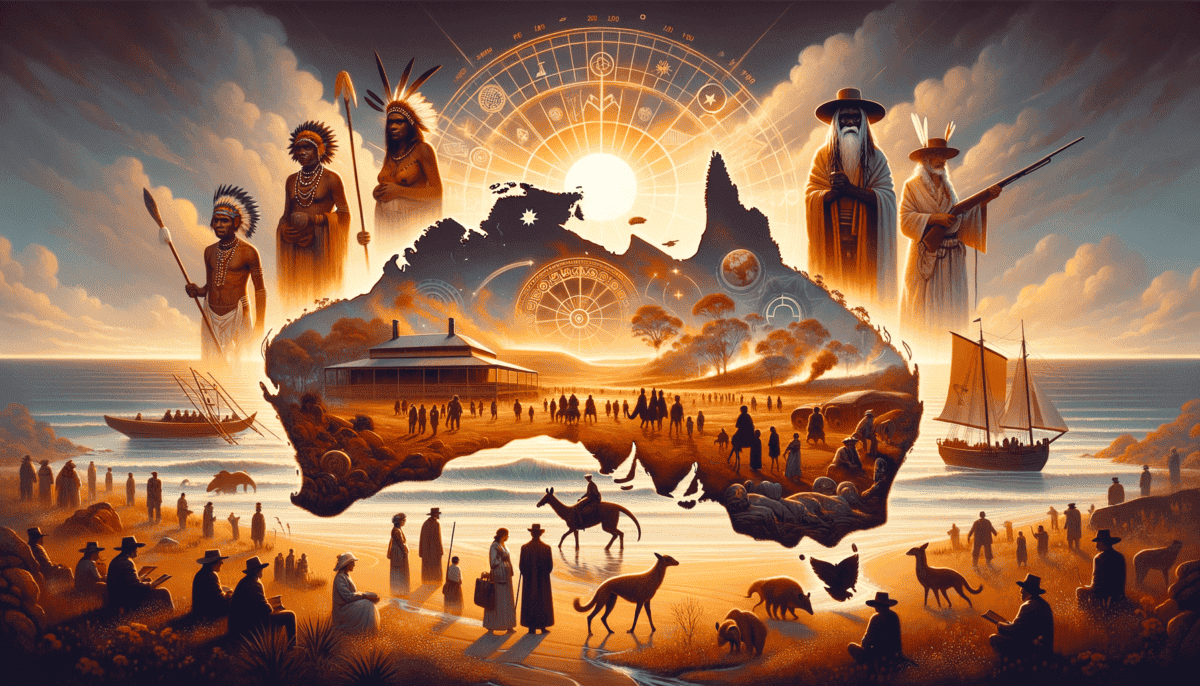
The sun rose over Sydney Harbor in 1914. Young men and women were getting ready for something big. Australia was about to join its first major war.
The Call to Adventure
“We’re going to help Britain!” announced Jack to his sister Sarah. Like many young Australians, he was excited to travel across the world. They called themselves the ANZACs – Australian and New Zealand Army Corps.
Sarah watched as ships filled with soldiers left the harbor. “Be brave,” she whispered, waving goodbye to her brother.
Stories from Far Away
The ANZACs fought at a place called Gallipoli. It was very hard, but they showed great courage. They helped each other and never gave up.
A Changed World
After World War I ended, Australia changed in many ways:
• Women took on new jobs
• Cities grew bigger
• Factories made new things
• Farms got bigger
• More people came to live in Australia
Another Big Test
In 1939, another war started – World War II. This time, the fighting came closer to Australia. Japanese planes flew over Darwin, a city in the north. ✈️
New Friends, New Home
After the wars, many people came to Australia to start new lives. They brought wonderful things with them:
“Our street is like a little world now,” Sarah told her grandchildren. “We have friends from everywhere!”
Growing Together
Australia became stronger because people from different places worked together. They built new homes, schools, and hospitals. They shared their food, music, and stories.
“This is what Jack fought for,” Sarah thought as she watched children from different backgrounds playing together in the park. “A place where everyone can feel at home.”
Looking Forward
The wars taught Australians important lessons about being brave and helping others. These lessons helped make Australia a better place.
As the sun set over Sydney Harbor, where those ships had sailed so long ago, Australia was ready for new adventures. The country had grown stronger, kinder, and more colorful than ever before.
Tomorrow’s Promise
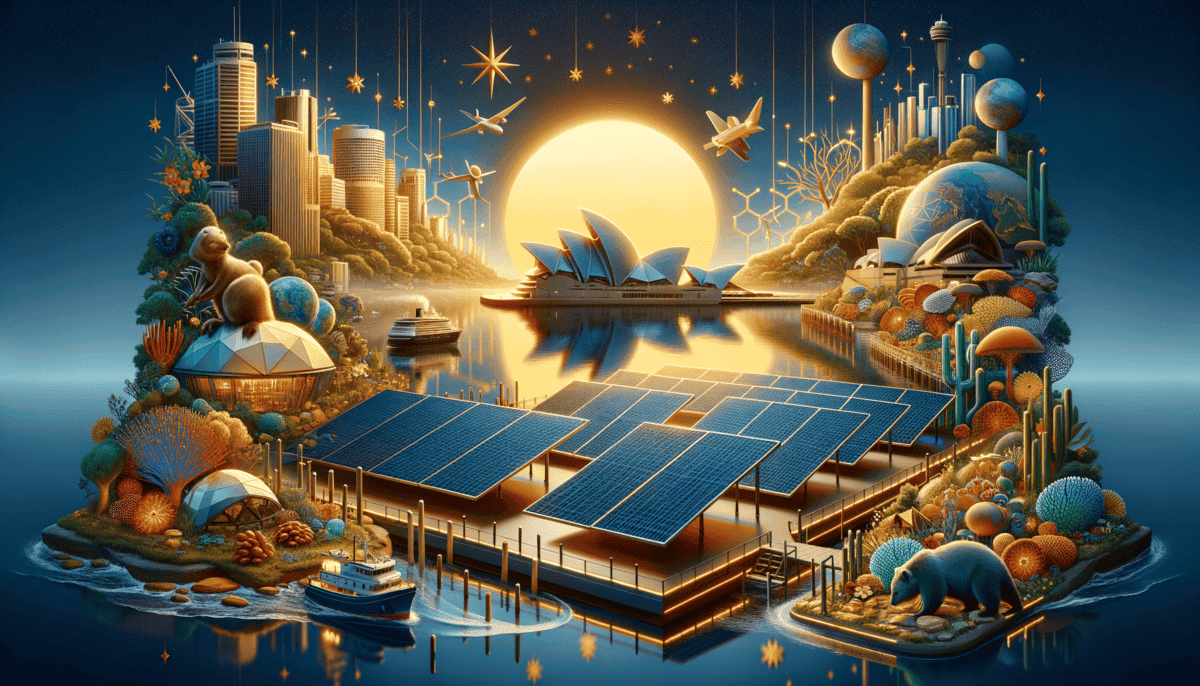
The Sydney Opera House sparkles in the morning sun. Its white sails shine like pearls against the blue sky. This special building shows how far Australia has come.
Smart Ideas for a Better World
“Look at this, kids!” Emma shows her class a solar panel. “Australia is helping save the planet. We’re using the sun to make power!” ☀️
Protecting Our Special Places
Down at the Great Barrier Reef, marine scientist Dr. Sarah waves to a group of students on a glass-bottom boat. “See those coral gardens? We’re working hard to keep them safe!”
The children gasp as colorful fish swim below. “Look at the sea turtle!” one excited voice calls out.
Making Things Right
In a classroom in Alice Springs, Uncle Tom shares stories with young students. He’s teaching them about Aboriginal culture.
Amazing Inventions
Australian scientists and inventors are creating wonderful things:
• WiFi to connect people worldwide
• New medicines to help sick people
• Better ways to grow food
• Robots that protect wildlife
• Clean energy solutions
Friends Around the World
Australia helps other countries too. When there are floods or fires, Australian helpers fly to help. When other nations need food or medicine, Australia shares what it has.
Together for Tomorrow
As the sun sets over Uluru, the great red rock glows like fire. It reminds us of Australia’s long journey – from the Dreamtime stories to today’s achievements.
Young Australians are dreaming big dreams. They want to:
“Make the air cleaner, the oceans healthier, and help everyone feel welcome. We want to make Australia even better!” says Lucy, a young student from Melbourne.
From the ancient songs of the First Peoples to the buzz of modern cities, Australia’s story continues. It’s a story of friendship, courage, and hope. As the stars come out over the vast land, they twinkle with the promise of tomorrow. ⭐