

Ancient Lands and Brave Warriors
Long ago, in a land where mountains touch the sky and oceans stretch forever, lived the brave Mapuche people. Their home was Chile, a special place shaped like a long ribbon along the coast of South America.
"Look at our beautiful land!" young Lautaro exclaimed to his father, standing atop a hill. The morning sun painted the Andes Mountains gold, while cool breezes carried the scent of native forests.
His father, a respected Mapuche warrior, smiled proudly. "Our people have lived here since the time of our ancestors' ancestors," he said, pointing to the vast territory before them.
The Mapuche weren't just farmers – they were brave warriors too. They lived in small groups called lof, where families worked together and shared everything. Their houses, called rukas, were made from wood and straw, perfect for the changing seasons.
Little Lautaro loved listening to the machi (wise healers) tell stories about their people:
"We are children of the earth and sky," the machi would say, her voice gentle like flowing water. "Our strength comes from the land itself."
The Mapuche had special ways to stay strong and healthy:
• They used plants to make medicine
• They learned to fight with spears and bows
• They taught their children to respect nature
• They shared food with everyone in their group
• They honored their wise elders
One evening, as the sun painted the sky orange and red, Lautaro's grandmother told him something important. "Changes are coming to our land," she whispered, looking toward the northern horizon. "But remember, young one – the Mapuche spirit is as strong as the mountains themselves."
The boy didn't understand what she meant then, but he would soon learn. Strange rumors were spreading through the valleys. Tales of bearded men in metal clothes, riding giant animals no one had ever seen before.
That night, under a sky full of stars ⭐, Lautaro dreamed of his people's future. He didn't know it yet, but his grandmother was right – big changes were coming to their peaceful land.
The fires burned low in the ruka as the family settled for sleep. Tomorrow would bring new adventures, new challenges, and new stories to tell. But for now, the Mapuche lands rested peacefully under the watchful eyes of their ancient mountains.
Far to the north, the sound of hooves grew closer…
Clash of Two Worlds
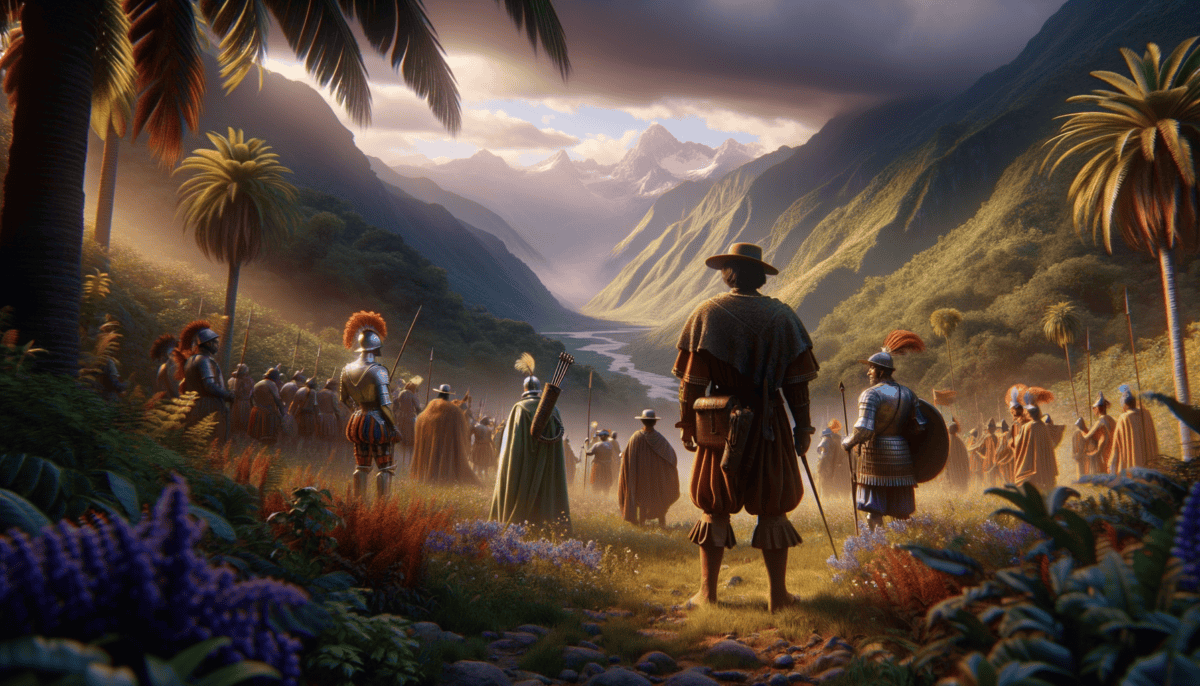
The morning sun caught the glint of metal as strange men rode into Chile. Their leader was Pedro de Valdivia, wearing shiny armor that sparkled like fish scales. ️ The year was 1541, and everything was about to change.
“What are those giant animals?” whispered a young Mapuche boy named Curamil to his sister. They watched from behind tall grass as horses – animals they’d never seen before – carried the Spanish soldiers across their lands.
• Horses
• Metal weapons
• Different clothes
• New languages
• Different foods
Pedro de Valdivia stood tall on a hill, looking at the beautiful land below. “Here,” he said to his men, pointing to a valley between two rivers, “we will build our city.” That place would become Santiago, Chile’s capital city.
But the Mapuche weren’t happy about these new visitors. Chief Michimalonco gathered his warriors and spoke firmly: “These strangers come to take our home. We must protect our land!”
The Spanish tried to make friends at first. “We bring gifts and new ways,” they said. But they also wanted to change how the Mapuche lived.
“Two different worlds met that day – one old, one new. Like mixing water and oil, they didn’t blend easily.”
One day, while the Spanish were building Santiago, Michimalonco led a brave attack. The Mapuche warriors fought hard to protect their home. Even though the Spanish had strong weapons, the Mapuche showed they wouldn’t give up easily.
Young Curamil watched as his people learned new things:
They learned to ride horses
They discovered metal tools ⚒️
They tried new foods from Spain
But they kept their own special ways too
Pedro de Valdivia wrote in his diary: “These Mapuche are the strongest warriors I’ve ever seen. They fight like lions for their land.”
As the sun set each day, both Spanish and Mapuche would look at the same mountains, but they saw different things. The Spanish saw new cities to build, while the Mapuche saw their ancient home.
The story of Chile was changing. Old ways and new ways crashed together like waves on the shore. But like those waves, they would eventually find a way to flow together, creating something new and special.
In the firelight, grandparents told their grandchildren: “Remember these days, little ones. They are the days when Chile began to change forever.”
Two Cultures Blend
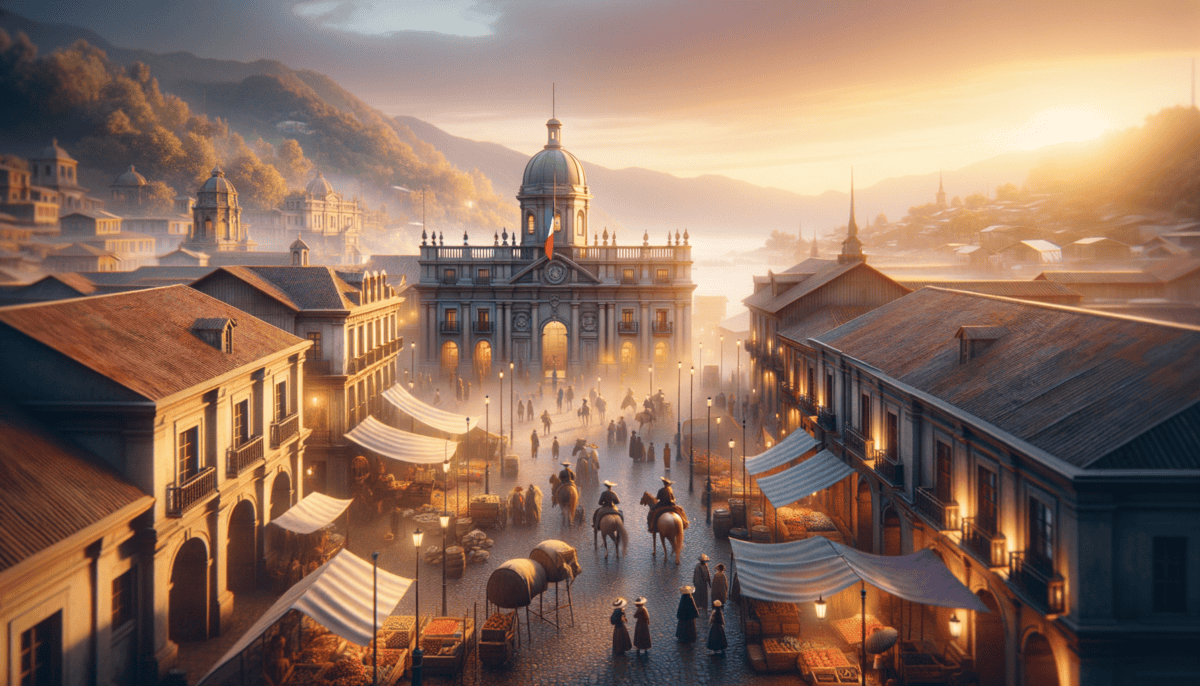
The sun rose over a changed Chile. Spanish churches now stood next to Mapuche homes. Children played together in the streets of Santiago, speaking a mix of Spanish and Mapuche words.
“Mama, tell me about when you were little,” asked María, whose father was Spanish and mother was Mapuche. Her mother smiled, weaving a colorful blanket in the traditional way.
“We are like this blanket, mi hija,” her mother said softly. “Different colors and patterns coming together to make something beautiful.”
• Spanish governors ruled the cities
• Mapuche kept their lands in the south
• New foods like wheat and grapes grew in fields
• People learned each other’s ways of living
In the marketplace, wonderful new things appeared. Spanish bread baked in stone ovens while Mapuche corn dried in the sun. Children ate sopaipillas – a new food that mixed Spanish cooking with Mapuche ingredients.
Don Francisco, the Spanish governor, watched from his big house. “Our two peoples are becoming one,” he said to his advisor. “But not everyone is happy about it.”
Some Spanish wanted all the power. They made unfair rules. Many Mapuche and poor Spanish people had to work very hard on big farms called haciendas.
But something special was happening too:
New families formed
New traditions started
New words were created
New kinds of music played in the streets
Little Juan, whose grandmother was Mapuche and grandfather was Spanish, loved hearing both sides of his family tell stories. “Tell me about the brave Mapuche warriors!” he would beg his grandmother. “And tell me about the ships from Spain!” he’d ask his grandfather.
Churches rang their bells while Mapuche drums beat in the distance. In the fields, farmers used both old and new ways to grow food. Spanish priests learned Mapuche healing plants, while Mapuche healers used Spanish medicines.
“Look at our city now,” said an old man to his grandchildren, pointing to Santiago. “When I was young, this was just a small fort. Now it’s growing into something new – not just Spanish, not just Mapuche, but Chilean.”
The warm afternoon light shined on adobe walls painted with both Spanish and Mapuche designs. Children played games their parents never knew, speaking words their grandparents had never heard. This was Chile changing, growing, becoming something new.
As night fell over the valley, stars twinkled above the mixed city. In homes throughout Chile, families gathered to share meals that brought together the best of both worlds. The story of Chile was still being written, day by day, by all its people together.
Ideas Begin to Change
The warm breeze carried new thoughts through Chile’s streets. It was 1808, and exciting ideas were spreading like wildfire.
Young José sat in his father’s library, eyes wide as he read books from Europe. “Papa, what does ‘liberty’ mean?” he asked.
“It means being free to choose your own path, hijo,” his father whispered, carefully closing the door. “But we must be careful talking about such things.”
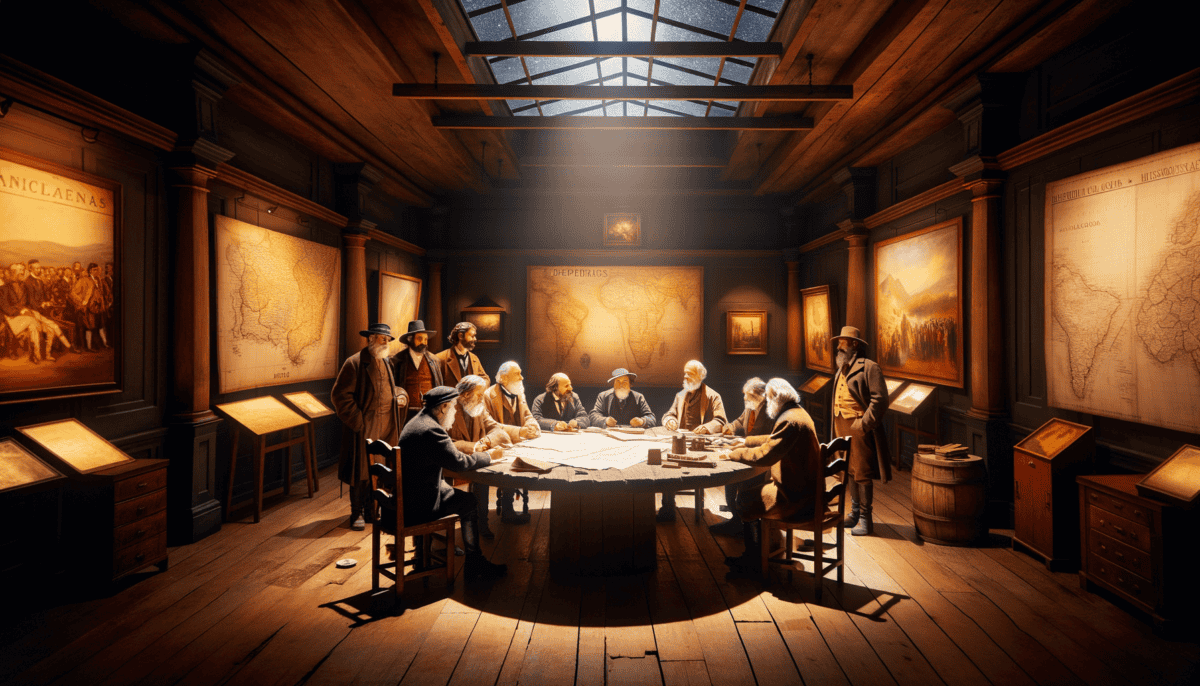
In secret rooms across Santiago, people gathered to talk about big dreams. They wanted Chile to rule itself, not be controlled by Spain.
• People should choose their leaders
• Everyone deserves fair treatment
• A country should make its own rules
• Education should be for all children
María, now grown up, taught her children to read in both Spanish and Mapuche. “Knowledge is power,” she would say, sharing stories of both their Spanish and Mapuche ancestors.
Change was in the air:
Students read new books
Farmers talked about rights
Merchants dreamed of free trade
Workers wanted better lives
“Did you hear?” whispered Ana to her friend in the marketplace. “They’re having secret meetings at Don Manuel’s house. They’re planning something big!”
In the grand houses of Santiago, wealthy Chileans hosted dinner parties where they talked about independence. “Why should Spain tell us what to do?” they asked. “We can govern ourselves!”
Even children felt the excitement. Little Pedro drew pictures of Chilean flags in the dirt. His sister Carmen made up songs about freedom that the neighborhood kids would sing.
“Times are changing,” said old Juan, now gray-haired, watching young people hurry to their secret meetings. “Our children want more than we had.”
News traveled slowly from Europe, but when it came, it brought hope. Other colonies were standing up to Spain. “If they can do it, so can we!” people whispered excitedly.
The stars seemed to shine brighter over Chile now. In homes and hideaways, in fields and city streets, people dared to dream of a free Chile. A storm was coming – one that would change everything. ⭐
Heroes Rise for Freedom
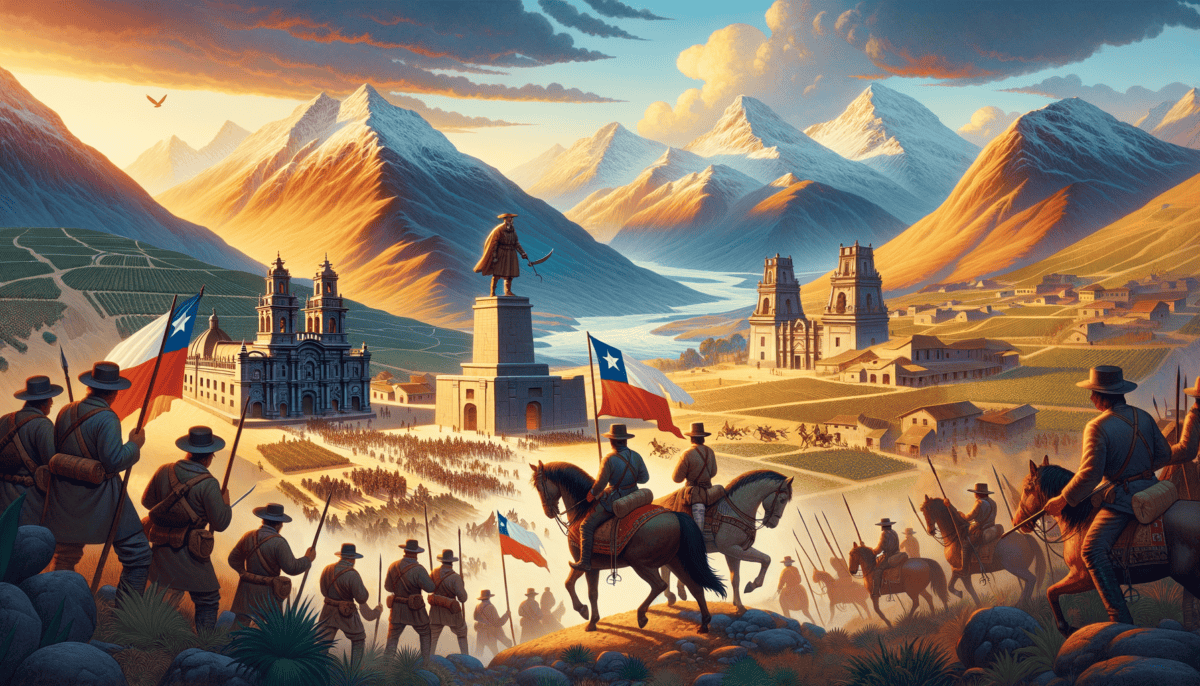
The morning sun rose over the Andes Mountains as two brave men met in secret. Bernardo O’Higgins and José de San Martín shook hands firmly. They had big plans to free Chile!
“Together, we will cross these mountains,” San Martín said, pointing to the snowy peaks. “And we will bring freedom to our people.”
O’Higgins nodded, his eyes bright with hope. “Our army may be small, but our hearts are strong!”
• Train soldiers in secret
• Cross the Andes Mountains
• Surprise the Spanish army
• Win Chile’s freedom
Little María watched the soldiers training near her village. “Why are they practicing so hard, Mama?” she asked.
“They fight for our future, mi amor,” her mother answered. “So you can grow up in a free Chile.”
The army grew stronger each day:
Farmers became soldiers
Blacksmiths made swords
Women sewed uniforms
Children carried messages
On February 12, 1817, the great battle began at Chacabuco. The freedom fighters charged down the mountainside, surprising the Spanish soldiers! ⚔️
“For Chile!” O’Higgins shouted, leading his brave soldiers forward. The battle was fierce, but the freedom fighters were fierce too.
Old Juan watched from his hilltop home. “Look!” he called to his grandchildren. “Our people are fighting for freedom!”
“Victory!” the soldiers shouted as the Spanish army retreated. Tears of joy rolled down their faces. Their dream of freedom was coming true!
In Santiago’s streets, people danced and celebrated. Children waved makeshift flags, and mothers hugged their returning soldier sons.
“Tell us the story again,” young Pedro begged his father, a soldier who fought at Chacabuco. “Tell us how you helped free Chile!”
The victory at Chacabuco wasn’t the end. More battles would come. But now everyone knew – Chile’s people would never stop fighting for their freedom. The dream of independence was closer than ever!
Birth of a Free Nation
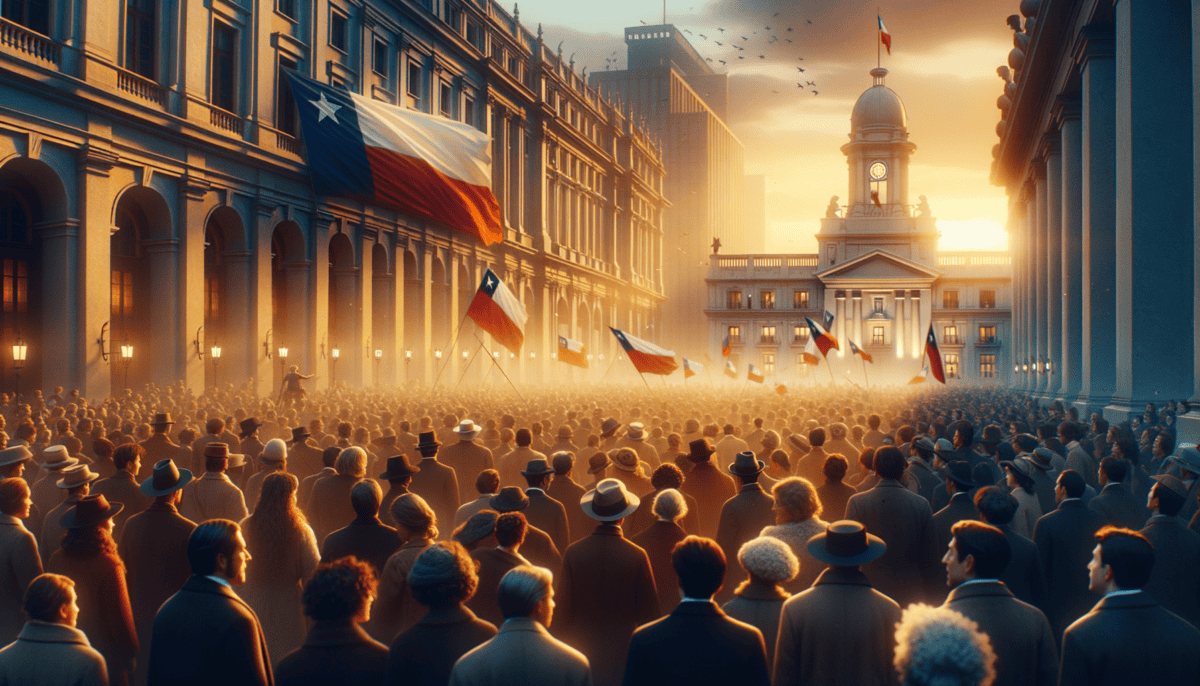
The sun rose over Santiago on a special morning in 1818. People filled the streets, waving blue, white, and red flags. Today was the day Chile would become free!
“People of Chile!” O’Higgins called out from the plaza. “Today we declare our independence! We are now our own country!” The crowd cheered and hugged each other with joy.
Little Ana held her father’s hand tightly. “Papa, what does independence mean?”
“It means we can make our own choices now, mi pequeña,” he smiled. “We can build the Chile we dream of.”
– Made their own laws
– Started new schools
– Built roads and bridges
– Created their own flag
But being a new country wasn’t easy. O’Higgins and other leaders worked hard to bring everyone together. They wanted to make Chile a home for all its people – Spanish, Mapuche, and everyone in between. ❤️
In the countryside, María watched her brothers go to their new school.
In the cities, workers built new buildings.
In the mountains, Mapuche families taught their children both old and new ways.
“Remember,” Grandmother told her grandchildren, “our story is like a beautiful tapestry. The old threads and new threads weave together to make something special.”
Young Pedro stood in his classroom, learning to read. “One day,” he said proudly, “I will help make Chile even better!”
Years passed, and Chile grew stronger. The country faced challenges, but its people worked together to overcome them.
Today, Chile is a beautiful country where ancient mountains touch modern cities. Its people are proud of their past and excited about their future.
In parks and plazas, children play near statues of O’Higgins and San Martín. They learn about the brave people who fought for freedom. And they dream about how they too will help write Chile’s continuing story.
“Tell me about Chile,” a young girl asks her teacher.
“Chile,” the teacher answers with pride, “is a land of brave people who never stopped dreaming of freedom. And now, mi amor, it’s your turn to help make those dreams come true.”
And so Chile’s story continues, written by new generations who carry the spirit of freedom in their hearts. ✨