
The Eagle’s Realm
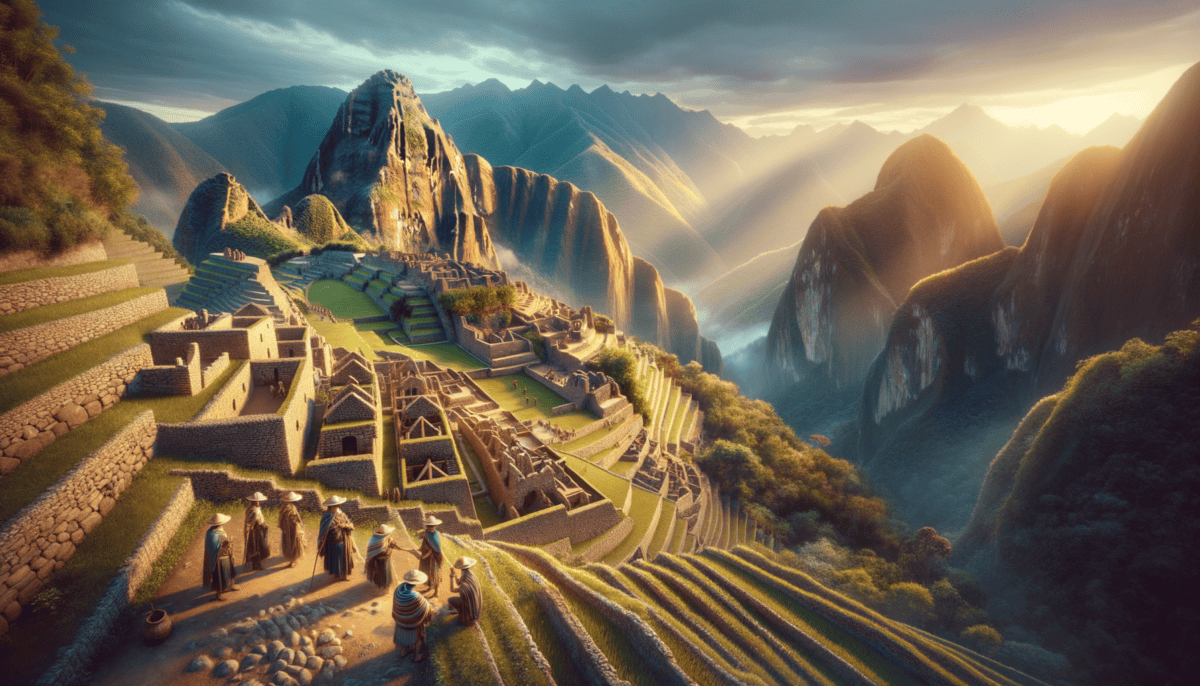
The morning sun pierced through the thin mountain air, casting long shadows across Machu Picchu’s perfectly fitted stones. Pachacuti stood at the edge of his greatest achievement, his royal cloak billowing in the crisp Andean breeze. Below him, thousands of workers moved like ants, continuing their meticulous construction of what would become the crown jewel of the Inca Empire.
“Sapa Inca,” a voice called from behind. His trusted advisor, Apu Huallpa, approached with measured steps. “The architects await your inspection.”
Pachacuti turned, his gold ear spools catching the early light. “Tell me, old friend, will our works endure?”
“Your empire stretches from Quito to Chile, sacred one. Your engineers have built roads that would make the gods envious. Qhapaq Ñan connects all corners of Tawantinsuyu.”
The emperor’s eyes swept across the terraced mountainside, where crops grew in perfect geometric patterns. Agricultural innovation had been key to feeding his expanding empire. Each level was a testament to Inca ingenuity – precise irrigation systems that prevented erosion while maximizing harvest yields.
“We build not just for ourselves, but for the generations to come. Every stone must speak of our greatness.”
Below in the sacred plaza, priests prepared for the day’s ceremonies. The sun’s rays aligned perfectly with the ceremonial stone, an astronomical precision that marked the summer solstice. This was no accident – Inca architects had mastered the art of working with both earth and sky.
The empire’s achievements were remarkable:
- The quipu system for recording information through knotted cords
- Suspension bridges spanning impossible chasms
- Sophisticated metalworking in gold and silver
- Advanced agricultural techniques
- A complex system of governance uniting diverse peoples
A young messenger approached, dropping to one knee. “Great Inca, reports from the northern scouts.”
Pachacuti’s expression darkened. Strange rumors had been arriving from coastal regions. Tales of floating houses on water and pale-skinned men in metal clothing. He dismissed them as fantasy, yet something stirred uneasily in his chest.
“Your majesty,” Apu Huallpa spoke softly, “perhaps we should increase the coastal garrisons?”
“No,” Pachacuti replied firmly. “Our empire is at its zenith. What force could possibly threaten the children of the Sun?”
As if in answer, a shadow passed overhead – a condor soaring on thermal currents. Its wings spread wide, casting a momentary darkness across the sacred city. Pachacuti watched it glide toward the distant horizon, where the sun rose over his vast domain.
In the temple below, priests chanted ancient prayers, their voices carrying on the wind. The smell of burning sage drifted upward, and for a moment, time seemed to stand still in this perfect convergence of natural and human achievement.
Location: Machu Picchu, 1471 CE
The day’s inspection continued, with Pachacuti examining every detail of the ongoing construction. Master stonemasons demonstrated their technique of fitting massive blocks so precisely that not even a knife blade could pass between them. No mortar was needed – the stones were cut to lock together perfectly, creating structures that would withstand earthquakes.
“See how they use bronze tools to shape the granite?” Apu Huallpa gestured toward the workers. “Each stone is unique, yet they fit together like puzzle pieces.”
Pachacuti nodded approvingly. “And the astronomical alignments?”
“Perfect, Sapa Inca. The solstice markers are aligned with absolute precision.”
As evening approached, torches were lit throughout the city. From his vantage point, Pachacuti could see the network of signal fires being lit along distant mountaintops – the empire’s communication system spanning thousands of miles.
The emperor retired to his chambers, where maps made of clay showed the extent of his domain. His fingers traced the routes of the great royal roads, connecting administrative centers and temples across the realm. Messengers could travel these roads at impressive speeds, maintaining communication throughout the vast empire.
“Tomorrow we inspect the food storehouses,” he announced to his attendants. The empire’s system of food storage and distribution was another marvel, ensuring that no region would face famine even in poor harvest years.
As night fell over Machu Picchu, Pachacuti stood at his window, contemplating the empire he had built. Stars wheeled overhead in familiar patterns, tracked and recorded by his astronomers. Below, the city hummed with activity even in darkness.
Yet still, that uneasy feeling persisted. In his dreams that night, he saw great birds with white wings floating on the sea, carrying within them the seeds of change that would transform his world forever.
Shadows of Conquest
The Pacific waves crashed against the shore of Tumbes as Francisco Pizarro’s ships appeared on the horizon like massive seabirds. The year was 1532, and Peru stood on the precipice of irrevocable change. Local fishermen dropped their nets, staring in disbelief at the strange vessels approaching their coast.
“Viracochas,” whispered an elderly fisherman, using the Inca word for divine beings. “The prophecy speaks of their return.”
Aboard the lead ship, Pizarro stood at the bow, his weathered face fixed on the coastline. The morning sun glinted off his steel breastplate as he addressed his men:
“Behold, gentlemen, the land of gold we’ve sought. Today we claim it for God and Spain.”
The Spanish expedition, merely 168 men strong, carried with them tools of conquest that would reshape the continent: steel swords, crossbows, horses, and most devastatingly, invisible allies – diseases against which the Inca had no defense.
The Fateful Meeting
Months later, in the highland city of Cajamarca, Atahualpa, the last independent Inca emperor, received troubling reports. The strange beings had been moving inland, bringing with them instruments of war never before seen in the Andes.
“Great Inca,” his general Rumiñawi urged, “these foreigners bring death in their wake. Villages fall silent after they pass.”
Atahualpa stood in his golden chamber, adorned with the finest textiles and precious metals. The empire was already weakened by civil war between himself and his brother Huáscar, but surely these few strangers could pose no real threat to the mighty Tawantinsuyu?
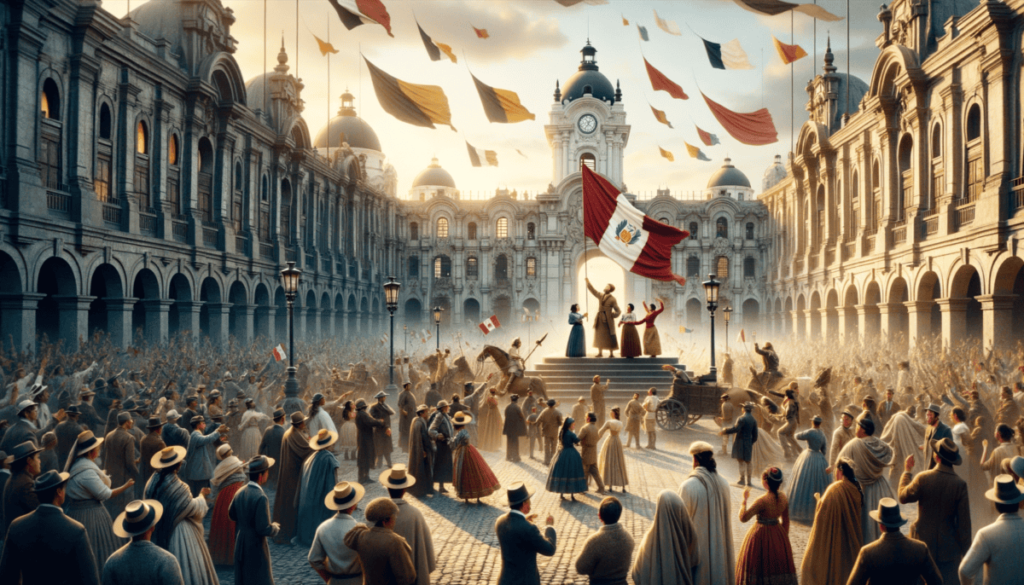
The meeting was set for November 16, 1532. Atahualpa entered Cajamarca’s main plaza with thousands of unarmed attendants, carried high on a golden litter. The Spanish, hidden in buildings around the square, watched in amazement.
Dominican friar Vicente de Valverde approached the Inca ruler, holding a breviary and cross. Through an interpreter, he delivered the Requerimiento – demanding submission to the Spanish Crown and the Catholic Church.
“Speak clearly of this god you claim created all things,” Atahualpa replied, taking the book and examining it. “I hear nothing.”
He threw the book to the ground – an action that would seal his fate and that of his empire.
Pizarro gave the signal. The trap was sprung. The sound of cannon fire shattered the mountain air, followed by the thunder of hooves as Spanish cavalry charged into the packed plaza. Steel met flesh as the conquistadors unleashed their terrible efficiency for killing.
The Empire’s Twilight
In the chaos that followed, Pizarro himself fought through the press of bodies to reach Atahualpa. The emperor’s bearers died trying to protect him, their bodies forming a bridge over which more bearers stepped up to hold the litter aloft.
“Take him alive!” Pizarro shouted in Spanish. “The king is our key to the kingdom!”
As the sun set over Cajamarca, thousands of Inca lay dead or dying in the plaza. Atahualpa, the last free Inca emperor, sat imprisoned in his own city. The Spanish had accomplished the unthinkable – capturing the sovereign ruler of the largest empire in the Americas with fewer than 200 men.
“Fill this room with gold,” Atahualpa offered his captors, reaching up to touch the ceiling, “and twice over with silver. That shall be my ransom.”
The Spanish agreed, never intending to honor their word. As precious metals poured into Cajamarca from every corner of the empire, the conquistadors marveled at the wealth before them while planning their betrayal.
In the following months, the Inca world began to unravel. Royal storehouses were plundered, temples stripped of their gold, and sacred objects melted down. But more devastating than the physical destruction was the shattering of the imperial system itself.
Distance runners, the chaski, carried news of the disaster throughout the empire via the royal road system. The same magnificent network that had once ensured efficient administration now spread panic and confusion across the realm.
As night fell over the Andes, generations of technological achievement, social organization, and cultural knowledge teetered on the brink of oblivion. The Spanish tide would sweep away much of the old order, but seeds of resistance were already taking root in the hearts of those who watched their world transform.
Far to the south, in the sacred valley, keepers of ancient knowledge began hiding sacred objects and records. The conquest would not be total – some things would survive, waiting for future generations to rediscover them.
The Fire of Resistance
The mountain air crackled with tension as dawn broke over Cusco in 1780. José Gabriel Condorcanqui, who would soon be known as Túpac Amaru II, stood before an ancient Inca mirror, carefully adjusting his royal mascapaicha – the crimson fringe that marked him as a descendant of the last Inca emperors.
“Our people have endured enough,” he whispered to his wife, Micaela Bastidas. “Today, we reclaim our dignity.”
Micaela, her dark eyes fierce with determination, helped secure his ceremonial armor. “The Spanish grow more cruel with each passing season. The mita kills our men in the mines, while our children starve.”
Seeds of Revolution
The colonial system had grown increasingly oppressive. Corregidores forced indigenous communities to purchase unwanted Spanish goods at inflated prices, while the brutal mita labor system sent thousands to their deaths in the silver mines of Potosí.
• Abolition of the mita system
• End to forced purchase of goods
• Recognition of indigenous rights
• Reform of colonial administration
In the marketplace of Tungasuca, Túpac Amaru confronted the corrupt corregidor Antonio de Arriaga. The plaza fell silent as the descendant of Inca royalty faced the Spanish official.
“By authority of ancient law and natural justice,” Túpac Amaru’s voice rang out, “you are condemned for crimes against the children of the sun.”
The Spark Ignites
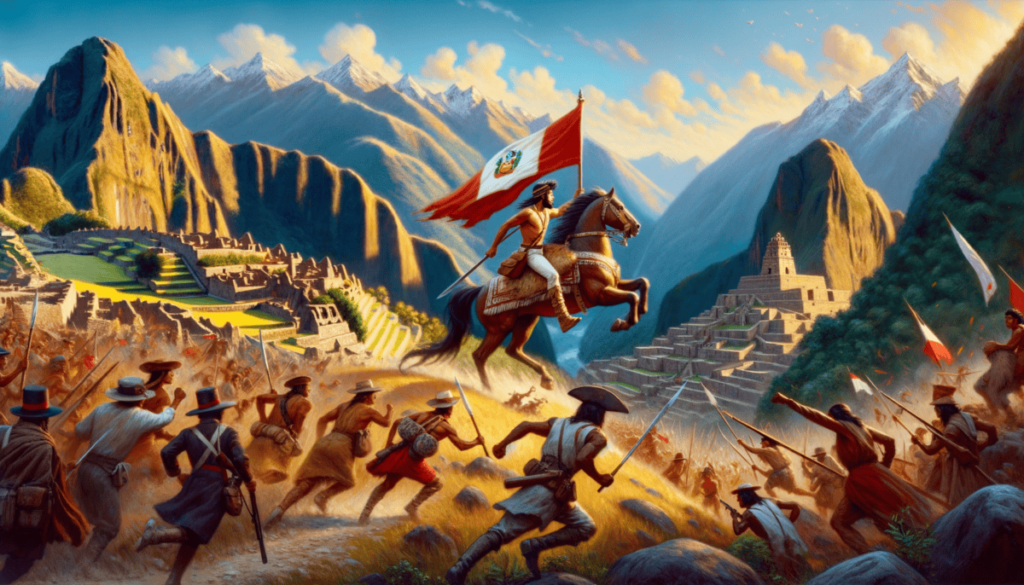
What followed was a carefully orchestrated rebellion. Indigenous warriors, armed with traditional weapons and captured Spanish arms, emerged from hiding places throughout the region. The uprising spread like wildfire through the Andes.
Micaela proved herself a brilliant strategist, coordinating supply lines and maintaining communication between rebel forces. “We fight not just for ourselves,” she told her gathered captains, “but for generations yet unborn.”
Villages that had suffered under Spanish rule for generations now rose in open revolt. Ancient Inca war horns – pututus – echoed through mountain valleys, calling warriors to arms.
A People Awakened
The rebellion grew beyond anything the Spanish had faced before. Indigenous communities, long divided by colonial rule, found common cause. Secret meetings were held in ancient huacas, sacred spaces that had survived the conquest.
“Remember who you are,” an elderly quipucamayoc told a gathering of young warriors, his fingers moving over the ancient counting cords. “In these knots lie the memories of empire. Our time returns.”
Colonial authorities reacted with increasing brutality, but each act of repression only fueled the resistance. Underground networks, maintained through ancient Inca messenger routes, spread word of victories and coordinated attacks.
Price of Rebellion
Success came at a terrible cost. Villages that supported the rebellion faced savage reprisals. Yet still they fought, choosing death over continued submission.
Micaela organized an intricate system of safe houses and escape routes, helping hundreds avoid capture. Her messages, written in a mixture of Spanish and Quechua, kept the rebellion coordinated across vast distances.
“They may break our bodies,” she wrote in a secret dispatch, “but they cannot break our spirit. We are the children of mountains that have stood since time began.”
The Spanish response grew more desperate as the rebellion spread. They offered pardons to those who would betray their leaders, but few accepted. The bonds of resistance, forged in centuries of shared suffering, proved stronger than fear.
Legacy of Resistance
Though Túpac Amaru and Micaela would ultimately face capture and execution, their resistance became legend. Stories of their courage passed from generation to generation, inspiring future struggles for freedom.
In remote mountain villages, people began preserving their culture with renewed determination. Ancient ceremonies, long practiced in secret, emerged into the open. Children were taught their true history, not just the version approved by Spanish authorities.
The seeds of revolution, watered with the blood of martyrs, took root deep in Peru’s soil. The spirit of resistance, like the eternal Andes themselves, would endure.
As night fell over Cusco, where the rebellion had reached its tragic climax, an old woman gathered children around her cooking fire. “Remember,” she said, dropping dried coca leaves into the flames, “remember how we fought. For the story is not yet finished…”
Winds of Change
Lima, 1820. The colonial capital hummed with whispered conspiracies as José de San Martín’s liberation army approached from the south. In a dimly lit study, Carlos Montoya, a young creole merchant, carefully unfolded a letter marked with the secret symbol of the revolutionaries. ️
“The time has come,” he read, his heart racing. “The Protector marches north.”
“Freedom is not given – it is taken,” San Martín had written in his proclamation, words that now spread through the city like wildfire.
A City Divided
The streets of Lima pulsed with tension. Spanish loyalists fortified their positions while secret patriot meetings multiplied in the shadows. In the marketplace, Rosa Flores, an indigenous herb seller, passed coded messages hidden in bundles of coca leaves.
“Watch the guards at the western gate,” she whispered to Carlos. “They grow fewer each day.”
• Merchant guilds sharing intelligence
• Indigenous market vendors as messengers
• Creole aristocrats funding the resistance
• Church officials providing sanctuary
The Grand Strategy
San Martín’s approach was methodical. Rather than direct confrontation, he orchestrated a campaign of psychological warfare. Spanish forces found themselves increasingly isolated as coastal towns declared for independence.
“General San Martín understands that Lima must fall from within,” Carlos explained during a clandestine meeting. “Our task is to make the city ungovernable.”
Hearts and Minds
Rosa moved through the city’s indigenous neighborhoods, where memories of Túpac Amaru’s rebellion still burned bright. “San Martín promises equality,” she told gathered crowds. “No more mita, no more tribute.”
The revolution’s promises resonated deeply. Centuries of oppression had created a powder keg of resentment. Now, at last, the spark of liberation approached.
Diplomatic Dance
In Lima’s grand salons, Doña Isabella Riquelme, a wealthy widow, hosted gatherings that served as cover for revolutionary planning. “Even the Viceroy’s own officers attend,” she confided to Carlos. “They see which way the wind blows.”
The Spanish authority’s grip weakened daily. Desertion rates soared as colonial troops, many themselves American-born, questioned their loyalties.
The Price of Liberty
Not everyone supported the revolution. Old rivalries and fears complicated the path to independence. “My own brother serves the crown,” Carlos admitted during a secret meeting. “Tomorrow, we may face each other across battlelines.”
“Revolution demands sacrifice,” Rosa replied, touching the scar where Spanish soldiers had struck her years before. “But slavery demands more.”
Momentum Builds
As summer turned to autumn, the liberation army’s presence grew stronger. Coastal blockades by Lord Cochrane’s rebel fleet strangled Spanish supply lines. In Lima’s markets, food prices soared.
The network of revolutionaries expanded. Every night, more lights flickered in windows – secret signals of support for the coming liberation. The city’s mood shifted from fear to anticipation.
Doña Isabella’s salons became more daring. “Even the Archbishop speaks of accommodation,” she reported. “The old order crumbles.”
The Final Push
By December, Lima seethed with revolutionary fervor. Carlos coordinated with San Martín’s agents, preparing for the final phase. Rosa’s network of market women tracked Spanish troop movements, passing intelligence through ancient Inca messenger routes.
In the highest circles of colonial society, the whispers grew louder. Victory seemed inevitable, yet the final steps would prove the most dangerous.
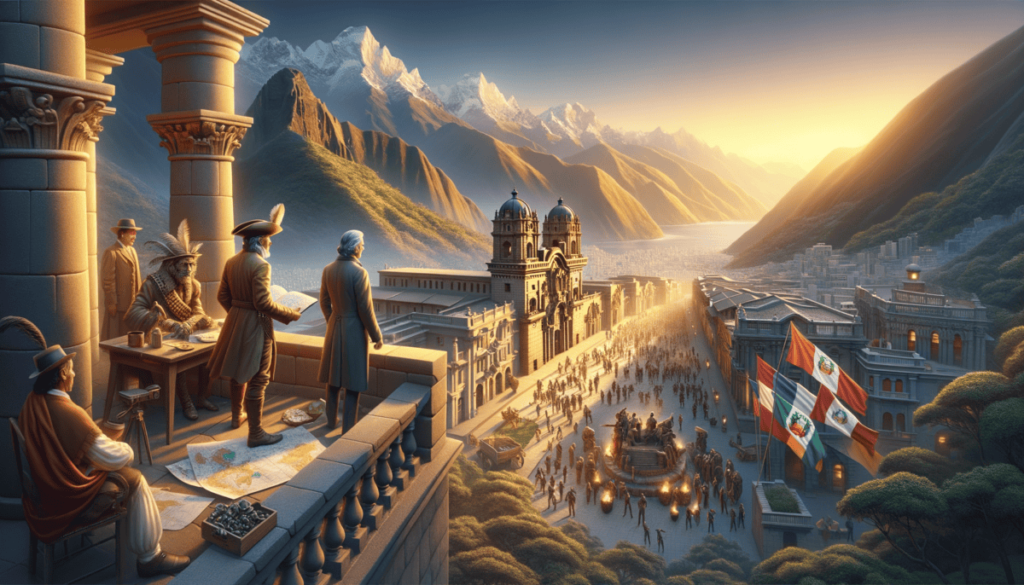
As the year drew to a close, Carlos stood on his balcony overlooking Lima’s grand plaza. In the distance, he could almost imagine he saw the dust of San Martín’s approaching army. The air crackled with possibility.
That night, as revolutionary councils plotted across the city, an old prophecy echoed through the streets: “When the eagle of the north meets the condor of the south, a new day will dawn for Peru…”
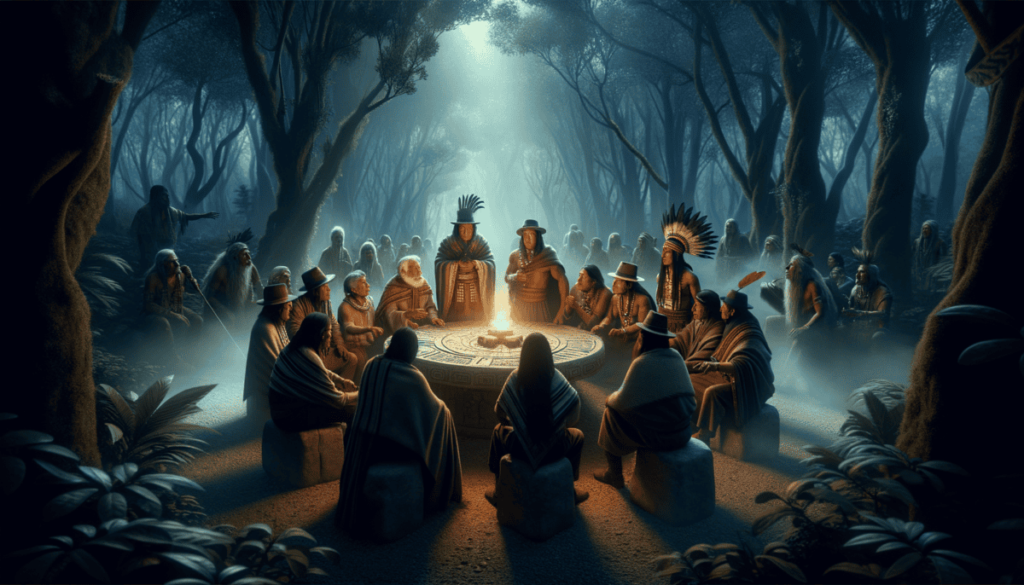
Dawn of Liberty
The summer of 1821 blazed across Peru as San Martín’s forces tightened their grip around Lima. The ancient city, once the proud jewel of Spanish America, now trembled on the edge of transformation.
“Today, we write history with our blood and courage,” General San Martín declared to his assembled officers. “Lima must fall, but it must fall wisely.”
The Final Siege
Carlos Montoya stood atop the city walls, watching rebel cavalry patrol the dusty plains. Below, Rosa Flores moved through the crowded markets, where hunger and hope mingled in equal measure. The Spanish blockade had taken its toll – even wealthy families now felt the bite of scarcity.
• Cerro San Cristóbal – Strategic heights
• Lima’s western gates – Main defense point
• Callao Port – Naval stronghold
• Rimac River crossings – Supply routes
Warriors Unite
Indigenous warriors from the mountains joined San Martín’s professional soldiers. Their knowledge of the terrain proved invaluable as the rebel army established control of key mountain passes.
“My grandfather fought with Túpac Amaru,” a young warrior named Kuntur told Carlos. “Today, we finish what he started.”
The Turning Point
As June turned to July, Spanish resolve crumbled. Viceroy La Serna, recognizing the inevitability of defeat, prepared to abandon the capital. In secret meetings, patriot leaders planned the transition.
“We must prevent chaos,” Doña Isabella insisted during a clandestine gathering. “The city must not burn.”
A City Transforms
The night the Spanish departed was surreal. Torch-lit processions of soldiers and civilians streamed through the streets. Rosa organized indigenous communities to maintain order, while Carlos coordinated with rebel forces outside the walls.
“Look!” someone shouted. “The royal flag – they’re lowering it!”
A profound silence fell over the crowd as the Spanish colors descended for the last time.
Liberation’s Price
San Martín’s entry into Lima on July 12th marked a new epoch. But amid the celebration, the cost became clear. Streets bore scars of fighting, and many families mourned loved ones lost to both sides.
“Freedom’s price is always high,” Rosa murmured, tending to wounded patriots. “But slavery costs more with each passing day.”
Building Anew
The initial euphoria gave way to the hard work of nation-building. San Martín established a provisional government, working to unite Peru’s diverse populations. Carlos found himself appointed to the new administrative council, while Rosa helped organize indigenous representation.
“We must build bridges between all Peruvians,” San Martín declared. “Spanish, Creole, Indigenous – all must have a voice in the new Peru.”
Echoes of Empire
In the ancient stones of Cusco, ceremonies marked the end of colonial rule. Kuntur and his warriors performed traditional rites, linking Peru’s independent future to its imperial past.
The spirit of the Inca empire seemed to stir as indigenous leaders took their places in the new government. Ancient prophecies spoke of cycles of time – destruction followed by rebirth.
High in the Andes, signal fires blazed across mountain peaks, carrying news of liberation. Peru had won its freedom, but the greater challenge lay ahead: forging a nation from the ashes of empire.
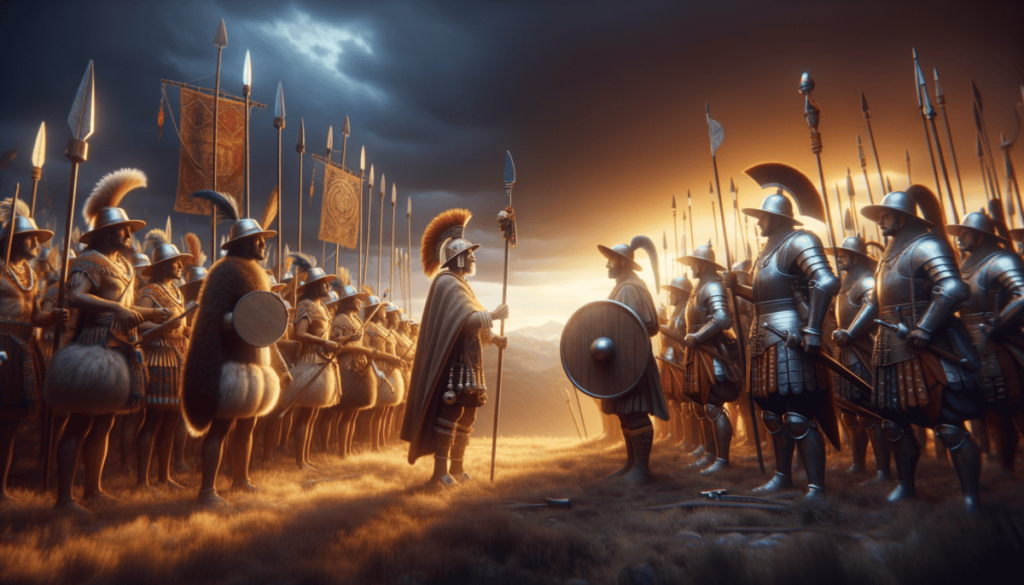
Legacy of Liberty
The streets of Lima pulsed with newfound energy as dawn broke over the first year of independence. The morning light caught the glint of dew on cobblestones where Spanish boots had once marched, now echoing with the footsteps of free citizens.
“We’ve won our freedom,” Rosa whispered to herself, watching market vendors set up their stalls beneath the rising sun. “Now comes the harder task – deciding what to do with it.”
Rising Dawn
The grand plaza buzzed with activity as representatives from across Peru gathered for the first Constitutional Congress. Carlos adjusted his formal attire, now bearing the symbols of the new republic rather than colonial insignia.
Indigenous leaders in traditional dress sat alongside creole politicians, their voices mixing in animated debate about Peru’s future. Kuntur stood proudly among them, his warrior’s bearing now tempered with diplomatic grace.
• Equal rights for all citizens
• Protection of indigenous lands
• Religious freedom
• Public education
Weaving the Future
In the markets, Rosa organized cooperative ventures between indigenous artisans and urban merchants. Traditional textiles found new markets, while ancient agricultural techniques were integrated with modern farming.
“See how the old and new strengthen each other?” she explained to a group of young apprentices. “Like the threads of a tapestry, we are stronger together.”
Challenges of Unity
Yet the path forward wasn’t smooth. Regional rivalries threatened to tear the young nation apart. Carlos spent long nights mediating disputes between coastal and mountain communities.
“Remember why we fought,” he urged during a particularly heated session. “Not to replace one form of division with another, but to create something new.”
Cultural Renaissance
In Cusco, Kuntur led efforts to revive traditional ceremonies while embracing modern education. Schools sprouted in ancient plazas, teaching both Spanish and Quechua.
“Our children will walk in both worlds,” he declared. “They will carry our ancestors’ wisdom into the future.”
Seeds of Democracy
The first elections brought both excitement and tension. Women like Rosa pushed for greater representation, while indigenous communities demanded recognition of their traditional governance systems.
“True independence means all voices must be heard,” Isabella argued in the assembly. “Even those that make us uncomfortable.”
Bridges Across Time
As the sun set on the first anniversary of independence, Peru stood transformed. The ancient stonework of Inca temples now housed newspapers printing in multiple languages. Market squares echoed with debates about constitutions and commerce.
Carlos and Rosa stood together on the balcony of the new government building, watching children play in the plaza below. Some wore traditional ponchos, others European-style clothes, all of them free.
“Look at them,” Rosa smiled. “They don’t see Spanish or Indigenous anymore. They just see Peruvians.”
The Journey Continues
In the high Andes, ancient terraces bloomed with new crops. Coastal ports bustled with international trade. And in village squares across the nation, people gathered to share stories that bridged centuries.
The sun dipped behind the mountains, painting the sky in colors that had witnessed the rise and fall of empires. But this evening’s light held something new – the promise of a future where all of Peru’s children could reach for their dreams under the same free sky.
“We are not at the end,” Carlos reflected, watching the stars emerge. “We are at the beginning.”
And so Peru continued its journey, carrying forward the wisdom of the Inca, the lessons of revolution, and the dreams of its people – all woven together into the fabric of a nation reborn.