
Cradle of Civilization
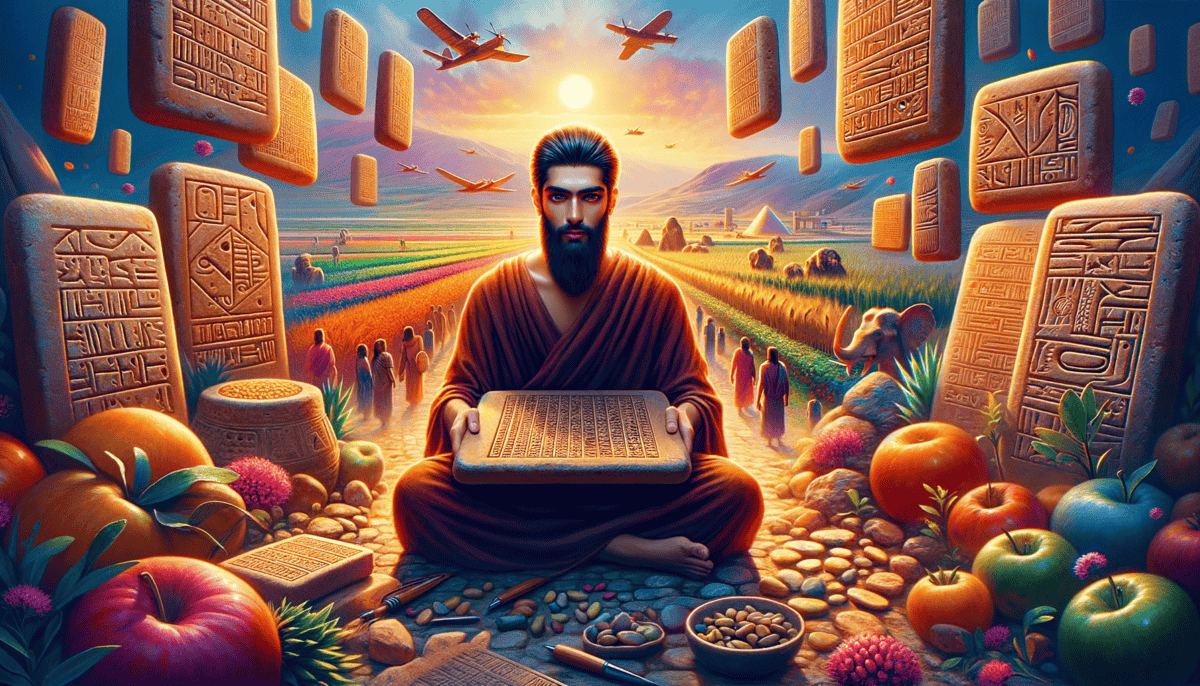
Long, long ago, in a place we now call Syria, there was a young boy named Adad. He lived in a beautiful city called Ebla, where the sun painted the stone buildings golden every morning.
“Wake up, Adad! It’s time for your lessons,” his father called out one bright morning.
Adad wasn’t like other kids his age. While they played in the dusty streets, he spent his days learning something very special – he was training to be a scribe. A scribe was someone who knew how to write, which was super important back then!
Every morning, Adad would sit with his teacher in the big temple. They used soft clay tablets and special tools to make marks that told stories. It was like magic!
A Special Discovery
“Today is different,” his teacher said with a smile. “We’re going to try something new.”
Instead of the usual picture-writing, Adad’s teacher showed him something amazing – marks that stood for the sounds of words! It was the beginning of what we now call the alphabet.
Adad’s eyes grew wide. “You mean we can write exactly what we say?” he asked excitedly.
“Yes!” his teacher laughed. “This will change everything.”
Life in Ancient Ebla
When Adad wasn’t learning to write, he loved watching the busy life of his city. Farmers worked in fields of wheat and barley, using clever ways to water their crops. They had invented special tools to help plants grow in the dry land.
• Writing and record-keeping
• Farming and growing food
• Trading with other cities
• Building beautiful temples
Big caravans would come to Ebla, bringing treasures from far away. Adad would watch the traders with their camels, carrying colorful cloth, shiny metals, and sweet-smelling spices.
Making History
One evening, as the sun set behind the city walls, Adad sat with his father on their rooftop.
“Father,” he said proudly, “today I wrote my own name using the new marks!”
His father smiled. “You are part of something big, my son. Here in Ebla, we are creating things that people will remember for thousands of years.”
Adad didn’t know it then, but he was right in the middle of one of the most important moments in human history. The marks he was learning to make would grow into the letters we use today!
As the stars began to twinkle above Ebla, Adad dreamed about all the stories he would write, and all the people who would read them in the years to come. ⭐
Time of Great Change
The warm Syrian sun shone down on Malik as he watched soldiers march into his city. They wore strange armor and carried weapons he had never seen before. At their head rode a young man with golden hair – Alexander the Great! ️
“Father, who are these people?” Malik asked, clutching his merchant father’s hand.
“They are Greeks, my son. Our world is changing,” his father replied softly.
A New Way of Life
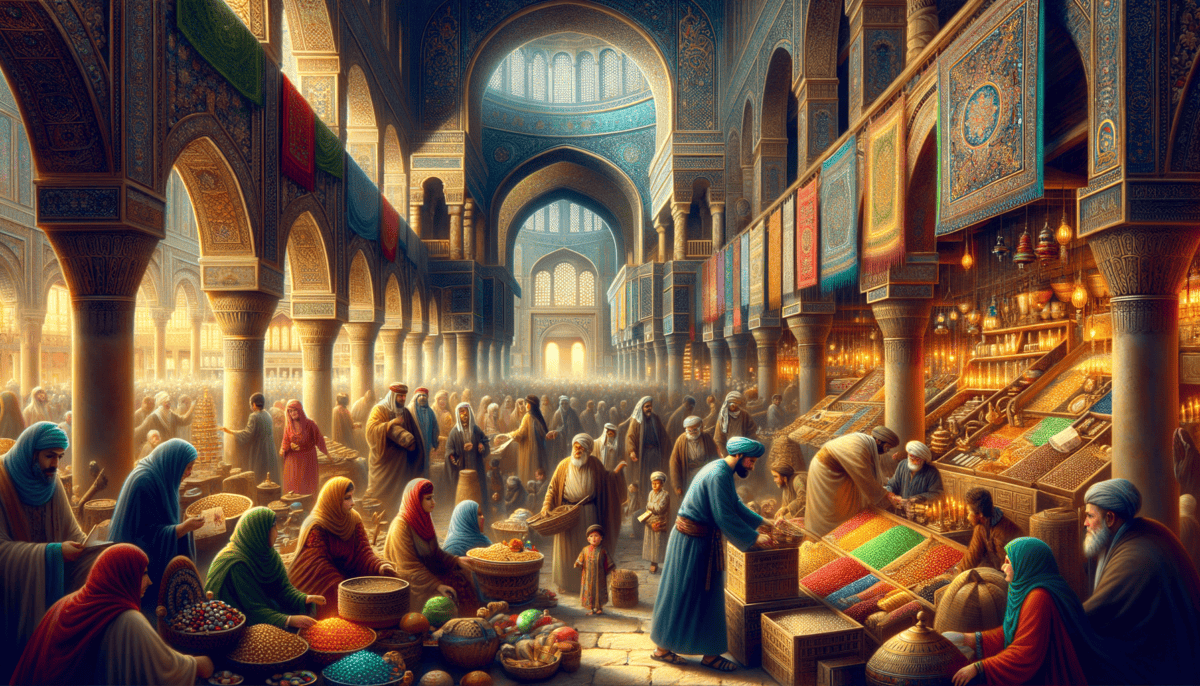
Malik’s family ran a busy shop in the market. They sold beautiful cloth and spices from far away lands. Now, with the Greeks in charge, everything was different. But different wasn’t always bad!
One morning, a Greek boy named Andreas came into their shop. At first, Malik was shy, but soon they became good friends.
“Your language is so different from mine!” Andreas laughed as they shared treats in the marketplace.
“But look – we both love sweet dates!” Malik replied, making them both giggle.
The Silk Road Adventure
As Malik grew older, he joined his father on trading trips. They traveled on the famous Silk Road – a long path that connected many lands. It was like a giant road that went all the way to China!
• Connected many different countries
• Helped people share ideas and inventions
• Brought new foods and goods to Syria
• Made cities very rich and busy
On these trips, Malik saw amazing new things. There were tall buildings with beautiful round tops called domes. The Greeks had taught people how to build them.
A Bridge Between Worlds
One special evening, Malik’s family hosted a big dinner. Greek friends sat next to Syrian neighbors. Everyone shared food and stories.
“See, my son?” his father said proudly. “Our city is like a bridge. We connect people from all over the world.”
Malik watched as his Greek friend Andreas tried Syrian desserts for the first time, his eyes lighting up with joy.
Growing Together
Years passed, and Malik grew into a successful merchant like his father. The city grew too, becoming more beautiful with new Greek-style buildings next to traditional Syrian ones. ️
People spoke many languages now. They wore different clothes and ate different foods. But instead of staying separate, they learned from each other and grew stronger together.
As Malik taught his own children about trade, he would tell them: “Remember, change can bring good things. Just like the sweet dates we share with our Greek friends!”
Looking out over his beloved city one evening, Malik smiled at how old and new lived side by side. Syrian traditions stayed strong while new Greek ideas made life exciting and different. ⭐
Sacred Stories and New Beliefs
Yasmine sat in the cool shade of an olive tree, watching people walk past the ancient temple. Some wore Roman clothes, others traditional Syrian robes. A small group of Christians hurried by, carrying scrolls.
“So many different ways to pray,” Yasmine whispered to herself, writing carefully in her notebook.
A City of Many Voices
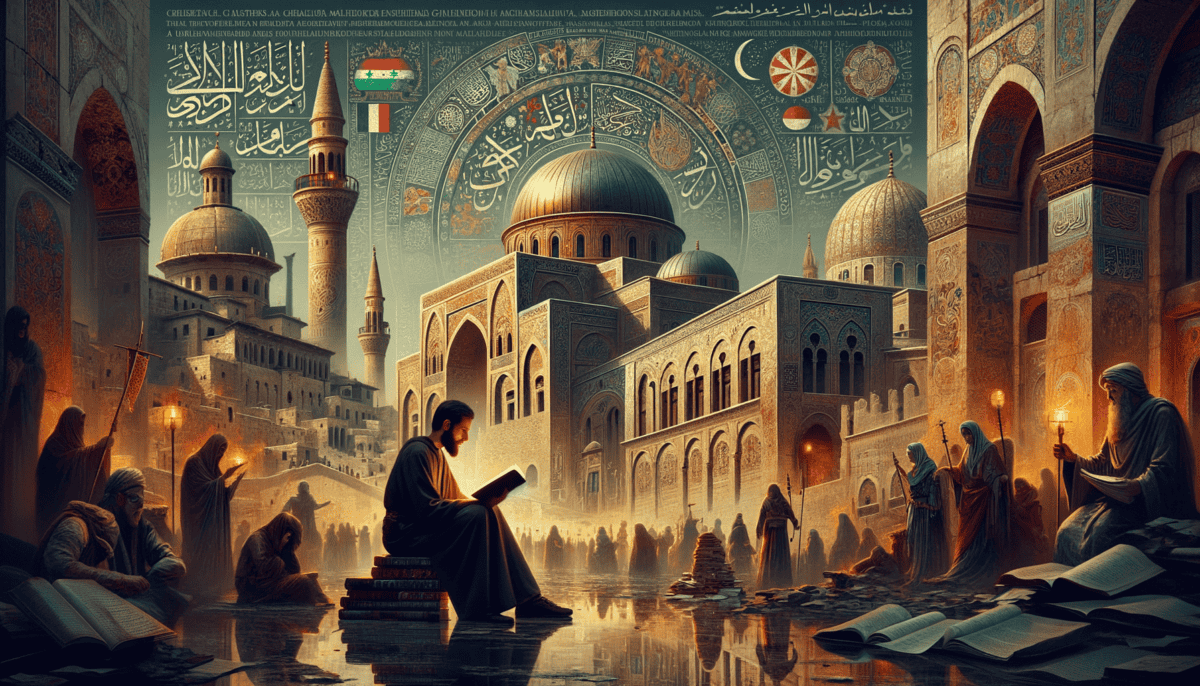
As a young scholar, Yasmine loved learning languages. She could speak Syrian, Greek, Latin, and Arabic. In Damascus, her hometown, this was very useful! People from all over the world came to study and trade.
One morning, Yasmine met a Christian monk named Thomas at the library.
“Would you like to learn about our stories?” he asked kindly.
“Yes, please!” Yasmine replied eagerly. “And I can teach you our Syrian tales too!”
New Teachers Arrive
Everything changed when Muslim travelers came to Damascus. They brought exciting new ideas about science, math, and stars. Yasmine was amazed by their knowledge! ⭐
• People built beautiful mosques
• New books were written
• Doctors learned better ways to help sick people
• Scientists made discoveries about the stars
Yasmine spent her days translating books from one language to another. This helped everyone share what they knew.
Learning Together
In the grand library, Yasmine worked with friends from different faiths. Sarah was Jewish, Marcus was Roman, and Hassan was Muslim.
“Look at this!” Sarah would say, showing a scroll about healing plants.
“That reminds me of something in our books,” Hassan would reply.
Together, they discovered that different peoples often had similar ideas about being kind and helping others.
A Time of Wisdom
As years passed, Damascus became famous for its schools and libraries. People called it the City of Knowledge.
Yasmine taught many students. “Knowledge is like water,” she would say. “It flows from person to person, making everything grow.”
Stories That Last Forever
One evening, Yasmine sat with her students under the stars. Muslims, Christians, and Jews all listened as she told ancient Syrian stories.
“These stories belong to all of us now,” she said softly. “Just like the new stories we’re making together.”
Looking at the happy faces around her, Yasmine knew that Damascus would keep growing stronger because people shared their wisdom with each other.
As the moon rose over the city’s domes and towers, prayers from different temples floated on the evening breeze. The sounds mixed together like a beautiful song – the song of a city where many beliefs lived as one.
Between Swords and Scrolls
Hassan walked through the busy streets of Damascus, his translator’s pouch heavy with important messages. Knights in shining armor rode past, while merchants hurried to protect their goods. The year was 1148, and danger was coming.
A City Under Pressure
“The Crusaders are getting closer,” whispered Ahmad, Hassan’s friend who worked at the palace. “But our walls are strong, and our people are brave.”
Hassan knew his job was very important. He helped people who spoke different languages understand each other. Sometimes this could stop fights before they started.
Saving Knowledge
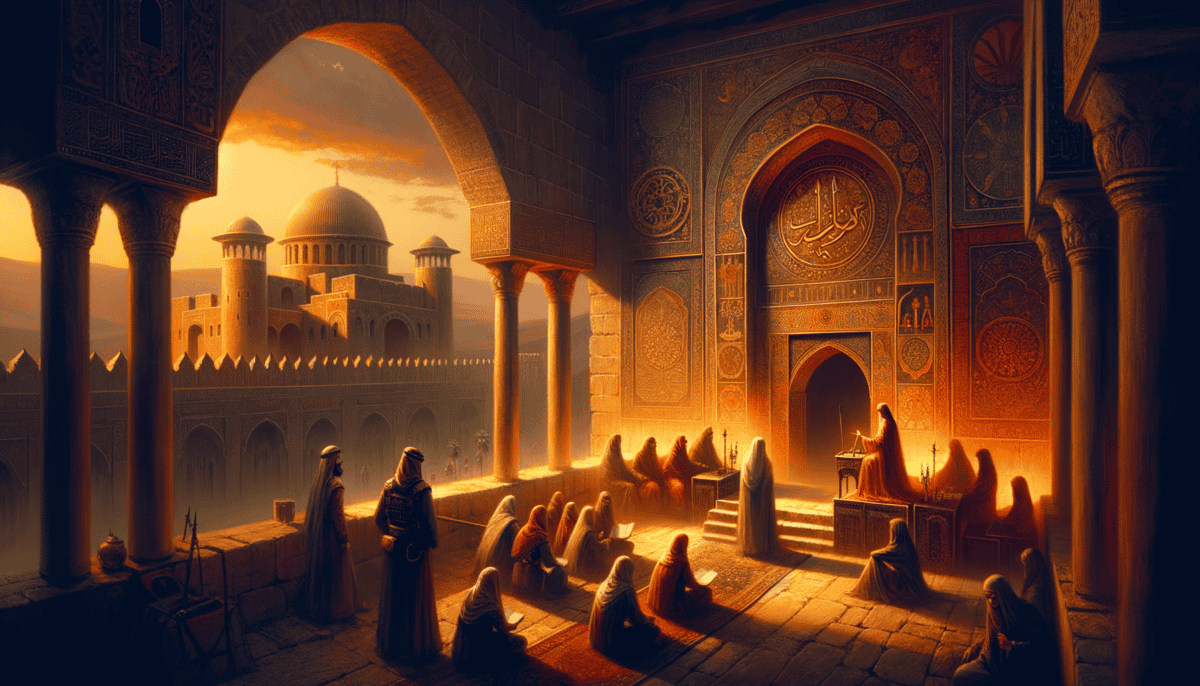
One morning, Hassan got an important job. The great library needed to hide its precious books to keep them safe!
“These books hold the wisdom of many peoples,” said the head librarian. “We must protect them.”
Hassan helped carry scrolls and books to secret rooms under the city. Muslim, Christian, and Jewish scholars worked side by side to save their shared treasure. ✨
The Brave Defenders
When the Crusaders attacked, Damascus didn’t fall! The people:
• Built strong walls
• Shared food with each other
• Helped their neighbors
• Stayed brave together
Hassan watched as people from all different groups protected their home. “We may pray differently,” said his friend Maryam, “but we all love Damascus.”
New Friends from Far Away
Later, traders from Mongolia came to visit. They brought beautiful silk and new ideas. Hassan learned their language too!
“Your city is like a garden with many different flowers,” said Ming, a Mongol merchant. “Each one beautiful in its own way.”
Building Together
After the fighting ended, everyone helped rebuild. Hassan saw Muslim builders working with Christian stone cutters. Jewish metalworkers made beautiful doors for new buildings. ️
Stories of Hope
At night, Hassan would tell his children stories about the brave people of Damascus. “Our city is strong because we help each other,” he would say.
Young Sara, his daughter, loved these tales. “Tell us about the time everyone saved the books!” she would beg.
Hassan smiled, remembering how people had worked together. Even in hard times, Damascus found ways to grow and learn.
Looking Forward
As Hassan grew older, he saw Damascus change and grow. New buildings went up. More traders came to visit. The library got bigger and better!
“Our city is like a big family,” Hassan told his grandchildren. “Sometimes we disagree, but we always take care of each other.”
The moon shone down on Damascus’s towers and minarets, lighting up a city that had faced big challenges but grown stronger. The sounds of evening prayers mixed with children’s laughter, telling everyone that Damascus would keep standing strong.
Life Under Ottoman Rule
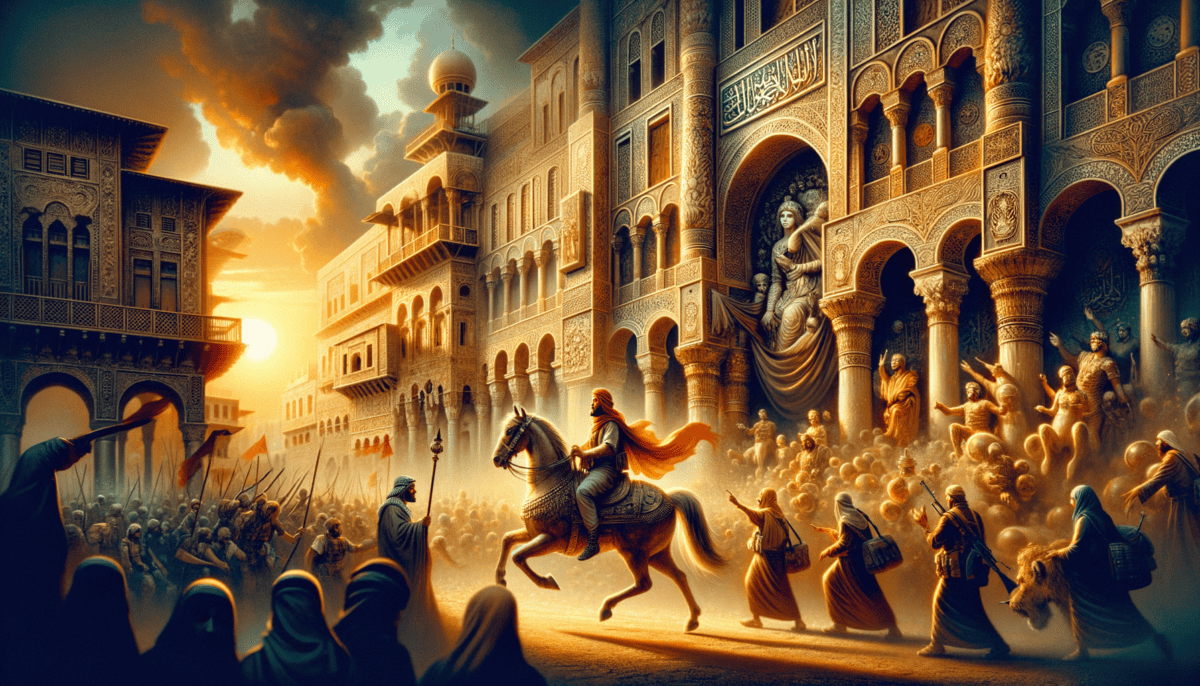
In the bustling streets of Damascus, Leila adjusted her headscarf as she hurried to help her father at his office. The year was 1683, and the Ottoman Empire ruled over Syria. The smell of fresh bread and spices filled the air.
A Family’s Story
“Baba, tell me again how our family came to work for the Sultan,” Leila asked her father, Karim, who was the local administrator. He smiled warmly at his curious daughter.
“Our great-grandfather was chosen because he could speak many languages and knew how to help people work together,” he explained.
A City of Colors
Damascus was like a beautiful painting come to life. People wore clothes from all over the world. Some had tall Ottoman hats, others wore flowing Arabic robes.
Working Together
Karim’s job was to help everyone get along. He made sure the city ran smoothly by:
• Making fair rules for all people
• Helping solve problems between neighbors
• Making sure markets were fair
• Taking care of the poor
The Grand Bazaar
Leila loved visiting the big market with her father. Traders came from far away places like Istanbul and Cairo. They brought beautiful carpets, sweet treats, and shiny jewelry.
“Look, Baba!” Leila pointed at a merchant selling colorful silk. “His clothes are different from ours!”
“Yes, habibi. That’s what makes our city special – we’re all different but we live together like one big family.”
School Days
The Ottomans built new schools where children could learn. Boys and girls studied reading, writing, and numbers. They also learned about different cultures and religions.
Building Beauty
New buildings went up all over Damascus. The Ottomans loved beautiful architecture. They built:
✨ Grand mosques with tall minarets
✨ Public fountains with cool water
✨ Covered markets to keep shoppers dry
✨ Big houses with pretty courtyards
Helping Others
One day, Leila saw her father helping a poor family get food. “Why do you help everyone, even people who are different from us?” she asked.
“Because that’s what makes a city strong,” Karim answered. “When we help others, we all grow together.”
Changes and Growth
As years passed, more changes came to Syria. New ideas and inventions arrived from Europe. Trains started running between cities. People learned new ways to farm and make things.
Leila grew up and had her own children. She taught them what her father had taught her – that being kind and working together makes everyone stronger.
Night Stories
Every evening, families would gather to share stories. They talked about brave heroes, wise rulers, and magical adventures. These stories helped everyone remember where they came from.
“Tell us about the old days,” Leila’s children would beg. And she would smile, just like her father had, ready to share tales of Syria’s colorful past.
Dreams of Tomorrow
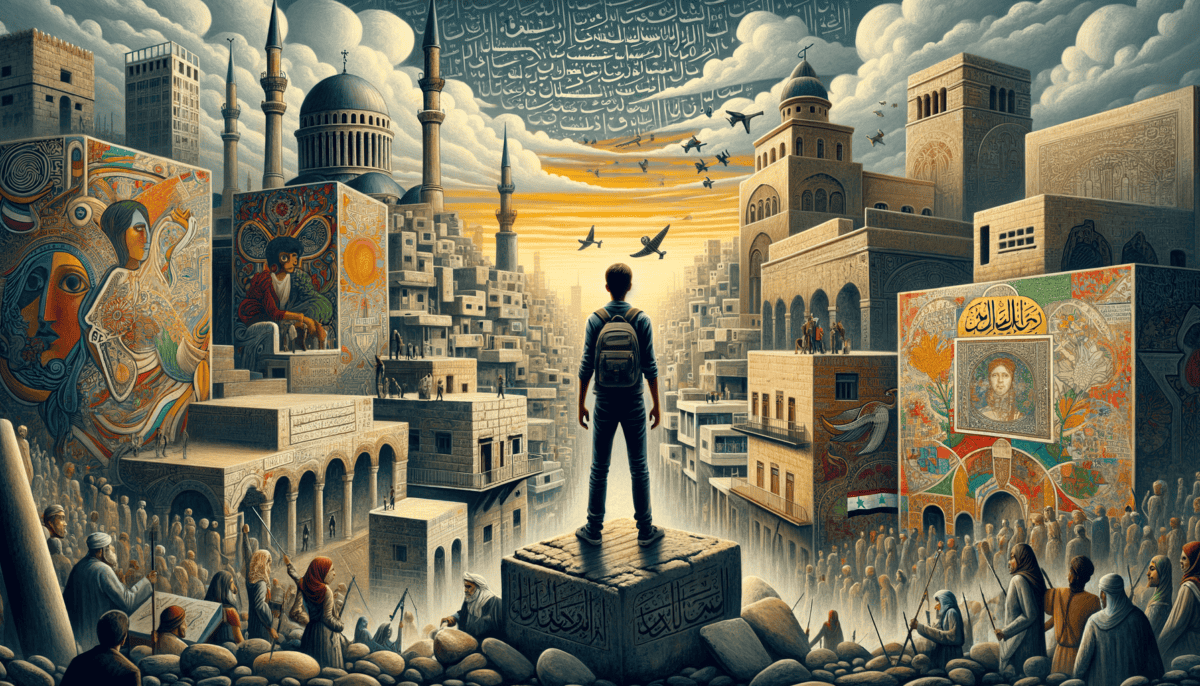
The sun rises over modern Damascus as Nour, a young Syrian girl, sits by her grandmother’s side. The old city walls still stand strong, telling stories of thousands of years gone by.
A Special Morning
“Teta, what was Syria like when you were little?” Nour asks, holding her grandmother’s warm hand.
“Oh, habibti, Syria was – and still is – like a beautiful garden where many flowers grow together,” her grandmother says with twinkling eyes.
Today’s Syria
Syria has changed a lot. New buildings touch the sky next to ancient markets. Cars zoom past camels on busy streets. People use phones to take pictures of old castles.
Keeping Traditions Alive
Even with all the new things, Syrians work hard to keep their special traditions:
Dancing the dabke at celebrations
Cooking yummy foods like hummus and falafel
Making beautiful art and music
Telling stories from long ago
Learning New Things
Syrian children today go to school to learn about computers, science, and the whole world. But they also learn about their rich history.
“Did you know,” Nour’s teacher tells the class, “that some of the first letters ever written were found right here in Syria?”
Helping Hands
When parts of Syria faced hard times, people from all over helped each other. Neighbors shared food. Teachers taught classes outside. Doctors helped everyone they could.
Modern Life
Today’s Syria is full of amazing things:
• Young people creating cool art and music
• Farmers growing food in smart new ways
• Scientists making new discoveries
• Artists saving old treasures
Dreams for Peace
Nour and her friends dream of a bright future. They plant trees, help clean their neighborhoods, and learn about keeping peace.
“What do you want to be when you grow up?” Nour’s grandmother asks.
“I want to help tell Syria’s story to the world,” Nour says proudly.
Looking Forward
As the sun sets over Damascus, Nour thinks about all she’s learned about her country. From ancient times to today, Syria has been a place where people come together.
“Remember,” her grandmother says, “you carry the strength of thousands of years of Syrian history in your heart.”
Syria Forever
Syria’s story continues with each new day. Its people keep growing, learning, and sharing their beautiful culture with the world. Young Syrians like Nour carry hopes for tomorrow while remembering the wisdom of yesterday.
Just as the ancient walls of Damascus have stood through time, the spirit of Syria stands strong – a bridge between past and future, a home to dreams both old and new. ✨