

The Forbidden Games
Sarah bounced on her toes, her eyes wide with excitement. "Mom, did you know girls weren't always allowed to run in the Olympics?" The ten-year-old track star-in-training could hardly believe it.
Her mother smiled, sitting down on the couch beside her daughter. "That's right, sweetie. The very first Olympics were only for boys and men. It happened a very long time ago in Greece."
️ Ancient Greece – Where it All Began
The first Olympics were special games held in a place called Olympia. Men would come from all over to run, jump, and throw. They wore olive leaf crowns when they won. But girls and women? They couldn't even watch the games!
"But why, Mom?" Sarah's nose wrinkled in confusion.
"Back then, people thought sports were just for boys. They had some silly ideas about what girls could and couldn't do."
Sarah crossed her arms. "That's not fair at all!"
"You're right," her mother agreed. "And for a very long time, even when the Olympics started again in 1896, women still couldn't join in."
♀️ The First Push for Change
But some brave women didn't like being left out. They wanted to run and jump and play sports too! One of these women was Alice Milliat. She was like a superhero for women's sports.
"What did she do, Mom?"
"Alice organized special games just for women. She showed everyone that girls could be amazing athletes too!"
“If they won’t let us join their games, we’ll make our own!” – Alice Milliat
The world was different back then. Girls had to wear long dresses. Many people thought sports would hurt them. Some doctors even said running was bad for girls!
• Girls couldn’t run more than 200 meters
• No jumping allowed
• Swimming was thought to be “too rough”
Sarah jumped up from the couch. "But that's crazy! I can run way farther than 200 meters!"
Her mother laughed. "Times have changed, thankfully. But it took a lot of brave women standing up and saying 'We can do this!'"
The Spark of Change
Even though women couldn't compete, they didn't give up. They kept practicing. They kept showing everyone what they could do. They knew that one day, things would change.
"Like what I do at track practice?" Sarah asked, demonstrating her running form.
"Exactly like that! And guess what? All that hard work by those first women paid off. In 1900, something amazing happened…"
Sarah leaned forward eagerly. "What? What happened?"
Her mother smiled. "That's a story for tomorrow. But I'll give you a hint – it has to do with the Paris Olympics and some very determined women who changed everything."
Sarah hugged her knees to her chest, imagining those first brave women who fought for their chance to compete. "I'm glad I can run in races now," she said quietly. "Those women must have been really strong."
"They were," her mother agreed. "And they helped make it possible for girls like you to chase your dreams."
Outside their window, the sun was setting, painting the sky in gold – just like those ancient olive crowns. But now, those crowns weren't just for boys anymore. They were for anyone brave enough to run after them.
The First Olympic Heroines
Sarah couldn’t wait for today’s story. She had her running shoes on, ready for practice later. “Mom, you promised to tell me about the Paris Olympics!”
Her mother smiled. “Ah yes, 1900. That was when everything started to change.”
Sarah settled into her favorite spot on the couch. “Did girls finally get to run?”
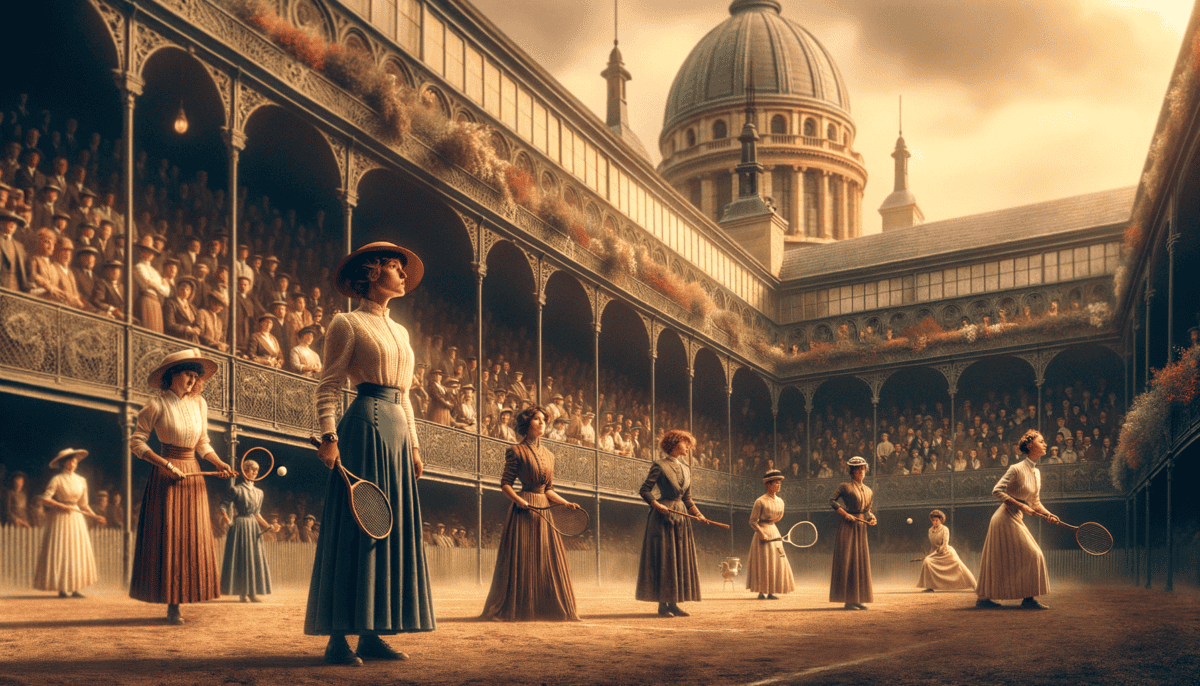
“Actually, the first women didn’t run – they played other sports. There were 22 brave women who competed in tennis, golf, and croquet.”
“Only 22?” Sarah’s eyes went wide. “That’s smaller than my class at school!”
The Tennis Pioneer
“Let me tell you about Charlotte Cooper,” her mother said. “She was a tennis player from England. Do you know what she did?”
“What?”
“She became the very first woman to win an Olympic gold medal! She was really good at tennis, even though she had to play in a long skirt.”
“I will show them what women can do!” – Charlotte Cooper
Sarah giggled. “A long skirt? How could she run?”
“It wasn’t easy! But these women were determined. They didn’t care what people said.”
⛳ The Golf Champions
“Margaret Abbott was another hero,” Mom continued. “She won golf, but here’s the funny part – she didn’t even know she was in the Olympics!”
“How could she not know?” Sarah laughed.
“Back then, the Olympics weren’t as organized as they are now. Margaret thought she was just playing in a regular golf tournament. She found out years later that she was actually the first American woman to win an Olympic gold medal!”
Fighting for More
“But not everyone was happy about women joining the Olympics,” Mom explained. “Some people still said mean things.”
Sarah frowned. “What did the women do?”
“They kept going! They showed everyone how strong and brave they were. And guess what? More and more women wanted to join.”
“Like me!” Sarah jumped up and started running in place. “I want to be in the Olympics too!”
Her mother beamed. “And you can, thanks to those first 22 women who opened the door.”
A Growing Dream
“After 1900, things started to change. More sports were added for women. More girls got to chase their dreams.”
“Like what sports?” Sarah asked.
“Well, that’s another exciting story. It’s about how women finally got to run on the Olympic track. Would you like to hear about that tomorrow?”
Sarah nodded eagerly. “Yes! But first, can we go practice? I want to be strong like Charlotte and Margaret!”
Her mother grabbed her keys. “Let’s go! And remember – every time you run, you’re carrying on the dream those first Olympic women started.”
As they headed to practice, Sarah imagined those 22 brave women. They might have worn long dresses and big hats, but they were just like her – they loved sports and wouldn’t take no for an answer.
Running Against the Wind
Sarah bounced on her toes at the track. “Mom, you promised to tell me about the first women runners!”
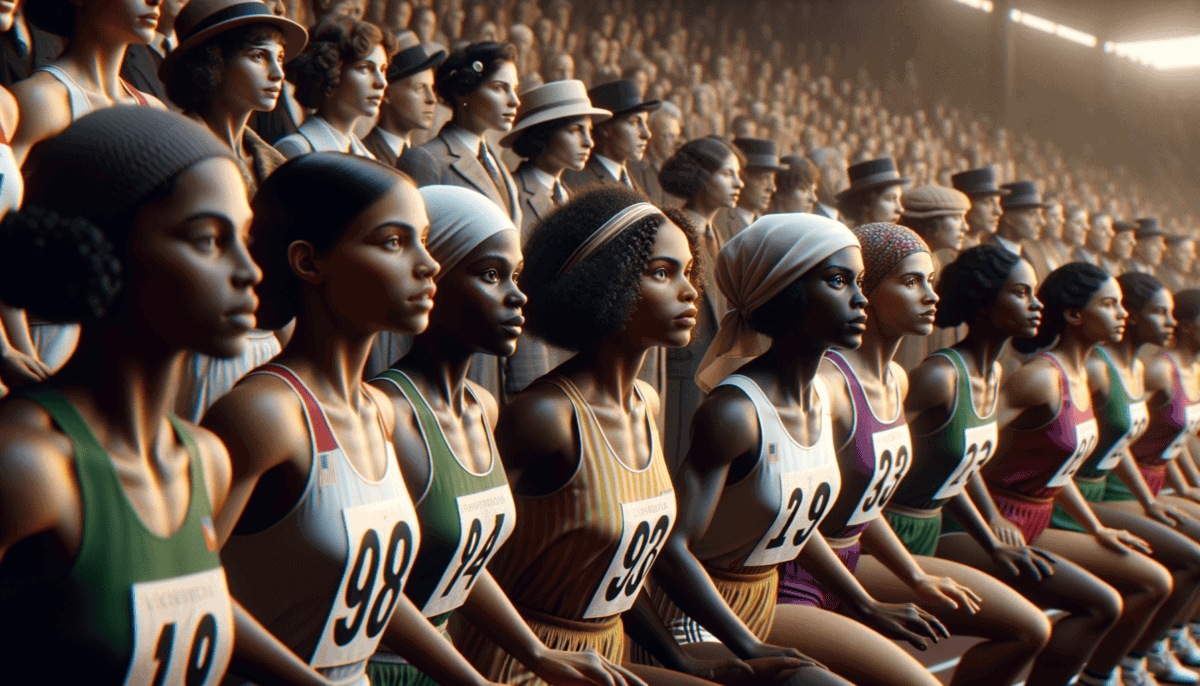
“Ah yes, the 1928 Amsterdam Olympics. That was when women first got to run on the Olympic track!” ♀️
“But some people weren’t happy,” Mom said. “They said silly things like ‘running isn’t lady-like’ and ‘girls are too weak to run.'”
Sarah made a face. “That’s not true! I’m strong!”
“You sure are! And so were those first runners. Let me tell you about Betty Robinson.”
The Girl Who Flew
“Betty was only 16 years old – just a kid! One day, her teacher saw her running for a train and said, ‘You’re fast!'”
“I never knew I could run until someone gave me a chance.” – Betty Robinson
“What happened next?” Sarah leaned forward.
“Betty started training. And guess what? She made it to the Olympics! She ran in the 100-meter race – that’s like running the length of a football field.”
“Did she win?”
“She sure did! Betty became the first woman to win gold in Olympic track and field!”
️ Breaking Records, Breaking Rules
“More brave women joined Betty on the track. Like Lina Radke from Germany, who ran the 800 meters.”
“That’s twice around our track!” Sarah knew from her practice.
“Right! And the women ran so well, they broke records! But some people still didn’t want women to run long races.”
“Why not?”
“They thought it was too hard for girls. Can you believe they took the 800-meter race away from women for 32 years?”
Sarah stomped her foot. “That’s not fair!”
Proving Them Wrong
“But here’s the good part,” Mom smiled. “The women didn’t give up. They kept training, kept running, kept showing everyone how strong they were.”
“Like me at practice!”
“Exactly! And slowly, people started to see the truth – that girls can run just as well as boys.”
The Path Forward
“Today, women run in all kinds of races at the Olympics. Short races, long races, relay races – even marathon races that are 26 miles long!”
Sarah’s eyes got big. “Twenty-six miles? Wow!”
“And it all started with brave girls like Betty, who wouldn’t take no for an answer.”
Sarah jumped up. “Can we run now? I want to be fast like Betty!”
“Race you to the starting line!” Mom called, already jogging ahead.
As they ran together on the track, Sarah felt proud. She was running on the same kind of track where Betty Robinson made history. Every step was like a thank you to those first brave runners who opened the door for girls like her.
“Hey Mom,” Sarah called between breaths, “what happened after the runners? Did women get to do more Olympic sports?”
“That’s another amazing story. Want to hear about some real Olympic heroes tomorrow?”
Stars Who Showed the Way
“Tell me about the heroes, Mom!” Sarah bounced on the couch. “You promised!”
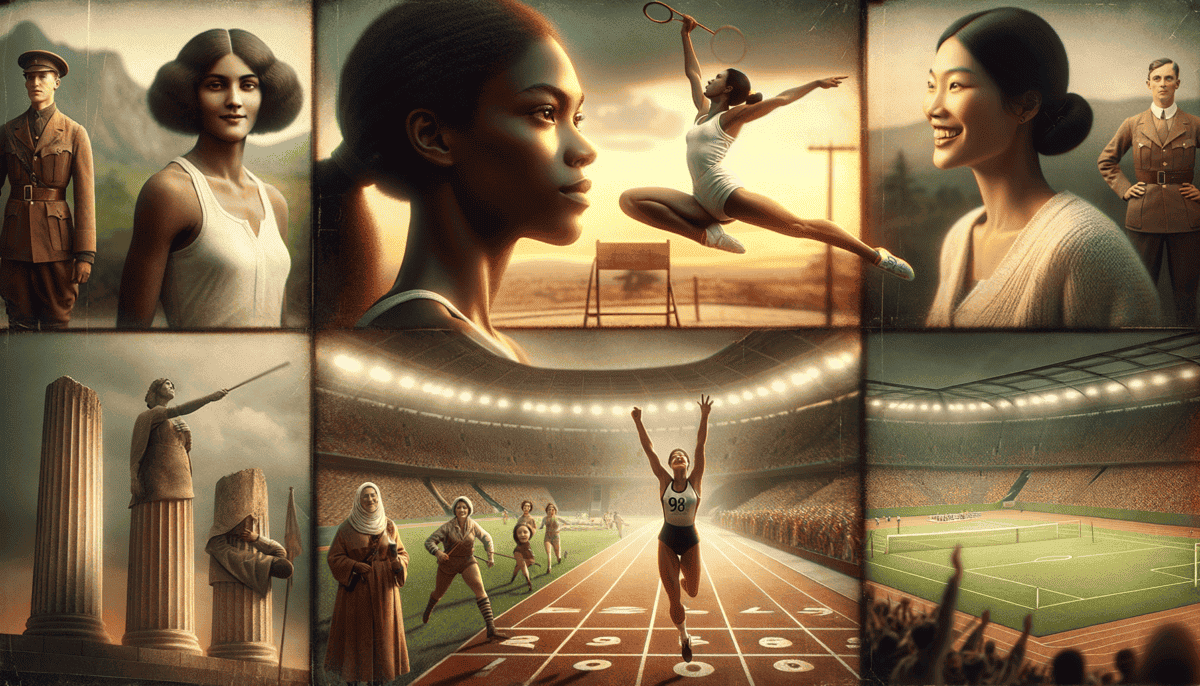
“I did! And today’s story is about someone very special – Wilma Rudolph.”
“Never walk? But how did she run?” Sarah’s eyes went wide.
“That’s what makes Wilma so amazing. When she was little, she got very sick. Her left leg got weak and twisted.”
“That must have been scary,” Sarah hugged her knees.
“It was. But Wilma had a super power – she never gave up! “
“My doctor told me I would never walk again. My mother told me I would. I believed my mother.” – Wilma Rudolph
“What did she do?” Sarah leaned forward.
“Every day, Wilma’s mom gave her leg rubs. Her brothers and sisters helped her do exercises. And guess what? By age 12, Wilma could walk without help!”
♀️ The Race to Glory
“But Wilma didn’t stop there. She started running! She ran before school. She ran after school. She ran so fast, people called her ‘The Tornado’!”
“Did she win races?”
“Oh yes! At the 1960 Olympics in Rome, Wilma won three gold medals! No American woman had ever done that before.”
• 100-meter race
• 200-meter race
• 4×100 meter relay race with her team
“She was so fast, they gave her a new nickname – ‘The Black Gazelle.’ And people all over the world watched her run on TV!”
More Than Just Running
“But Wilma did something even more important than winning races. She showed everyone that girls could be strong. That you can overcome anything if you try hard enough.”
“Like when I keep practicing my cartwheel even though I fall sometimes?”
“Exactly like that! And there were other heroes too. Like Wyomia Tyus, who became the first person – not just woman, but person – to win gold in the 100-meter race at two different Olympics!”
⭐ Opening Doors
“These amazing women didn’t just win medals. They opened doors for other girls. They showed that women could be strong, fast, and brave.”
“After them, more and more girls started running?”
“Yes! And not just running. Women started doing all kinds of sports. Like gymnastics, swimming, and basketball!”
Sarah jumped up. “Can we play basketball right now?”
“Sure! But first, want to know something cool? When Wilma won her races, she had a special way to celebrate…”
“How?” Sarah bounced excitedly.
“She would do a little dance. Want to try it?”
Mom and Sarah danced around the living room, celebrating like Olympic champions. Sarah twirled and laughed, thinking about all the brave women who ran before her.
“Mom,” Sarah said as they caught their breath, “what happened next? Did women get to do even more at the Olympics?”
“Oh yes! Wait until you hear about the 1984 Olympics – that’s when everything changed…”

Breaking Records and Breaking Barriers
“1984 was magic!” Mom’s eyes sparkled. “That’s when the Olympics came to Los Angeles.” ✨
“What made it special?” Sarah sipped her hot chocolate.
“That year, more women got to compete than ever before! And one tiny gymnast became a huge star.”
“Was she scared to compete?” Sarah asked.
“Maybe a little. But Mary Lou Retton had worked so hard. She practiced six days every week for years!”
The Big Moment
“The whole world was watching. Mary Lou needed a perfect score on her final vault to win gold.”
“I felt like my heart was going to jump right out of my chest!” – Mary Lou Retton
“What happened next?” Sarah bounced on her knees.
“She ran fast. She jumped high. She flipped through the air. And when she landed… STICK! Her feet didn’t move at all!”
“Did she get the perfect score?”
“YES! The crowd went wild! Mary Lou became the first American woman to win gold in gymnastics!”
More Than Just Gymnastics
“But 1984 wasn’t just about gymnastics. Joan Benoit did something amazing too!”
“What did she do?”
“She won the very first women’s marathon at the Olympics! Women had never been allowed to run that far before.”
“That’s so far!” Sarah’s eyes went wide.
“It is! But Joan showed everyone that women could do it. And now, lots of women run marathons!”
♀️ Making Waves
“In the pool, more magic happened. Mary T. Meagher swam like a butterfly!”
“People can’t swim like butterflies, Mom!” Sarah giggled.
“It’s a special way of swimming – and Mary was so good at it, they called her ‘Madame Butterfly.’ She won three gold medals!”
Opening New Doors
“After 1984, everything changed. More girls started doing sports. More women became coaches. Even the TV shows started talking about women athletes!”
“Like they do now?”
“Even more! These women showed everyone that girls could be strong, brave, and amazing at sports.”
Sarah stood up and tried to do a gymnast pose. “I want to be strong and brave too!”
“You already are! And guess what? The Olympics kept getting better for women. Want to know what happened next?”
“Yes! Tell me about the new Olympics!”
“Well, that’s when something really exciting happened – women and men started competing together…”

Racing Together, Winning Together
“Today is so different from when I was little,” Mom smiled. “Now boys and girls race on the same team!” ♀️ ♂️
Sarah’s eyes got big. “Really? How does that work?”
“It’s called mixed relay racing. Boys and girls take turns running super fast, passing a little stick called a baton.”
“That sounds fun! Can anyone join?”
“Yes! That’s what makes it special. The Olympics today wants everyone to have a fair chance.” ⭐
More Girls Than Ever
“Did you know that almost half of all Olympic athletes are girls now?” Mom showed Sarah a picture on her phone.
“Wow! Look at all those medals they’re winning!”
“And there are new sports too. Girls can now:
- Box like champions
- Skateboard on big ramps
- Surf giant waves ♀️
- Climb walls like superheroes ♀️
Breaking More Records
Sarah jumped up. “Tell me about the fastest girls!”
“Well, there’s Allyson Felix. She won more Olympic medals than any other girl runner ever!”
“I want girls everywhere to know they can break records too.” – Allyson Felix
“And Simone Biles! She can flip and twist better than anyone in the world!” ♀️
Looking to Tomorrow
“What’s next for girls in the Olympics, Mom?”
“The future is so bright! More sports are opening up. More girls are training. More dreams are coming true!”
Sarah stood tall and proud. “I’m glad I can do any sport I want!”
“That’s right! And it’s because of all the brave women who came before you. They fought hard so you could play any sport you dream of.”
“Like running fast?”
“Yes!”
“And jumping high?”
“Absolutely!”
“And swimming like a butterfly?”
Mom laughed. “Anything you want, sweetheart. The Olympics are for everyone now!”
Sarah hugged her mom tight. “Thanks for telling me about all the strong girls, Mom.”
“Remember, you’re strong too. And who knows? Maybe one day we’ll watch you in the Olympics!”
Sarah smiled big. “Race you to the backyard! I need to practice!”
As Sarah ran outside, Mom watched proudly. The little girl running in their backyard could dream as big as she wanted. Thanks to all the amazing women who came before her, Sarah’s only limit was the sky itself.